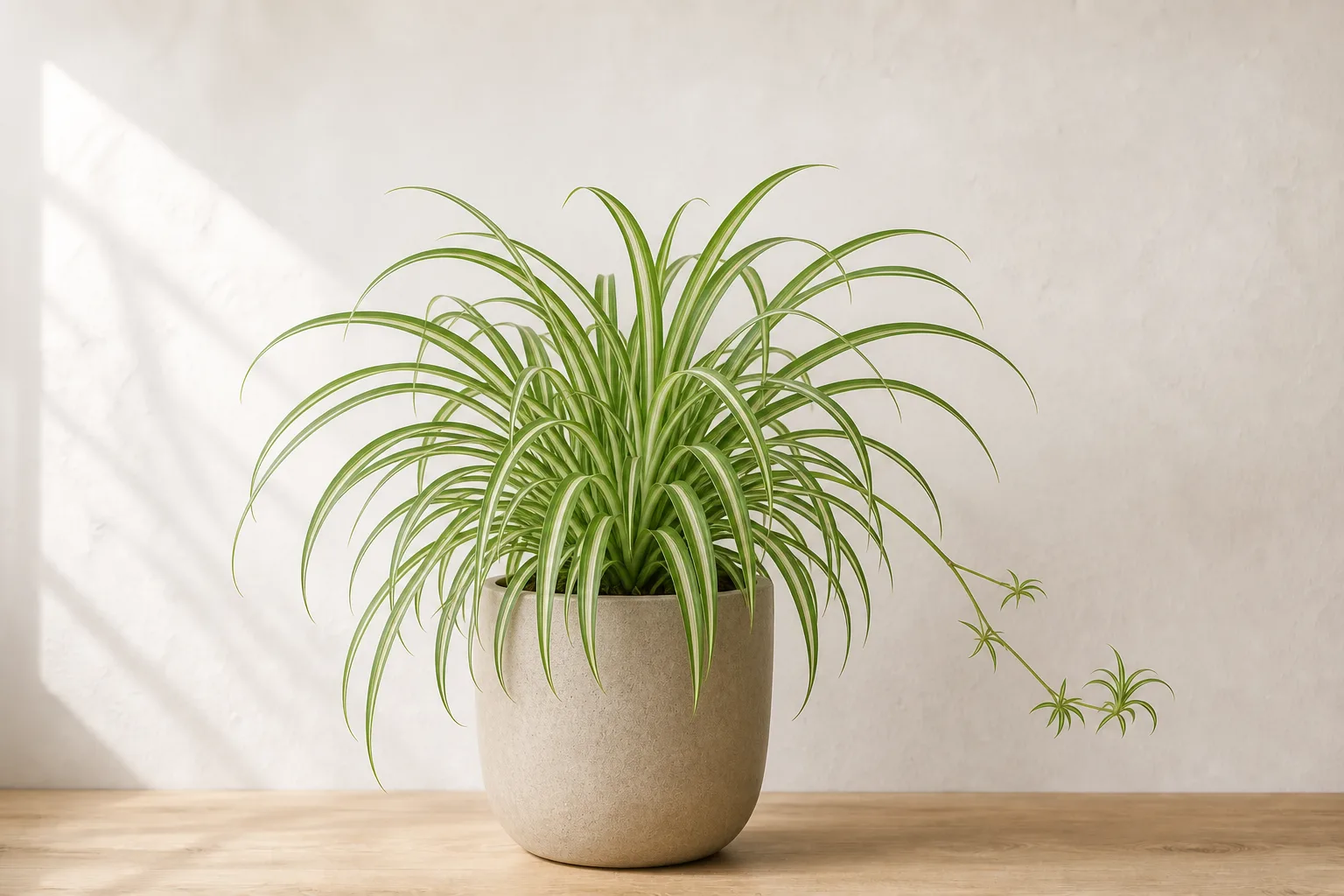
 Pet-friendlier
Spider Plant
Chlorophytum comosum
Striped arching leaves and cascading plantlets in a compact, pet-friendlier package.
Small-space growing works best when a plant's mature habit matches the surface, shelf, or floor area available—not just its size on purchase day.
This collection brings plant profiles and care guidance together around the conditions that define small-space plants.
Work with growth direction rather than against it. Upright, narrow plants suit tight corners and floor gaps; trailers and climbers turn shelves and wall hooks into growing space without claiming floor area. Before buying, decide which direction the plant is allowed to grow in your room, then pick the habit to match.
In compact rooms, maintenance replaces space. Regular rotation keeps growth balanced toward the light, light pruning holds a plant to its footprint, and repotting one size at a time prevents a small plant from becoming a large one prematurely. A slow-growing species often costs less effort per year than a fast one that constantly needs cutting back.
Pet-friendlierChlorophytum comosum
Striped arching leaves and cascading plantlets in a compact, pet-friendlier package.
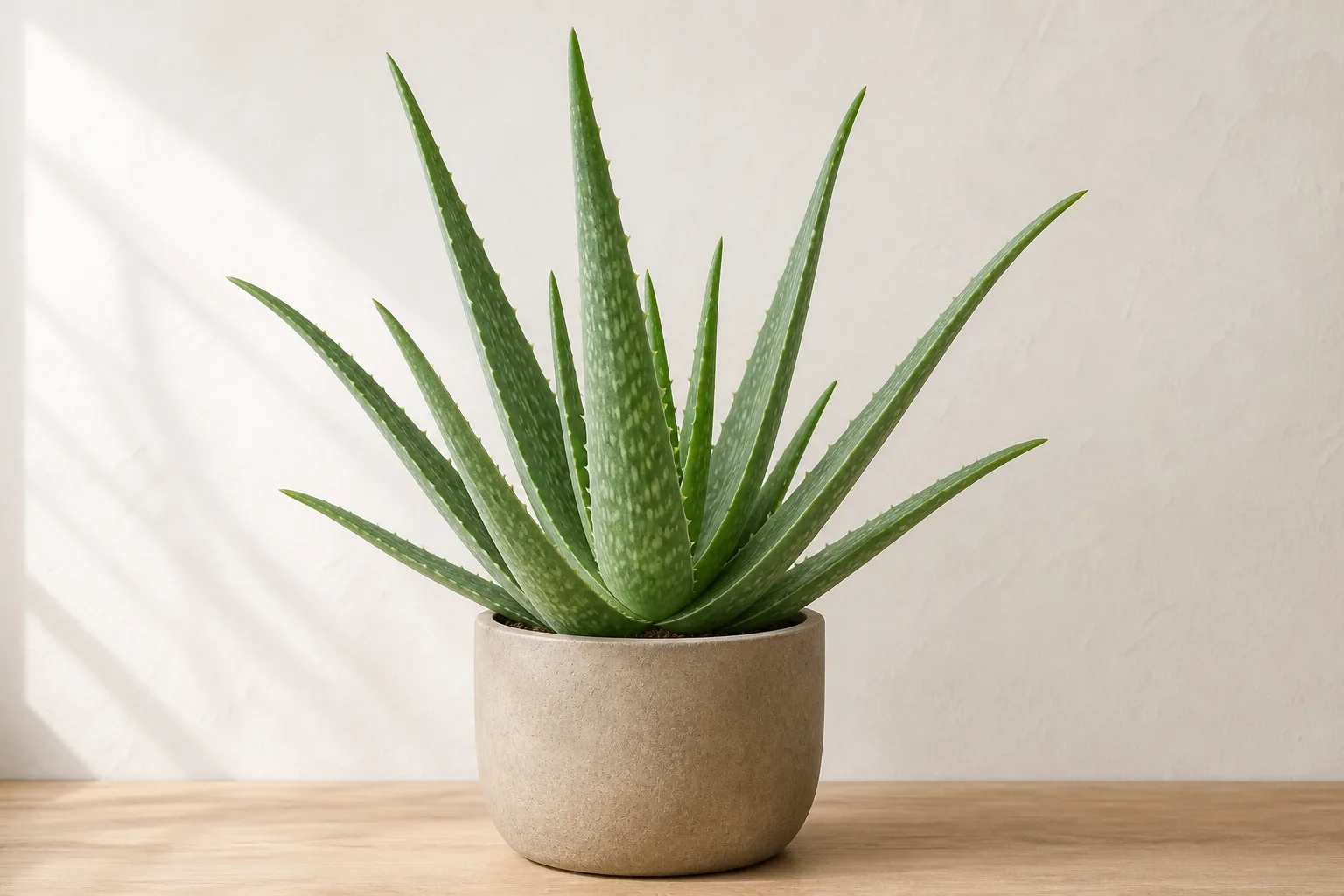 beginner
Aloe vera
A sun-loving succulent with fleshy leaves and a strong preference for dry roots.
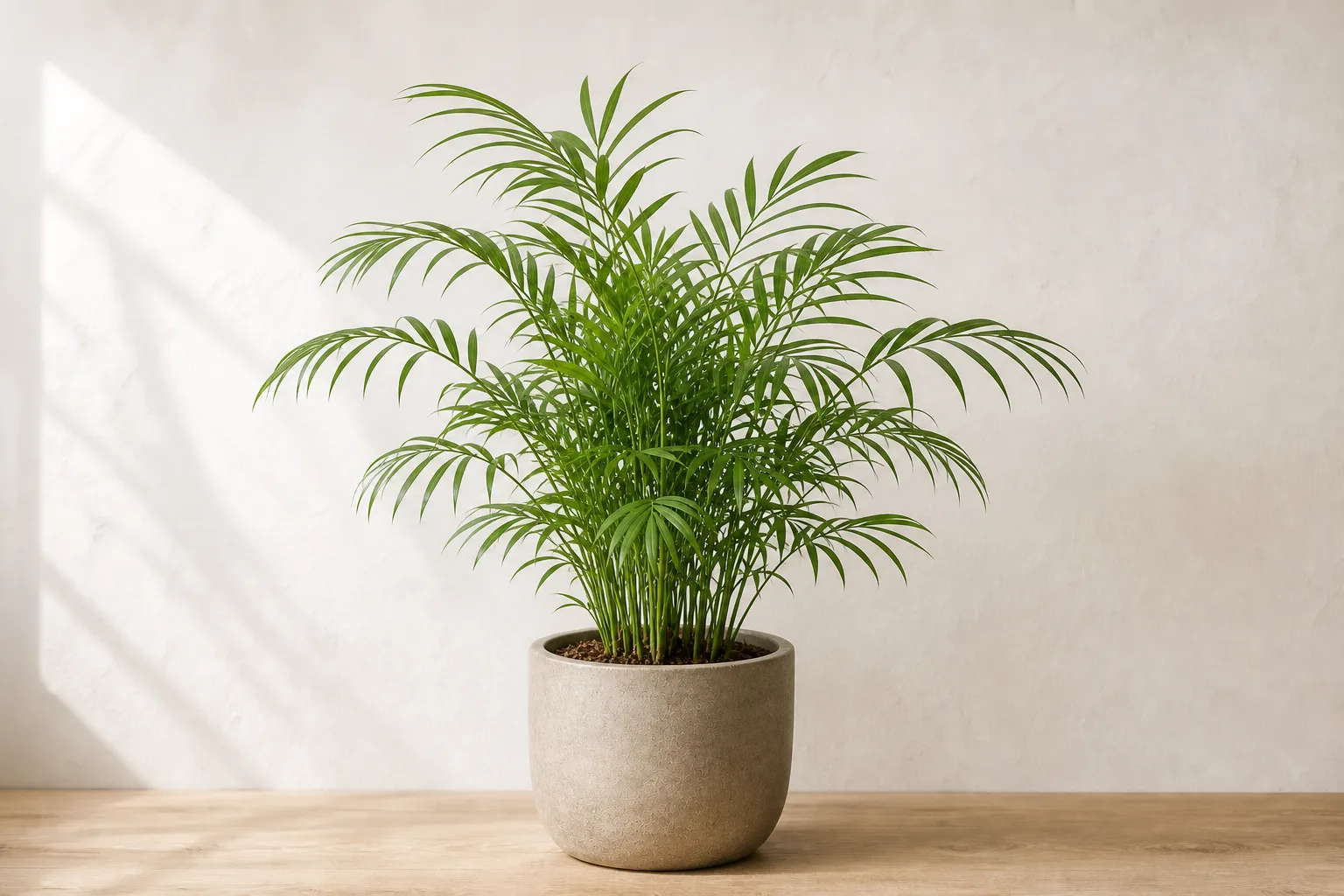 Pet-friendlier
Chamaedorea elegans
A compact palm that accepts lower light and is considered non-toxic to pets.
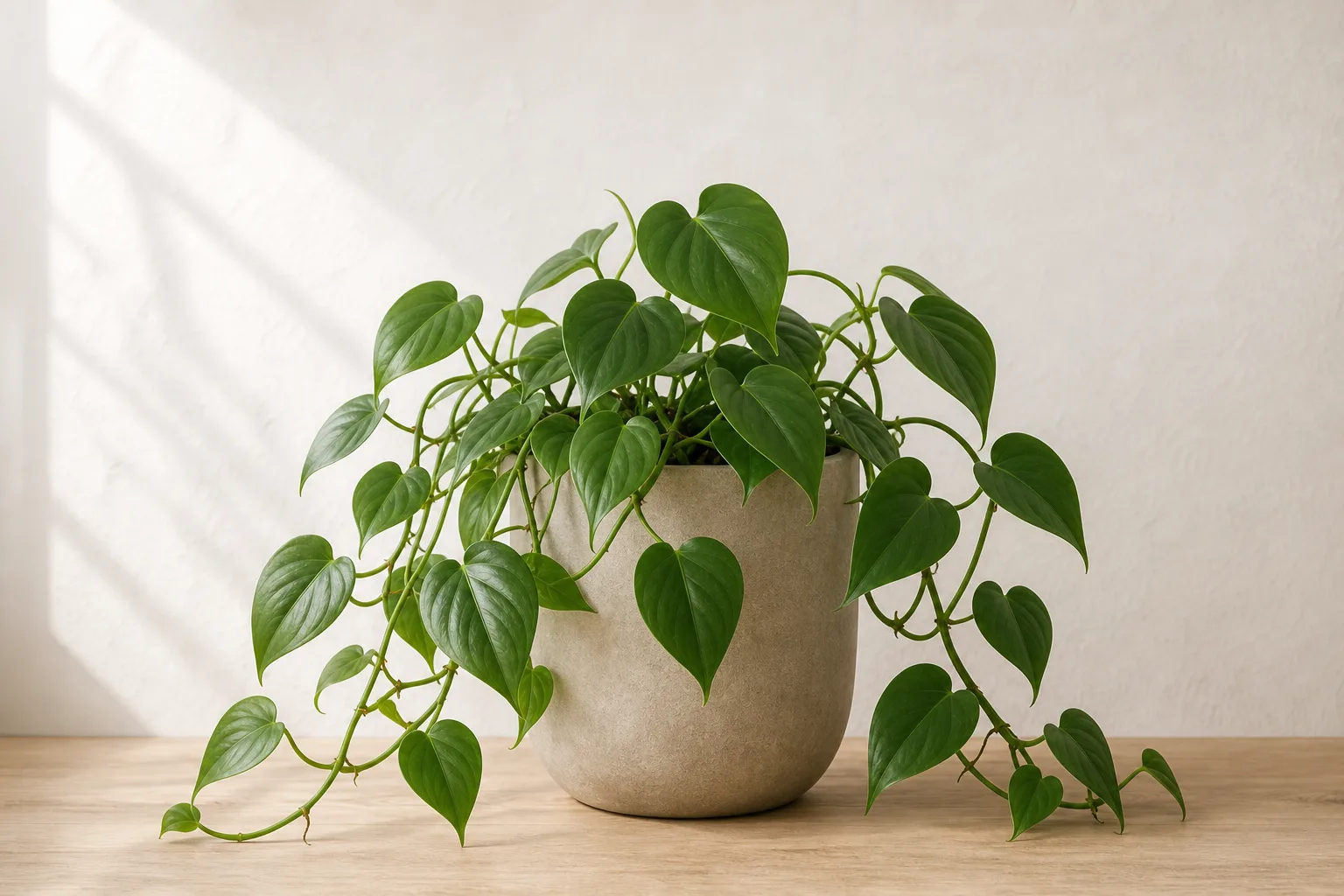 beginner
Philodendron hederaceum
Heartleaf philodendron (Philodendron hederaceum) is a vining aroid grown for its glossy, heart-shaped leaves and forgiving nature. Native to the tropical forests of Central and South America and the Caribbean, it climbs and trails readily, making it a staple for shelves, hanging baskets, and moss poles. It tolerates lower light better than most houseplants, but grows fuller and larger-leaved with bright, filtered exposure.
 beginner
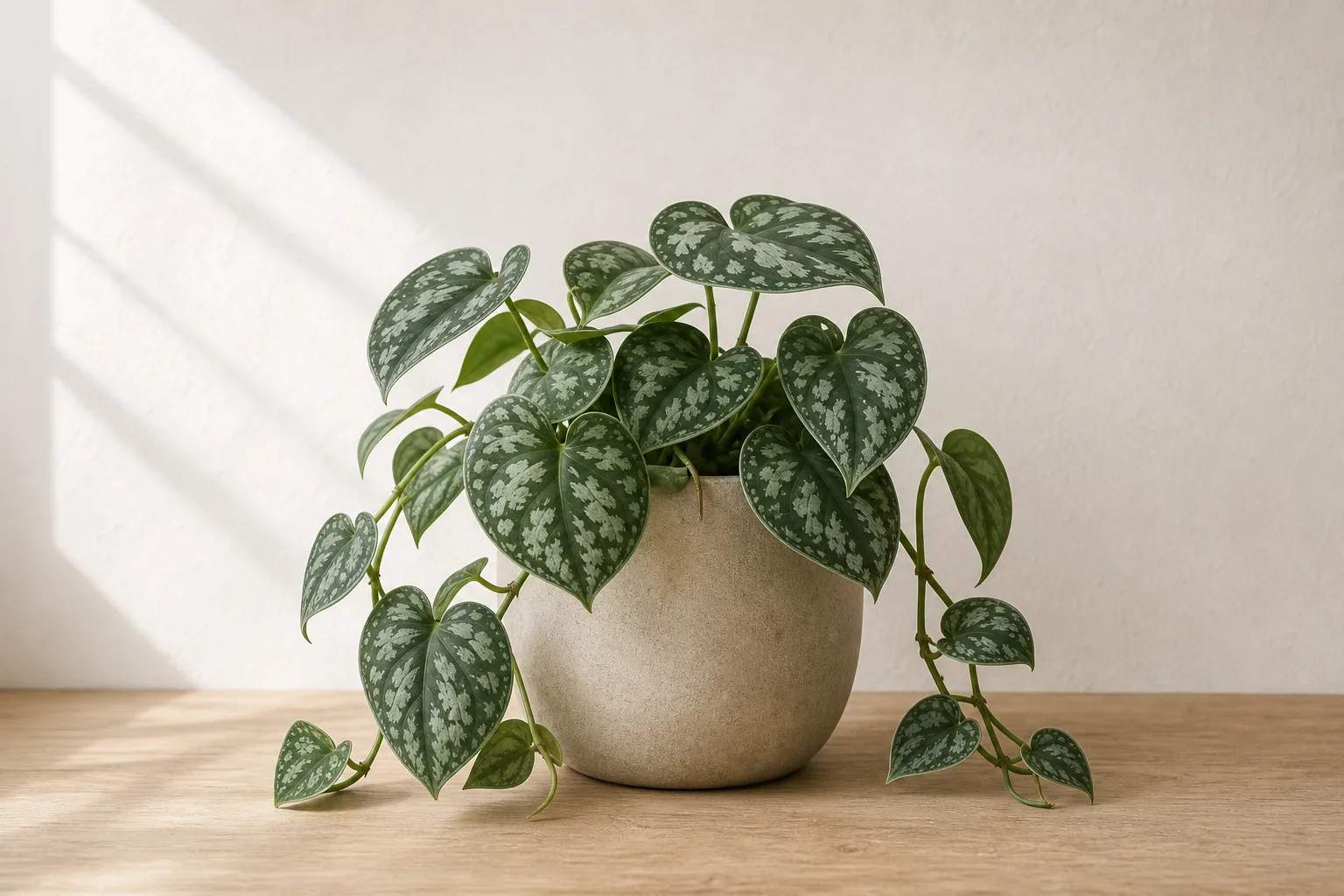
Scindapsus pictus
Silver satin pothos (Scindapsus pictus) is a trailing tropical aroid grown for its matte green leaves splashed with silvery blotches. Native from Bangladesh through western and central Malesia, it climbs by rootlets in the wild and trails gracefully from a shelf, hanging basket, or moss pole indoors.
 beginner
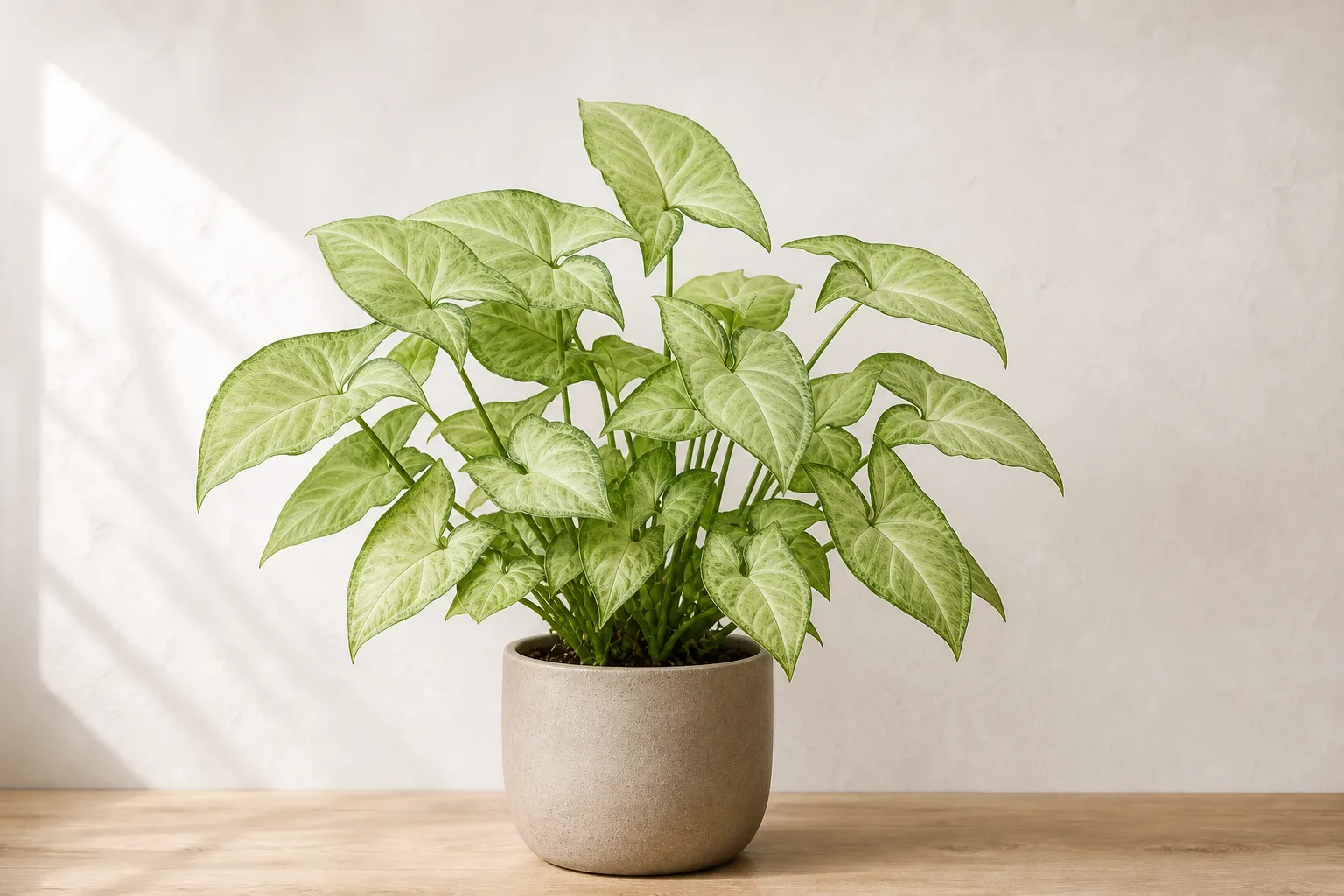
Syngonium podophyllum
Arrowhead vine (Syngonium podophyllum) is a climbing aroid from Mexico to tropical America, grown for its arrow-shaped juvenile leaves that mature into deeply lobed, multi-part leaves. Indoors it trails from a basket or climbs a moss pole with very little fuss.
 beginner
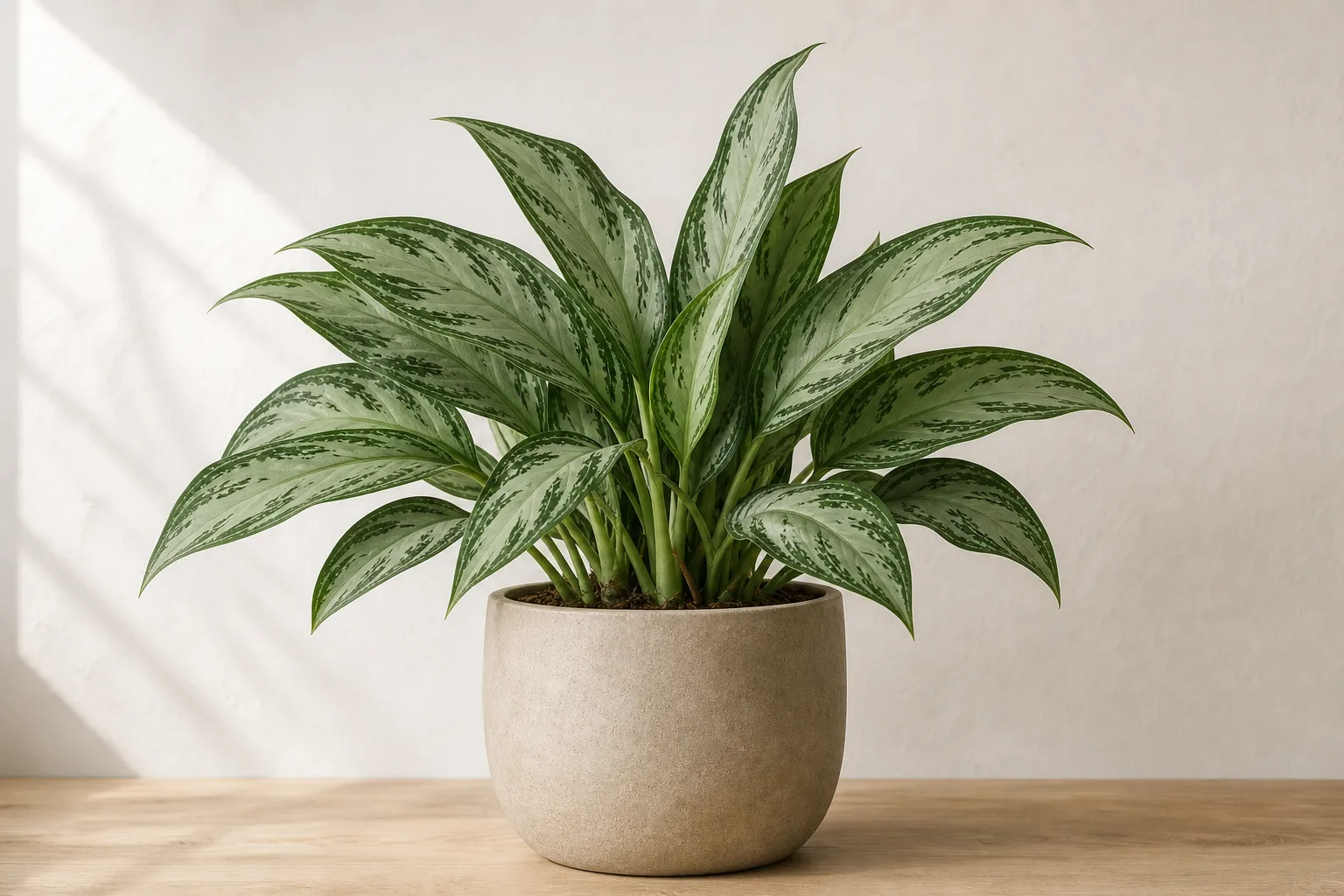
Aglaonema commutatum
Chinese evergreen (Aglaonema commutatum) is a slow-growing foliage plant prized for its patterned, silver-and-green leaves and remarkable tolerance of low indoor light. Native to the Philippines and Sulawesi in Central Malesia, it sits well on a desk or in a dim corner where few other plants thrive. It is a durable, beginner-friendly houseplant, but - like other aroids - it is toxic if chewed.
 beginner
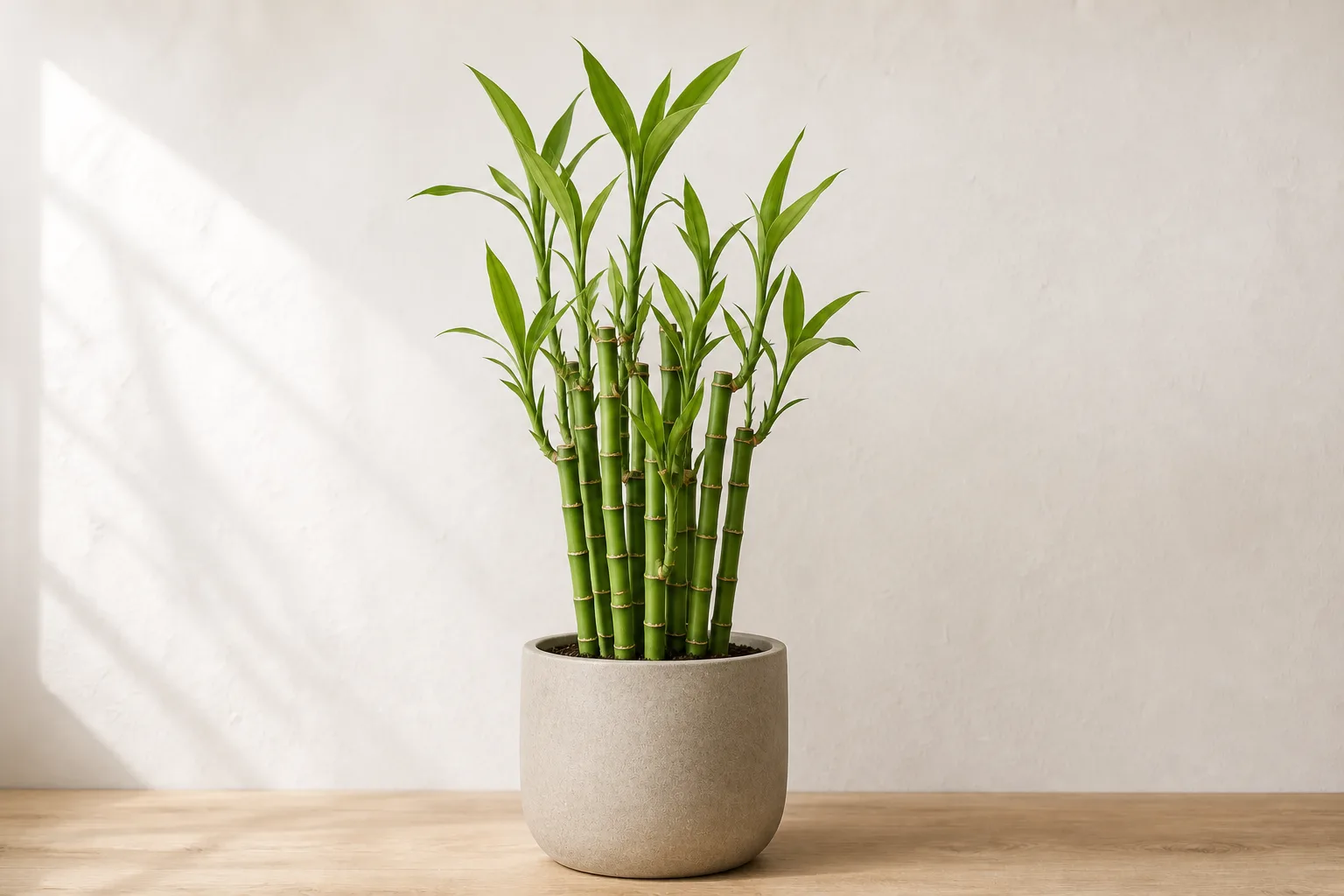
Dracaena sanderiana
Lucky bamboo (Dracaena sanderiana) is not bamboo at all but a tropical African dracaena with fleshy, bamboo-like canes, often trained into spirals, braids, or hearts. It grows happily in water with pebbles or in moist soil, making it one of the easiest and most symbolic houseplants.
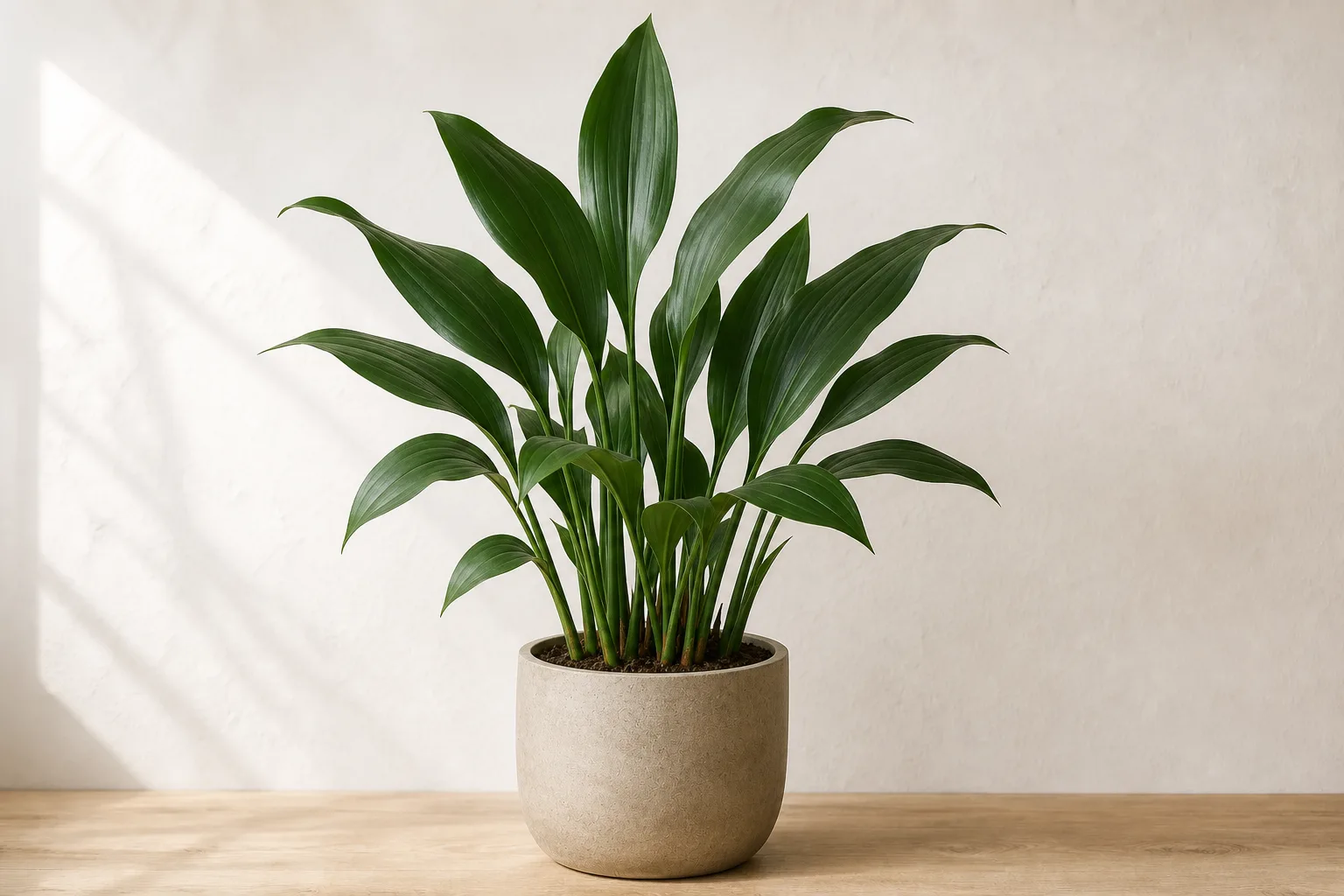 Pet-friendlier
Aspidistra elatior
Cast iron plant (Aspidistra elatior) is a shade-tolerant perennial from Japan, grown for its arching, glossy, lance-shaped leaves that rise directly from a creeping rhizome. Its famous toughness - handling low light, drought, and neglect - makes it one of the most forgiving houseplants.
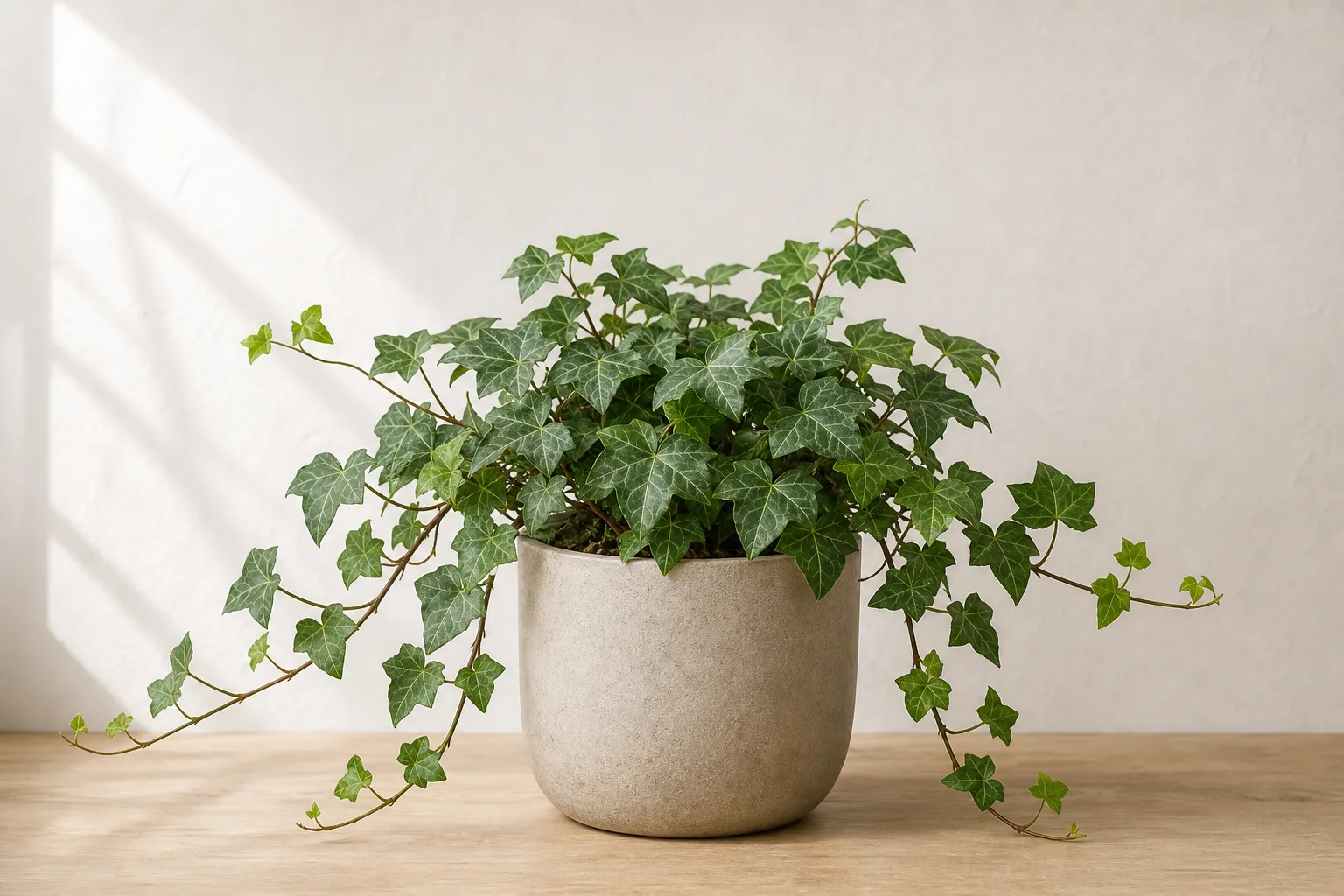 intermediate
Hedera helix
English ivy (Hedera helix) is a vigorous evergreen vine from Europe that clings by aerial rootlets and trails or climbs with equal ease. Indoors it is grown for its lobed, glossy leaves in hanging baskets, though it needs cool-to-moderate conditions and regular pest checks.
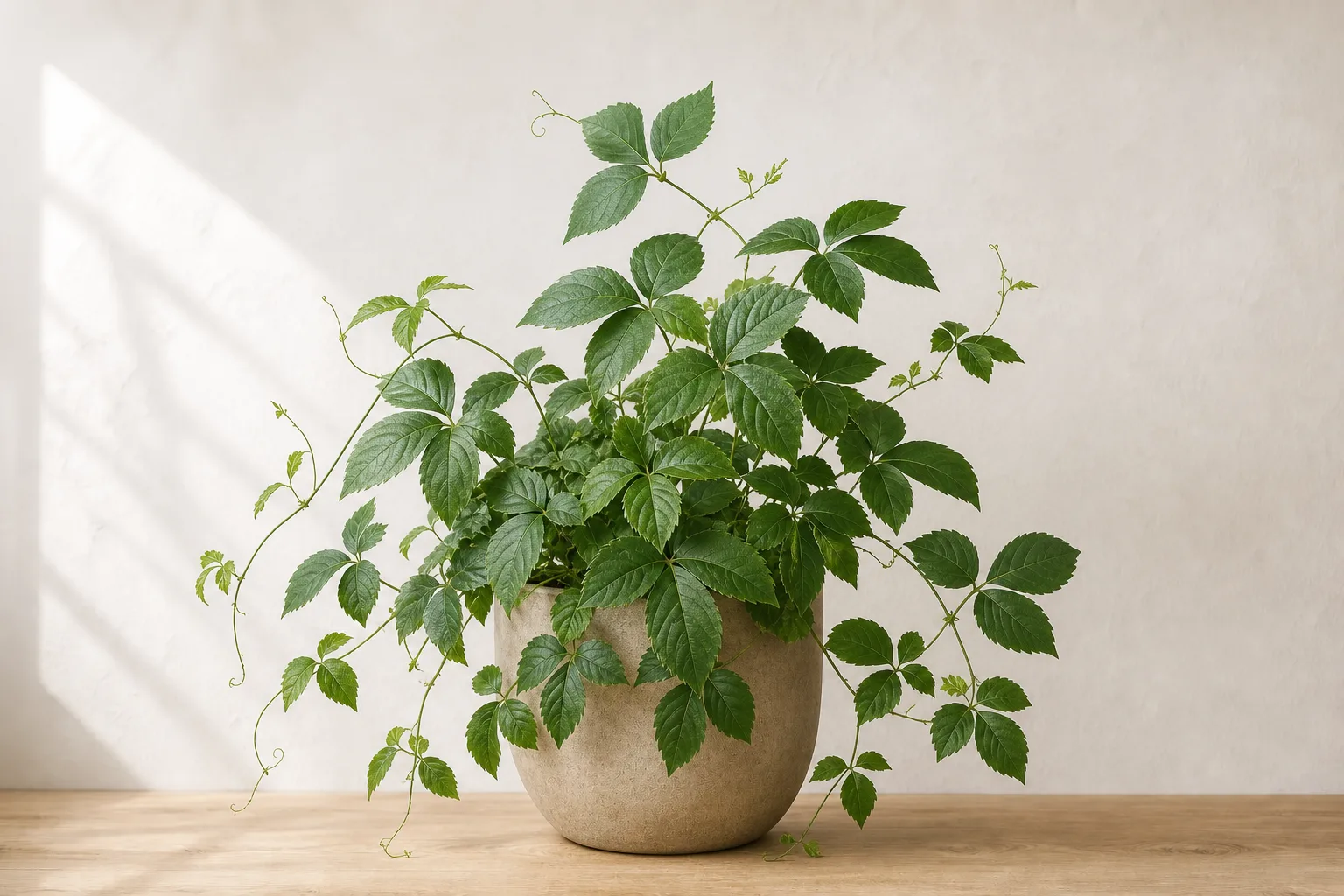 Pet-friendlier
Cissus rhombifolia
Grape ivy (Cissus alata, long known as Cissus rhombifolia) is a subtropical evergreen vine in the grape family, native from Mexico to Bolivia and Trinidad. Its glossy, toothed, three-part leaves trail gracefully from a hanging basket or climb a trellis by forked tendrils.
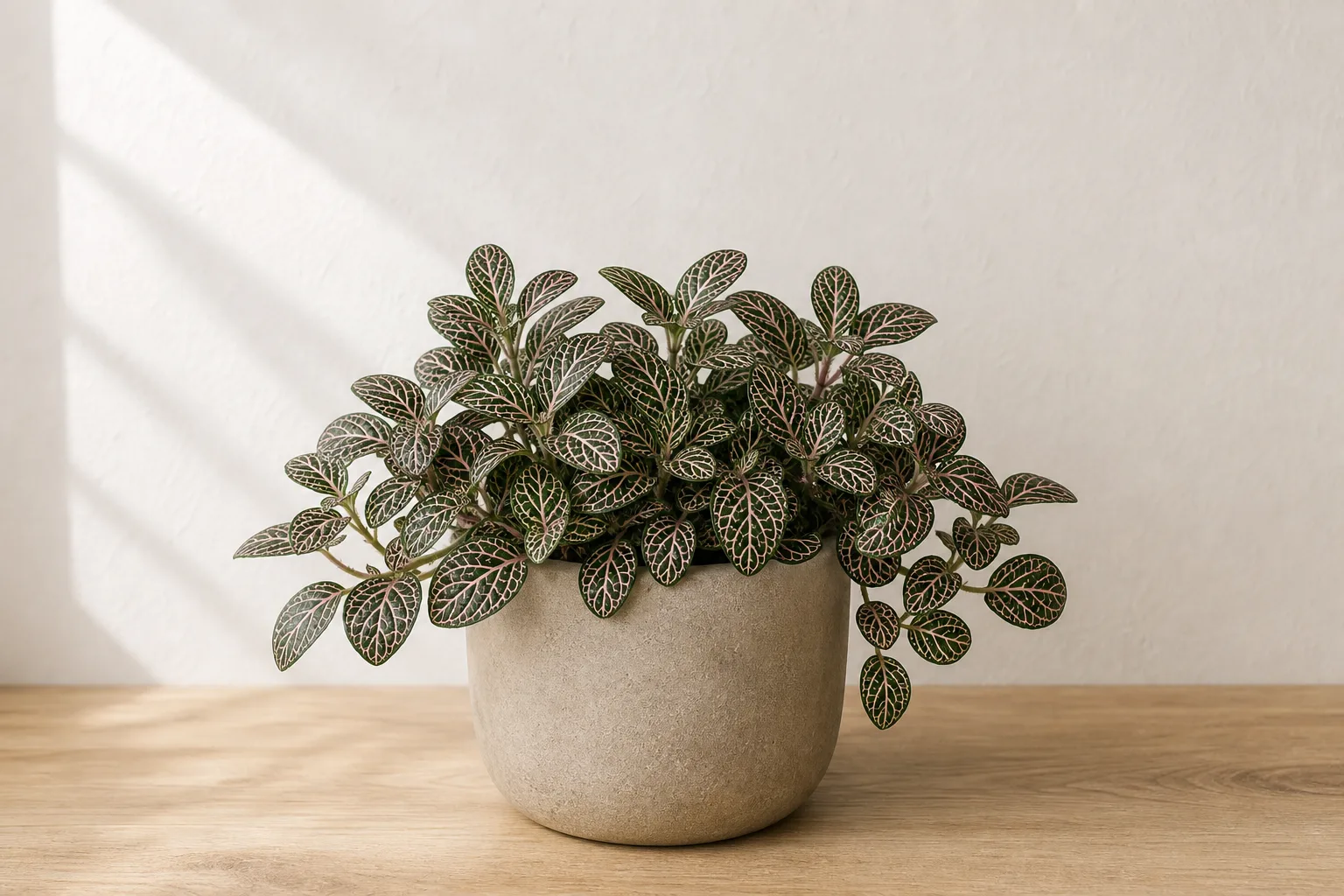 Pet-friendlier
Fittonia albivenis
Nerve plant (Fittonia albivenis) is a creeping evergreen from the tropical rainforests of South America, prized for deep olive-green leaves netted with white, pink, or red veins. It is a small, low-growing plant that thrives in humid terrariums, pots, and hanging baskets.
 Pet-friendlier
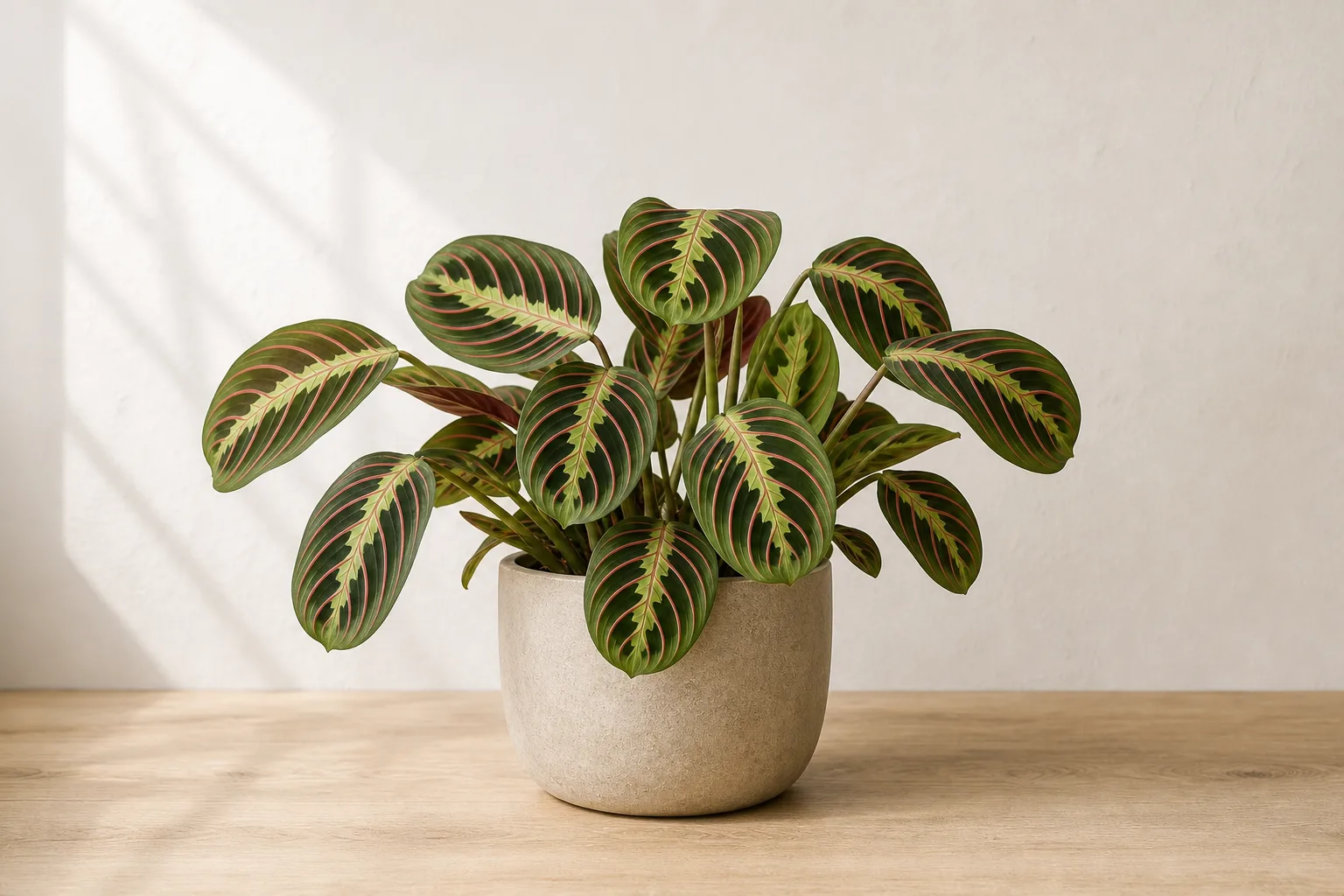
Maranta leuconeura
Prayer plant (Maranta leuconeura) is a low-growing tropical perennial from Brazil whose leaves fold upward at night like hands in prayer, then flatten again by day. Its oval leaves are marked with striking fishbone-pattern veins and dark blotches along the midrib.
 Pet-friendlier
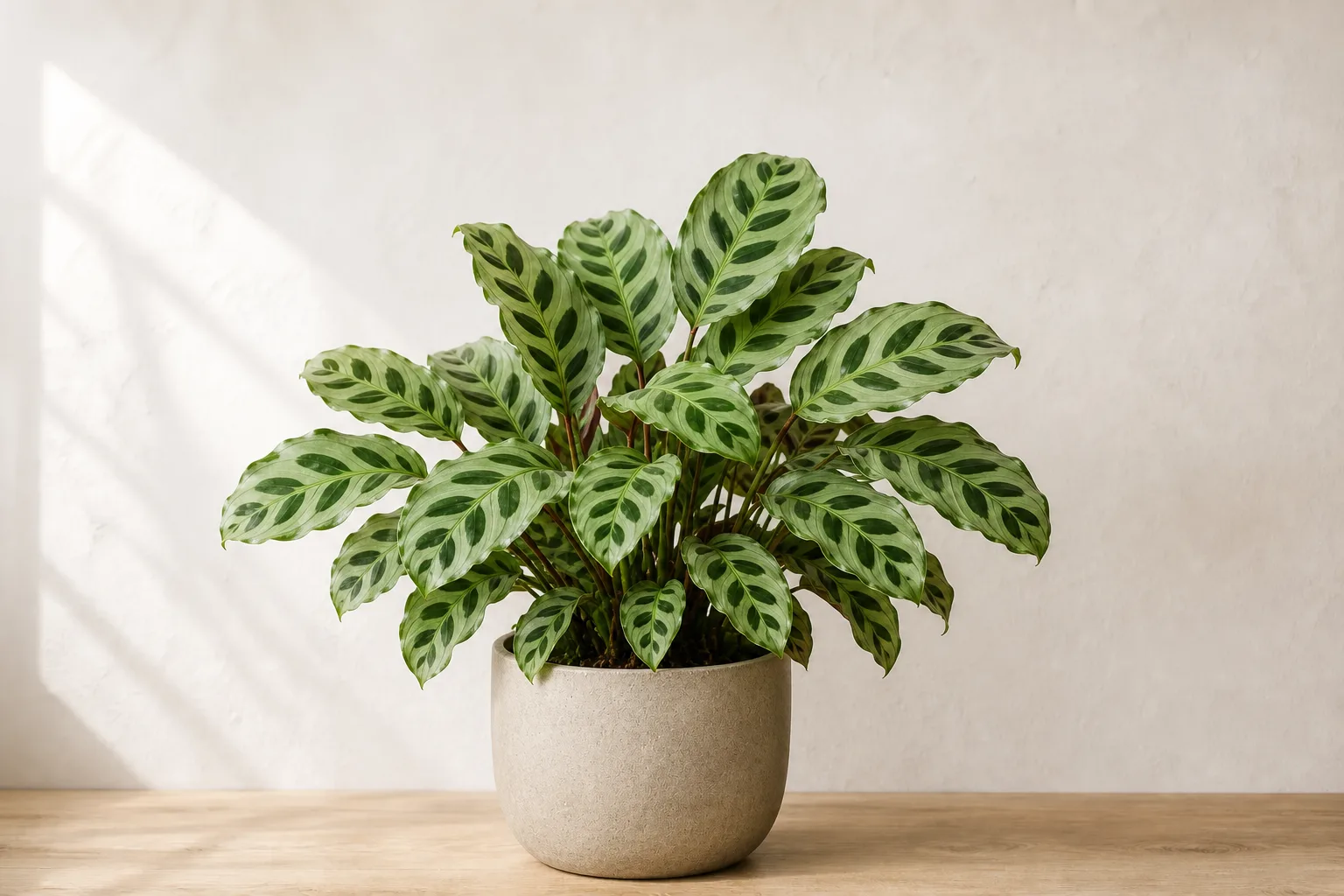
Goeppertia makoyana
Peacock plant (Goeppertia makoyana, long known as Calathea makoyana) is a tropical perennial from eastern Brazil grown for its papery, oval leaves patterned like peacock tail feathers, with dark blotches along the veins and rich purple undersides. Like other prayer plants, its leaves fold up in the evening and reopen at sunrise.
 Pet-friendlier
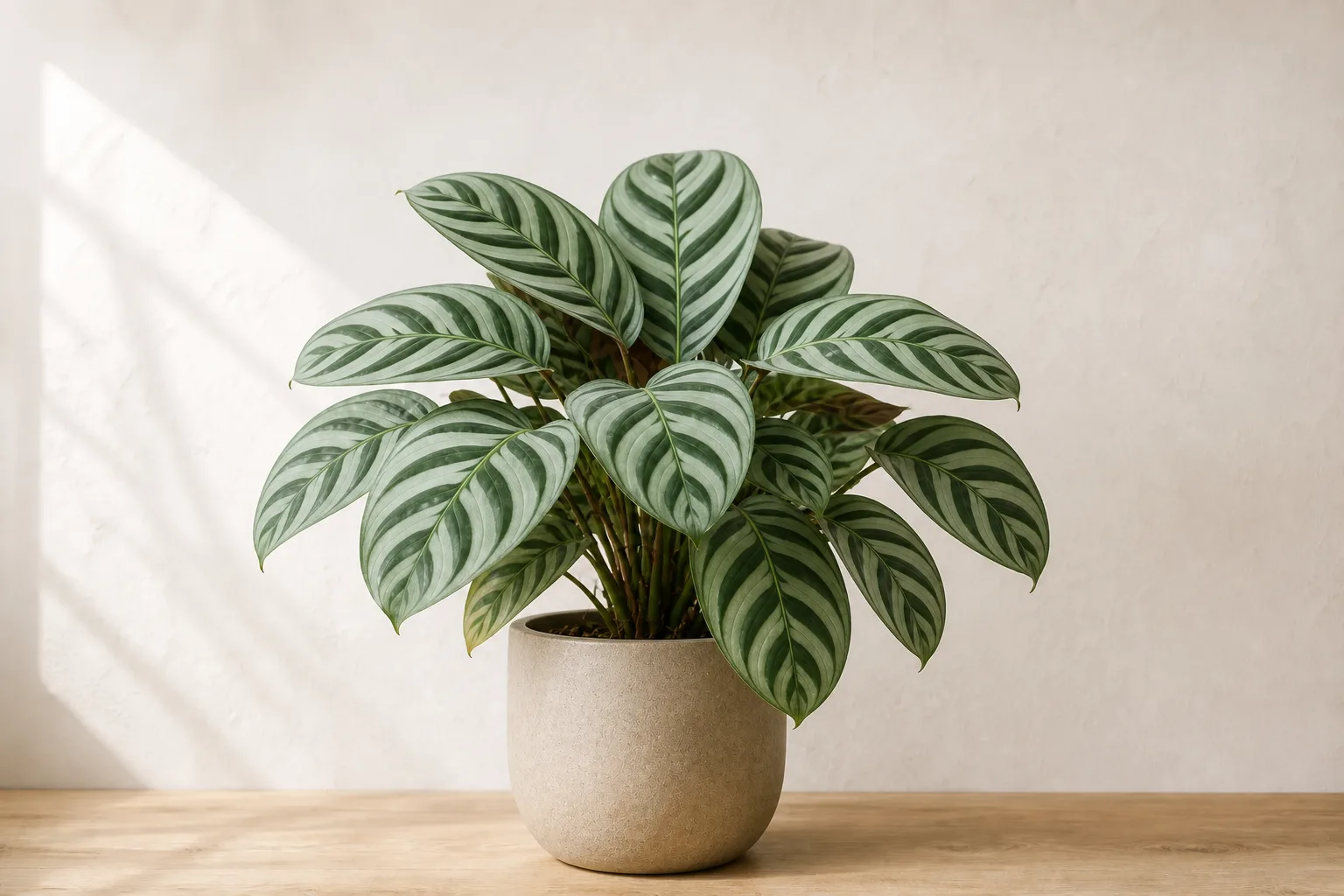
Ctenanthe burle-marxii
Ctenanthe burle-marxii is a compact Brazilian prayer-plant relative grown for its fishbone-patterned leaves - pale green with dark green bands along the midrib and purple undersides. Native to Brazil's Espirito Santo, it folds its leaves up at night, tolerates lower light than many tropicals, and stays a tidy tabletop size indoors.
 Pet-friendlier
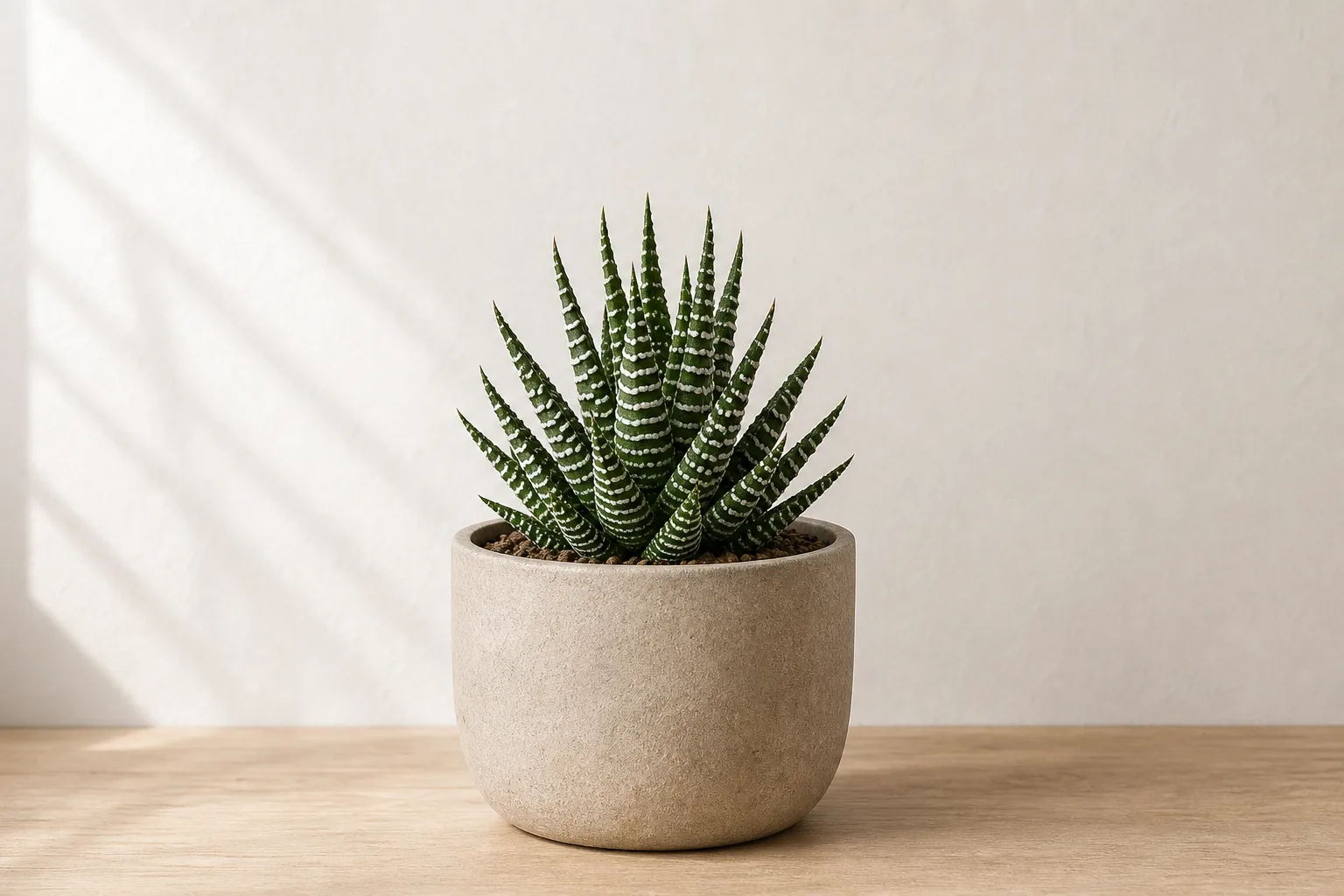
Haworthiopsis attenuata
Haworthiopsis attenuata, the zebra haworthia, is a compact South African succulent with dark green rosettes of pointed leaves banded in white tubercles. Slow-growing, drought-tolerant, and easily propagated from offsets, it is one of the most reliable succulents for a bright windowsill or small desk.
 Pet-friendlier
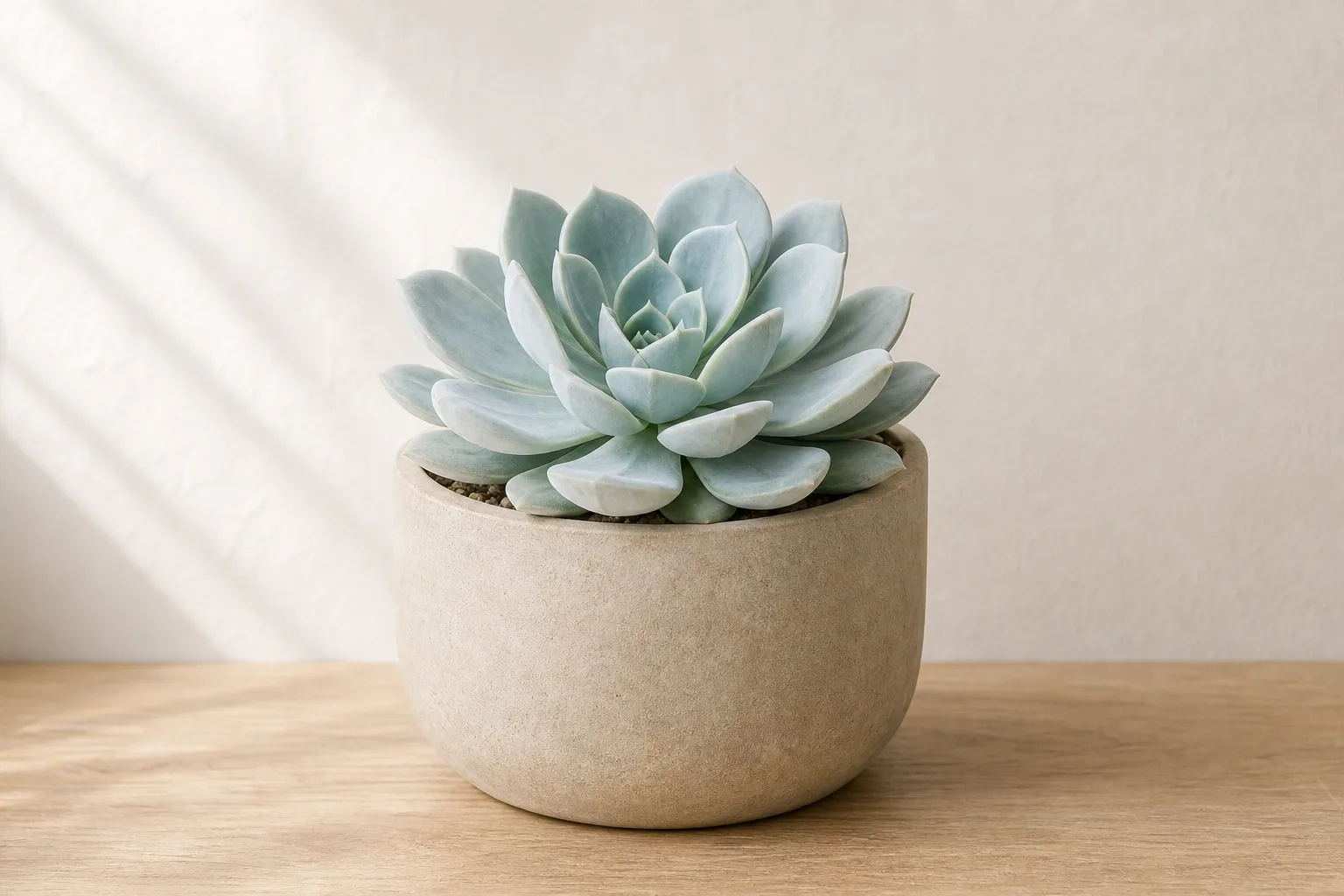
Echeveria elegans
Echeveria elegans, the Mexican snowball, is a rosette-forming succulent from northeastern Mexico with pale blue-green leaves coated in a powdery bloom. Its tight, symmetrical rosettes, pink winter flowers, and easy propagation from offsets or leaves make it a classic for sunny windowsills and succulent collections.
 beginner
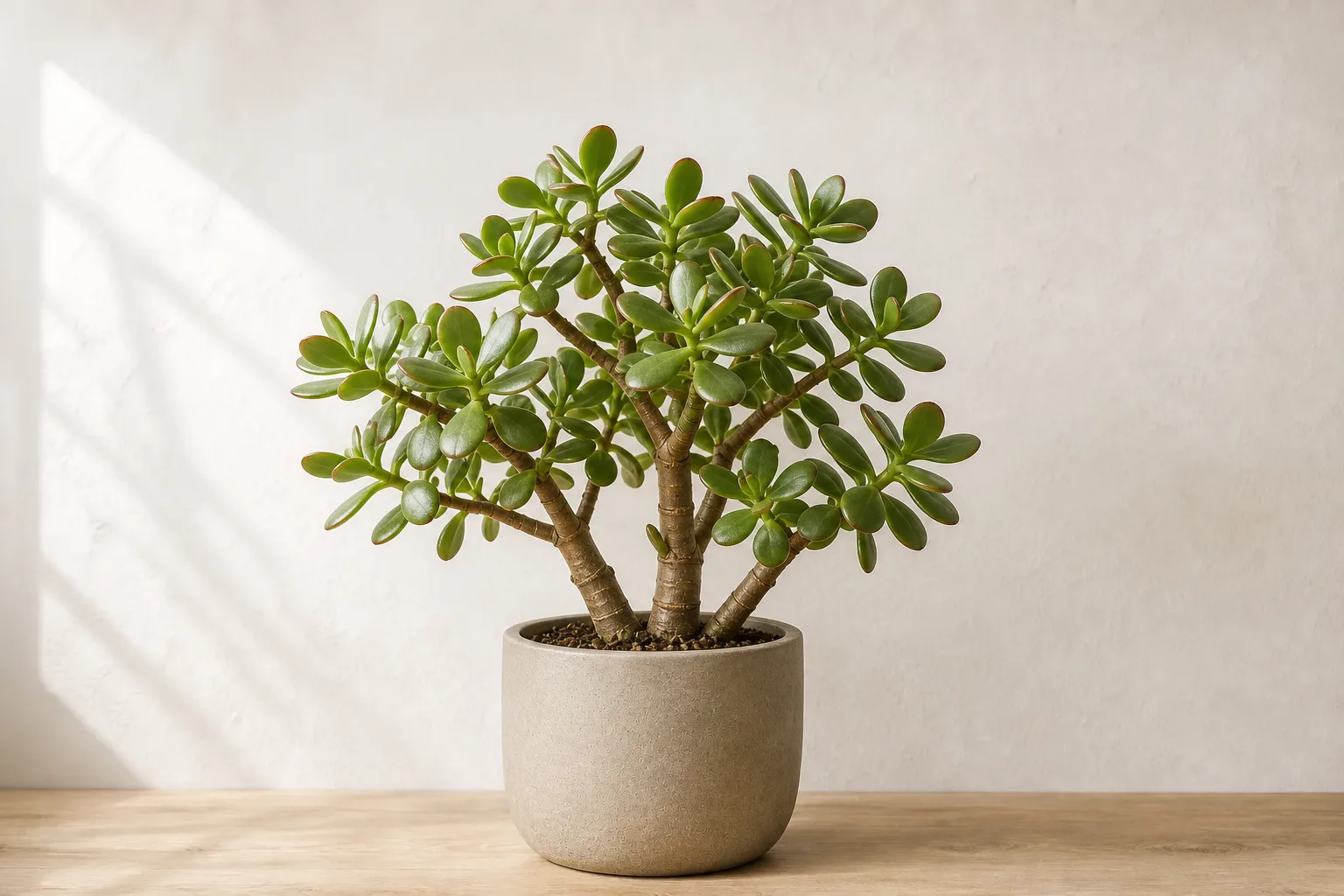
Crassula ovata
Crassula ovata, the jade plant, is a long-lived woody succulent from South Africa and Mozambique with glossy, oval leaves on thickening, trunk-like stems. It forms a miniature-tree silhouette over years, needs bright light and a real dry-down between waterings, and is toxic to cats and dogs if chewed.
 Pet-friendlier
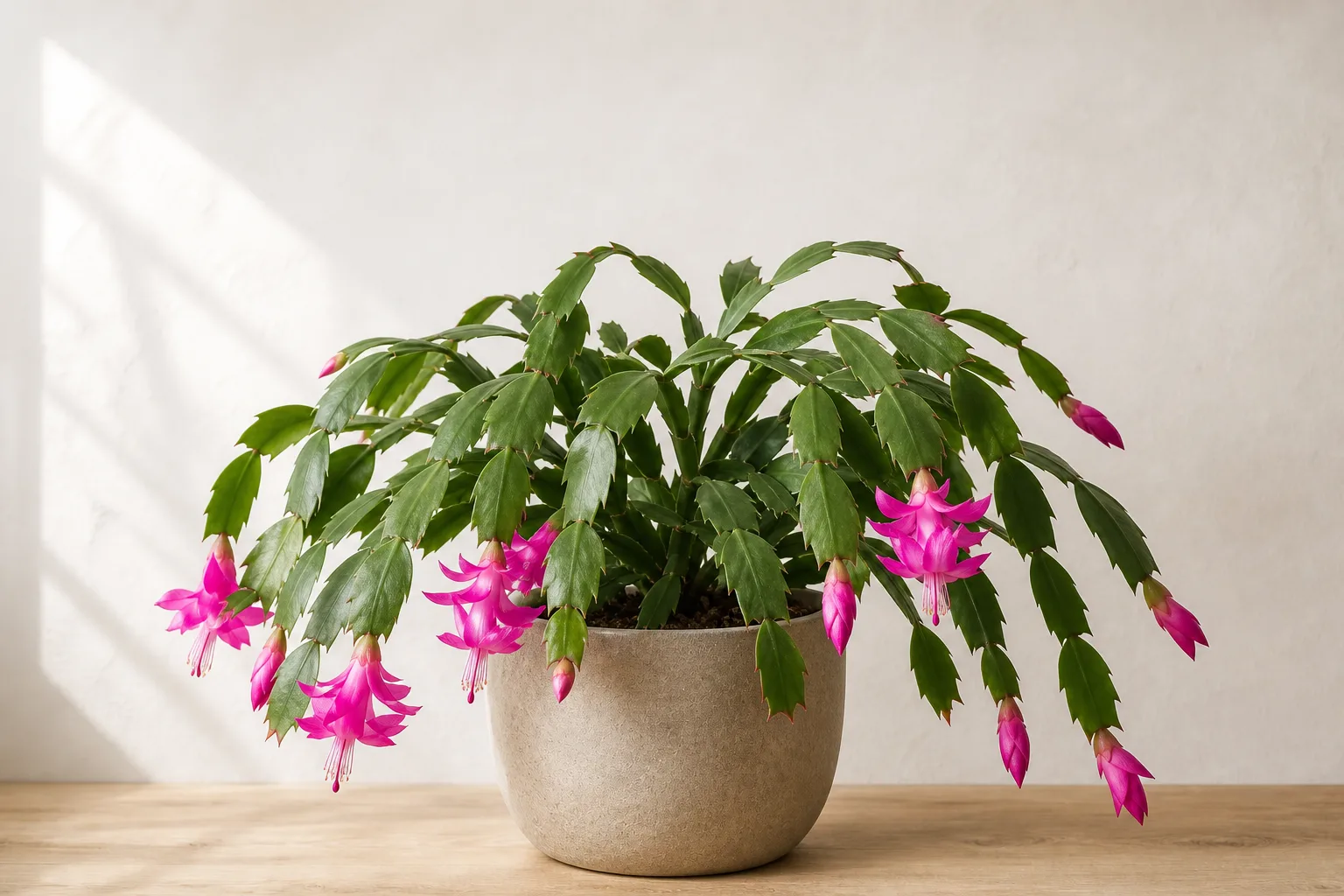
Schlumbergera truncata
Schlumbergera truncata, the Christmas or Thanksgiving cactus, is an epiphytic cactus from the coastal mountains of southeastern Brazil with flattened, segmented stems and vivid winter flowers. Unlike desert cacti it wants filtered light and regular moisture, and it is listed as non-toxic to cats and dogs.
 Pet-friendlier
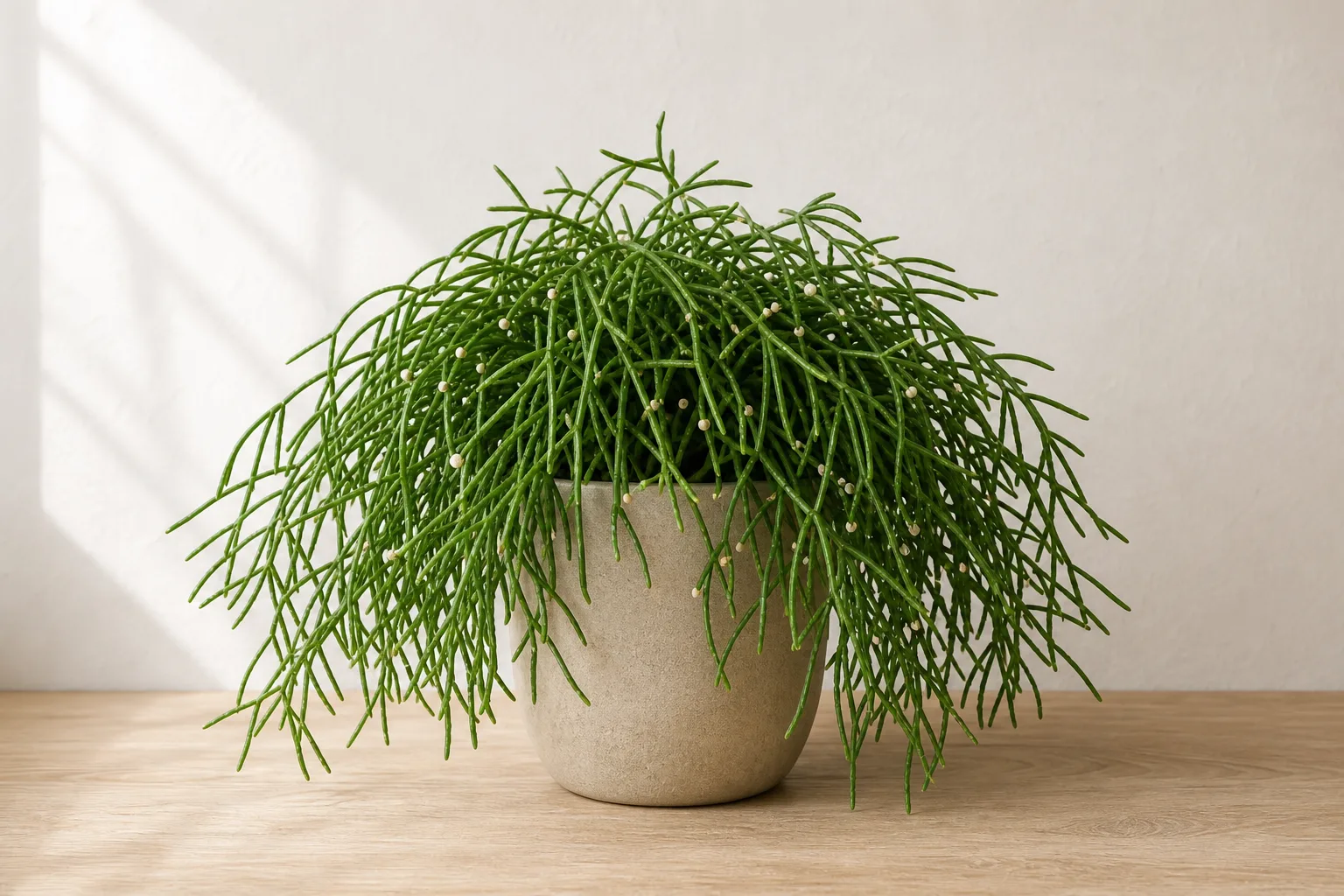
Rhipsalis baccifera
Rhipsalis baccifera, the mistletoe cactus, is a spineless epiphytic cactus with slender, trailing green stems and small white or pale pink berries. One of the world's most widely distributed cacti, it makes an elegant hanging-basket plant that prefers filtered light and more even moisture than desert cacti.
 intermediate
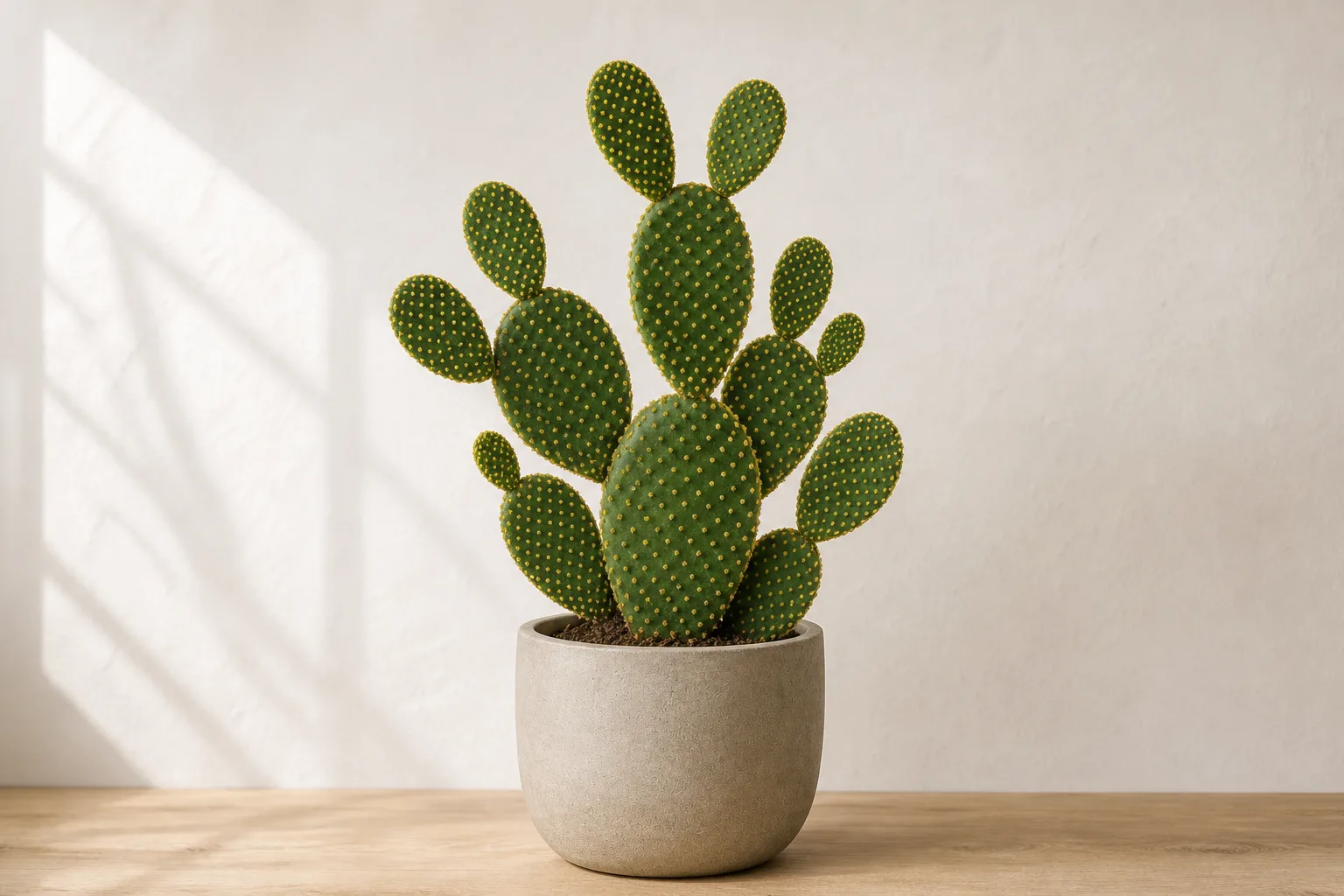
Opuntia microdasys
Opuntia microdasys, the bunny ears cactus, is a Mexican desert cactus with flattened, pad-like stems covered in fine golden glochids instead of true spines. It is a striking, slow-growing windowsill plant, but the barbed glochids detach at the slightest touch and must be treated with care.
 intermediate
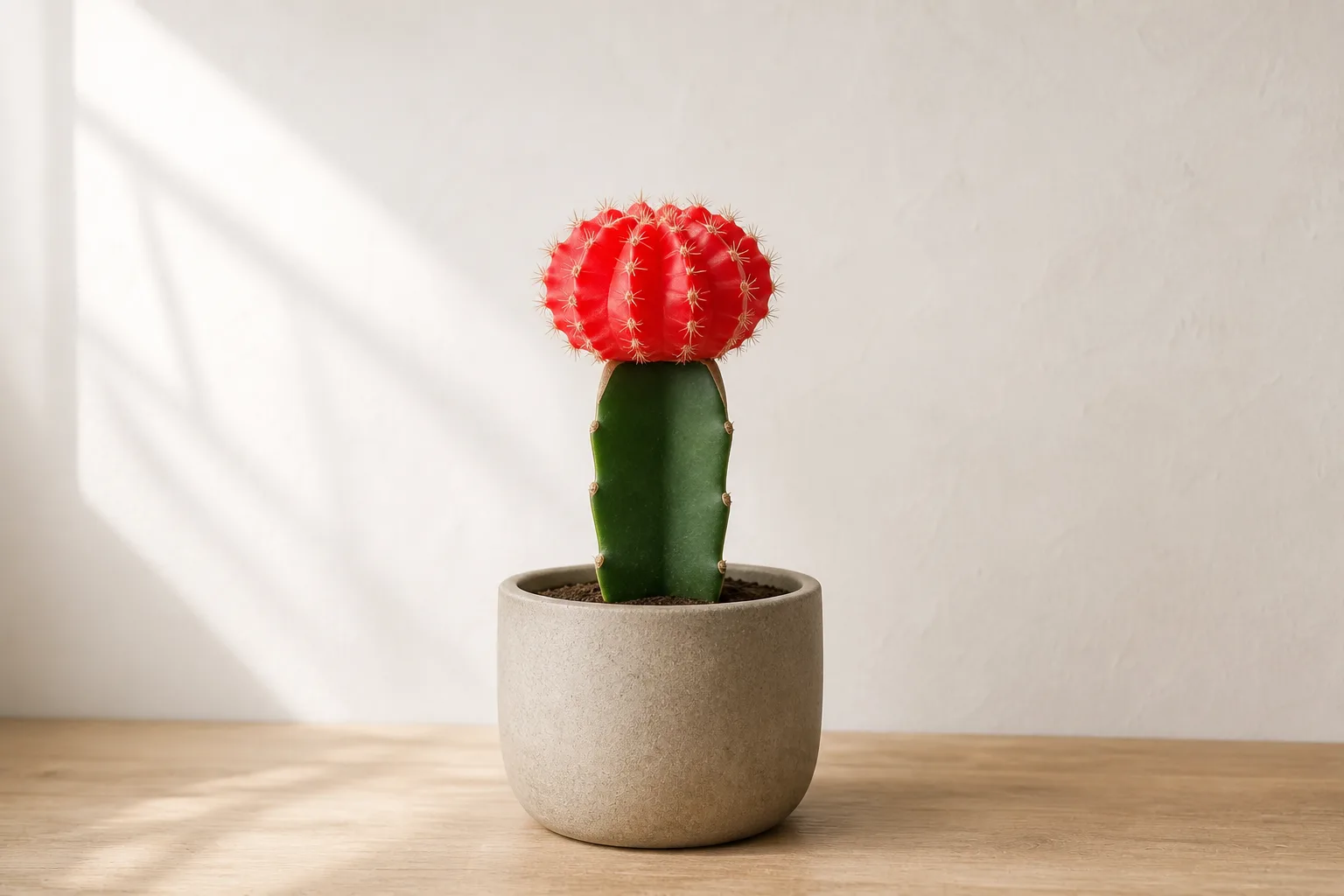
Gymnocalycium mihanovichii
Gymnocalycium mihanovichii, the moon cactus, is a small South American cactus whose chlorophyll-free 'Hibotan' mutants are grafted onto green rootstocks to create the colorful novelty houseplant. The colorful top cannot photosynthesize on its own, so the graft is the whole point - and the whole vulnerability.
 Pet-friendlier
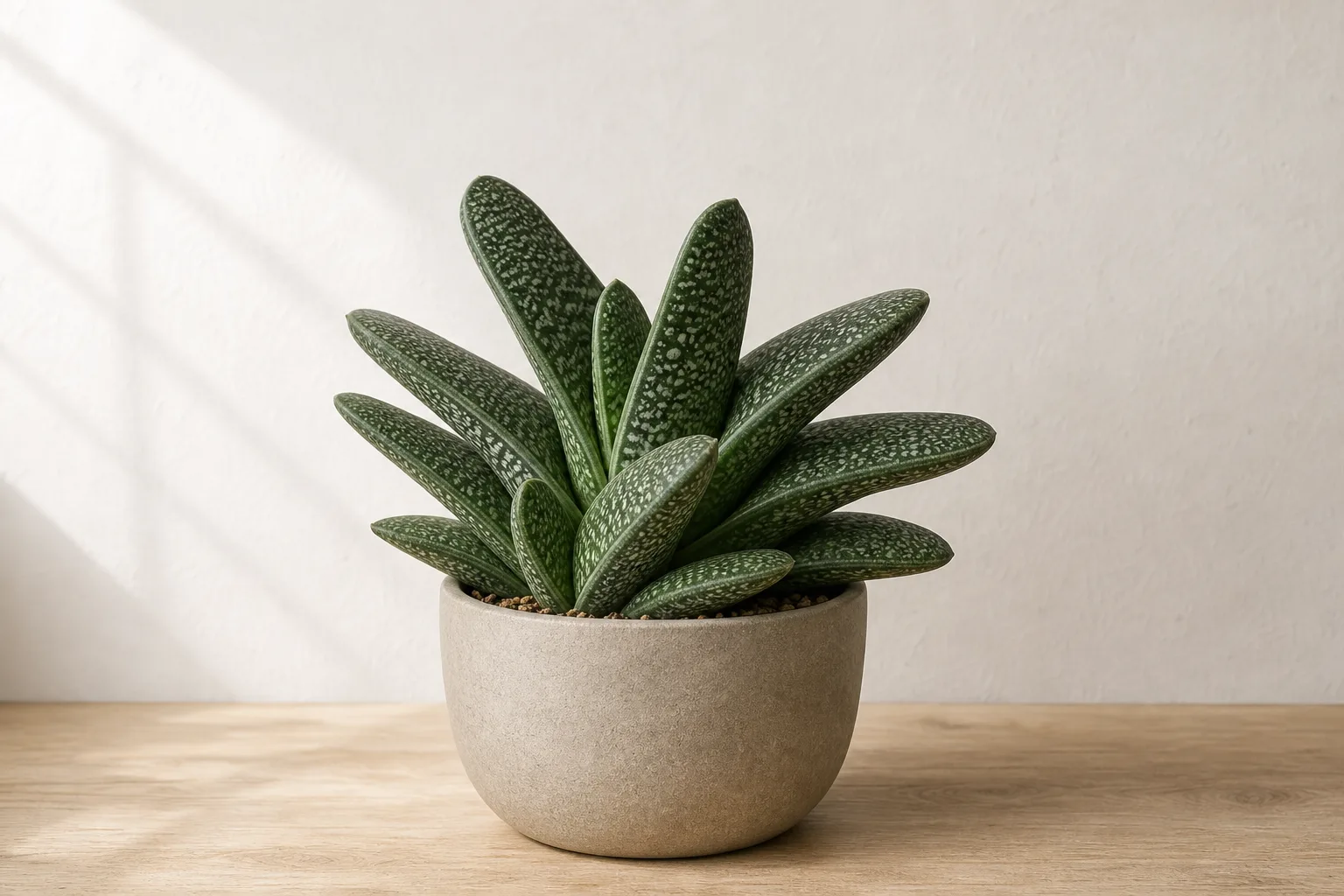
Gasteria bicolor
Ox tongue (Gasteria bicolor) is a compact, slow-growing succulent with thick, tongue-shaped leaves mottled with pale speckles and soft bands. Native to the rocky thickets of South Africa's Eastern Cape, it forms tidy rosettes or two-ranked fans and sends up tubular, stomach-shaped flowers in late winter to spring.
 Pet-friendlier
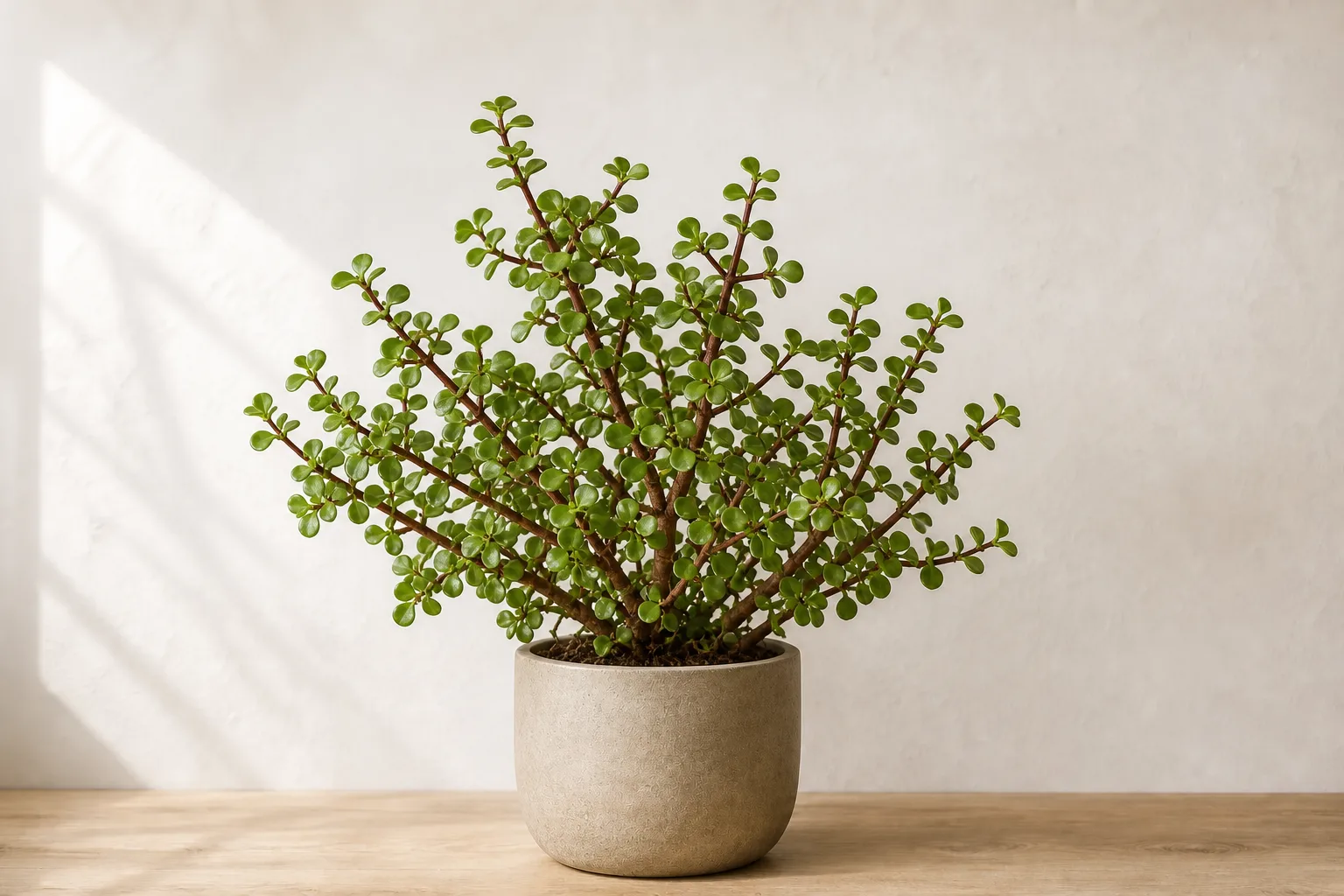
Portulacaria afra
Elephant bush (Portulacaria afra) is a branching, soft-wooded succulent with small, glossy green leaves on reddish stems. Native to the thicket vegetation of southern Africa, it is grown as a houseplant and bonsai subject and tolerates drought far better than a soggy pot.
 Pet-friendlier
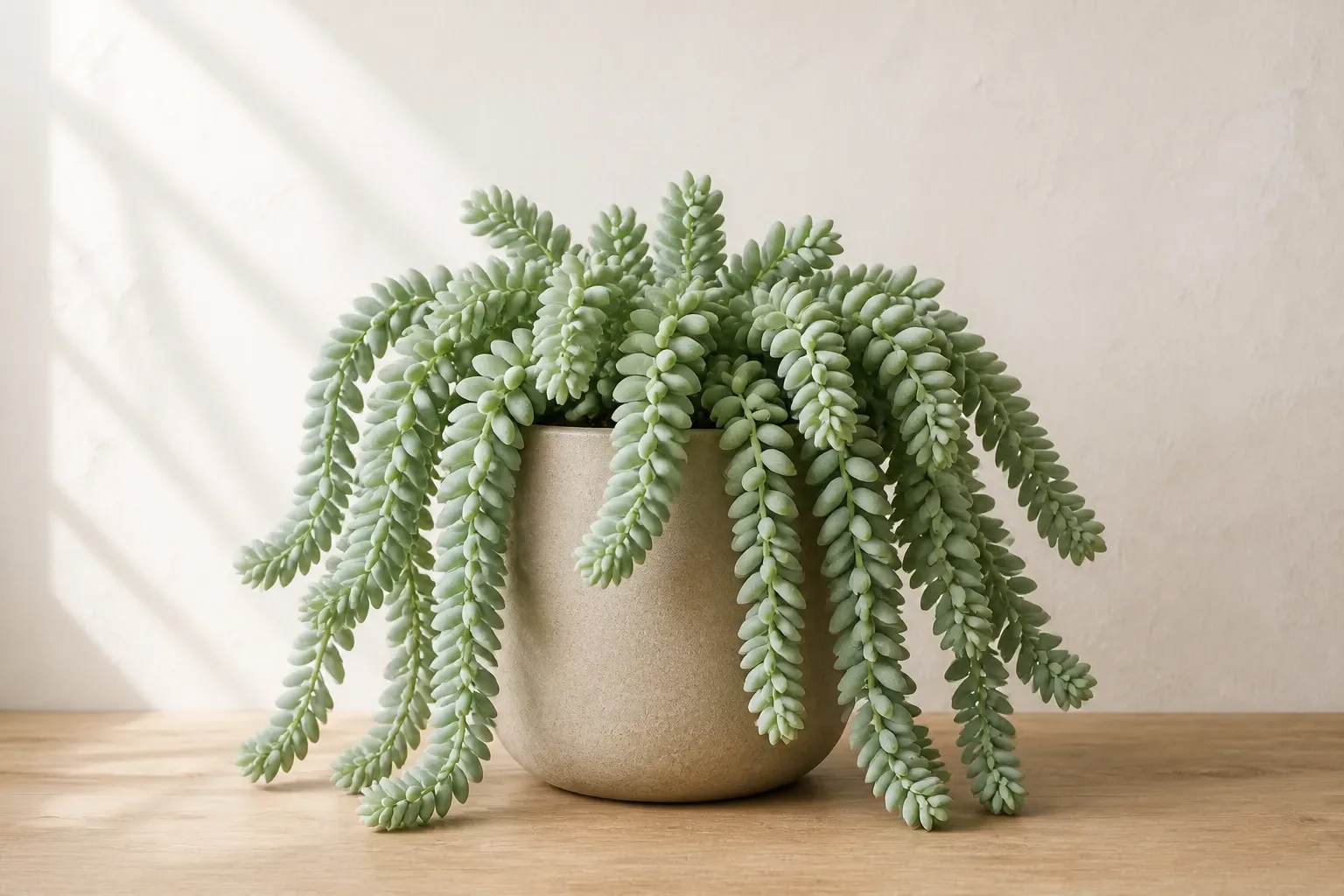
Sedum morganianum
Burro's tail (Sedum morganianum) is a trailing succulent with densely packed, blue-green, bead-like leaves that cascade from hanging baskets. Native to seasonally dry cliffs in southern Mexico, it is prized for its braided 'tails' but its leaves detach at the lightest touch.
 Pet-friendlier
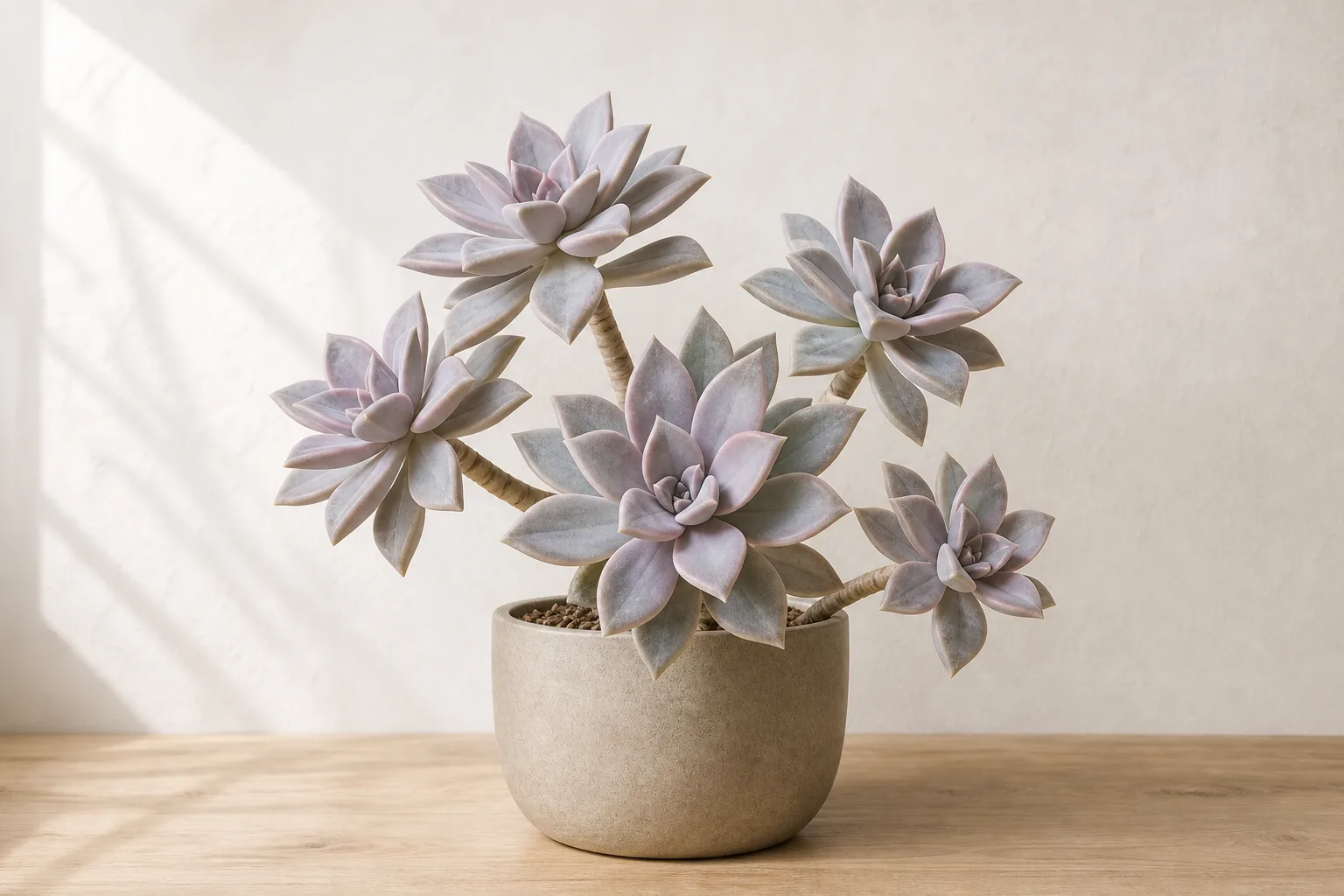
Graptopetalum paraguayense
Ghost plant (Graptopetalum paraguayense) is a rosette succulent with chalky, gray-green leaves that flush pink in bright light and cool nights. Native to Mexico's Tamaulipas, it trails from pots and roots readily from leaves that fall onto the mix.
 Pet-friendlier
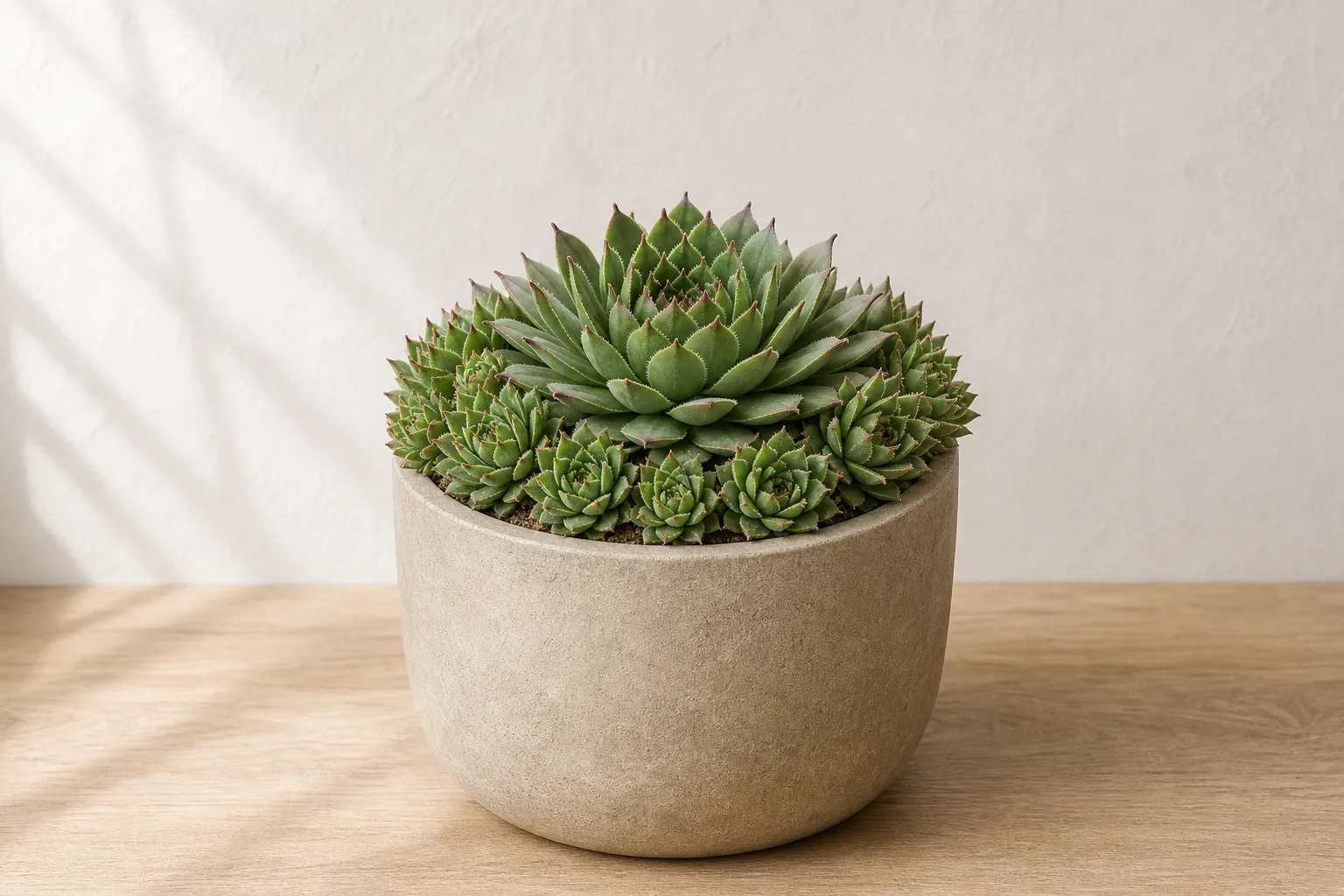
Sempervivum tectorum
Hens and chicks (Sempervivum tectorum) forms tight rosettes of thick, pointed leaves that multiply by offsets ('chicks') around the mother 'hen'. Native to the mountains of southern Europe, it thrives in lean, sharply drained soil and strong light, and the flowering rosette dies after bloom.
 Pet-friendlier
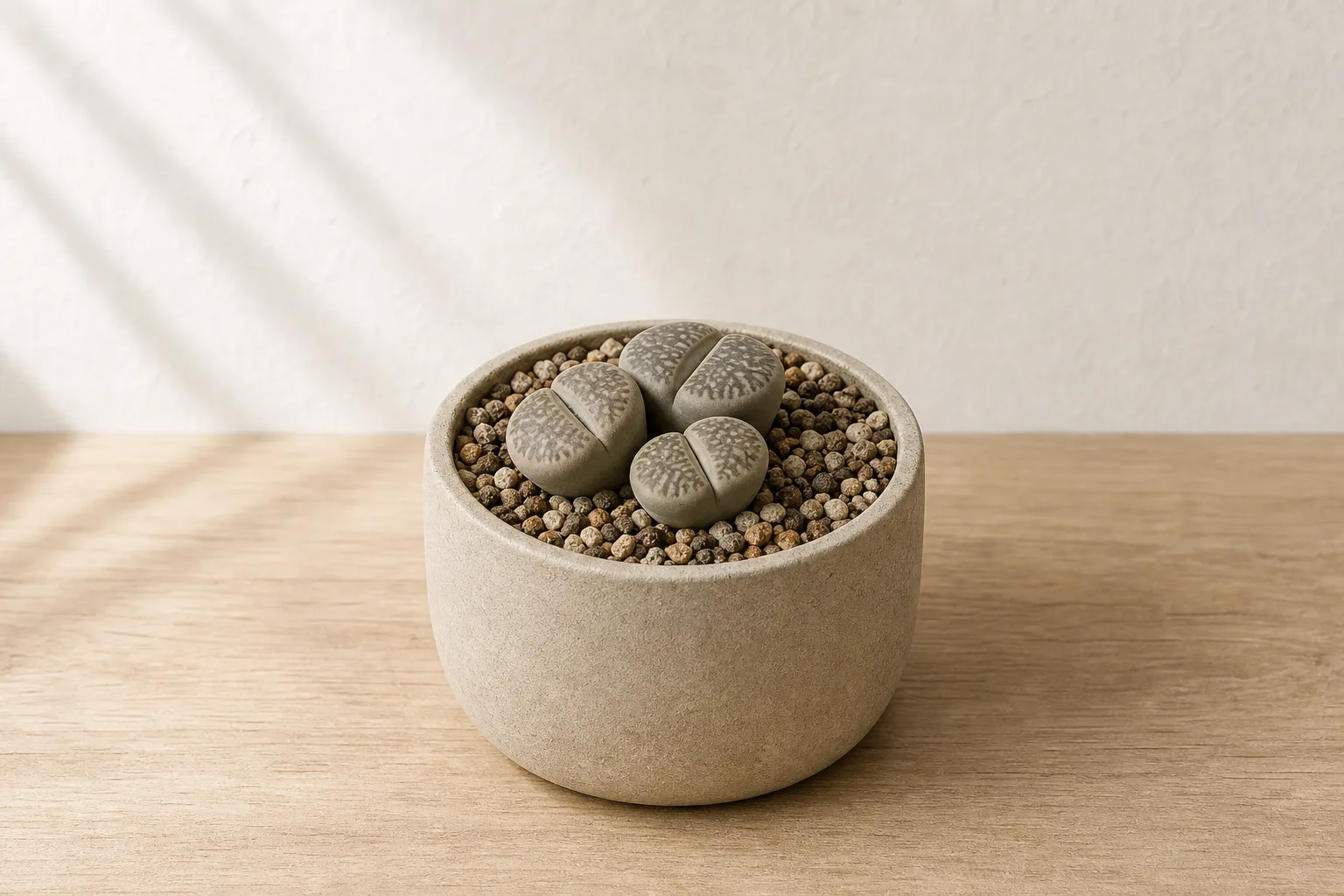
Lithops karasmontana
Living stone (Lithops karasmontana) is a tiny, nearly stemless succulent whose pair of fused, stone-patterned leaves blend into the quartz gravel of its Namibian home. It follows a strict seasonal cycle: it replaces its leaves each year and must be kept dry through much of its rest.
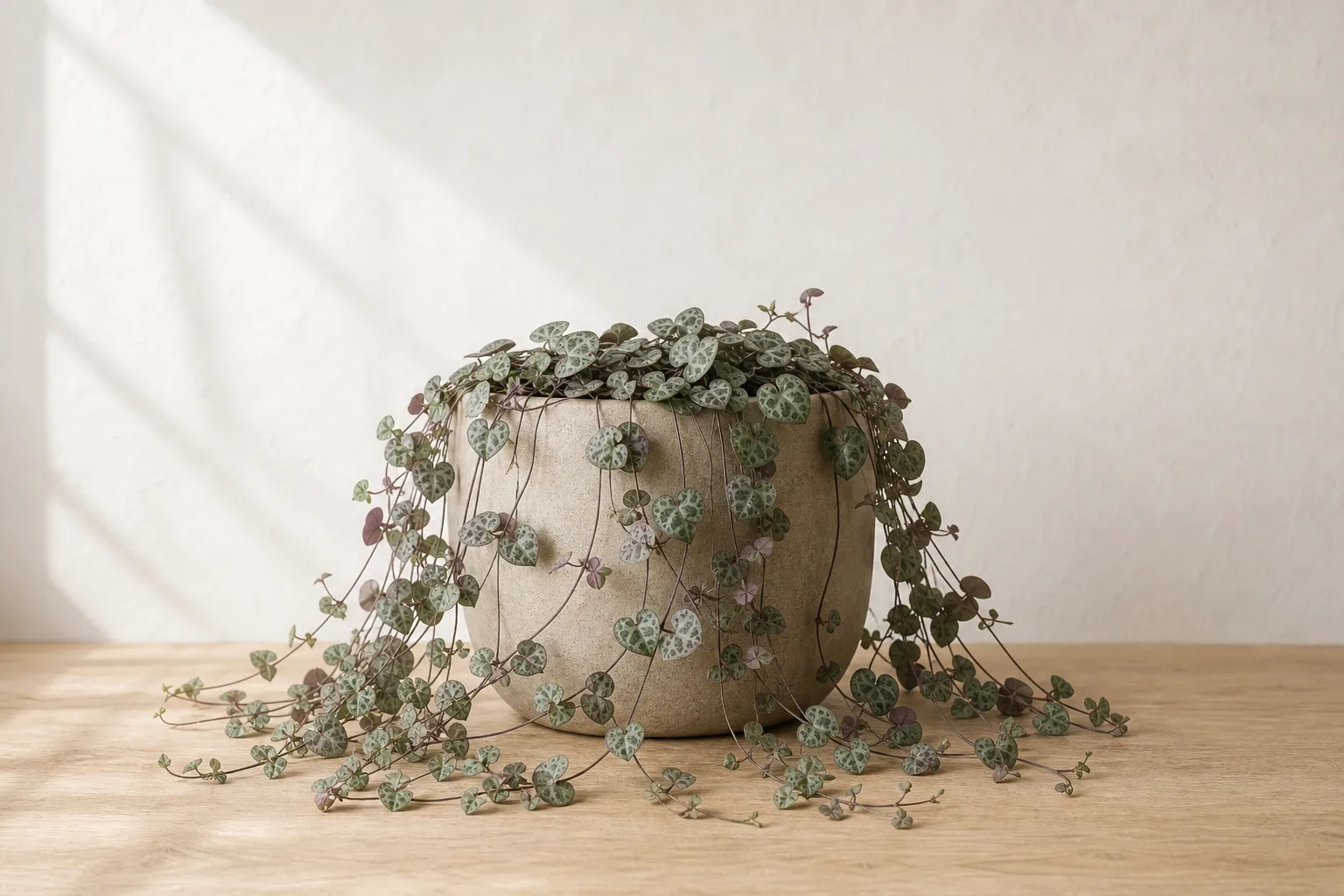 Pet-friendlier
Ceropegia woodii
String of hearts (Ceropegia woodii) is a fine, trailing succulent vine with silver-marbled, heart-shaped leaves on wiry purple stems. Native to southern Africa, it forms aerial tubers along its vines, roots wherever a node touches moist soil, and is commonly listed as non-toxic to cats and dogs.
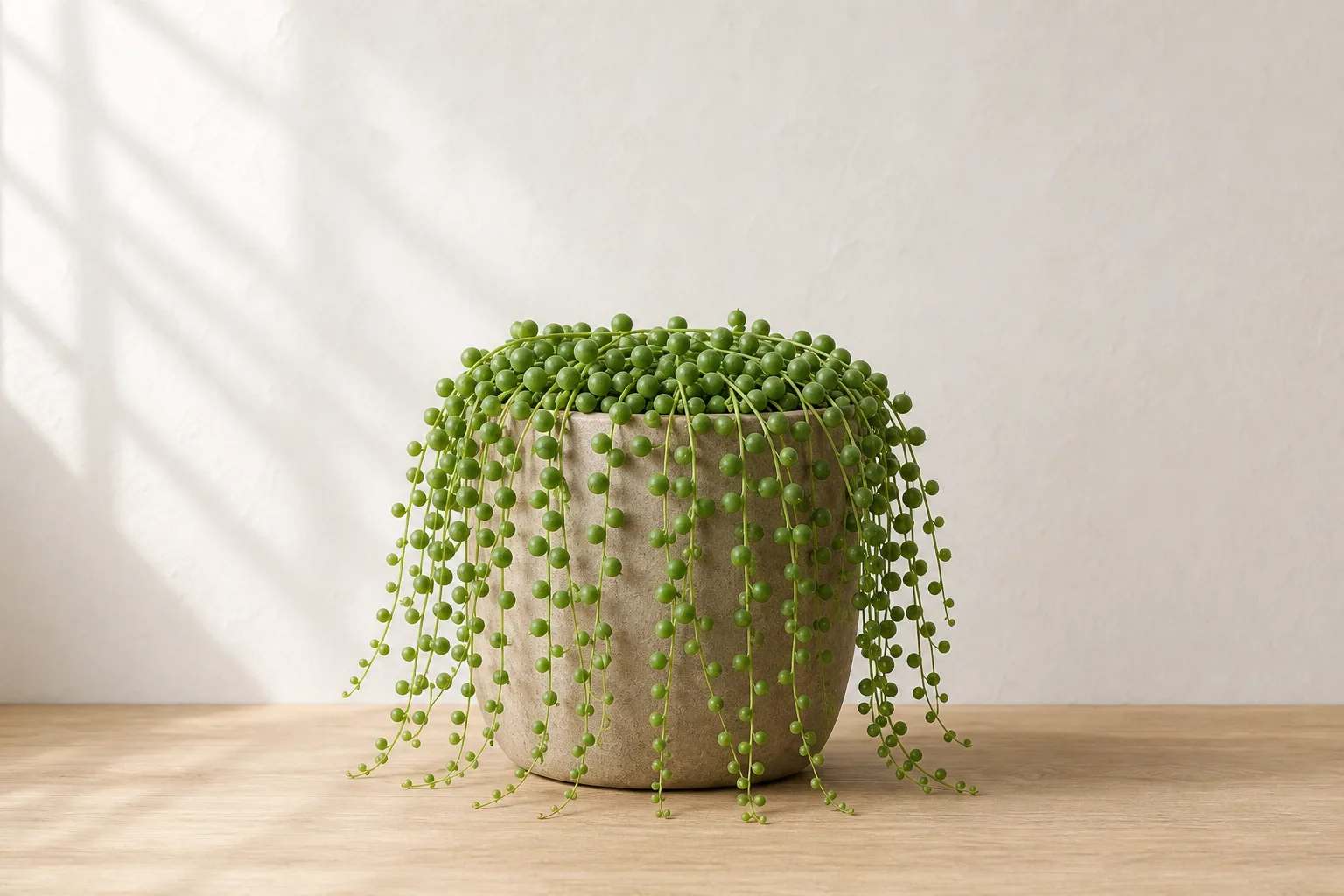 intermediate
Curio rowleyanus
String of pearls (Curio rowleyanus) is a trailing succulent whose spherical, pea-like leaves with translucent 'windows' store water on wiry stems. Native to the drier parts of southwest Africa, it is grown in hanging baskets and is toxic to pets if chewed.
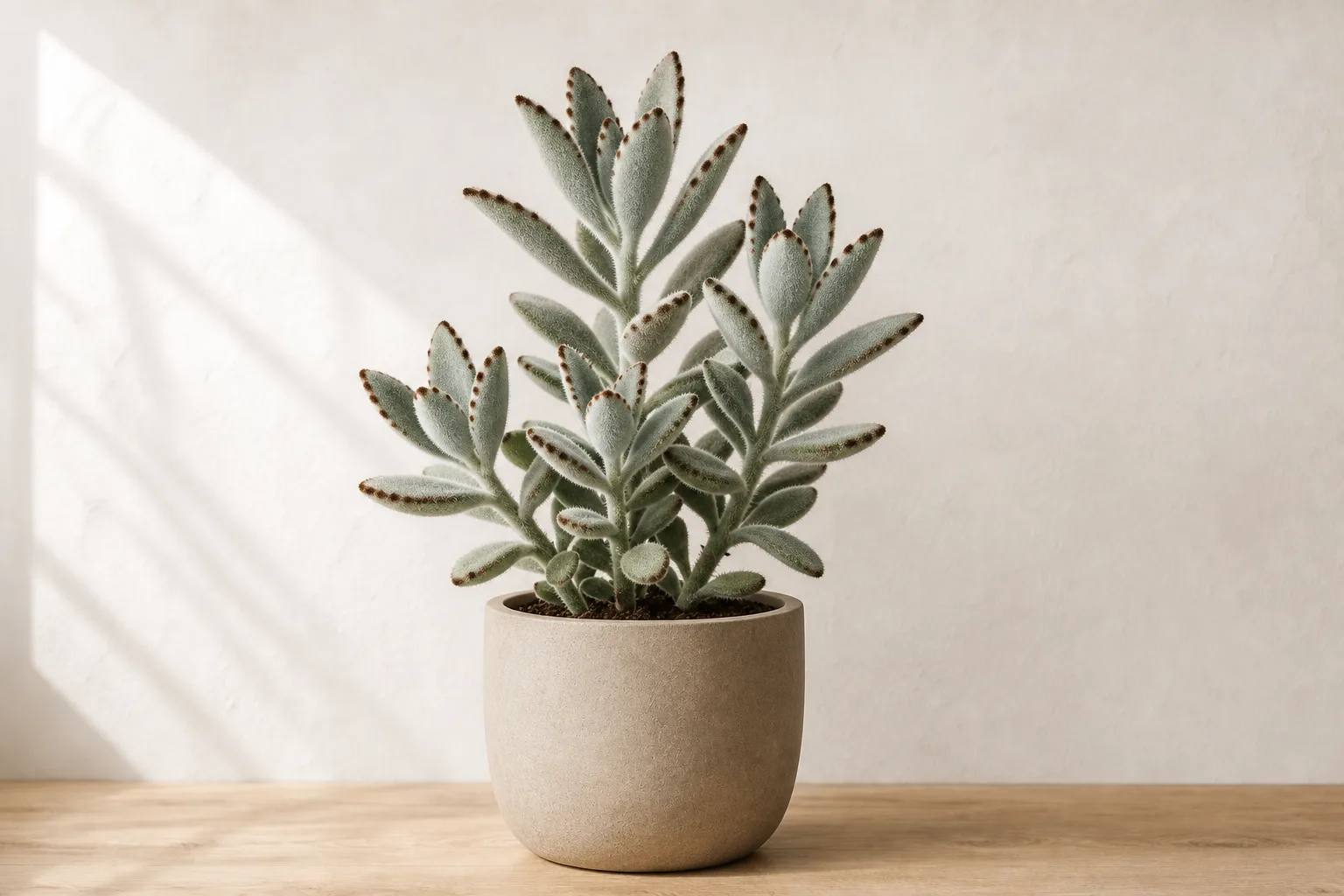 beginner
Kalanchoe tomentosa
Panda plant (Kalanchoe tomentosa) is a fuzzy-leaved succulent with felted, gray-green leaves edged in chocolate-brown. Native to the rocky granite country of central Madagascar, it is a slow, upright grower that is toxic to cats and dogs because of the bufadienolides in its tissues.
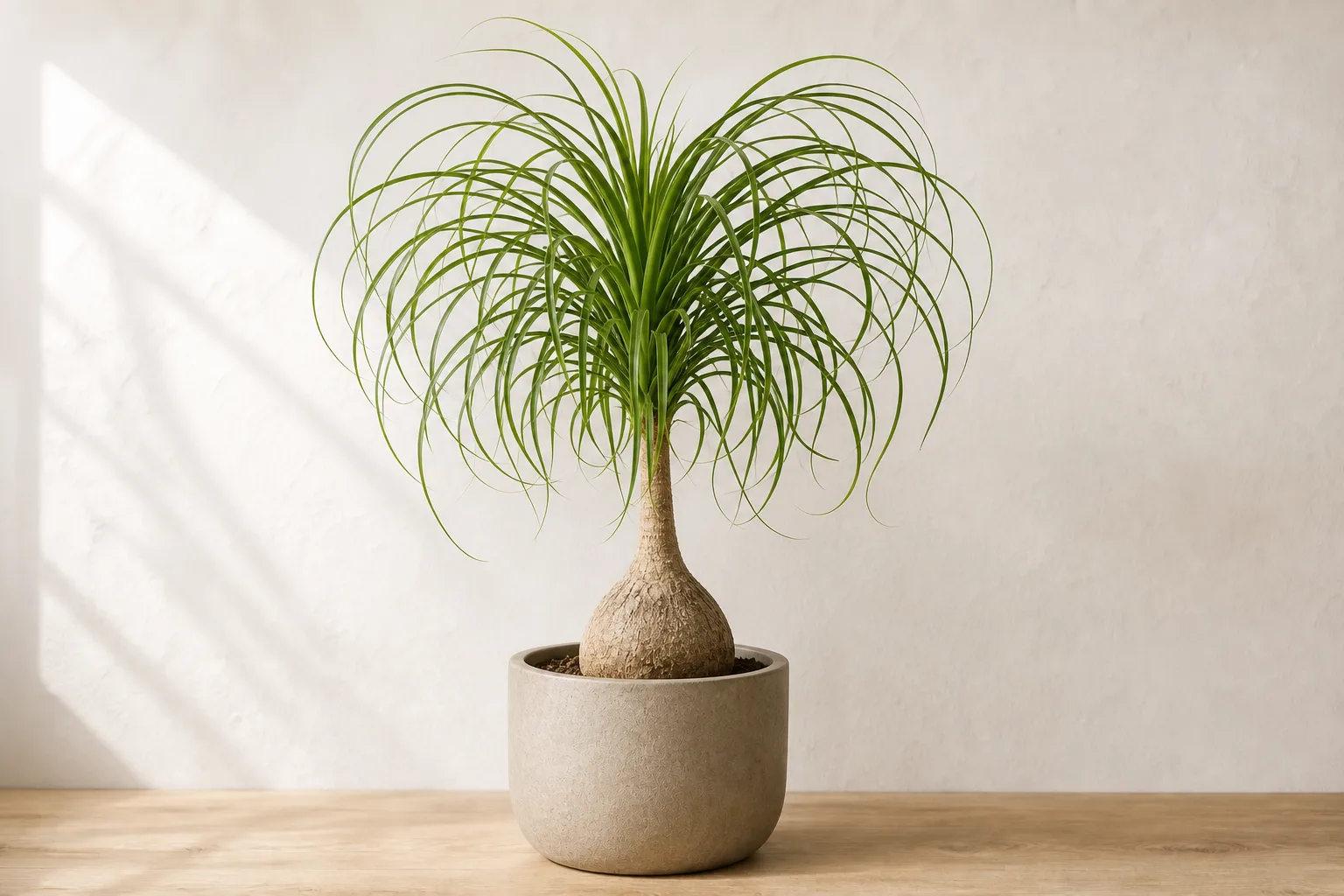 Pet-friendlier
Beaucarnea recurvata
Ponytail palm (Beaucarnea recurvata) is not a true palm but a caudiciform succulent from the semi-desert regions of Mexico. Its swollen, trunk-like base stores water, and a fountain of arching, strap-like leaves erupts from the top. Slow-growing and long-lived, it thrives on bright light and long dry spells between deep waterings, making it nearly foolproof. The leaves are non-toxic to pets.
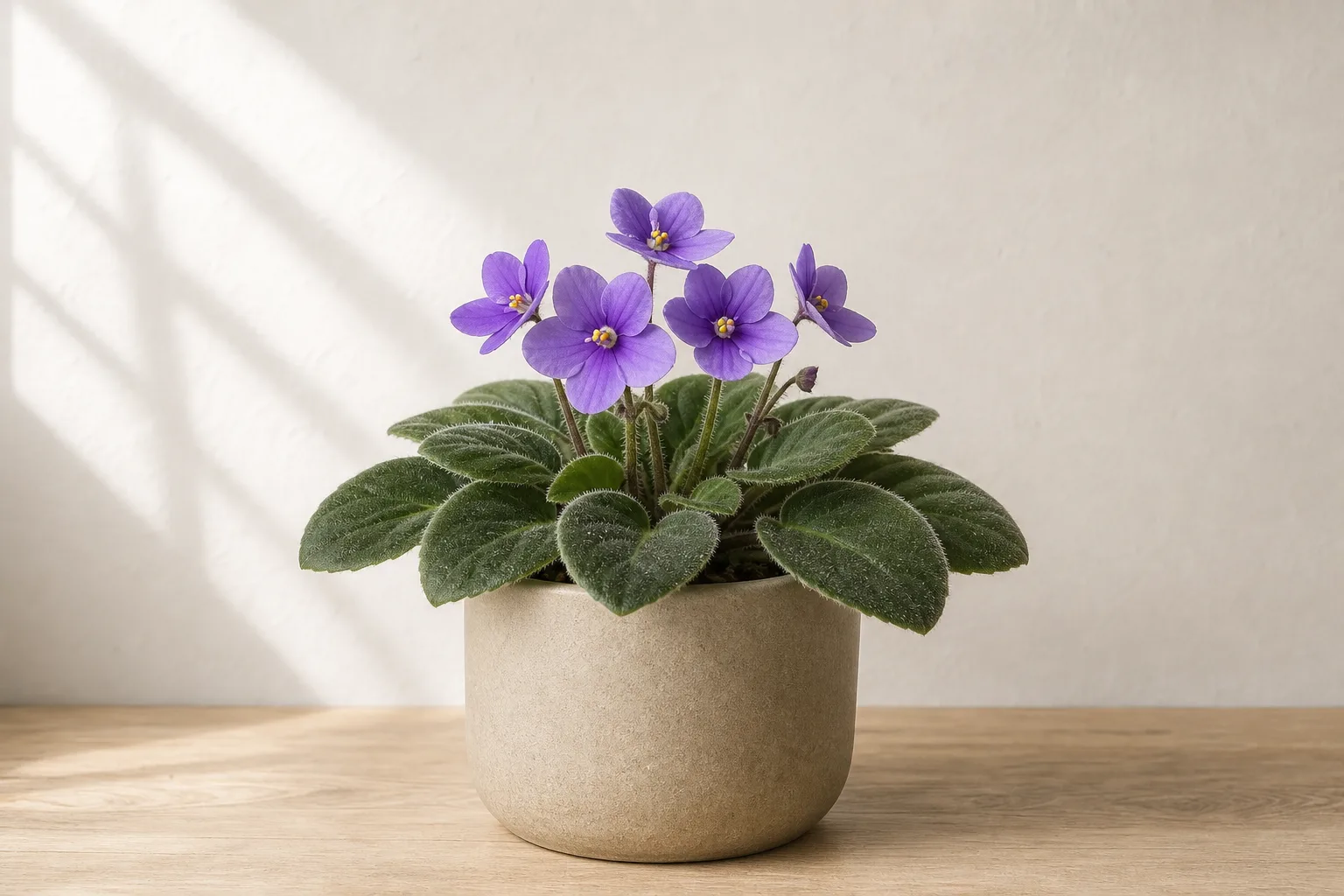 Pet-friendlier
Streptocarpus ionanthus
African violet (Streptocarpus ionanthus, long known as Saintpaulia ionanthus) is a compact, fuzzy-leaved flowering plant native to the cloud forests of Tanzania and neighboring East Africa. Grown for its velvety, round leaves and near-continuous clusters of violet, pink, white, or blue flowers, it blooms reliably indoors when given bright filtered light and careful watering. It is non-toxic to pets.
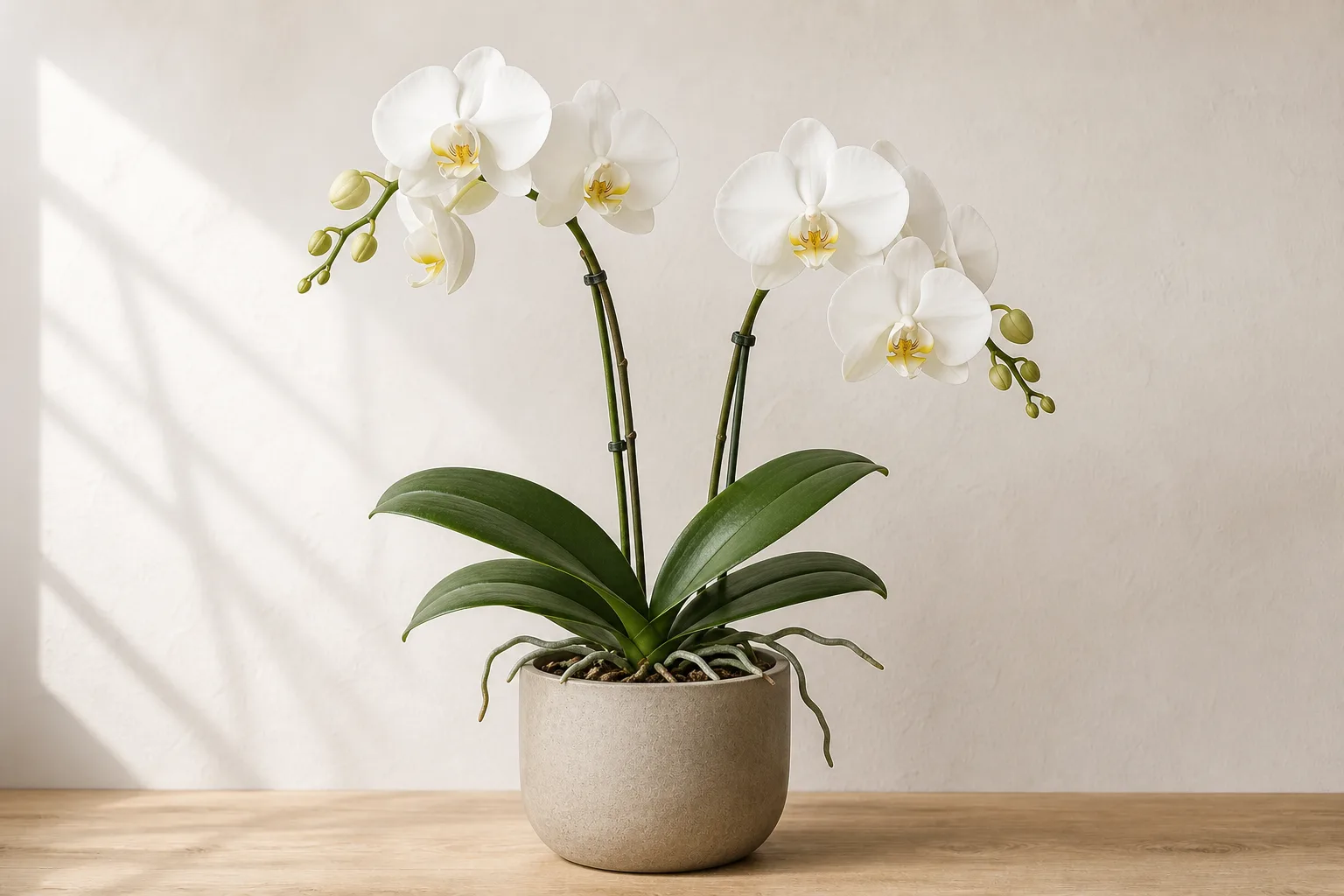 Pet-friendlier
Phalaenopsis amabilis
Moth orchid (Phalaenopsis amabilis) is the white-flowered species behind most supermarket 'moth orchids.' A tropical epiphyte native to Malesia and northeastern Australia, it grows on trees with arching sprays of long-lasting white flowers. Indoors it wants bright, filtered light, an airy bark mix, and watering based on root color rather than a calendar. It is non-toxic to pets.
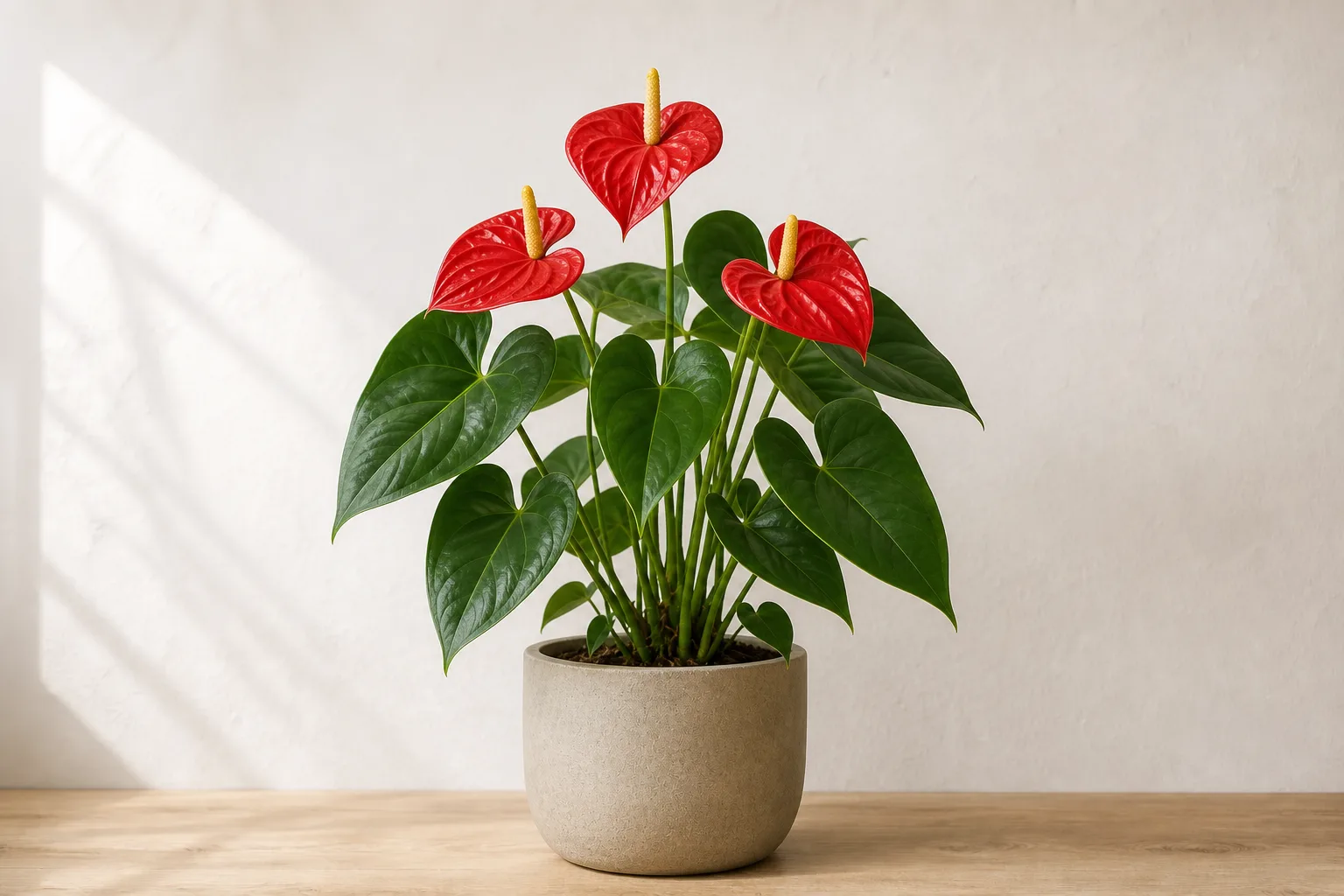 intermediate
Anthurium andraeanum
Flamingo flower (Anthurium andraeanum) is a tropical aroid grown for its glossy, heart-shaped leaves and waxy, palette-shaped spathes in red, pink, or white around a creamy spadix. Native to Colombia and Ecuador, it blooms intermittently through the year indoors when kept warm, humid, and in bright filtered light.
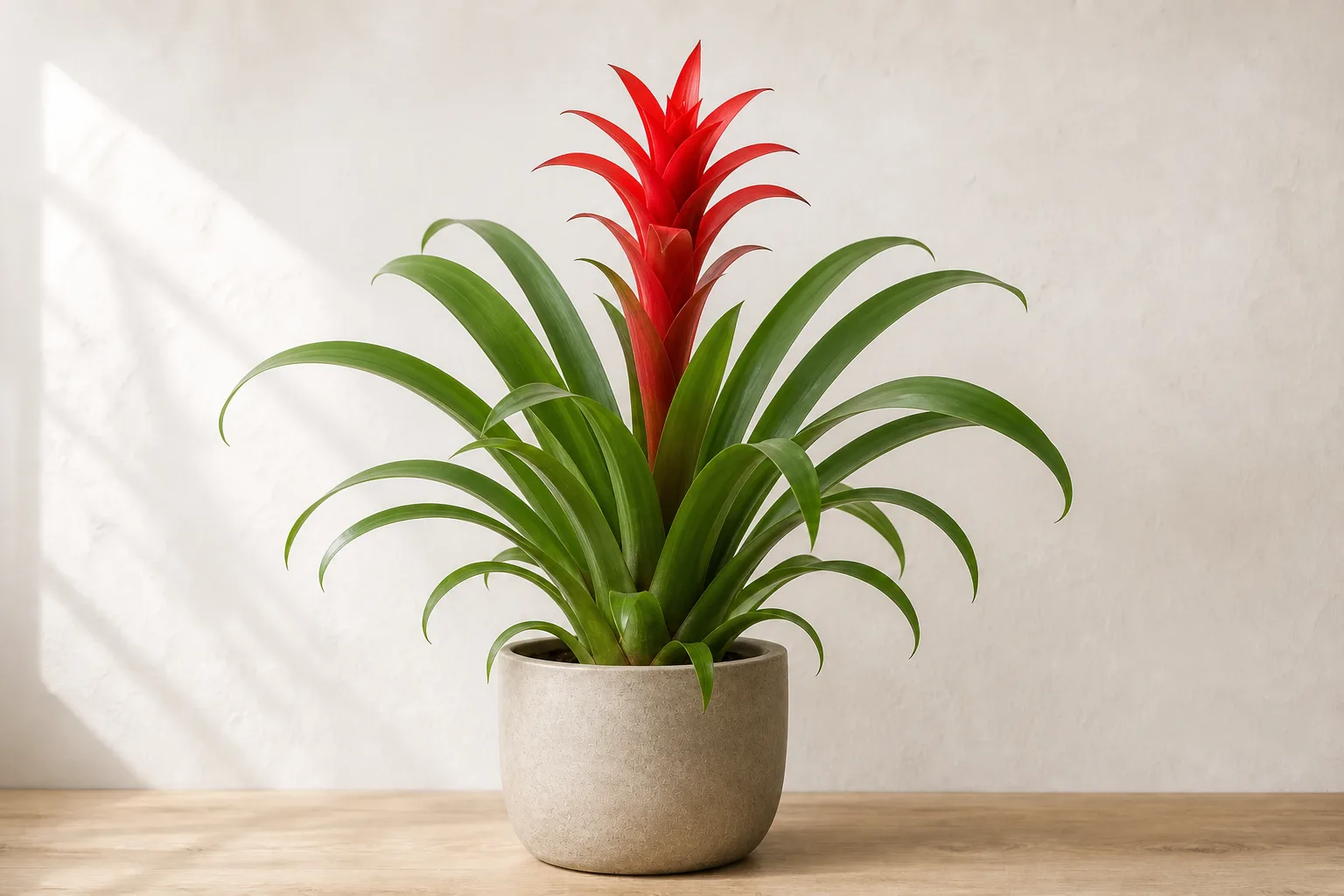 Pet-friendlier
Guzmania lingulata
Scarlet star (Guzmania lingulata) is a tropical epiphytic bromeliad with a rosette of glossy green strap leaves and a globular head of red or orange bracts surrounding small white flowers. Native from southeastern Mexico through tropical America and the West Indies, it keeps its showy inflorescence for two to four months.
 beginner
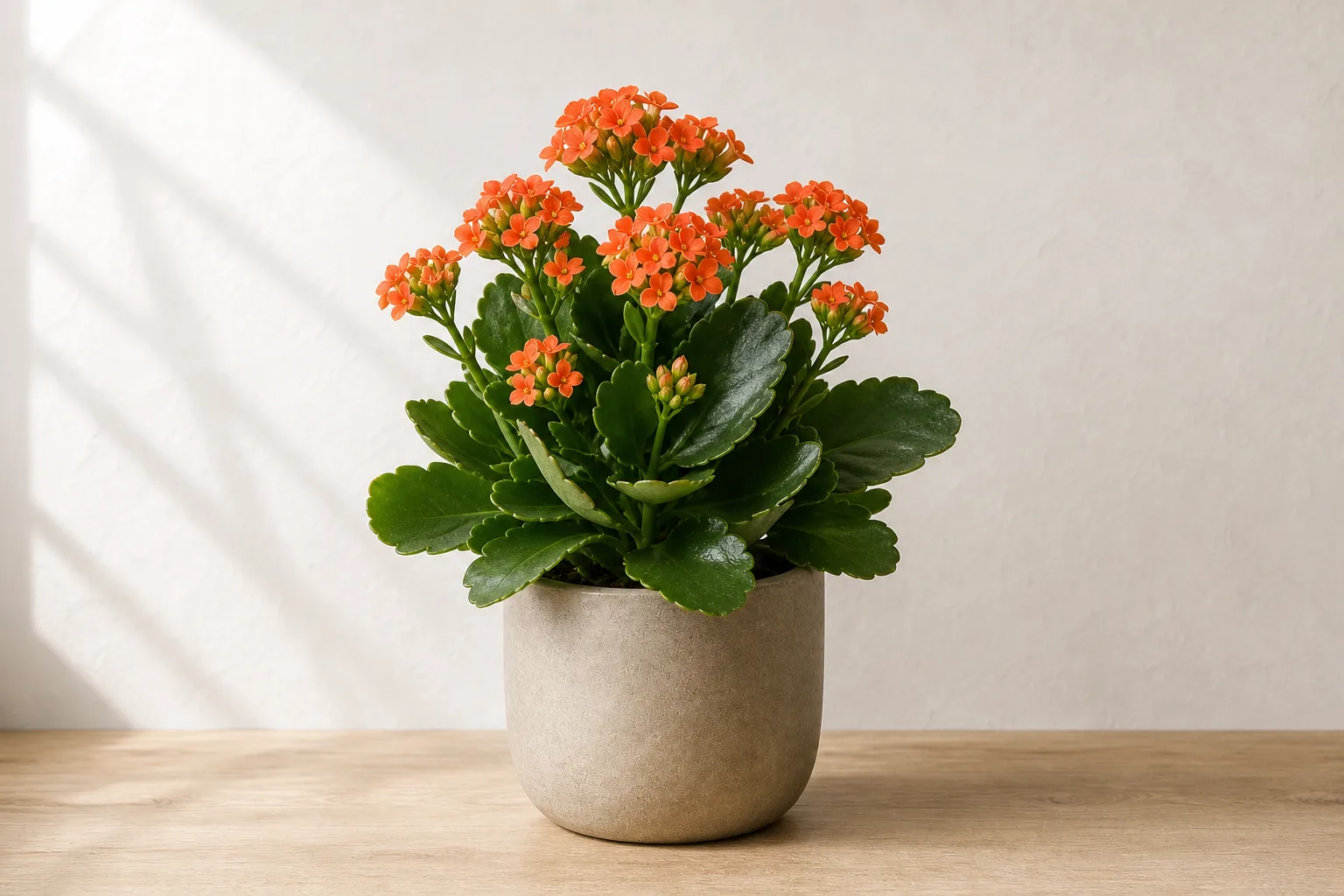
Kalanchoe blossfeldiana
Flaming Katy (Kalanchoe blossfeldiana) is a compact flowering succulent with fleshy, scallop-edged leaves and long-lasting umbels of red, pink, orange, or yellow flowers. Native to northeastern Madagascar, it is one of the easiest flowering houseplants when given bright light and dry intervals.
 intermediate
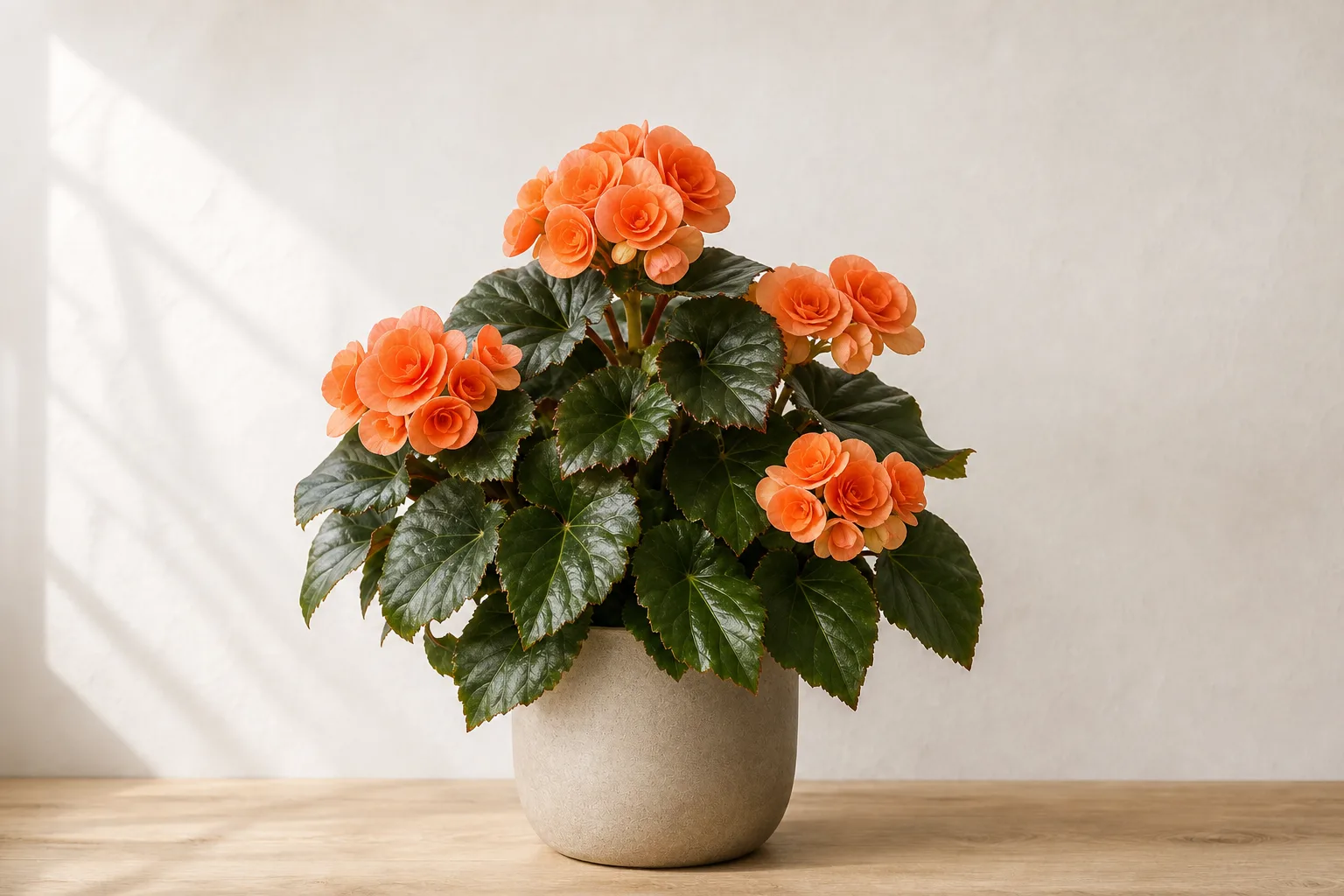
Begonia × hiemalis
Rieger begonia (Begonia × hiemalis) is a compact, winter-flowering hybrid begonia with glossy, asymmetrical green leaves and clusters of large single or double flowers in pink, red, orange, yellow, or white. Bred from Begonia socotrana and tuberous begonias, it is a popular bright-windowsill houseplant.
 intermediate
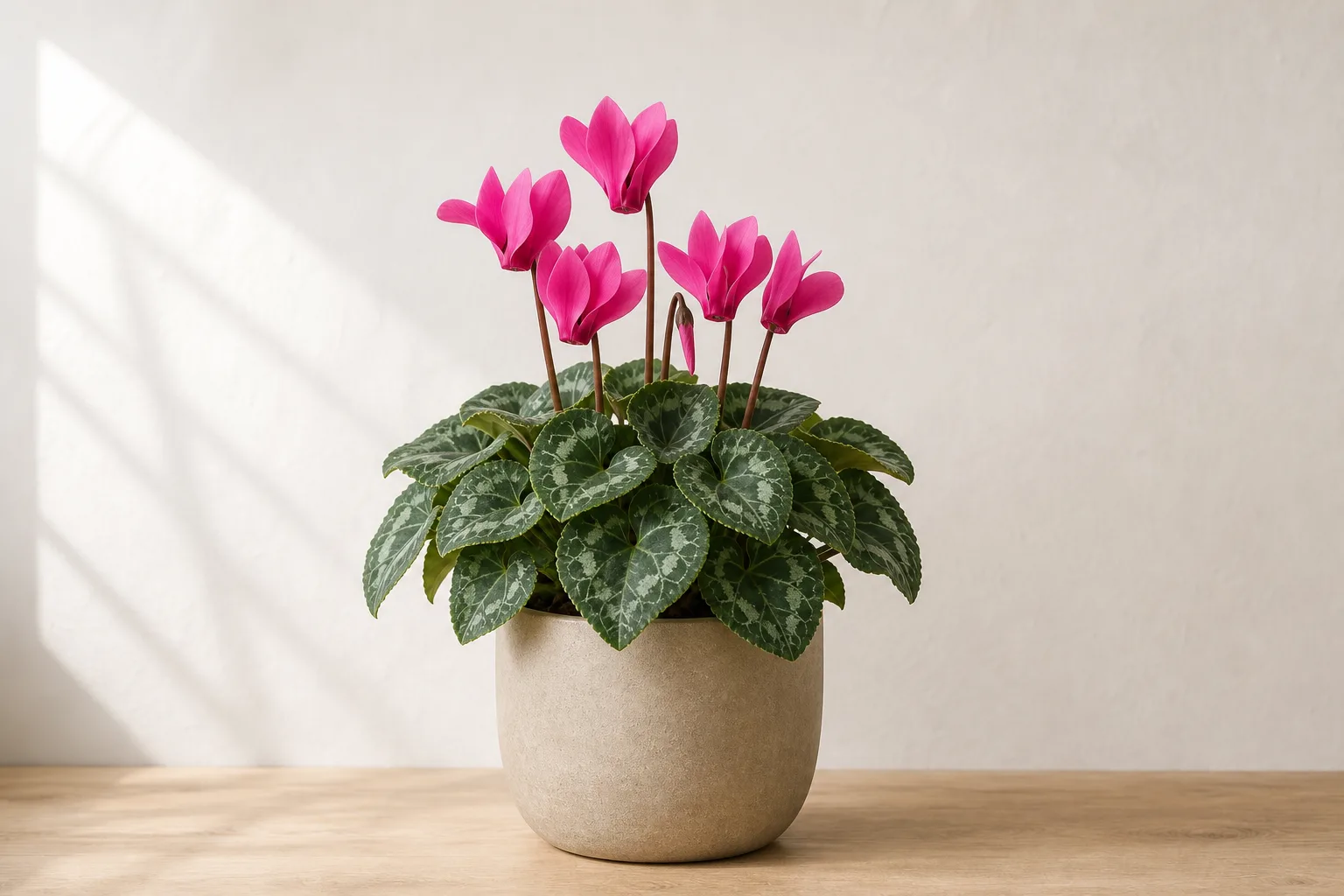
Cyclamen persicum
Florist cyclamen (Cyclamen persicum) is a tuberous flowering perennial grown for its marbled, heart-shaped leaves and upswept, butterfly-like flowers in pink, red, white, or lavender. Native from Algeria to the eastern Mediterranean, it blooms through fall and winter when kept cool and bright.
 Pet-friendlier
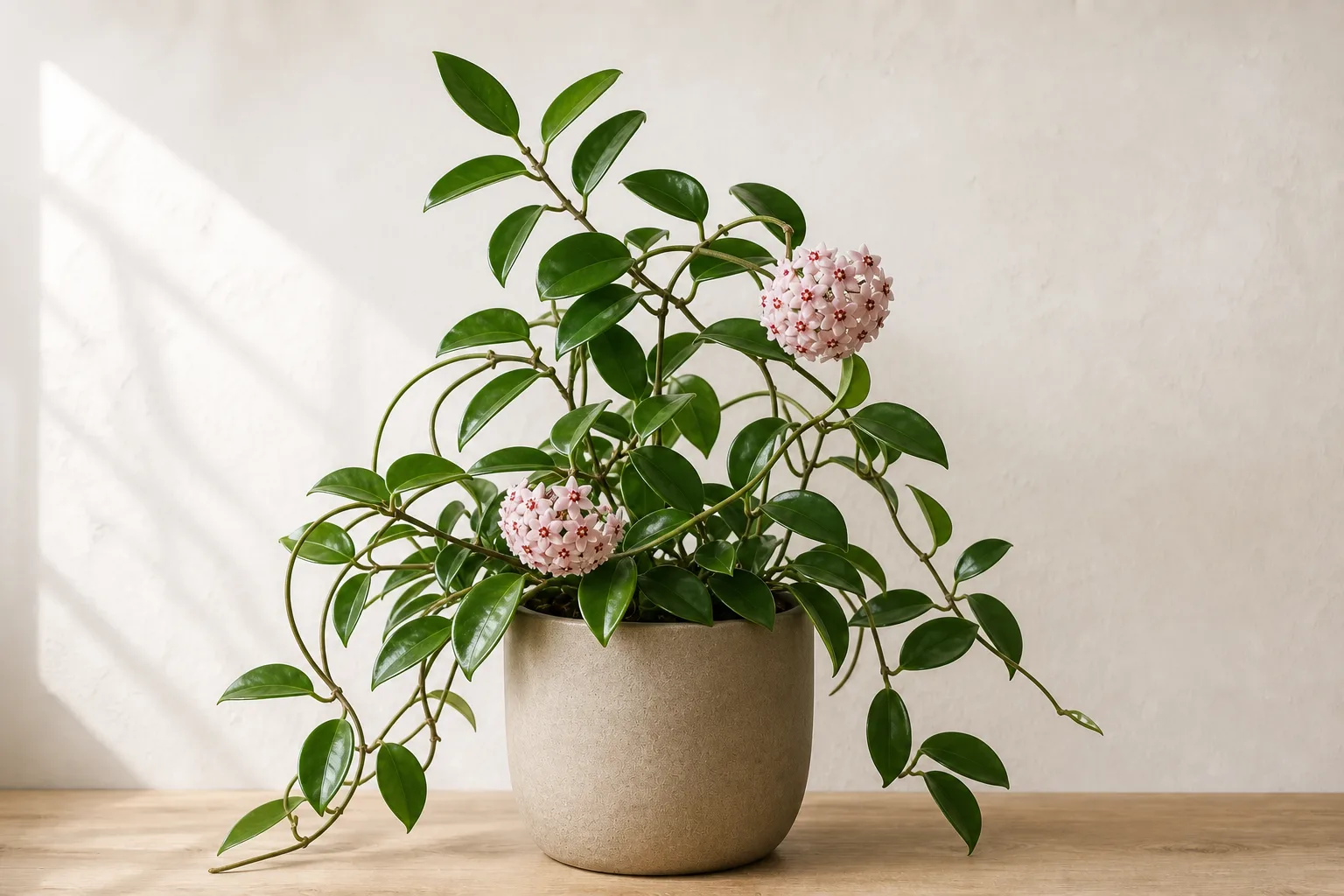
Hoya carnosa
Wax plant (Hoya carnosa) is a trailing or climbing tropical vine with thick, waxy, dark green leaves and tight clusters of fragrant, star-shaped white-to-pink flowers with red-centered coronas. Native from southern China and Japan to Taiwan and Laos, it is a long-lived, easy flowering houseplant.
 Pet-friendlier
Aeschynanthus radicans
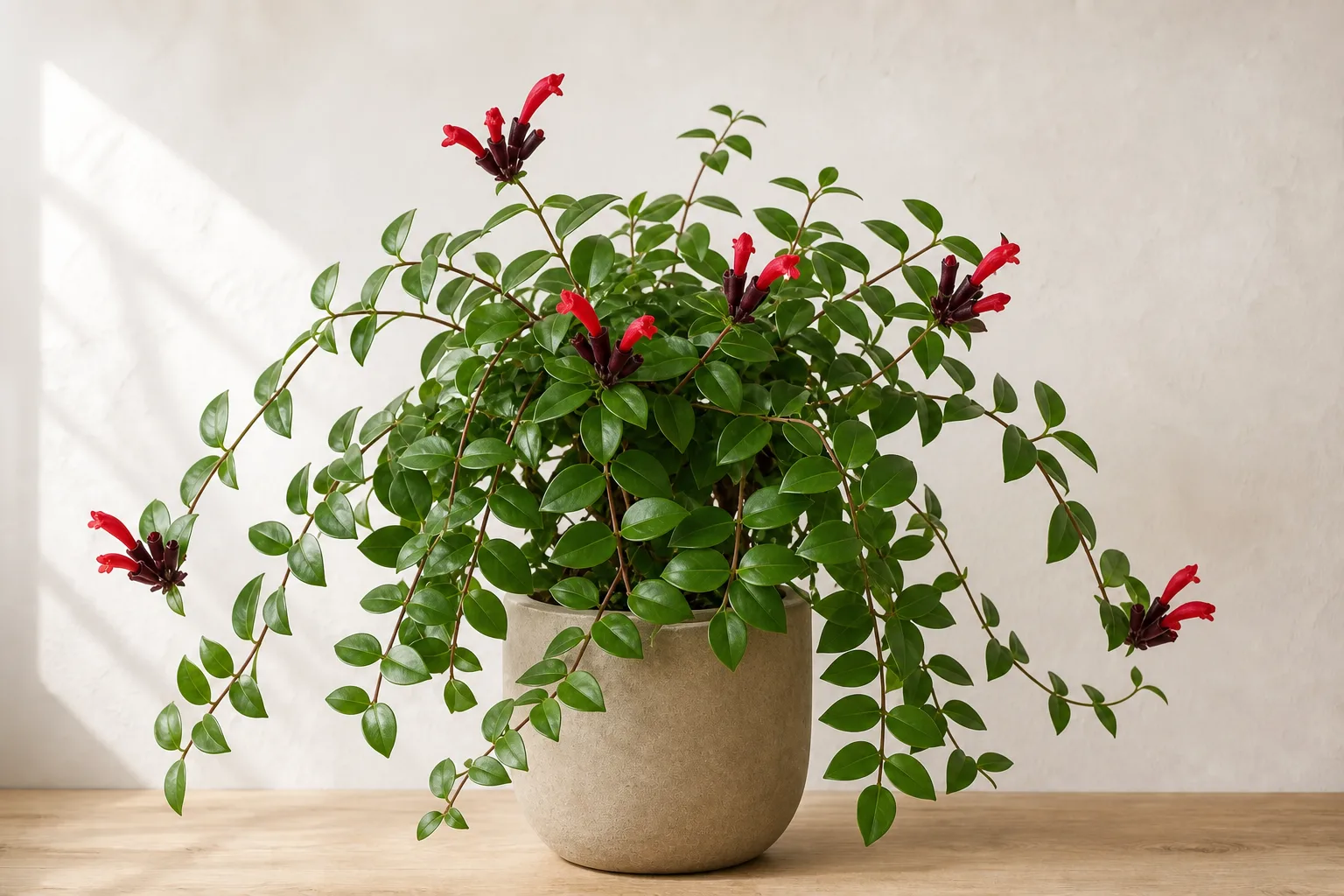
Lipstick plant (Aeschynanthus radicans) is a trailing, epiphytic tropical vine with waxy green leaves and clusters of tubular scarlet flowers that emerge from dark, lipstick-tube-like buds. Native to Thailand, the Malay Peninsula, Sumatra, and Borneo, it is a reliable flowering plant for hanging baskets.
 Pet-friendlier
Nematanthus gregarius
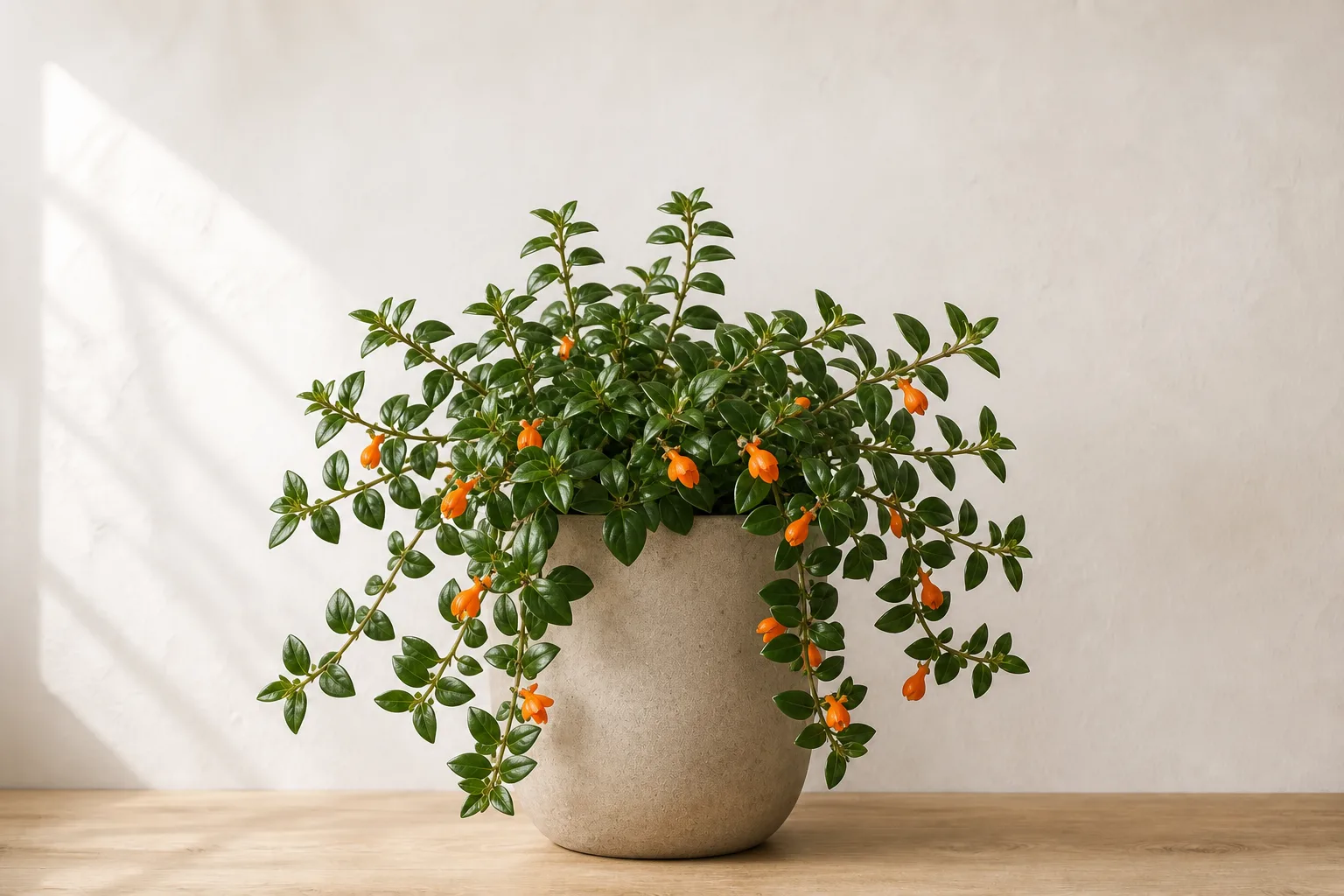
Goldfish plant (Nematanthus gregarius) is a trailing, epiphytic tropical plant with small, glossy, fleshy leaves and bright orange, pouch-like tubular flowers that resemble tiny goldfish. Native to southeastern Brazil, it is a compact, reliable bloomer for hanging baskets.
 Pet-friendlier
Sinningia speciosa
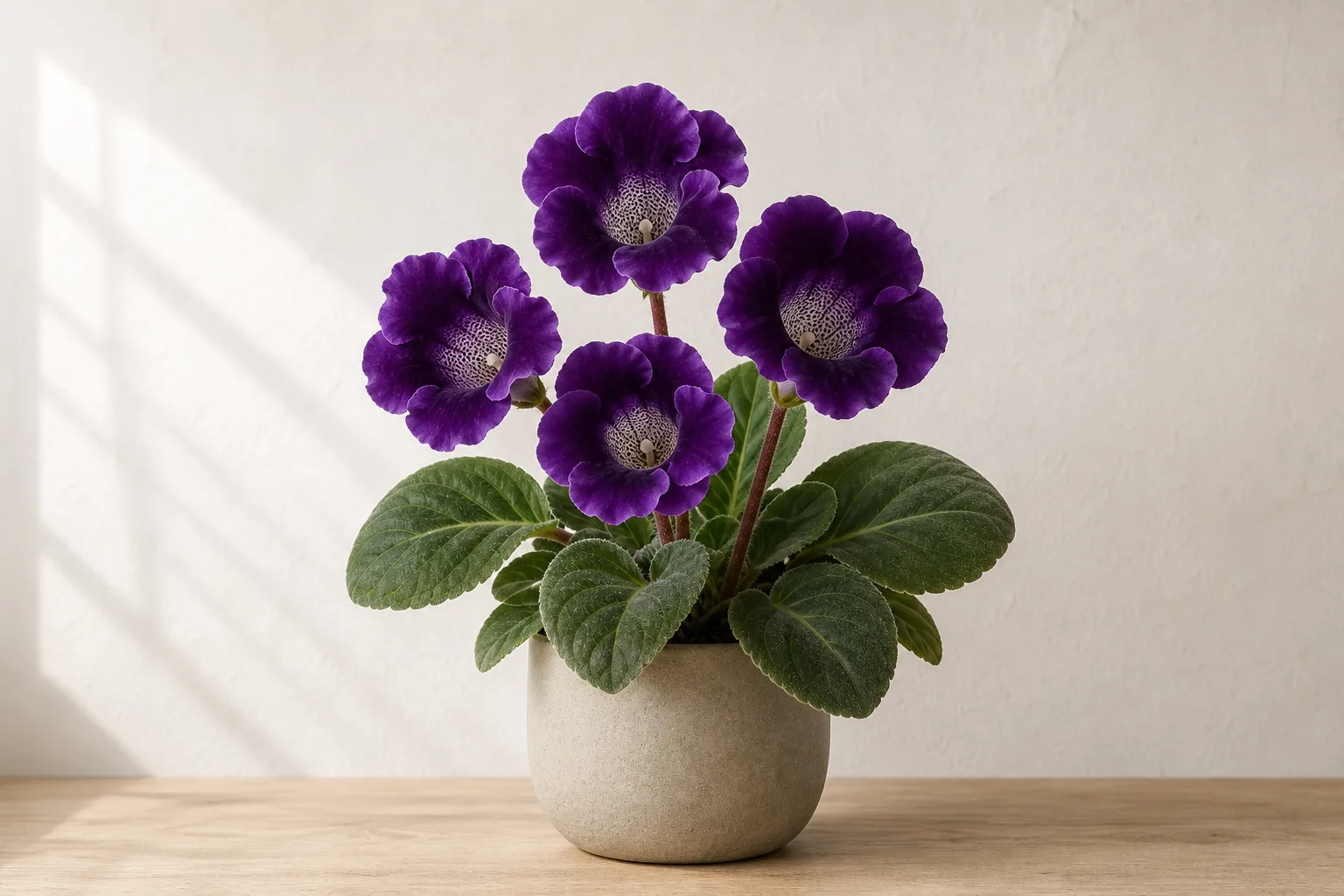
Florist gloxinia (Sinningia speciosa) is a tuberous flowering perennial with velvety, dark green leaves in a low rosette and large, trumpet-shaped flowers in purple, pink, red, or white. Native to southeastern Brazil, it is a showy, compact bloomer sold in pots by florists and nurseries.
 Pet-friendlier
Episcia cupreata
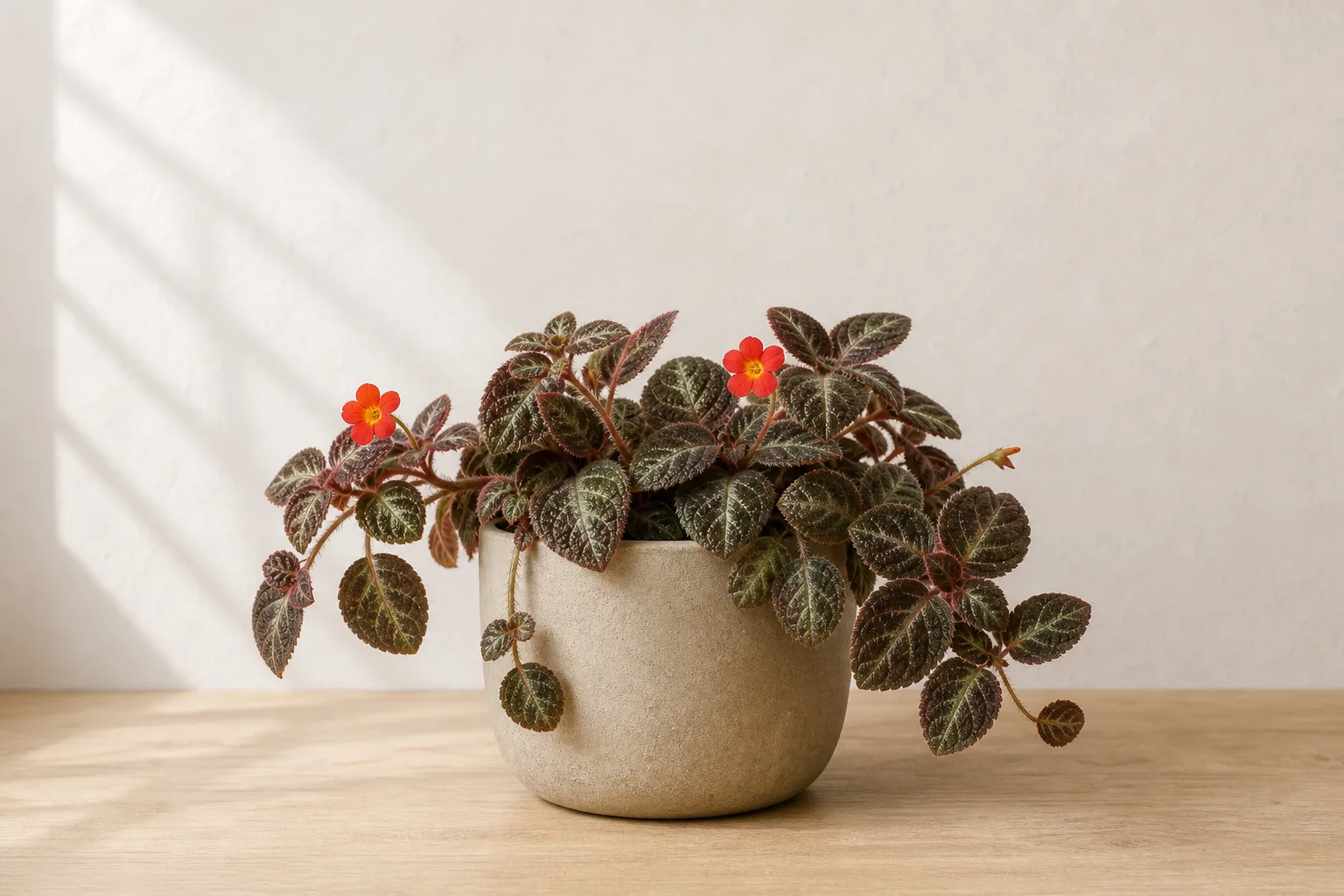
Flame violet (Episcia cupreata) is a trailing tropical perennial with oval, velvety leaves marked by pale midribs and purple undersides, and scarlet-to-orange tubular flowers with yellow throats. Native from Nicaragua to northern Brazil, it is a colorful, creeping plant for hanging baskets and terrariums.
 Pet-friendlier
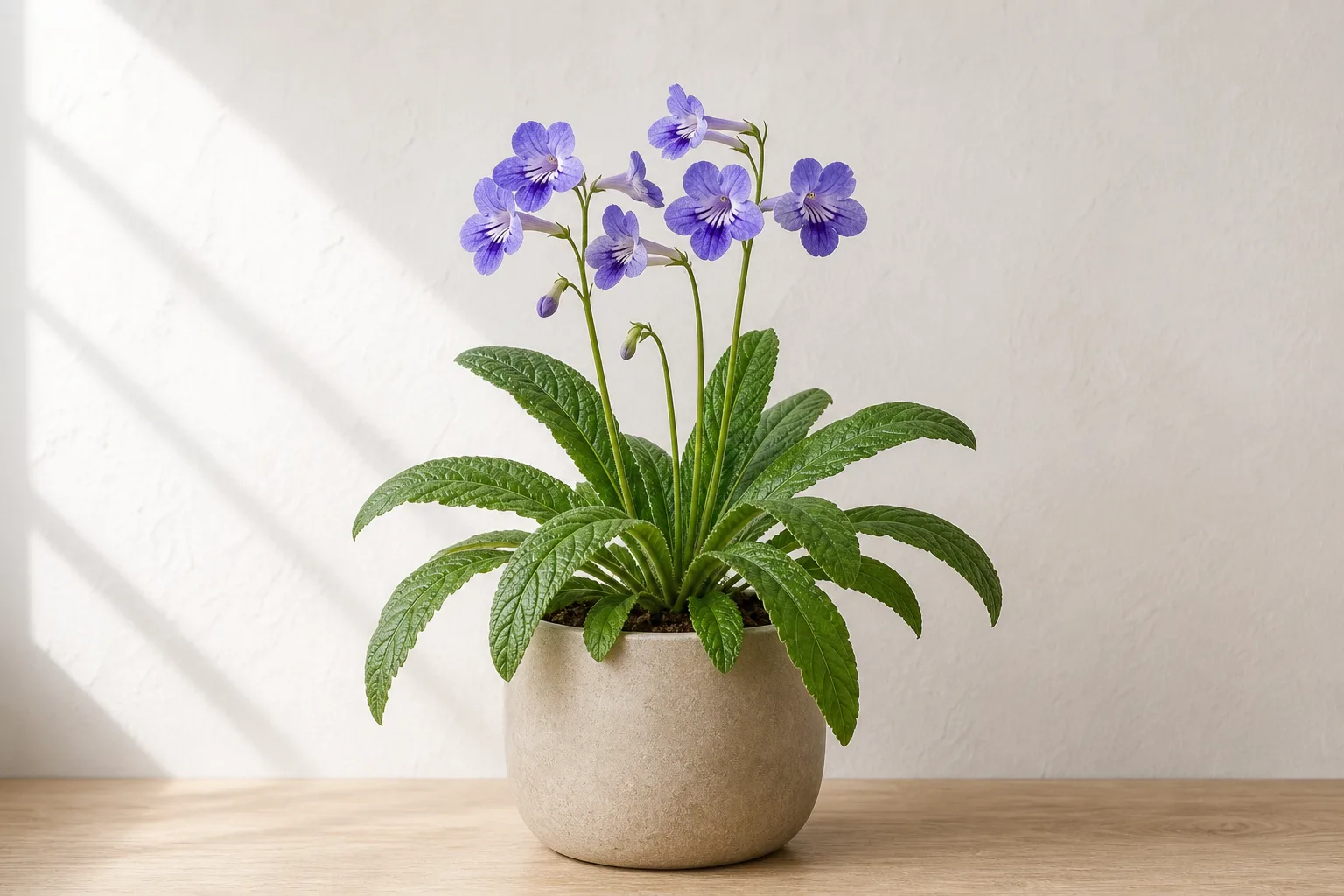
Streptocarpus rexii
Cape primrose (Streptocarpus rexii) is a stemless gesneriad grown for its low rosette of quilted, velvety leaves and trumpet-shaped flowers in white, blue, and violet shades with streaked throats. Native to the Cape Provinces and KwaZulu-Natal of South Africa, it blooms for months at a stretch and rewards bright filtered light with near-continuous flowers.
 Pet-friendlier
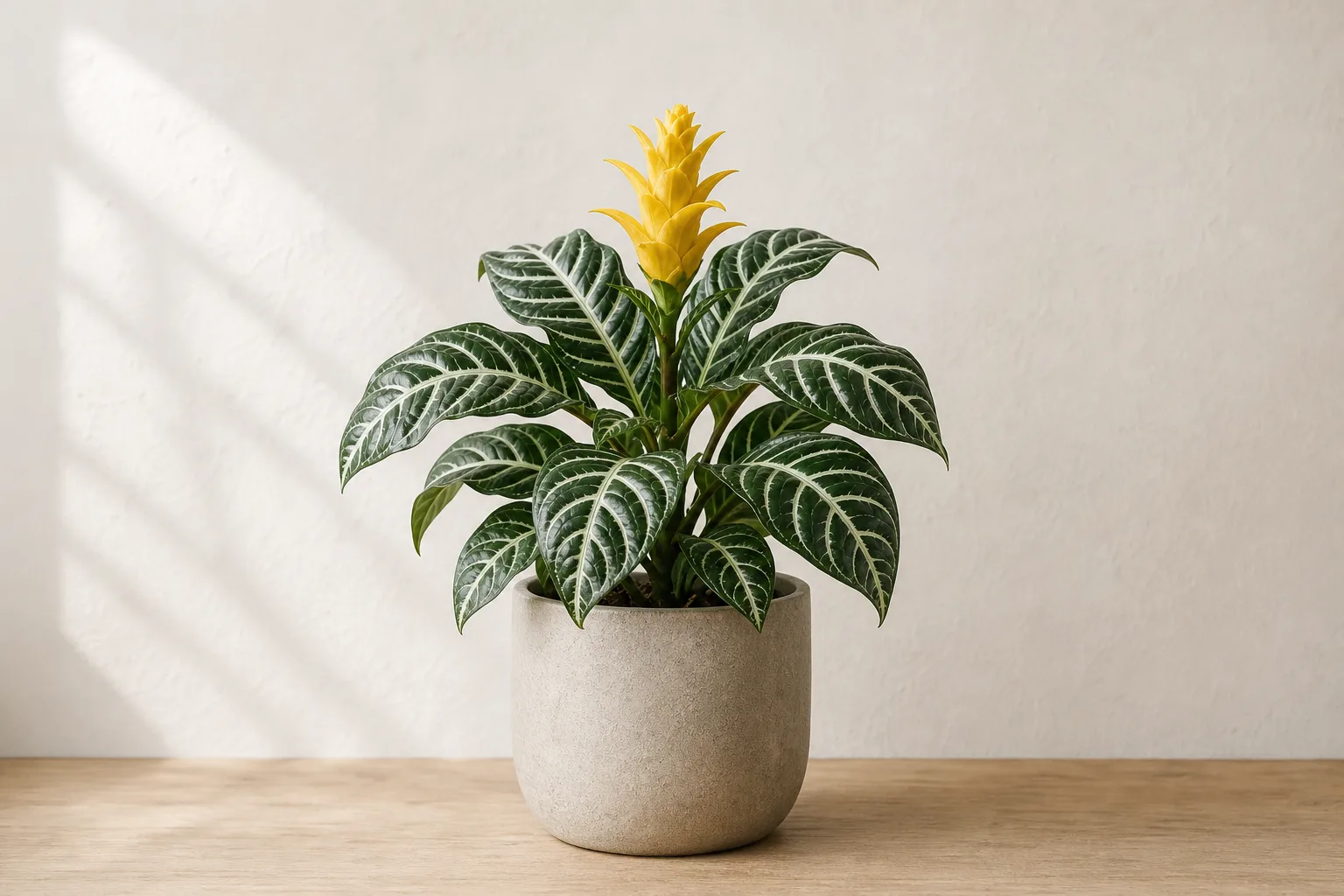
Aphelandra squarrosa
Zebra plant (Aphelandra squarrosa) is a tropical broadleaf evergreen grown for its glossy dark green leaves striped with bold white veins and its upright spikes of golden-yellow bracted flowers. Native to the Atlantic forests of Brazil, it makes a striking small houseplant that needs bright filtered light, warmth, and steady humidity.
 beginner
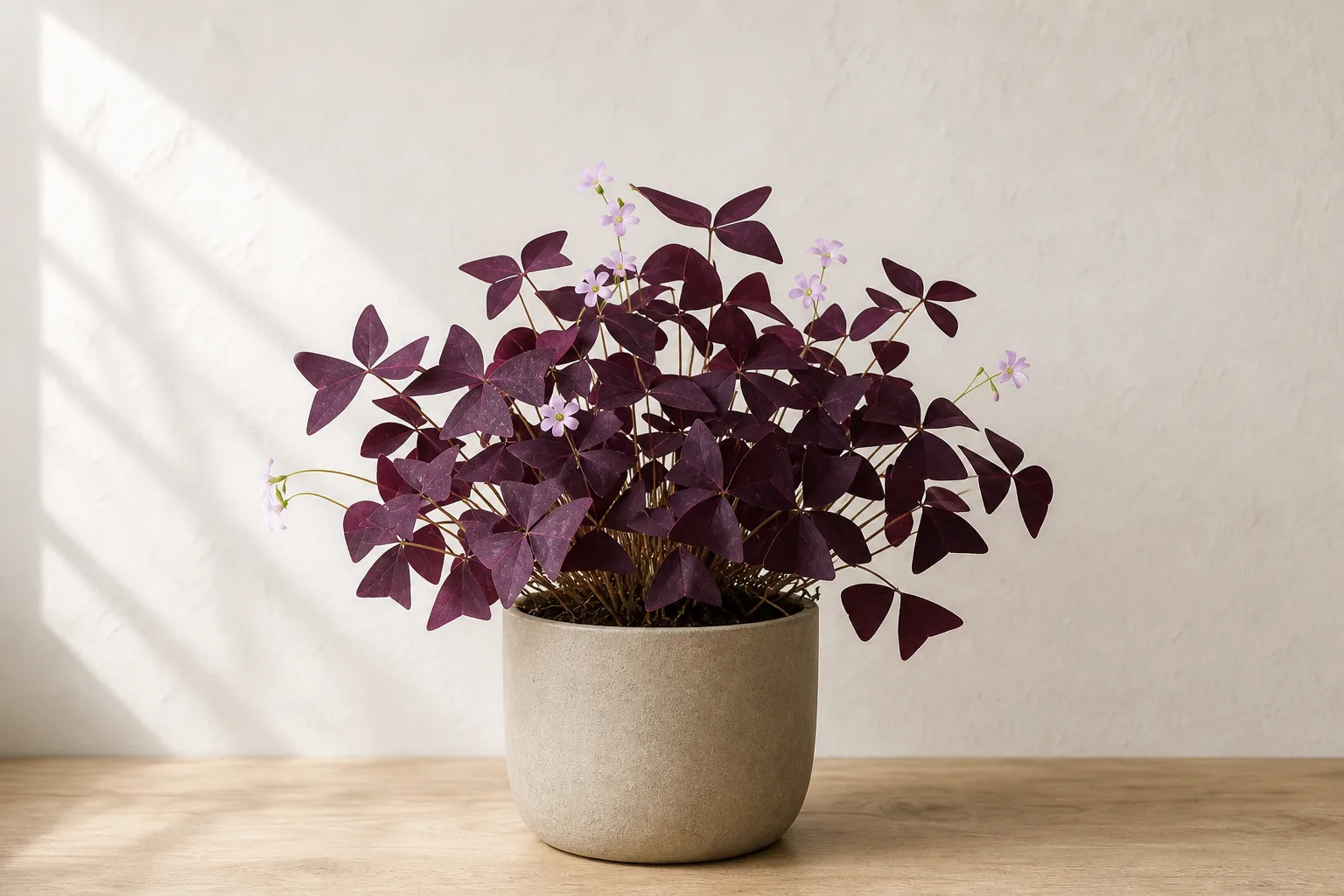
Oxalis triangularis
Purple shamrock (Oxalis triangularis) is a compact, tuberous South American perennial grown for its deep maroon, butterfly-like leaves that fold down at night and its small pink or white flowers. Easy and forgiving, it makes a colorful houseplant that responds well to bright filtered light and a dormancy-aware watering routine.
 intermediate
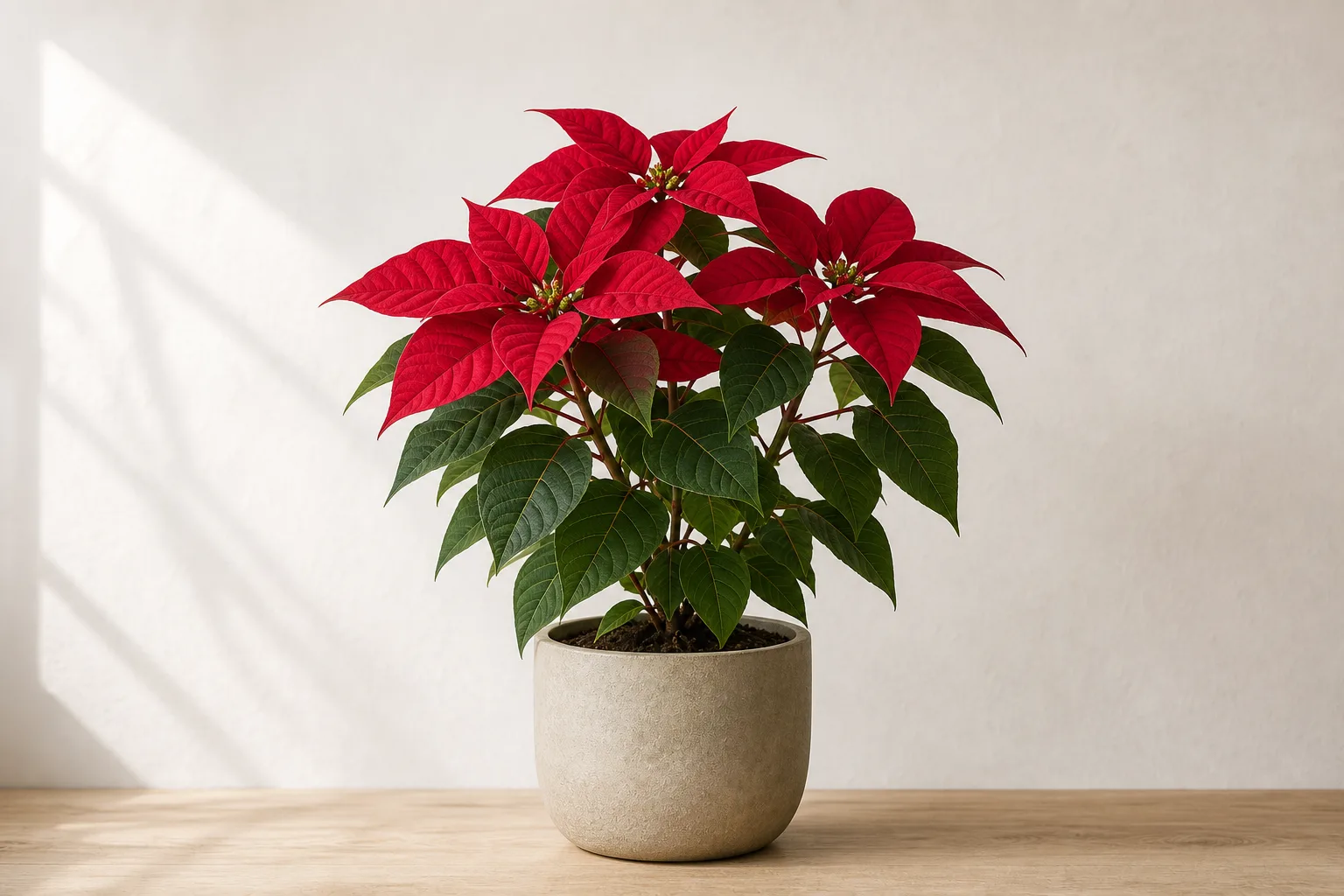
Euphorbia pulcherrima
Poinsettia (Euphorbia pulcherrima) is a seasonal flowering shrub from Mexico and Guatemala, grown for its brilliantly colored bracts that surround small yellow flowers. Brought into bloom for the winter holidays, it makes a bright seasonal houseplant that asks for bright light, gentle watering, and protection from cold drafts.
 Pet-friendlier
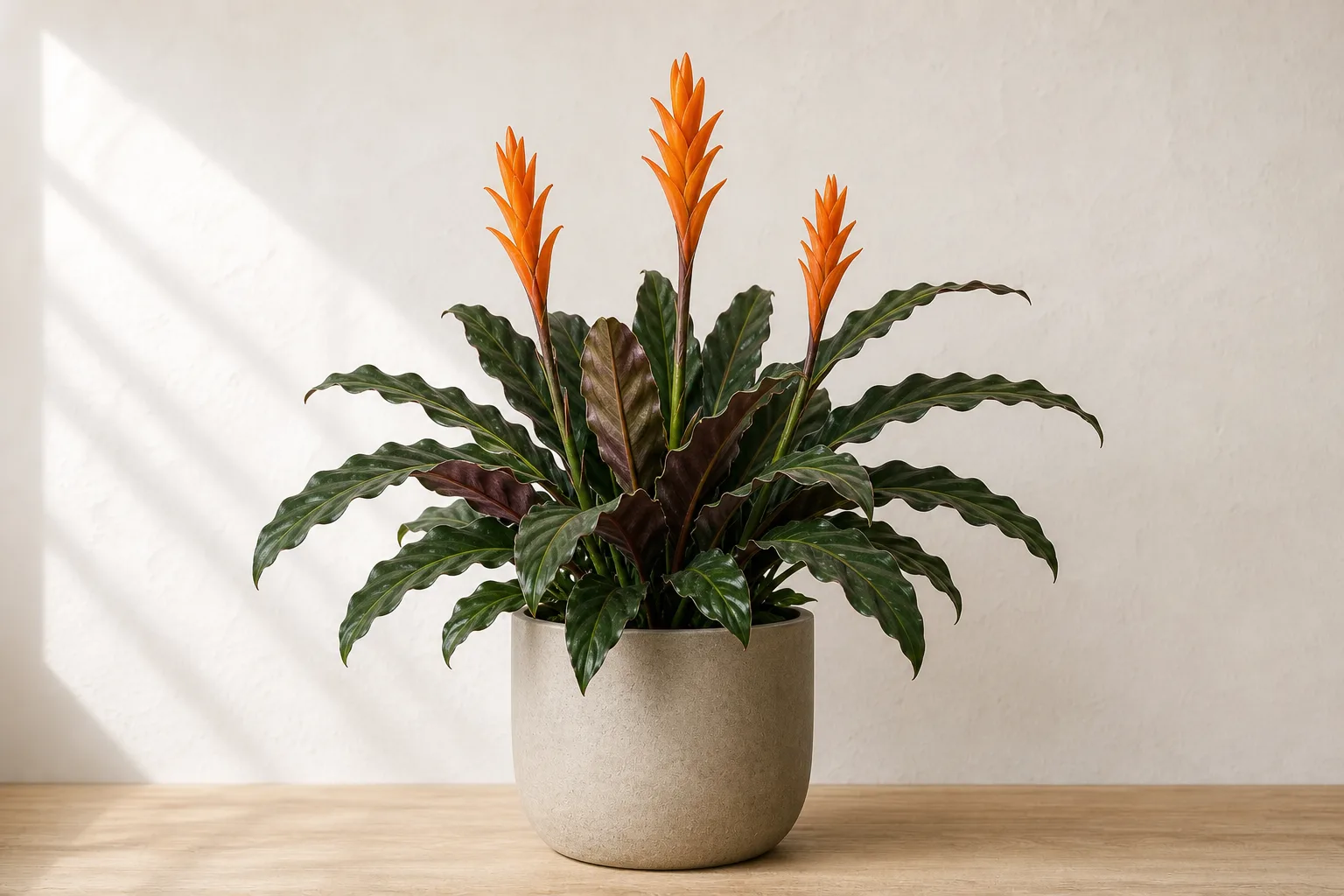
Goeppertia crocata
Eternal flame (Goeppertia crocata, formerly Calathea crocata) is a compact prayer-plant family perennial from the rainforests of eastern Brazil, grown for its glossy green leaves with maroon undersides and torch-like spikes of yellow-orange bracts. Its long-lasting flowers and pet-safe status make it a prized, if demanding, tropical houseplant.
 Pet-friendlier
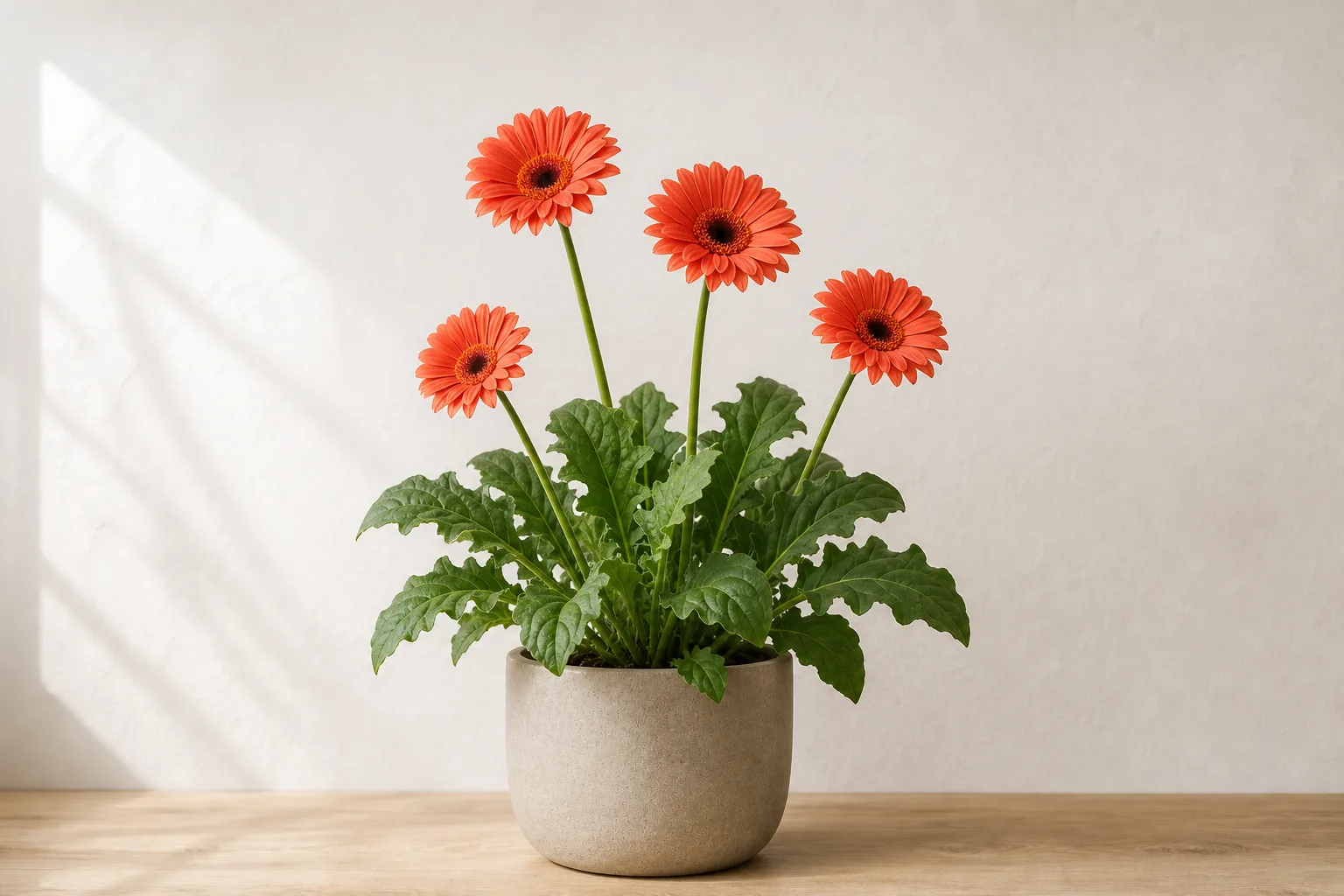
Gerbera jamesonii
Gerbera daisy (Gerbera jamesonii) is a clump-forming perennial from South Africa and Eswatini, grown for its large, showy daisy flowers in red, yellow, orange, pink, and white held above a rosette of lobed green leaves. A cheerful flowering houseplant, it needs bright light, good drainage, and careful watering to keep its crown healthy.
Favor plants with a clear growth direction, then rotate and prune lightly before they block walkways or windows.