Key takeaways
- Give it bright indirect light and protect it from hot direct sun, which can burn the fuzzy leaves.
- Water only after the mix has dried out, and keep humidity low - the felted hairs trap moisture.
- Keep it out of reach of cats and dogs: Kalanchoe species are toxic if chewed.
How to care for Panda Plant
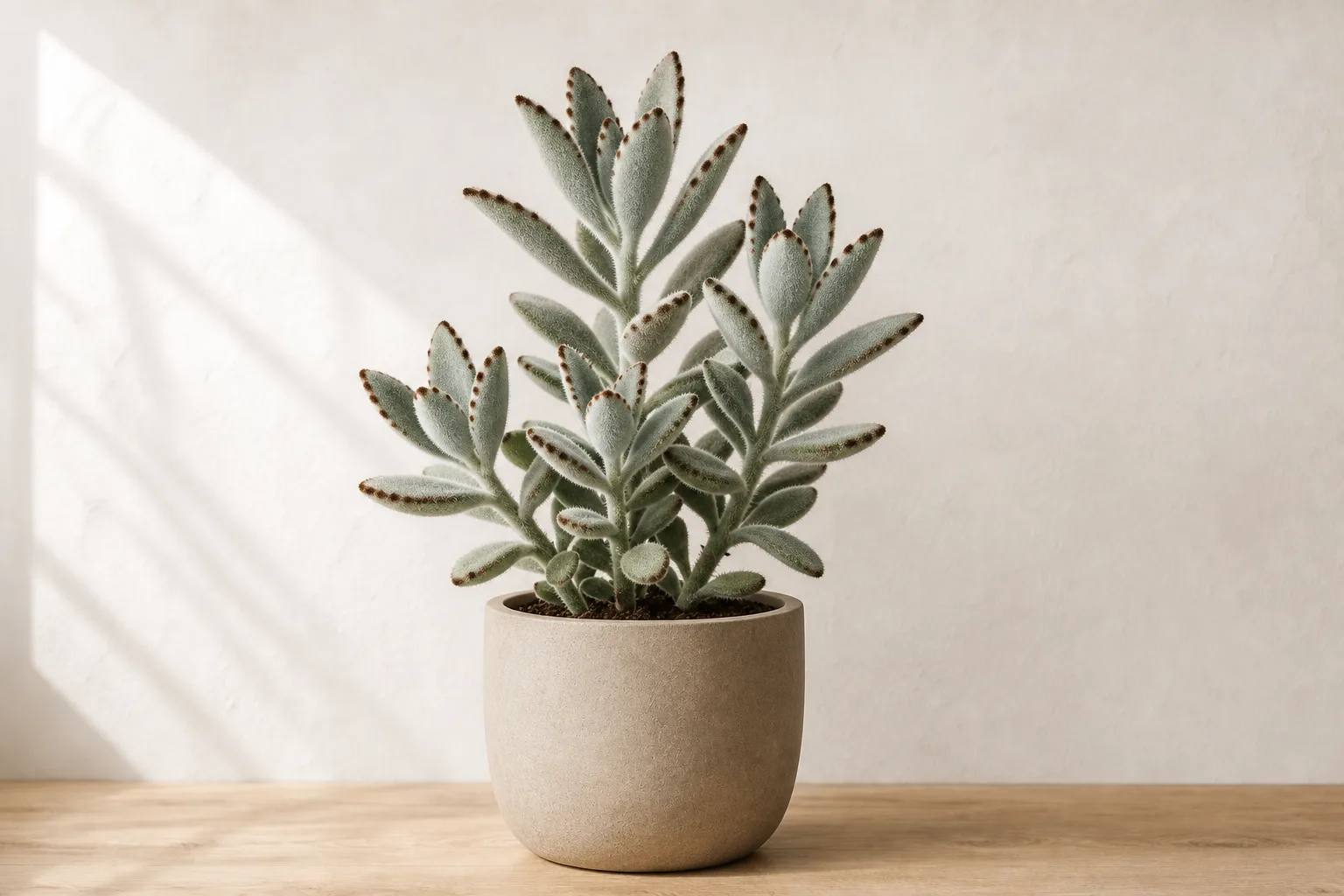
Panda plant (Kalanchoe tomentosa) is a semi-woody, slow-growing succulent in the Crassulaceae family, native to the granite outcroppings of east-central Madagascar. Its soft, pale green leaves are covered in dense gray-white hairs (trichomes) and edged with chocolate-brown markings - an adaptation that shades the leaf and reduces water loss. It grows upright to about 1 to 3 feet tall indoors.
The plant is easy to maintain as long as you respect its two vulnerabilities: too much water and too much humidity. It prefers bright, indirect light, a well-drained cactus mix, and a genuine dry-down between waterings. Water only when the mix is dry, and never mist the fuzzy leaves, which trap moisture and invite rot.
Light
Panda plant prefers bright, indirect sunlight for at least several hours a day, and it can handle full sun outdoors in milder climates. Indoors, an east or bright west window works well. Protect it from intense hot sun, which can burn the leaves, and note that in too little light the plant becomes leggy and the fuzzy leaf tips lose their warm brown edges. Move it gradually when changing position.
Water
Water only after the potting mix has dried out, then water thoroughly and drain. The plant prefers low moisture and is far more tolerant of drought than of wet soil, which causes root rot and mushy, yellow leaves. Reduce watering in winter, when growth slows. Shriveled or wrinkled leaves usually signal underwatering, while yellow or mushy stems signal too much water - check the mix before deciding.
Soil and repotting
Use a moist, well-drained cactus or succulent mix - the plant grows best in loose, gritty soil that dries quickly. A container with a drainage hole is essential. Repot only when the plant has filled its pot, typically every two to three years, and handle the fuzzy leaves as little as possible. Because the plant is slow-growing, it rarely needs a much larger container.
Temperature, humidity, and fertilizer
Panda plant prefers temperatures around 60-75°F (15-24°C), low humidity, and good ventilation; it is not cold hardy and must be protected from frost. The felted hairs trap moisture, so avoid misting and keep the plant in moving air. Feed lightly with a diluted succulent fertilizer during the growing season, and not at all in winter.
Pruning and propagation
Prune to control height and shape by cutting stems back with clean tools, and remove any damaged or mushy growth promptly. Propagation is from leaf cuttings or stem cuttings: allow the cut end to callus for a few days, then set it on or in a dry, gritty mix and water sparingly until roots form. Fuzz-covered cuttings are slower to root than smooth-leaved succulents, so be patient.
Common problems
Start with the pattern, current soil moisture, and recent changes. One symptom can have several causes, so change the most likely factor first and observe before making another major adjustment.
| Symptom | Check first | First action |
|---|---|---|
| Yellow or mushy leaves and stems | Whether the mix has stayed wet and whether the pot drains | Stop watering until the mix dries; if the base is soft, unpot and inspect the roots before watering again. |
| Shriveled or wrinkled leaves | How long since the last watering and the current light level | Water thoroughly if the mix is dry, then let it drain and resume a dry-down cycle. |
| Leggy growth | Available light and how far the plant sits from the window | Move gradually to a brighter position and cut stems back to a leaf pair to encourage fullness. |
| Leaf burn or bleached spots | Recent hot direct sun and whether the plant was moved suddenly | Move the plant gradually out of the harshest sun and let new growth replace the damaged leaves. |
| Mealybugs or spider mites | Stems, leaf undersides, and the fuzzy leaf bases, plus nearby plants | Isolate the plant and identify the pest before treating; wipe off visible pests with a targeted control. |
Pet and household safety
Panda plant (Kalanchoe tomentosa) is toxic to cats and dogs if chewed. Kalanchoe species contain bufadienolides, which can cause vomiting, diarrhea, and, in rare cases, an abnormal heart rhythm. Keep the plant out of reach of pets and children who chew plants, and contact a veterinarian or animal poison-control service after a concerning exposure. Wash hands after handling, as the fine hairs can be a mild irritant.
Frequently asked questions
How often should I water a panda plant?
Water only after the potting mix has dried out, then water thoroughly and drain. The interval changes with light, pot size, and season, and should lengthen in winter. Check the mix when the leaves wrinkle.
What light does a panda plant need?
Bright indirect light for at least several hours a day, with protection from hot direct sun. In too little light the plant becomes leggy and loses the brown tips on its fuzzy leaves.
Where does panda plant grow naturally?
It is native to east-central Madagascar, where it grows in rocky granite outcroppings in warm, seasonally dry conditions.
Why are my panda plant's leaves shriveling?
Usually underwatering - wrinkled leaves signal that the stored water is running low. Check that the mix is dry, then water thoroughly and drain.
How do I propagate a panda plant?
Leaf or stem cuttings root after the cut end calluses for a few days. Place the cutting on or in gritty mix and water sparingly; fuzzy-leaved succulents root more slowly than smooth ones.
Is panda plant safe for pets?
No. Kalanchoe species contain bufadienolides and are toxic to cats and dogs if chewed. Keep it out of reach and contact a veterinarian after a concerning chew.
Sources and editorial review
This editorial draft is based on the sources below and awaits named horticulture-expert approval before publication.
- Kalanchoe tomentosaRoyal Botanic Gardens, Kew (Plants of the World Online) · Checked
- Kalanchoe tomentosa (Panda Plant)North Carolina State University Extension · Checked
- Kalanchoe (genus)ASPCA · Checked
- Kalanchoe tomentosa (panda plant)Royal Horticultural Society · Checked
What works well
- Textural, plush foliage unlike almost any other houseplant.
- Slow, low-maintenance grower that needs little water.
- Easy to start from stem or leaf cuttings.
What to consider
- Fuzzy leaves hold onto water and dust, inviting rot and grime.
- Toxic to cats and dogs if chewed.
- Rarely flowers indoors.