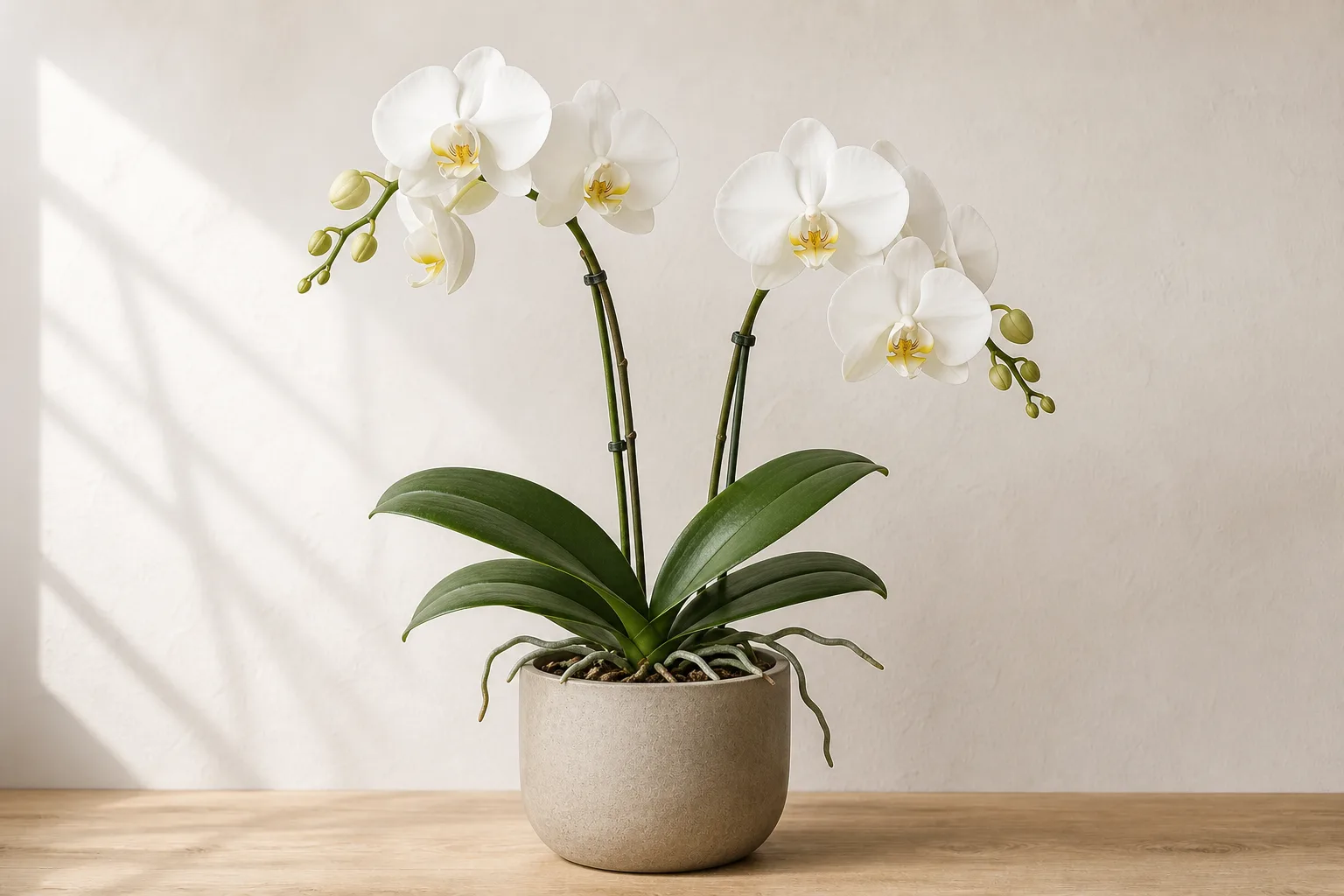
Key takeaways
- Bright, indirect light; olive-green leaves signal the right amount.
- Water when the roots look silvery, soak, and drain - never let the crown sit wet.
- Non-toxic to cats and dogs; a safe flowering choice.
How to care for Moth Orchid
Moth orchid (Phalaenopsis amabilis) is a tropical epiphyte - in nature it clings to tree bark in the warm, humid forests of Malesia and northeastern Australia, with roots built to breathe rather than sit in soil. That single fact explains almost all of its indoor care: it wants bright filtered light, an airy bark-based mix, and watering that lets the roots dry between drinks.
The best signal is the roots themselves. Healthy hydrated roots are green; thirsty roots turn silvery-gray. Water thoroughly when they look silvery, let it drain completely, and keep water out of the crown (the center where leaves meet). Bright, indirect light and stable temperatures encourage the long bloom spikes. Do not bin the plant after flowering - mature plants often rebloom.
Light
Give bright, indirect light similar to light under a tree canopy. An east window is excellent; a few feet back from a south or west window, or a sheer curtain, prevents leaf scorch. The leaves tell you the story: medium olive-green means the light is right, very dark green means too little (fewer flowers), and red-tinged or bleached leaves mean too much sun. In winter move it to the brightest safe spot, and use a grow light 8-12 inches above the leaves for 10-12 hours if your home is dim.
Water
Water based on the roots, not the calendar. When the roots look silvery-gray and the pot feels light, soak the mix thoroughly until water runs from the drainage holes, then let it drain completely. In warm months that may be every 7-10 days; in cooler, dimmer months every 10-14 days. Never let the plant sit in a saucer of water, and keep water out of the crown to avoid crown rot. Room-temperature water is best; tepid rainwater or filtered water reduces leaf-tip browning from minerals.
Soil and repotting
Do not use regular potting soil. Use a very airy orchid mix - usually medium-grade bark with optional sphagnum moss, perlite, or charcoal - so air moves freely around the roots. A clear plastic orchid pot helps you read root color and moisture. Repot every one to two years, or when the bark breaks down and holds water too long, ideally just after flowering as new roots appear. Remove dead, mushy roots with sterile scissors, keep firm green or silver roots, and set the crown above the mix.
Temperature, humidity, and fertilizer
Moth orchids like consistent warmth, about 65-85°F (18-29°C) by day with cooler nights, and 40-60% humidity with good airflow. Avoid cold drafts and sudden temperature drops, which cause bud drop. Feed with a balanced orchid fertilizer at half strength weekly during active growth, or a high-phosphorus formula to encourage blooms; omit feeding every fourth watering to flush accumulated salts. A short cooler period (about 5°C lower for a month) can help trigger a rebloom spike.
Pruning and propagation
After flowers fade, cut the spike to just above the third or fourth node to encourage a side branch and a second flush, or cut it back to the base. Remove any brown, shriveled aerial roots for appearance, but remember green roots photosynthesize - do not cut healthy ones. Propagation at home is usually via keiki (baby plants) that occasionally form on the spike; let a keiki develop roots an inch or two long before removing it to its own pot. Seed propagation is slow and best left to breeders.
Common problems
Start with the pattern, current soil moisture, and recent changes. One symptom can have several causes, so change the most likely factor first and observe before making another major adjustment.
| Symptom | Check first | First action |
|---|---|---|
| Yellowing lower leaves | Root color, recent overwatering, and natural aging of oldest leaves | Let the mix dry and confirm drainage before watering again. |
| Wrinkled, limp leaves | Root moisture and whether the mix is too dry | Soak thoroughly and let it drain; resume silvery-root watering cues. |
| Bud drop | Recent temperature or humidity swings and drafts | Stabilize temperature and humidity; keep the plant away from vents and fruit bowls. |
| Mushy, dark roots or crown | Overwatering, poor drainage, and water trapped in the crown | Repot into fresh bark, trim dead roots, and keep the crown dry. |
| Sticky marks or webbing | Roots and leaves for mealybugs, scale, or spider mites | Isolate and identify the pest before treating; improve airflow. |
Pet and household safety
Moth orchid (Phalaenopsis) is non-toxic to cats, dogs, and horses according to the ASPCA. Non-toxic does not mean edible, so it is still best to keep pets from chewing the leaves or flowers and to contact a veterinarian if a pet becomes unwell after eating any plant material.
Frequently asked questions
How often should I water a moth orchid?
When the roots turn silvery-gray and the pot feels light, then soak and drain. That is typically every 7-14 days depending on light, temperature, and pot size - not a fixed weekly schedule.
What light does a moth orchid need?
Bright, indirect light. Olive-green leaves mean it is right; dark green means too little light, red or bleached leaves too much. An east window is ideal.
Where does the moth orchid grow naturally?
Phalaenopsis amabilis is native to Malesia and northeastern Australia, where it grows as an epiphyte on tree bark in warm, humid forests - which is why it needs an airy bark mix and breathing roots.
Why are my orchid buds dropping?
Usually sudden temperature or humidity changes, drafts, or ripening fruit nearby. Stabilize the environment and keep the plant away from vents.
How do I get a moth orchid to rebloom?
After flowers fade, cut the spike above a node for a possible side branch, give bright light and consistent warmth, and a cooler period for about a month to trigger a new spike.
Is moth orchid safe for pets?
Yes - the ASPCA lists Phalaenopsis orchids as non-toxic to cats and dogs. Still discourage chewing and call a vet if a pet seems unwell.
Sources and editorial review
This editorial draft is based on the sources below and awaits named horticulture-expert approval before publication.
- Phalaenopsis amabilisRoyal Botanic Gardens, Kew (Plants of the World Online) · Checked
- Phalaenopsis Novice Culture SheetAmerican Orchid Society · Checked
- Phalaenopsis OrchidASPCA · Checked
- Phalaenopsis amabilis (Moth Orchid)Gardenia.net · Checked
What works well
- Long-lasting blooms (often 2-4 months) and repeat flowering.
- Forgiving compared with many orchids; good for beginners.
- Non-toxic to pets.
What to consider
- Overwatering and poor drainage rot the roots.
- Needs an airy bark mix, not regular potting soil.
- Drops buds with abrupt temperature or humidity swings.