Key takeaways
- Give it bright, filtered light - near a bright window but out of long direct sun.
- Water with soft water and let the mix approach dryness between waterings.
- Keep it warm - it cannot tolerate temperatures below 50°F (10°C).
How to care for Goldfish Plant
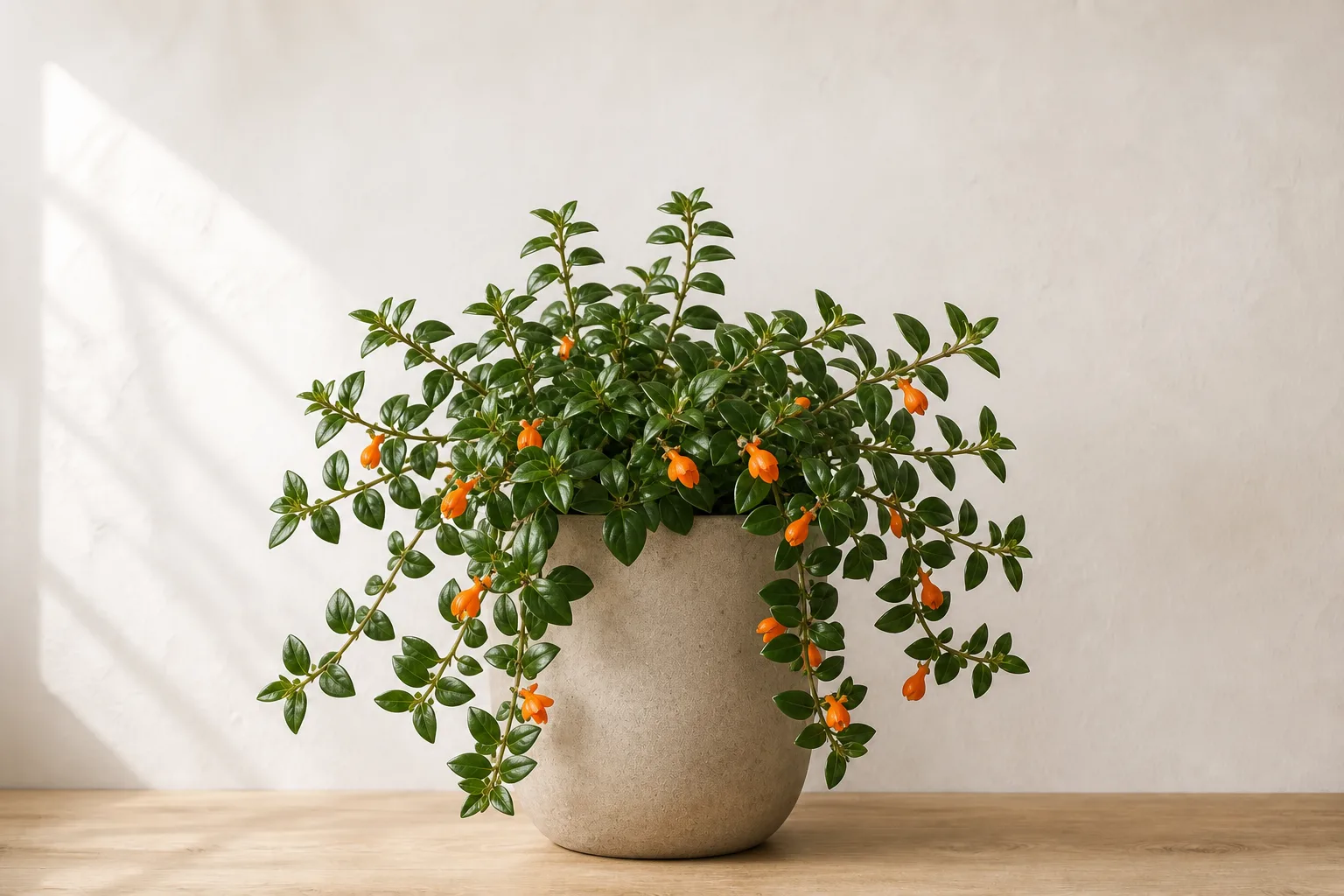
Goldfish plant (Nematanthus gregarius) is a trailing, epiphytic perennial in the African violet family (Gesneriaceae), native to southeastern Brazil. In the wild it grows on trees, drawing moisture and nutrients from the surrounding air and leaf litter. Its small, fleshy, glossy leaves store water, and in summer it produces clusters of bright orange, pouch-like flowers that resemble little goldfish, which gives the plant its common name.
Grow it as a houseplant in peat-free potting compost in bright, filtered light, watering with soft water. It has a trailing habit, so it shines in a hanging basket. Site it near a south-facing window, but not in full sun for extended periods. It cannot tolerate temperatures below about 50°F (10°C), so keep it warm and away from cold drafts.
Light
Aim for bright, filtered light. A spot near a south-facing window, but not in full sun for extended periods, suits it well - an east or west window, or a few feet back from a brighter one, also works. Good light is needed for flowering, and too little light produces leggy growth and few flowers. Avoid long exposure to harsh direct sun, which can burn the foliage.
Water
Water with soft water (rainwater or filtered water is ideal) and let the top of the mix approach dryness between waterings, then water thoroughly and drain. The mix should stay evenly moist during growth without staying soggy, since the fleshy roots rot in standing water. In winter, when growth slows and the plant rests, water less. Empty the saucer after each watering.
Soil and repotting
Use a peat-free, well-drained potting compost with good organic matter in a container with a drainage hole. The plant grows well slightly root-bound, so repot only when roots clearly fill the pot, moving up one pot size in spring. For a hanging basket, choose a pot with good drainage and handle the brittle, fleshy stems gently during repotting.
Temperature, humidity, and fertilizer
Goldfish plant is tropical and cannot tolerate temperatures below about 50°F (10°C); keep it warm, ideally 60-80°F (16-27°C), away from cold drafts and heat vents. It appreciates moderate humidity. Feed with a dilute, balanced liquid houseplant fertilizer every few weeks during spring and summer growth, and reduce feeding in winter. Consistent warmth and bright light matter more than heavy feeding for flowering.
Pruning and propagation
Pinch or trim trailing stems lightly to keep the plant full and compact, and remove spent flowers to encourage repeat bloom. Propagation is straightforward from softwood stem-tip cuttings taken in spring - root them in moist mix or water, and they establish quickly. The plant is also propagated commercially by vegetative means, so any cutting with a few leaves will readily form roots under warm, bright conditions.
Common problems
Start with the pattern, current soil moisture, and recent changes. One symptom can have several causes, so change the most likely factor first and observe before making another major adjustment.
| Symptom | Check first | First action |
|---|---|---|
| Leggy growth and few flowers | Available light and how far the plant sits from the window | Move gradually to brighter filtered light and pinch stems back to encourage a fuller plant. |
| Yellowing leaves | Top-inch soil moisture, drainage, and whether the pot sits in water | Pause watering and confirm the pot drains; check the roots if the mix has stayed wet. |
| Leaf drop or damaged foliage | Recent cold drafts or temperatures below 50°F (10°C) | Move the plant to a warm, draft-free position and avoid further cold stress. |
| Brown, scorched patches | Long periods of direct sun and recent moves | Move the plant gradually to bright filtered light rather than harsh direct sun. |
| Aphids on new growth | Stem tips, leaf undersides, and flower buds | Isolate the plant and identify the pest before treating; use a targeted control. |
Pet and household safety
Goldfish plant (Nematanthus gregarius) is non-toxic to cats and dogs. The ASPCA lists Hypocyrta - the former genus name for this plant group, with the common name 'Goldfish Plant' - as non-toxic to cats and dogs, and NC State lists Nematanthus gregarius as non-toxic for cats, dogs, and horses. Still, 'non-toxic' does not mean edible - chewing any plant material can cause mild stomach upset in pets. Discourage chewing, keep the plant out of reach of curious pets, and contact a veterinarian if a pet seems unwell after eating any part of it.
Frequently asked questions
How often should I water a goldfish plant?
Use soft water and let the top of the mix approach dryness between waterings, then water thoroughly and drain. In winter, water less as growth slows.
What light does a goldfish plant need?
Bright, filtered light - near a south-facing window but not in long, direct sun. Bright conditions are needed for reliable flowering.
Where does goldfish plant grow naturally?
It is native to southeastern Brazil, where it grows as an epiphyte on trees in the wet tropical biome, drawing moisture and nutrients from the air.
Why is my goldfish plant not flowering?
Most often too little light or temperatures too cool. Move it gradually to brighter filtered light, keep it warm, and avoid long periods of direct sun.
How do I propagate a goldfish plant?
Take softwood stem-tip cuttings in spring and root them in moist mix or water under warm, bright conditions. Cuttings with a few leaves root readily.
Is goldfish plant safe for pets?
Yes. The ASPCA lists Hypocyrta (Goldfish Plant) as non-toxic to cats and dogs, and NC State lists Nematanthus gregarius as non-toxic. Still discourage chewing.
Sources and editorial review
This editorial draft is based on the sources below and awaits named horticulture-expert approval before publication.
- Nematanthus gregariusRoyal Botanic Gardens, Kew (Plants of the World Online) · Checked
- Hypocyrta (Goldfish Plant)ASPCA · Checked
- Nematanthus gregarius (Goldfish Plant)North Carolina State University Extension · Checked
- Nematanthus gregarius (Clog Plant)Royal Horticultural Society · Checked
What works well
- Playful, goldfish-shaped orange flowers in summer.
- Compact trailing habit that suits hanging baskets.
- Non-toxic to cats and dogs.
What to consider
- Needs warmth; temperatures below 50°F (10°C) damage the plant.
- Reliable flowering depends on bright light.
- Fleshy stems and roots rot in a soggy pot.