Types of Houseplants: How Growth Habit and Plant Biology Shape Indoor Care
A field guide to the major groups of indoor plants—from aroids and palms to succulents, orchids, ferns, and flowering species—with the practical differences that matter at home.
Key takeaways
- Plant type is most useful when it predicts growth habit, water storage, root structure, light demand, and mature size.
- Foliage plants are not one care group: aroids, palms, ferns, and drought-adapted upright plants respond differently to the same room.
- Succulent describes water storage, while cactus describes a botanical family; many succulents are not cacti.
- Flowering indoors requires enough light and often a seasonal trigger, not simply more fertilizer.
- Use the botanical name to verify identity, toxicity, mature size, and species-specific care rather than relying on a broad retail label.
Why plant type matters
Houseplant is a use category, not a botanical category. Plants grown indoors come from many families, habitats, and growth forms. A tropical vine that climbs a tree, a desert succulent that stores water, an epiphytic orchid that grows on branches, and a palm with one active growing point can all be sold on the same bench. Treating them as interchangeable because they live in pots is the source of many care errors.
Useful classification connects appearance to function. Thick leaves or swollen stems may indicate water storage. Fine fern fronds have less protection from dry air and drought. A climbing aroid may produce larger leaves only when given support. A rosette collects growth around a central crown that should not remain buried or saturated. These traits do not replace species-level research, but they help you ask the right questions.
Start with the botanical name, then identify the growth habit: climbing, trailing, upright, rosette, clumping, palm, bulbous, epiphytic, or succulent. Add the plant's native habitat and seasonal cycle. This framework is more reliable than labels such as tropical or easy care, which can describe very different plants.
Aroids, climbers, and trailing foliage plants
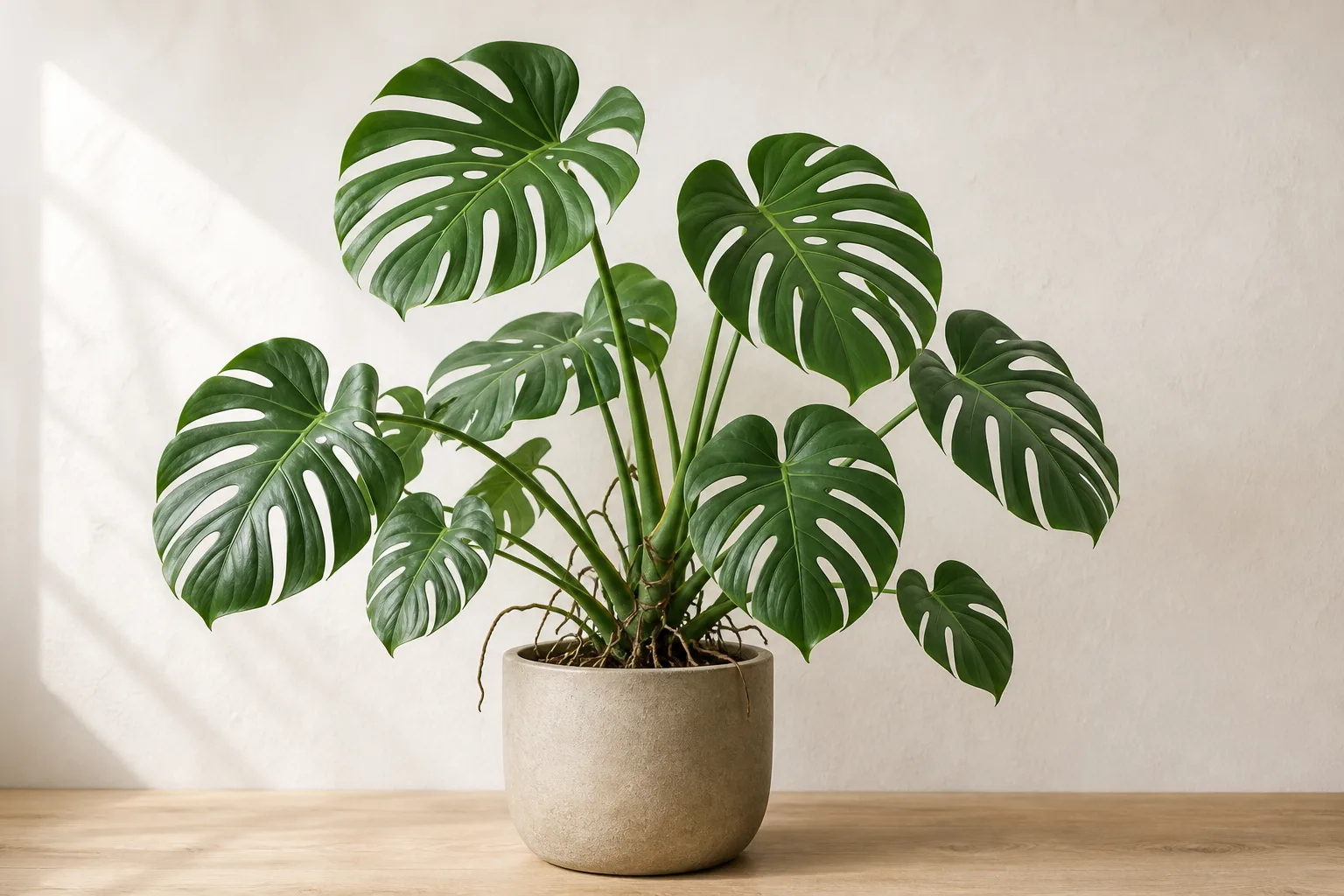
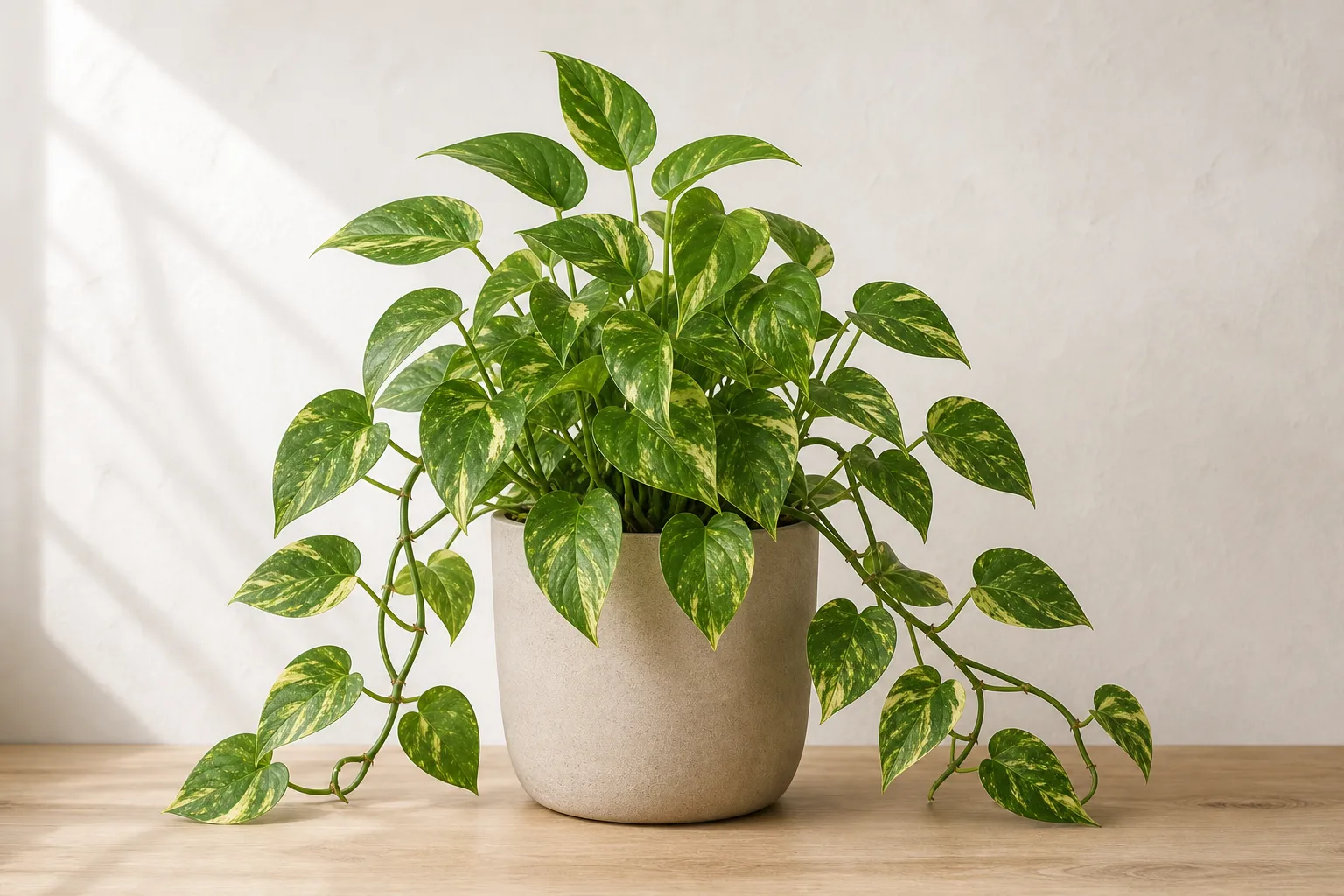
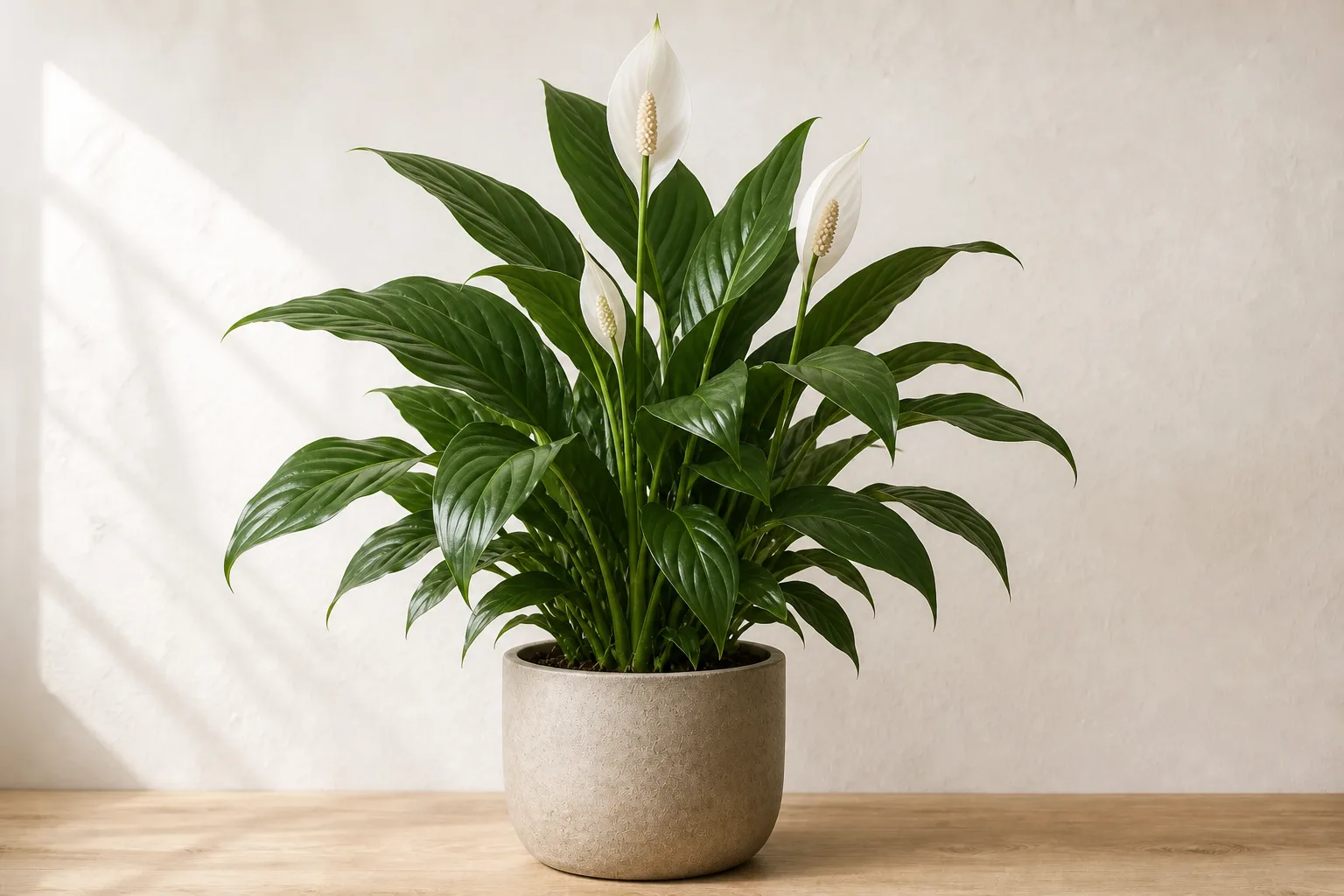
Aroids in the Araceae family include Monstera, Philodendron, Epipremnum or pothos, Anthurium, peace lilies, and many others. They are popular because foliage can remain attractive indoors and many tolerate bright filtered light rather than prolonged direct sun. The group is diverse: some climb, some creep horizontally, some form self-heading rosettes, and some grow from underground rhizomes.
Climbing species often change as they mature. Monstera and climbing philodendrons can develop larger or more divided leaves when light, roots, and support are adequate. A pole or board gives aerial roots a surface and keeps growth organized. Trailing the same plant from a shelf is a valid design choice, but leaves may remain smaller and stems can become sparse when light is weak.
Many aroids prefer an airy mix that drains while retaining moderate moisture. Chunky structure helps oxygen reach roots, but a mix should be adjusted to the room and watering pattern rather than copied from a recipe. Several common aroids contain insoluble calcium oxalate crystals and are unsafe for pets or children to chew, so verify each species before placement.
- Examples: Monstera deliciosa, golden pothos, heartleaf philodendron, peace lily, Anthurium.
- Typical strengths: adaptable foliage, easy propagation in many vines, strong visual variety.
- Common problems: wet dense mix, weak light, unsupported growth, and pest hiding places in new leaves.
Upright and architectural foliage plants
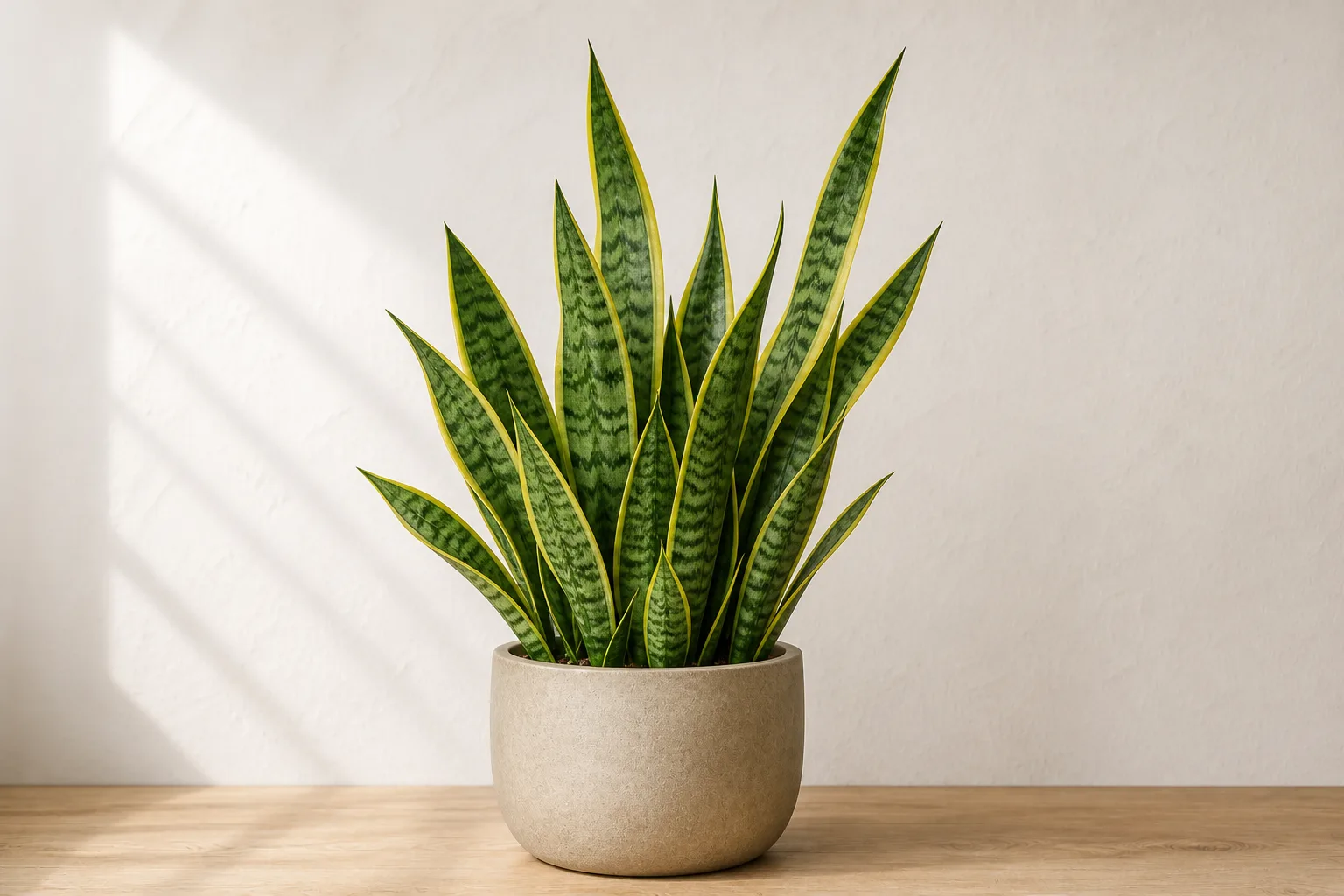
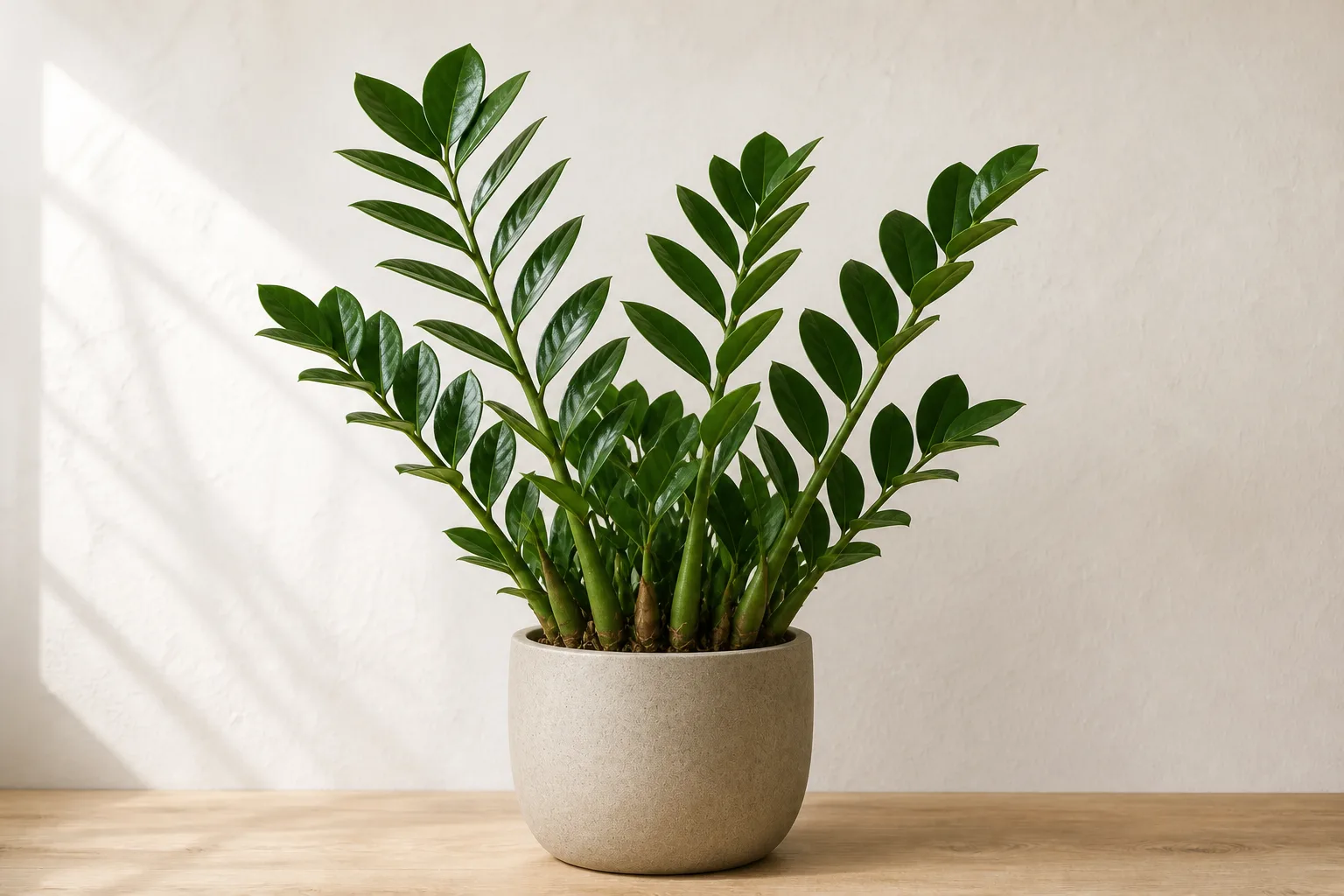
Snake plants, ZZ plants, many Dracaena, and similar upright forms fit narrow floor areas and create structure without long trailing stems. Their appearance can suggest similar care, but the biology differs. Snake plants are drought-adapted and store water in thick leaves and rhizomes. ZZ plants store water in swollen underground rhizomes. Many cane-forming Dracaena hold leaves on woody stems and need more regular moisture than a succulent.
These plants are often described as low-light plants. More accurately, many tolerate lower light while growing slowly. They use water more slowly in dim conditions, which makes frequent watering particularly risky. Bright indirect light usually produces stronger growth, denser foliage, and more predictable drying. Rotate upright plants if they lean, and keep leaf rosettes or canes from sitting in saturated mix.
Architectural plants are useful when floor footprint matters, but confirm mature size. A young Dracaena can eventually reach the ceiling, while a snake plant spreads through rhizomes and can fill a wide pot. Their firm leaves collect dust visibly, so periodic cleaning also provides a chance to inspect for scale, spider mites, or mealybugs.
True palms and palm-like houseplants
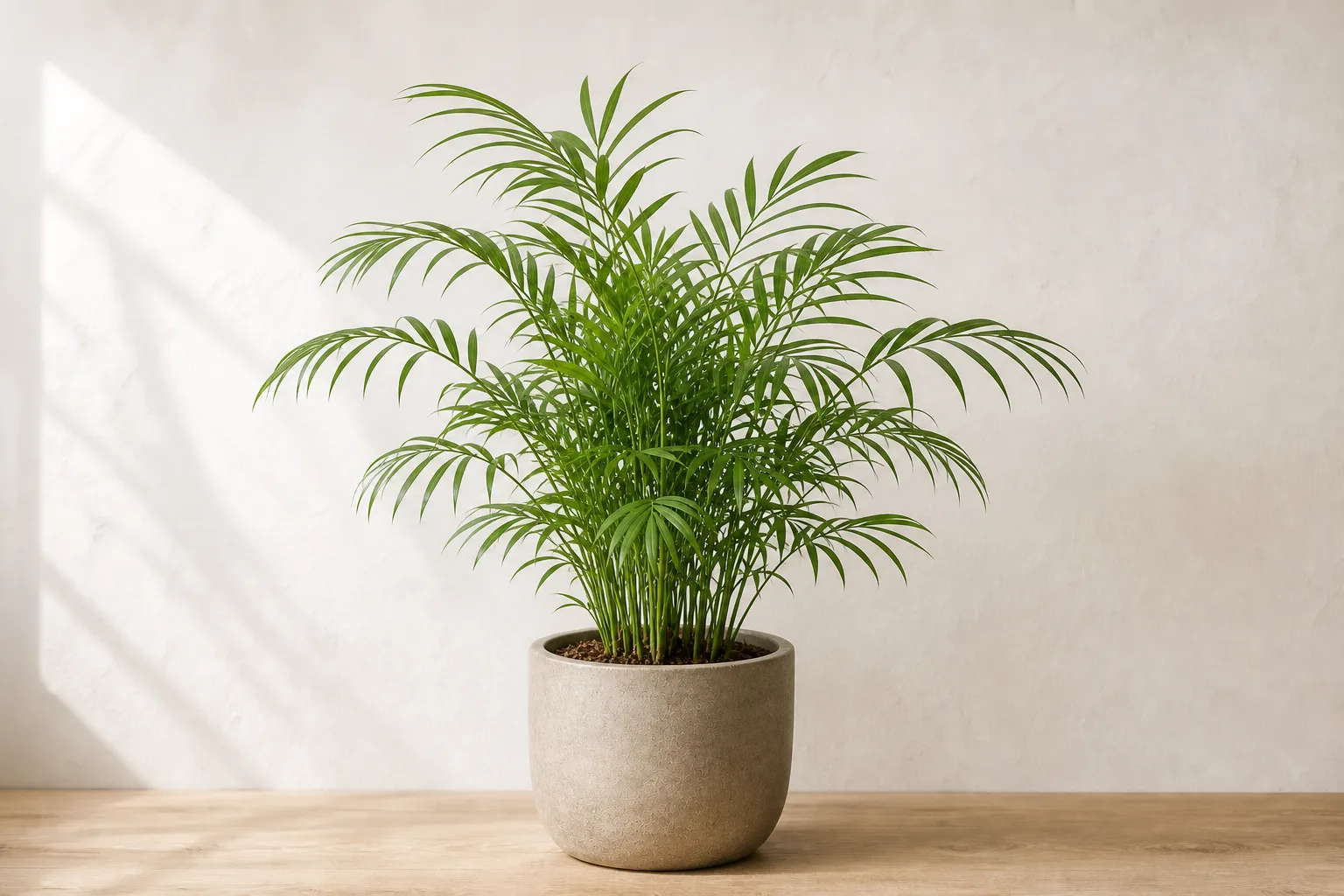
True palms such as parlor palm, areca palm, kentia palm, and lady palm grow from one or more central growing points. Unlike a branching shrub, a palm generally cannot be shortened by cutting the top and expected to branch below the cut. Damage to the only active crown can be permanent, so pruning should focus on fully dead fronds rather than reshaping healthy green growth.
Palms vary in light and humidity tolerance. Parlor palms accept medium and somewhat lower light, while many larger palms need brighter filtered exposure to remain full. Even moisture is often preferable to repeated extreme drought and saturation. Brown tips can reflect several factors, including dry roots, low humidity, mineral accumulation, root damage, or physical injury; trimming the symptom does not identify the cause.
Several unrelated plants carry palm in their common name. Sago palm is a cycad and highly toxic to pets; ponytail palm is a drought-adapted Beaucarnea; Madagascar palm is a succulent Pachypodium. The botanical name matters because these plants have different light, water, pruning, and safety requirements.
- Examples of true indoor palms: Chamaedorea elegans, Howea forsteriana, Dypsis lutescens, Rhapis excelsa.
- Typical strengths: vertical texture, soft fronds, strong use as floor plants.
- Common problems: spider mites in dry conditions, brown tips, poor drainage, and insufficient light for large species.
Ferns and fine-textured moisture lovers
Ferns reproduce by spores rather than flowers and seeds. Common indoor choices include Boston fern, bird's nest fern, maidenhair fern, button fern, and staghorn fern. The label fern still covers a wide range: some form crowns in potting mix, some spread through rhizomes, and epiphytic staghorn ferns can be mounted with their roots protected by specialized shield fronds.
Many ferns have fine foliage and limited drought tolerance. They usually prefer consistent moisture, filtered light, and protection from hot dry air. Consistent does not mean waterlogged; roots still require oxygen. Maidenhair ferns are especially quick to show drought, while bird's nest ferns have broader leaves and should be watered around rather than directly into a constantly wet crown.
Ferns suit growers who enjoy frequent observation. They are less forgiving of a forgotten dry week than a ZZ plant. Brown fronds can result from drought, mineral buildup, low humidity, strong sun, or natural aging. Identify the pattern and recent conditions before increasing water automatically.
Succulents and cacti
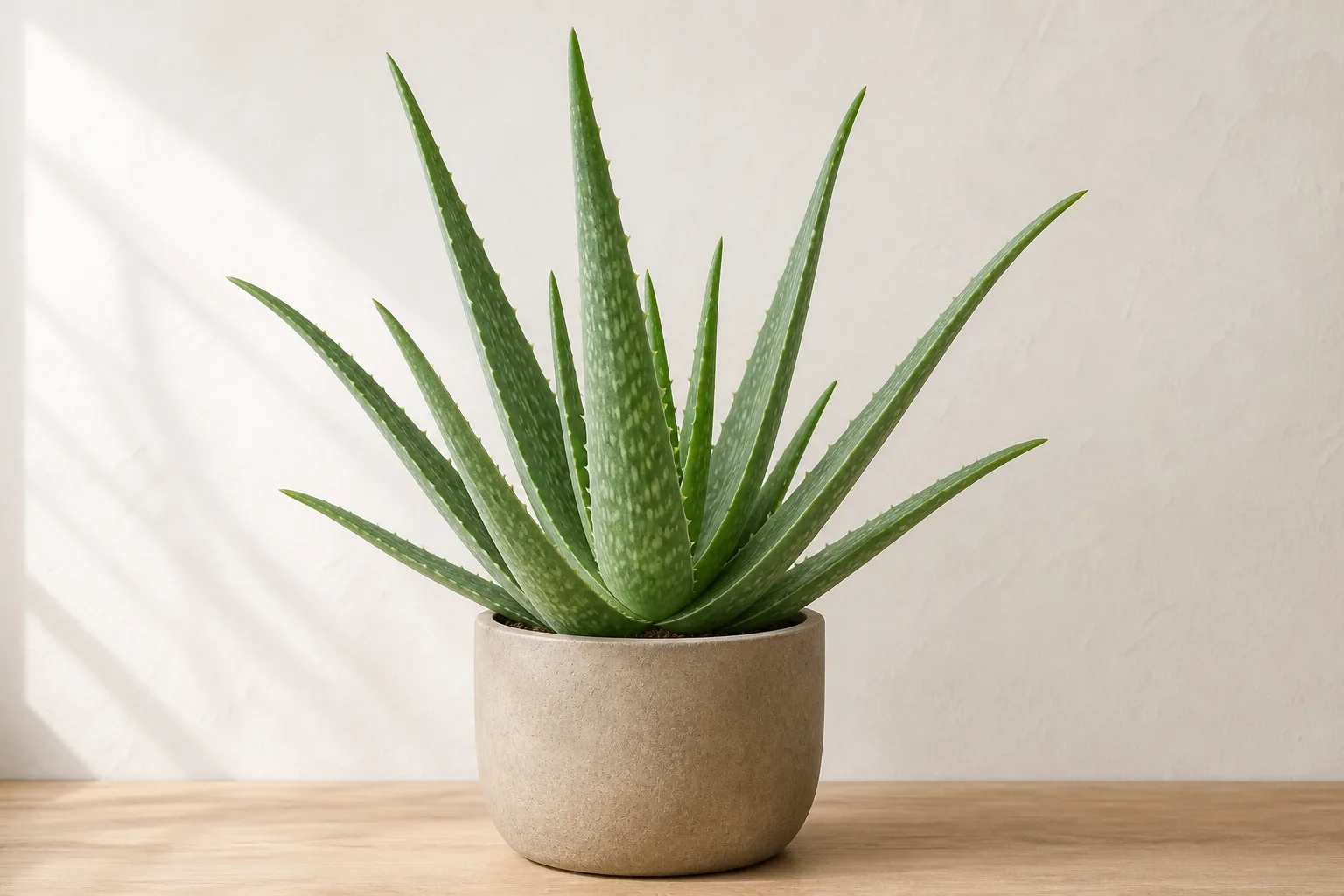
Succulent describes a water-storage strategy: a plant stores water in fleshy leaves, stems, or roots. Cacti are members of the Cactaceae family and are succulents, but many succulents—including Aloe, Haworthia, jade plants, and snake plants—are not cacti. Spines alone do not identify a cactus; cacti have specialized structures called areoles from which spines, branches, or flowers emerge.
Most common indoor succulents need stronger light than foliage plants. A bright window, careful acclimation to direct sun, and free-draining mix help keep growth compact. Stretching, leaning, pale new growth, and large gaps between leaves often indicate inadequate light. Moving a stretched plant suddenly into intense sun can burn it, so exposure should increase gradually.
Water deeply, then allow a substantial dry period. The correct interval changes with species, light, temperature, pot size, and season. Winter growth may slow, and damp conditions become more dangerous. The Royal Horticultural Society notes that many cacti and succulents dislike wet conditions, especially in winter, and may rot when overwatered. Drought tolerance is not an instruction to give tiny sips; it describes the ability to wait between complete waterings.
- Examples: Aloe vera, Haworthia, Echeveria, Crassula ovata, Schlumbergera, Mammillaria.
- Typical strengths: sculptural form, drought tolerance, compact choices for bright windows.
- Common problems: insufficient light, oversized pots, dense mix, and watering before the root zone dries.
Flowering houseplants
Flowering plants convert stored energy into buds and blooms, so adequate light is fundamental. Peace lilies, African violets, begonias, anthuriums, holiday cacti, cyclamen, and flowering bulbs are all sold as indoor color, but their bloom cycles and care differ. A plant may survive in lower light while failing to flower because foliage maintenance requires less energy than bud production.
Some species flower in response to day length, temperature, a cool rest, or a period of drier care. Holiday cacti need seasonal cues; cyclamen prefer cool conditions during active growth; forced bulbs may not perform the same way in a second indoor season. Learn whether the plant is intended as a long-term houseplant or temporary seasonal display before judging rebloom as the only measure of success.
More fertilizer does not force flowers when light or seasonal cues are missing. During active growth, use a suitable fertilizer according to the label and avoid salt accumulation. Remove spent blooms when appropriate, protect developing buds from sudden relocation, and inspect flowers closely because thrips and other pests can hide within them.
Epiphytes, orchids, and bromeliads
Epiphytes grow on other plants for support without taking nutrients from them as parasites. Many orchids, bromeliads, hoyas, and some ferns are epiphytic in nature. Their roots are adapted to high airflow, intermittent moisture, and organic debris rather than dense ground soil. Indoors, that often means a coarse bark-based medium, specialized mount, or very airy potting mix.
Phalaenopsis orchids use thick roots that should be visible and firm rather than hidden in permanently wet mix. Bromeliads often form a leaf rosette or tank, but water management varies by genus and household conditions. Hoyas have thicker leaves and generally prefer a drying interval, while mounted staghorn ferns need a different rhythm. Epiphyte is therefore a useful ecological clue, not one universal watering schedule.
These plants reward close attention to roots and airflow. Transparent orchid pots can make root condition easier to assess. Avoid forcing ordinary potting soil around roots that evolved with large air spaces, and do not assume every epiphyte wants constant high moisture simply because it comes from a humid region.
- Examples: Phalaenopsis orchids, many Anthurium, bromeliads, Hoyas, and staghorn ferns.
- Typical strengths: distinctive flowers or foliage, compact vertical display, specialized forms.
- Common problems: dense media, poor airflow, water trapped in sensitive crowns, and misunderstanding aerial roots.
Specialist groups: carnivorous plants, bulbs, and bonsai
Some indoor plants need care that departs sharply from general houseplant advice. Carnivorous plants such as Venus flytraps, sundews, and many pitcher plants evolved in nutrient-poor habitats. They often require low-mineral water, specialized media without ordinary fertilizer, strong light, and in some cases a winter dormancy. Feeding them fertilizer or planting them in rich indoor mix can cause damage.
Bulbous and tuberous plants store energy underground and may have a distinct active season followed by rest. Amaryllis, caladium, oxalis, and cyclamen should not all be kept in continuous active growth. Reduced foliage may be part of a normal cycle rather than a care failure. Identify the species and understand when water should be reduced or resumed.
Bonsai describes a cultivation practice, not a species. A tropical ficus bonsai and a temperate juniper bonsai have very different requirements; many temperate trees cannot live permanently indoors because they need outdoor light and seasonal dormancy. The small pot also dries faster and leaves less room for error. Specialist groups are rewarding, but they are poor candidates for generalized care rules.
Compare plant types before choosing
The right type depends on the strongest constraint in the room. For low light and infrequent care, slow foliage plants are more realistic than flowering plants or desert succulents. For a bright windowsill, compact succulents or flowering species may use the light well. For shelves, trailing vines and compact rosettes fit more naturally than large palms. For pet households, species-level toxicity must override appearance or growth habit.
Use the table as a first comparison, then open the individual plant profile. Within every type are exceptions. A bird's nest fern differs from a maidenhair fern; a Christmas cactus differs from a desert barrel cactus; a parlor palm differs from an areca palm. Type narrows the questions, while the botanical name provides the final care decision.
| Plant type | Typical light | Moisture pattern | Best fit | Watch for |
|---|---|---|---|---|
| Climbing and trailing aroids | Medium to bright indirect | Moderate dry-down | Shelves, poles, hanging growth | Toxicity, wet dense mix, weak light |
| Upright foliage plants | Low-tolerant to bright indirect | Low to moderate | Narrow floor areas and offices | Slow drying in low light |
| True palms | Medium to bright indirect | Generally even moisture | Soft vertical texture | Crown damage, mites, brown tips |
| Ferns | Filtered medium light | Consistent moisture | Humid rooms and attentive growers | Drought, salts, hot sun |
| Succulents and cacti | Bright light to direct sun | Deep dry-down | Bright windows and lower-frequency care | Stretching and root rot |
| Flowering plants | Usually medium-bright to bright | Species dependent | Seasonal color and active care | Insufficient light and missed seasonal cues |
| Epiphytes | Filtered bright light | Airy roots, intermittent moisture | Specialized displays and collectors | Dense media and poor airflow |
| Specialist plants | Highly species dependent | Specialized | Growers ready for targeted care | Generalized advice |
Frequently asked questions
What are the three basic houseplant types for a beginner?
A useful simplified starting point is foliage plants, cacti and other succulents, and flowering plants. Within each group, growth habit and species still matter. A climbing pothos, upright ZZ plant, and fern are all foliage plants but need different moisture and space.
Are tropical plants always high-humidity plants?
No. Tropical describes geographic climate broadly, not one indoor care recipe. Some tropical understory plants appreciate higher humidity, while ZZ plants and many hoyas tolerate ordinary homes. Root moisture, airflow, temperature, and species adaptation still matter.
Is every cactus a succulent?
Yes, cacti store water and are succulents. Not every succulent is a cactus. Aloe, Haworthia, jade plants, and many Euphorbia are succulent but belong to other plant families.
Which plant types tolerate low light best?
Slow-growing solid-green foliage plants such as ZZ plants, snake plants, Chinese evergreens, cast-iron plants, and some palms generally tolerate lower light better than succulents or flowering plants. Tolerance still requires usable daylight and usually means slower growth.
Which houseplant types are safest for pets?
Pet safety cannot be determined by a broad type. Some palms are considered non-toxic while sago palm is highly dangerous; some trailing plants are safe while pothos is irritating when chewed. Verify the exact botanical name through the ASPCA or a veterinarian.
Why does the botanical name matter when buying a houseplant?
Common names are inconsistent and can be shared by unrelated plants. The botanical name connects the plant to reliable information about mature size, toxicity, growth habit, seasonal cycle, and care. A clear label is part of a responsible purchase.
Sources and further reading
Plantwise uses extension services, horticultural institutions, and specialist safety references to support practical recommendations. Always pair general guidance with the exact botanical name and conditions in your home.
- HouseplantsRoyal Horticultural Society. Overview of indoor plant groups and houseplant growing guidance.
- Houseplant 101Royal Horticultural Society. Beginner introduction to foliage plants, cacti, and succulents.
- Cacti & succulent houseplantsRoyal Horticultural Society. Succulent form, light, drainage, and winter moisture guidance.
- Lighting for indoor plants and starting seedsUniversity of Minnesota Extension. Light requirements, low-light foliage plants, and symptoms caused by unsuitable light.
- Toxic and Non-Toxic PlantsASPCA Animal Poison Control. Species-level pet toxicity reference and emergency guidance.