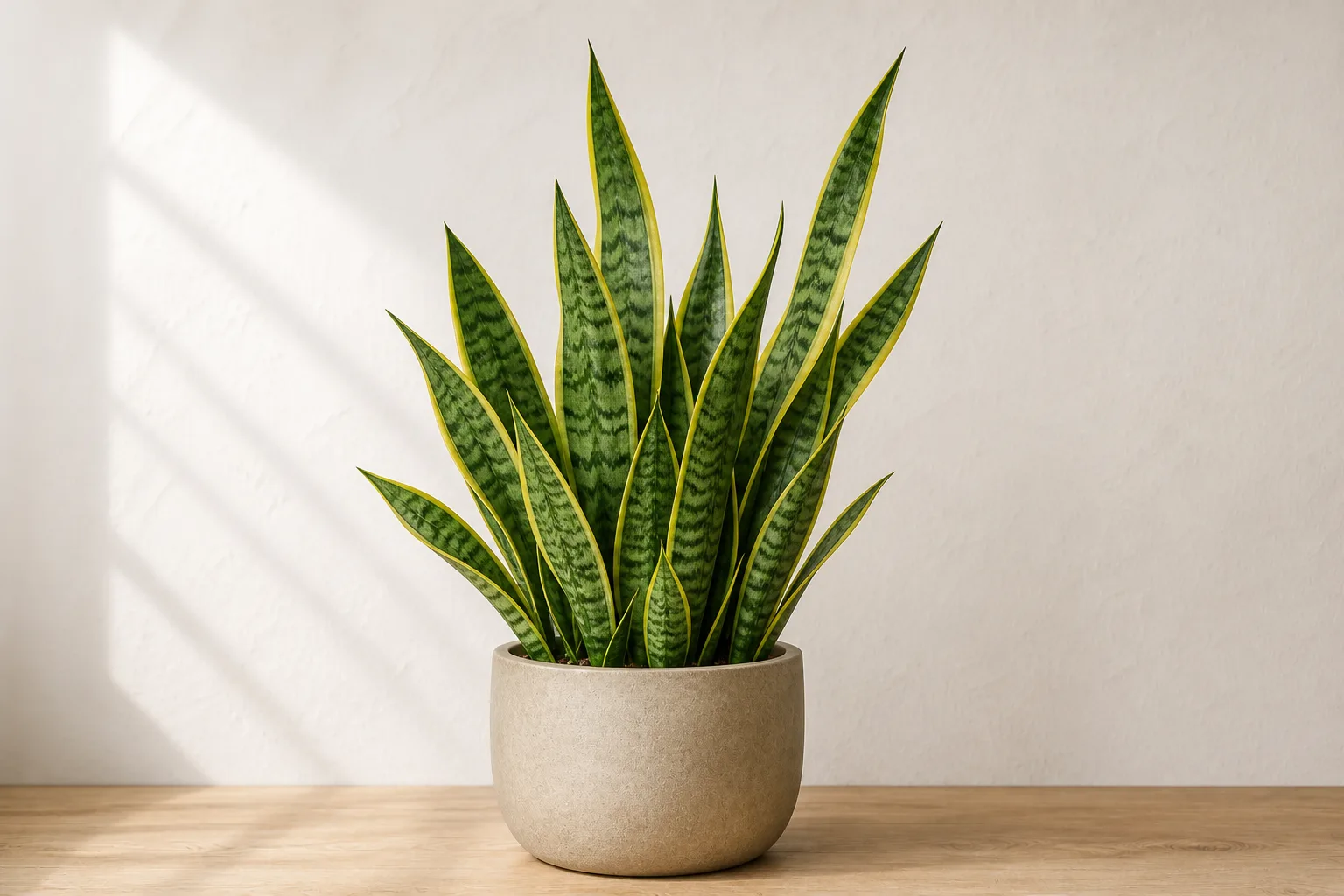
 beginner
Snake Plant
Dracaena trifasciata
Architectural upright leaves and genuinely low watering needs.
Succulents store water in leaves, stems, or roots. Indoors, their biggest risks are weak light, dense soil, and watering again before the root zone dries.
This collection brings plant profiles and care guidance together around the conditions that define succulents & cacti.
The single biggest decision for this group is the window. Most succulents and cacti sold as houseplants come from bright, arid regions and need the strongest indoor light you can offer; a west or south window, or a bright unobstructed east one, is the usual target. In weak light these plants stretch, lose their compact form, and become vulnerable to rot even when watering is careful.
Soil and pot choice matter as much as the watering can. A gritty, fast-draining mix in a pot with a drainage hole lets you water thoroughly—the way these plants prefer—without leaving roots in a damp mass for days. Terracotta helps in humid homes because the pot itself releases moisture.
beginnerDracaena trifasciata
Architectural upright leaves and genuinely low watering needs.
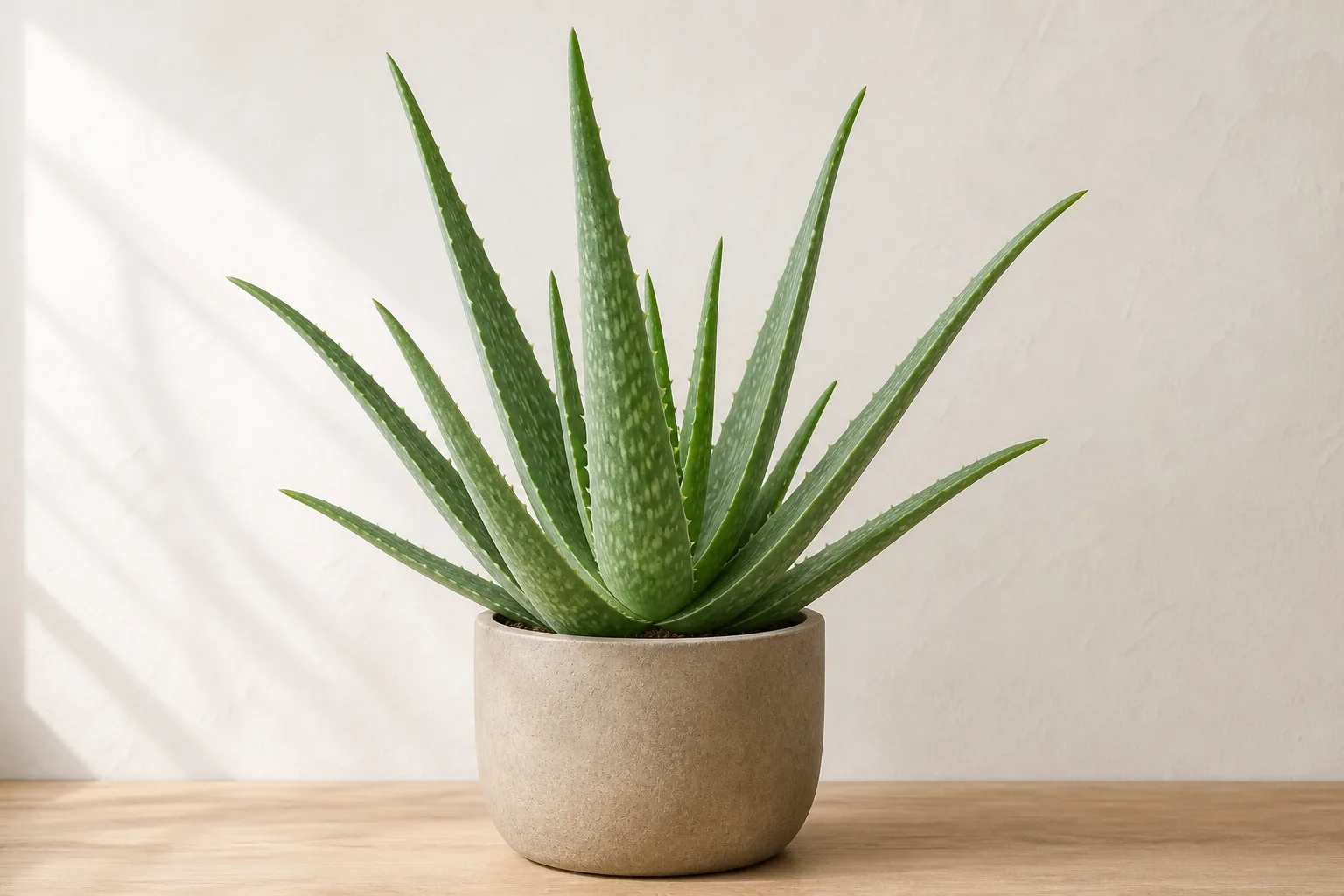 beginner
Aloe vera
A sun-loving succulent with fleshy leaves and a strong preference for dry roots.
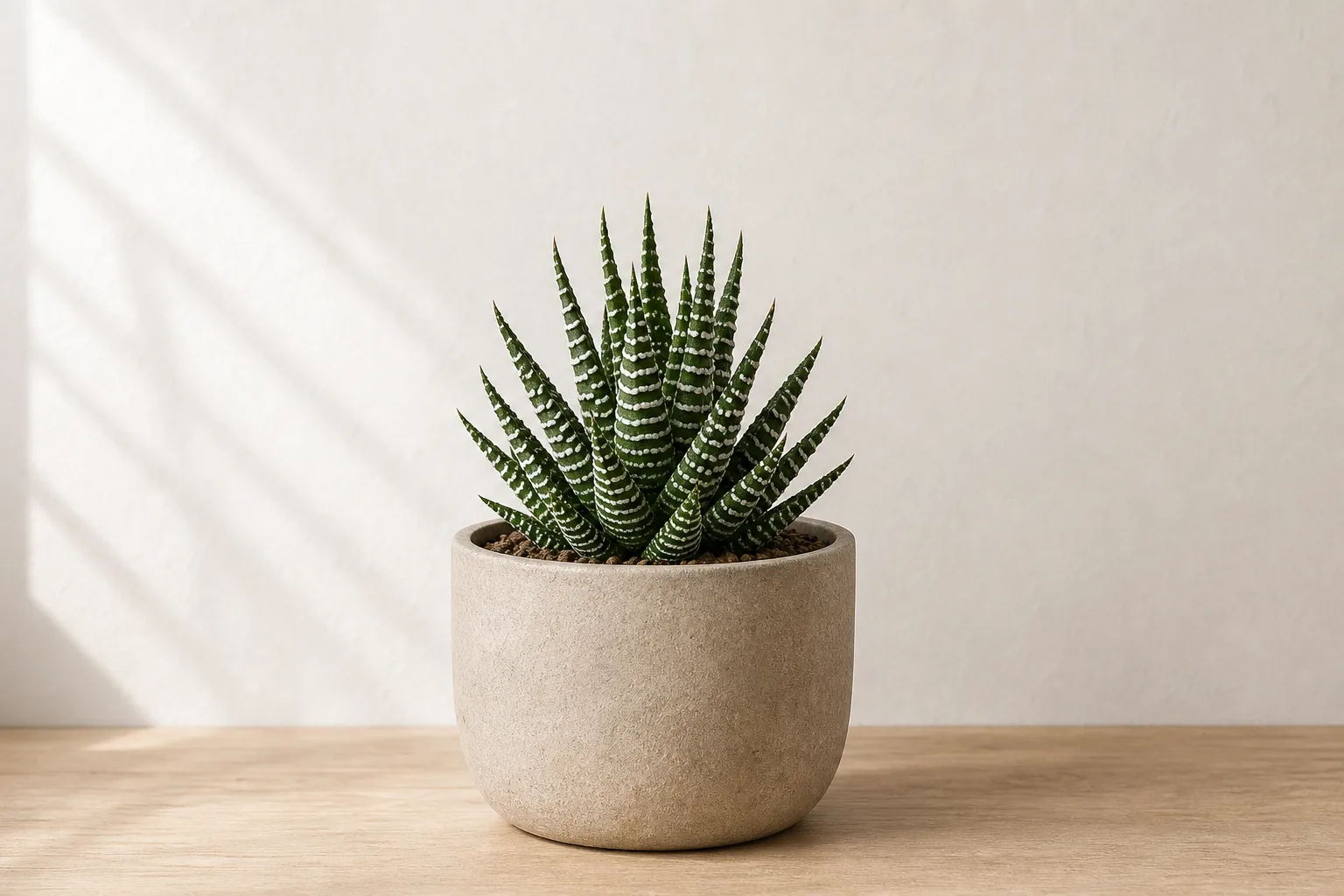 Pet-friendlier
Haworthiopsis attenuata
Haworthiopsis attenuata, the zebra haworthia, is a compact South African succulent with dark green rosettes of pointed leaves banded in white tubercles. Slow-growing, drought-tolerant, and easily propagated from offsets, it is one of the most reliable succulents for a bright windowsill or small desk.
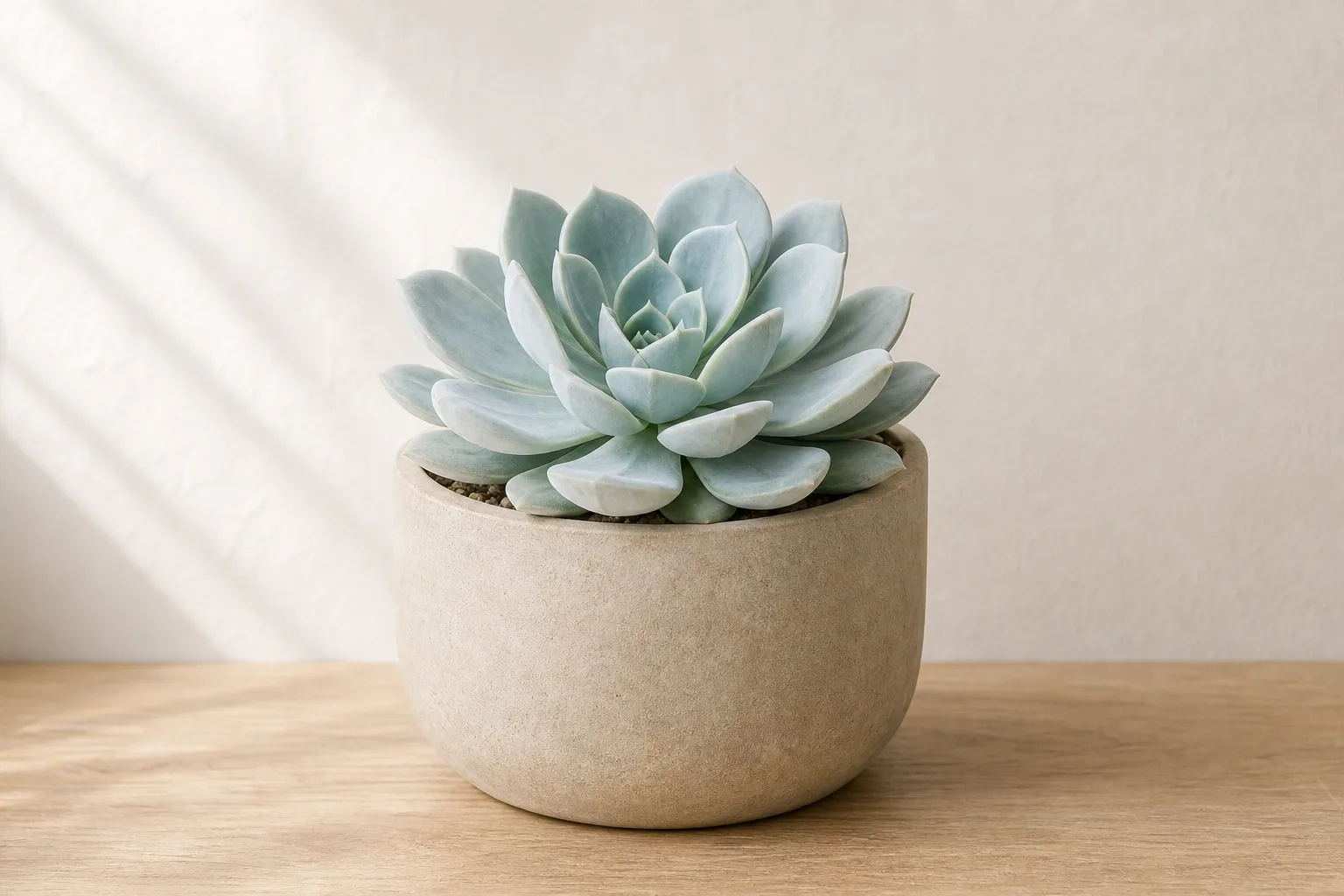 Pet-friendlier
Echeveria elegans
Echeveria elegans, the Mexican snowball, is a rosette-forming succulent from northeastern Mexico with pale blue-green leaves coated in a powdery bloom. Its tight, symmetrical rosettes, pink winter flowers, and easy propagation from offsets or leaves make it a classic for sunny windowsills and succulent collections.
 beginner
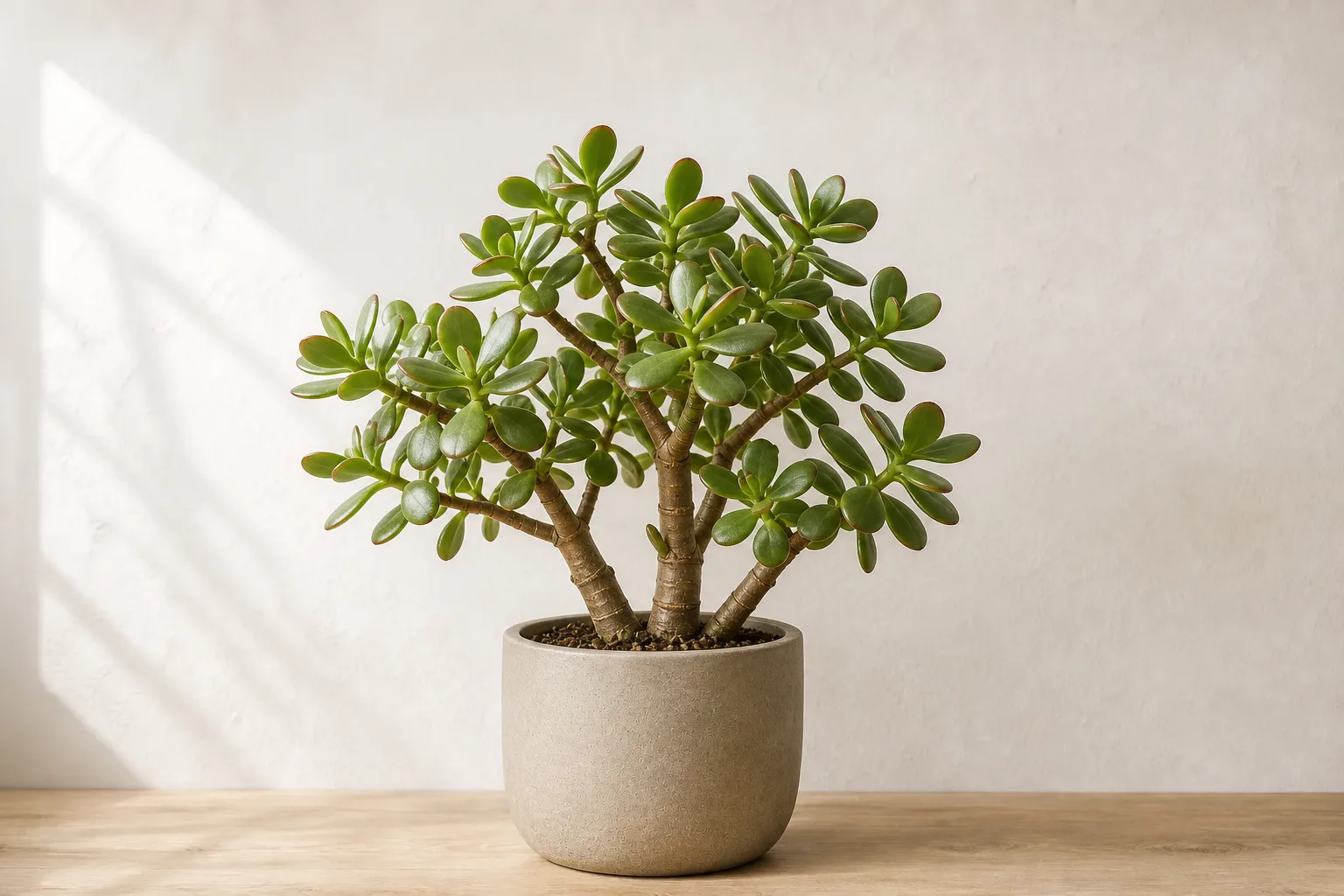
Crassula ovata
Crassula ovata, the jade plant, is a long-lived woody succulent from South Africa and Mozambique with glossy, oval leaves on thickening, trunk-like stems. It forms a miniature-tree silhouette over years, needs bright light and a real dry-down between waterings, and is toxic to cats and dogs if chewed.
 Pet-friendlier
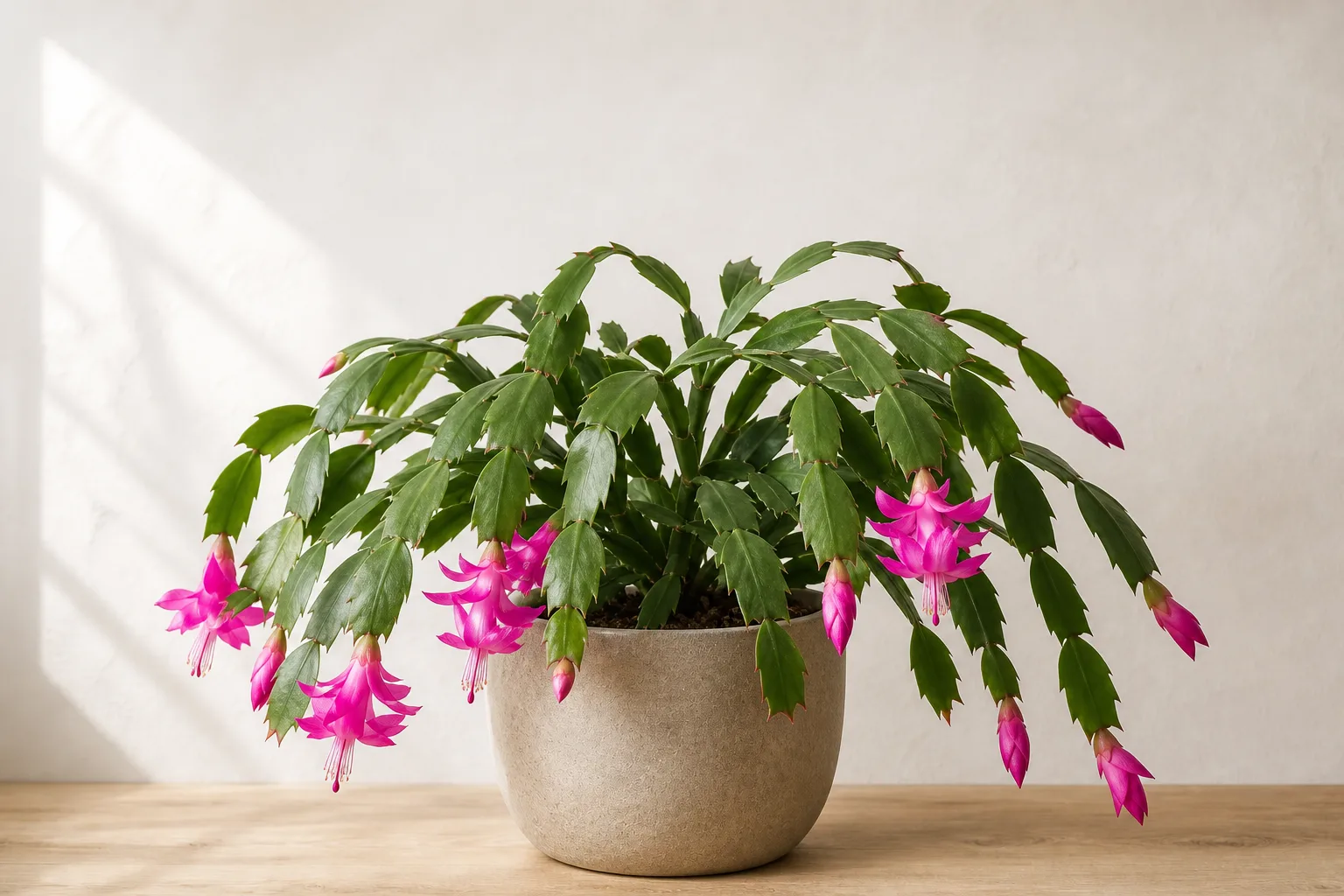
Schlumbergera truncata
Schlumbergera truncata, the Christmas or Thanksgiving cactus, is an epiphytic cactus from the coastal mountains of southeastern Brazil with flattened, segmented stems and vivid winter flowers. Unlike desert cacti it wants filtered light and regular moisture, and it is listed as non-toxic to cats and dogs.
 Pet-friendlier
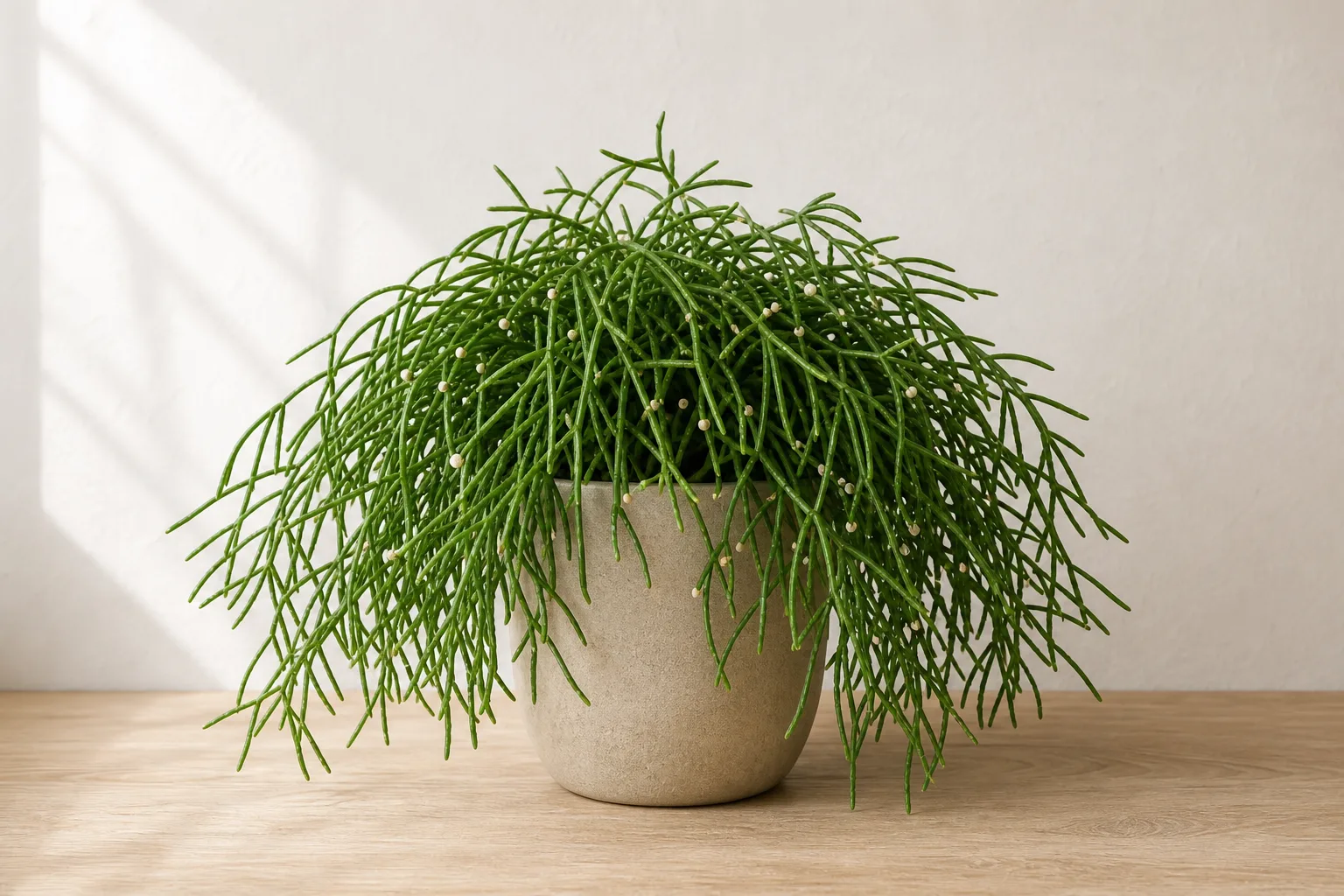
Rhipsalis baccifera
Rhipsalis baccifera, the mistletoe cactus, is a spineless epiphytic cactus with slender, trailing green stems and small white or pale pink berries. One of the world's most widely distributed cacti, it makes an elegant hanging-basket plant that prefers filtered light and more even moisture than desert cacti.
 intermediate
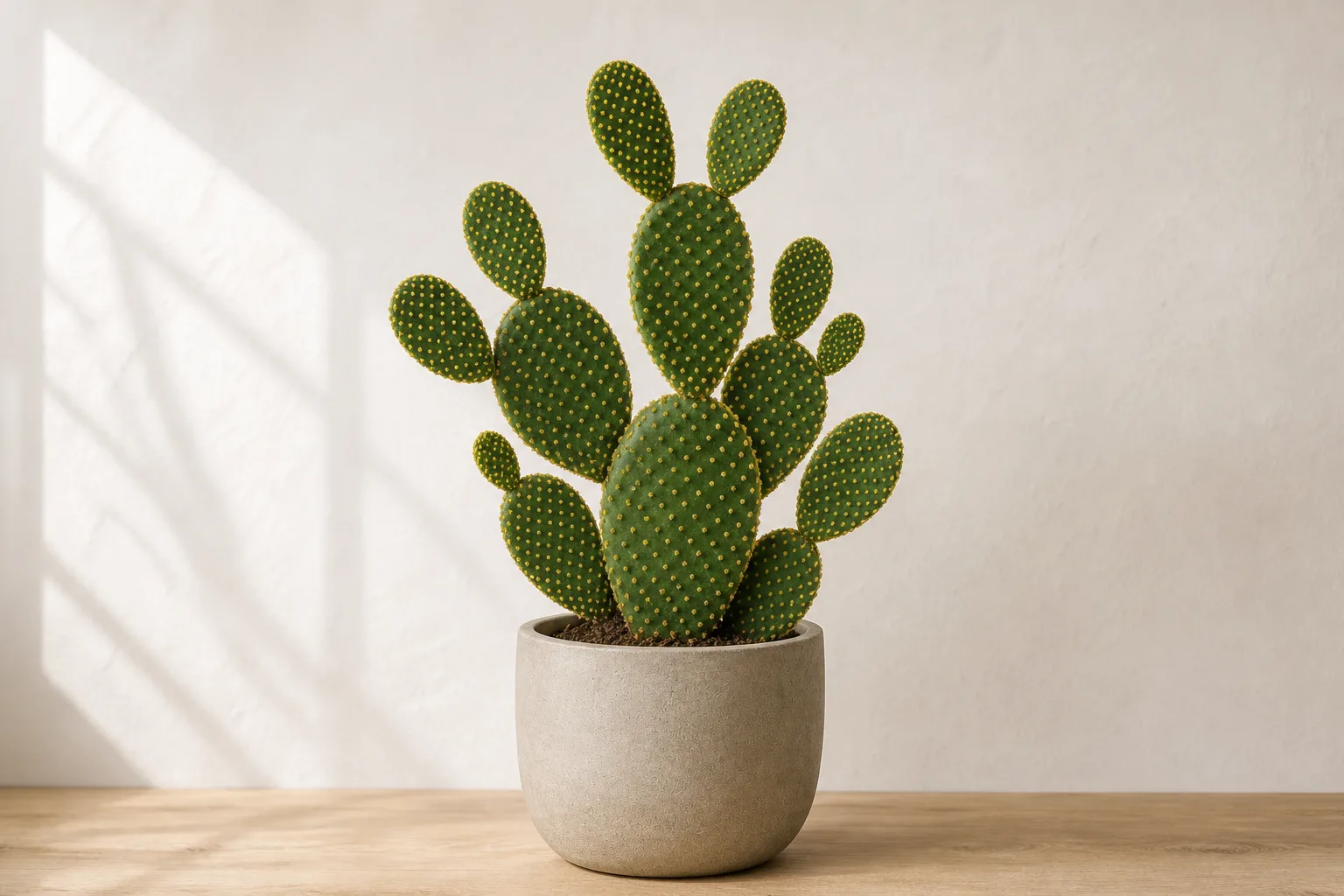
Opuntia microdasys
Opuntia microdasys, the bunny ears cactus, is a Mexican desert cactus with flattened, pad-like stems covered in fine golden glochids instead of true spines. It is a striking, slow-growing windowsill plant, but the barbed glochids detach at the slightest touch and must be treated with care.
 intermediate
Gymnocalycium mihanovichii
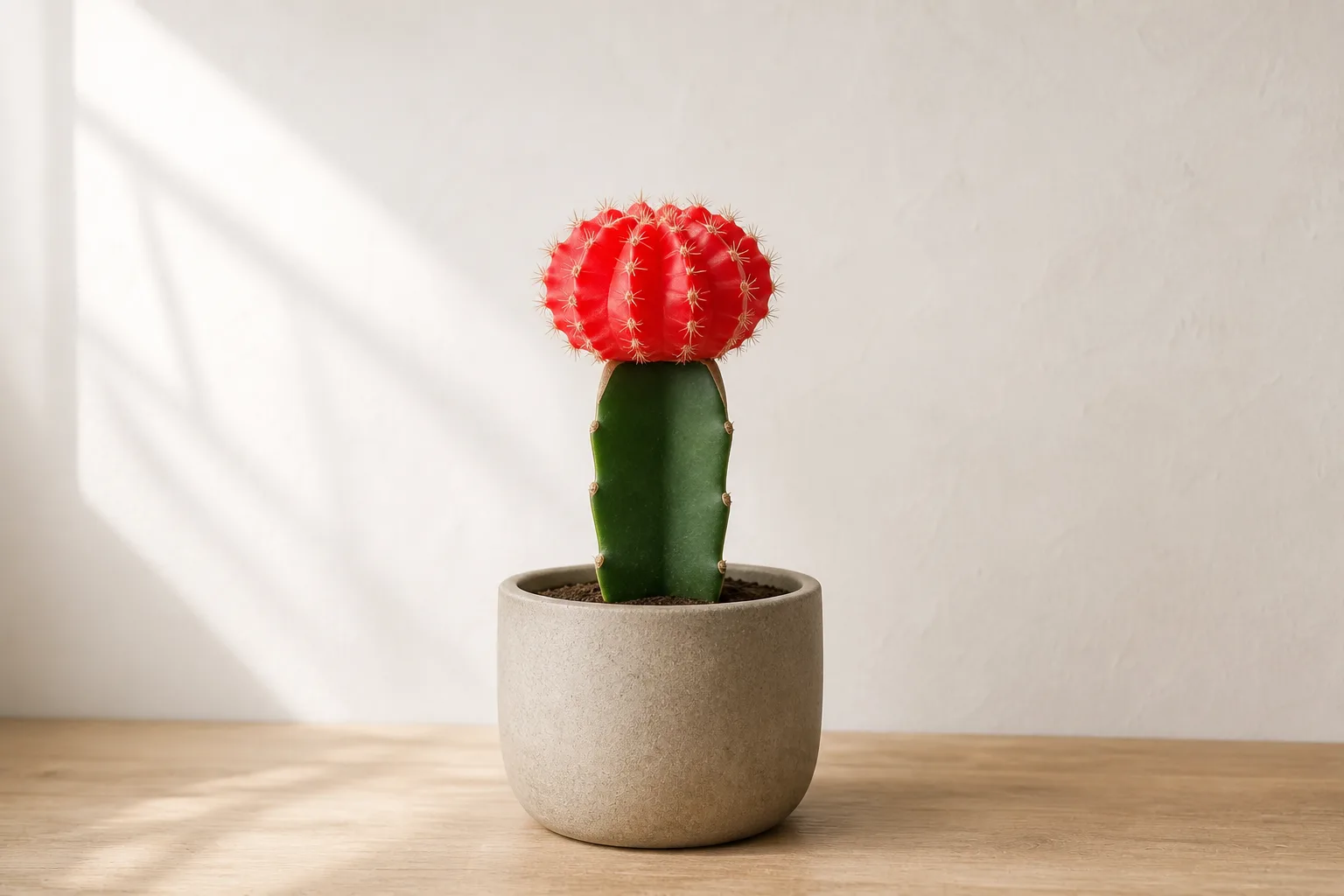
Gymnocalycium mihanovichii, the moon cactus, is a small South American cactus whose chlorophyll-free 'Hibotan' mutants are grafted onto green rootstocks to create the colorful novelty houseplant. The colorful top cannot photosynthesize on its own, so the graft is the whole point - and the whole vulnerability.
 Pet-friendlier
Gasteria bicolor
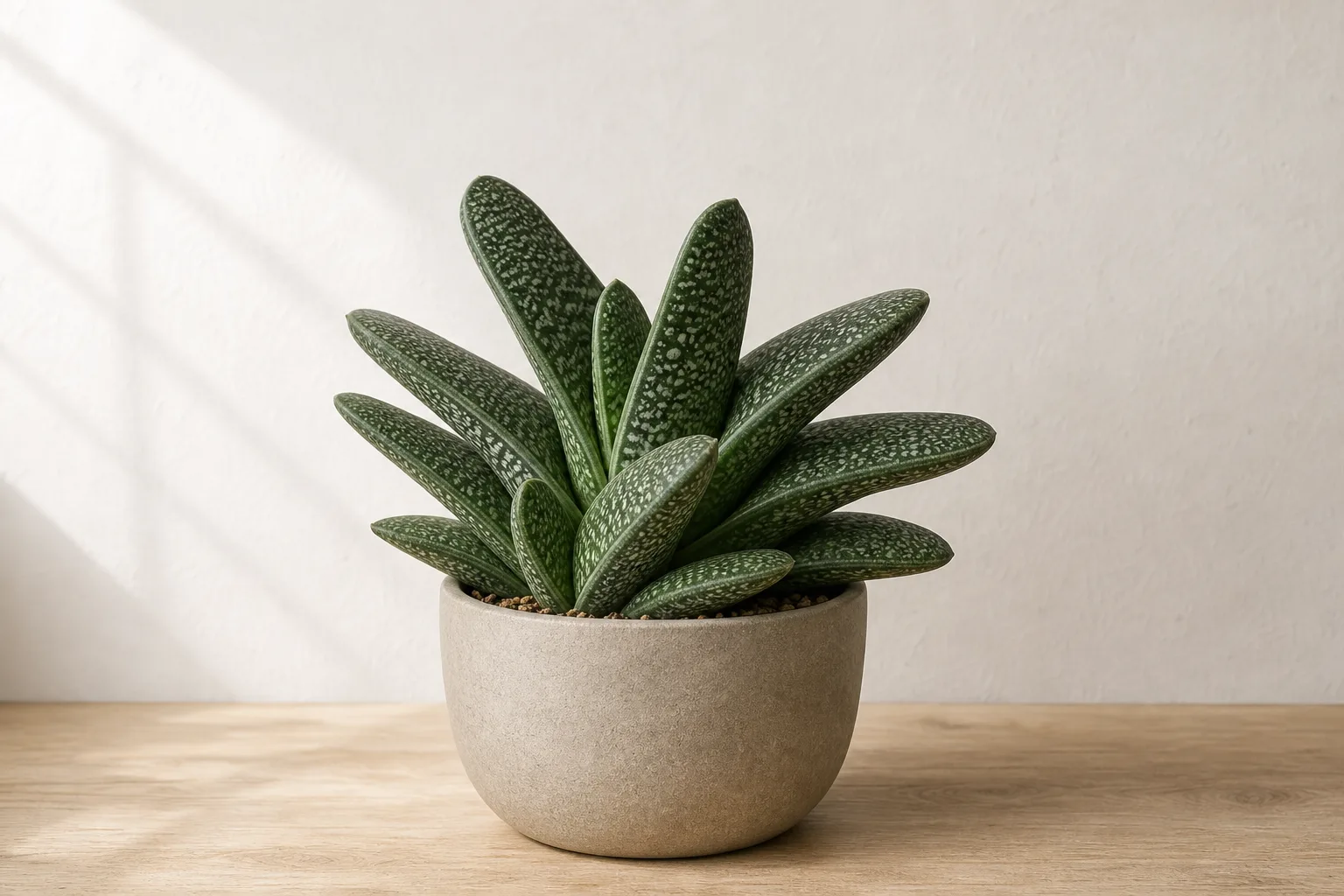
Ox tongue (Gasteria bicolor) is a compact, slow-growing succulent with thick, tongue-shaped leaves mottled with pale speckles and soft bands. Native to the rocky thickets of South Africa's Eastern Cape, it forms tidy rosettes or two-ranked fans and sends up tubular, stomach-shaped flowers in late winter to spring.
 Pet-friendlier
Portulacaria afra
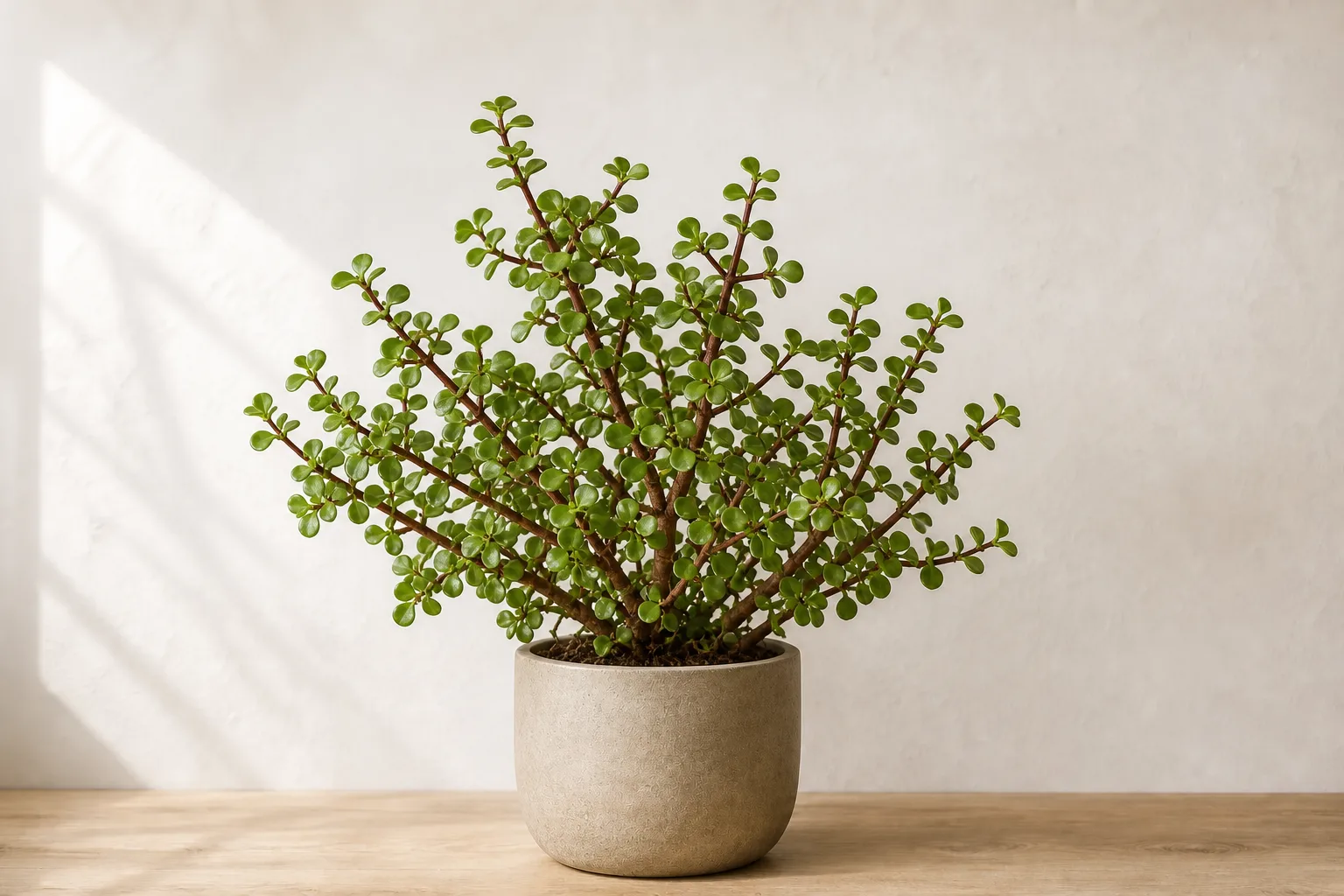
Elephant bush (Portulacaria afra) is a branching, soft-wooded succulent with small, glossy green leaves on reddish stems. Native to the thicket vegetation of southern Africa, it is grown as a houseplant and bonsai subject and tolerates drought far better than a soggy pot.
 Pet-friendlier
Sedum morganianum
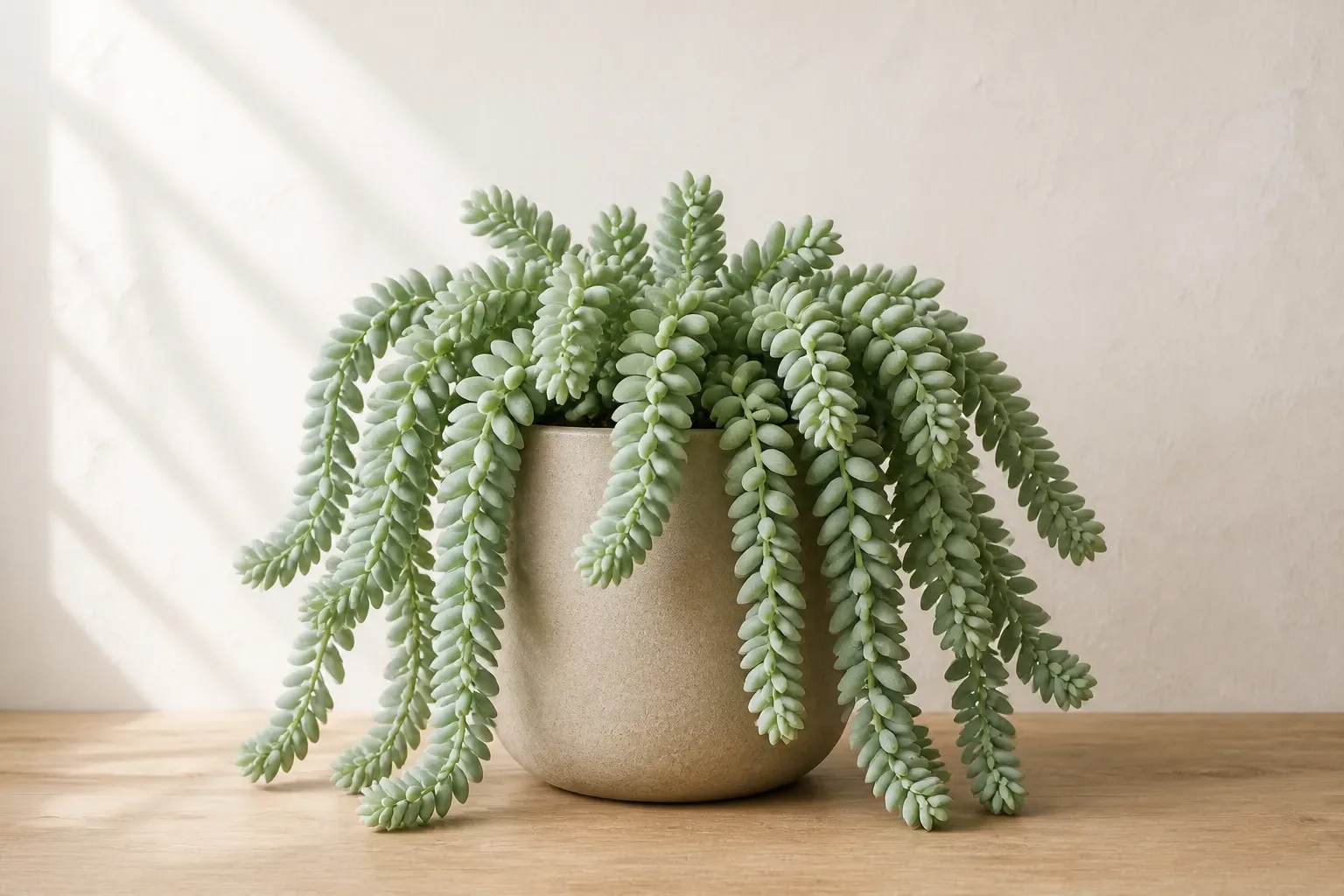
Burro's tail (Sedum morganianum) is a trailing succulent with densely packed, blue-green, bead-like leaves that cascade from hanging baskets. Native to seasonally dry cliffs in southern Mexico, it is prized for its braided 'tails' but its leaves detach at the lightest touch.
 Pet-friendlier
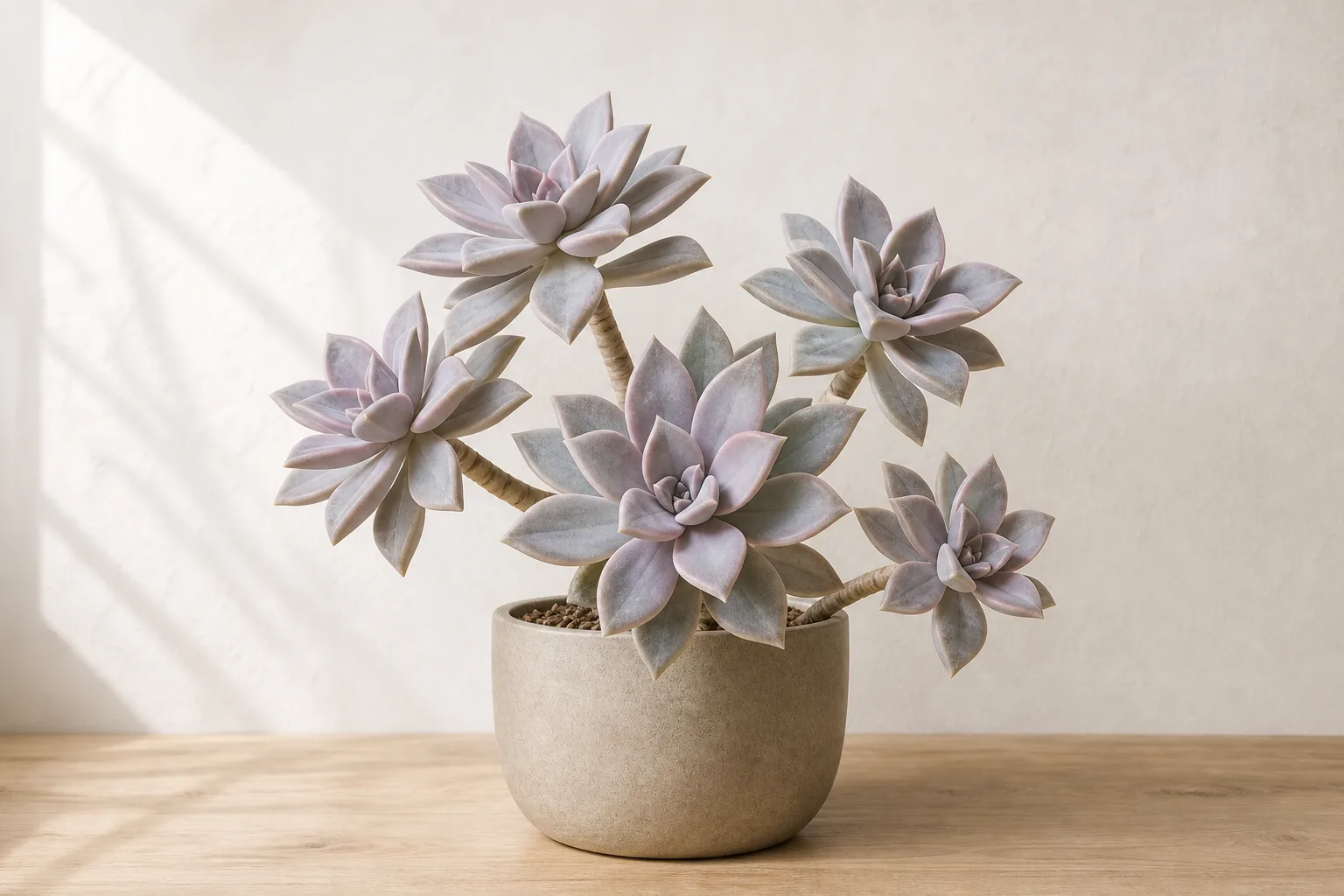
Graptopetalum paraguayense
Ghost plant (Graptopetalum paraguayense) is a rosette succulent with chalky, gray-green leaves that flush pink in bright light and cool nights. Native to Mexico's Tamaulipas, it trails from pots and roots readily from leaves that fall onto the mix.
 Pet-friendlier
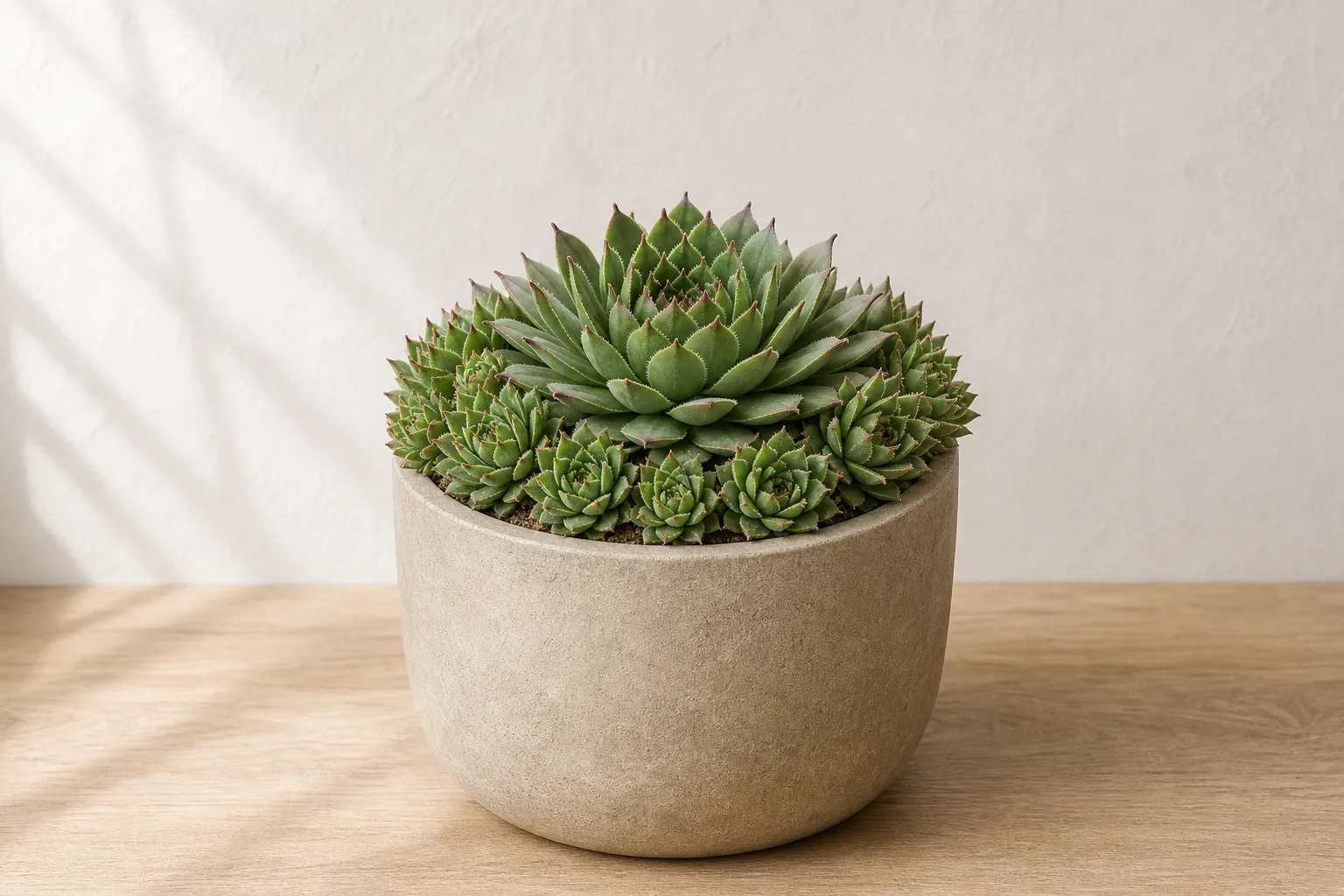
Sempervivum tectorum
Hens and chicks (Sempervivum tectorum) forms tight rosettes of thick, pointed leaves that multiply by offsets ('chicks') around the mother 'hen'. Native to the mountains of southern Europe, it thrives in lean, sharply drained soil and strong light, and the flowering rosette dies after bloom.
 Pet-friendlier
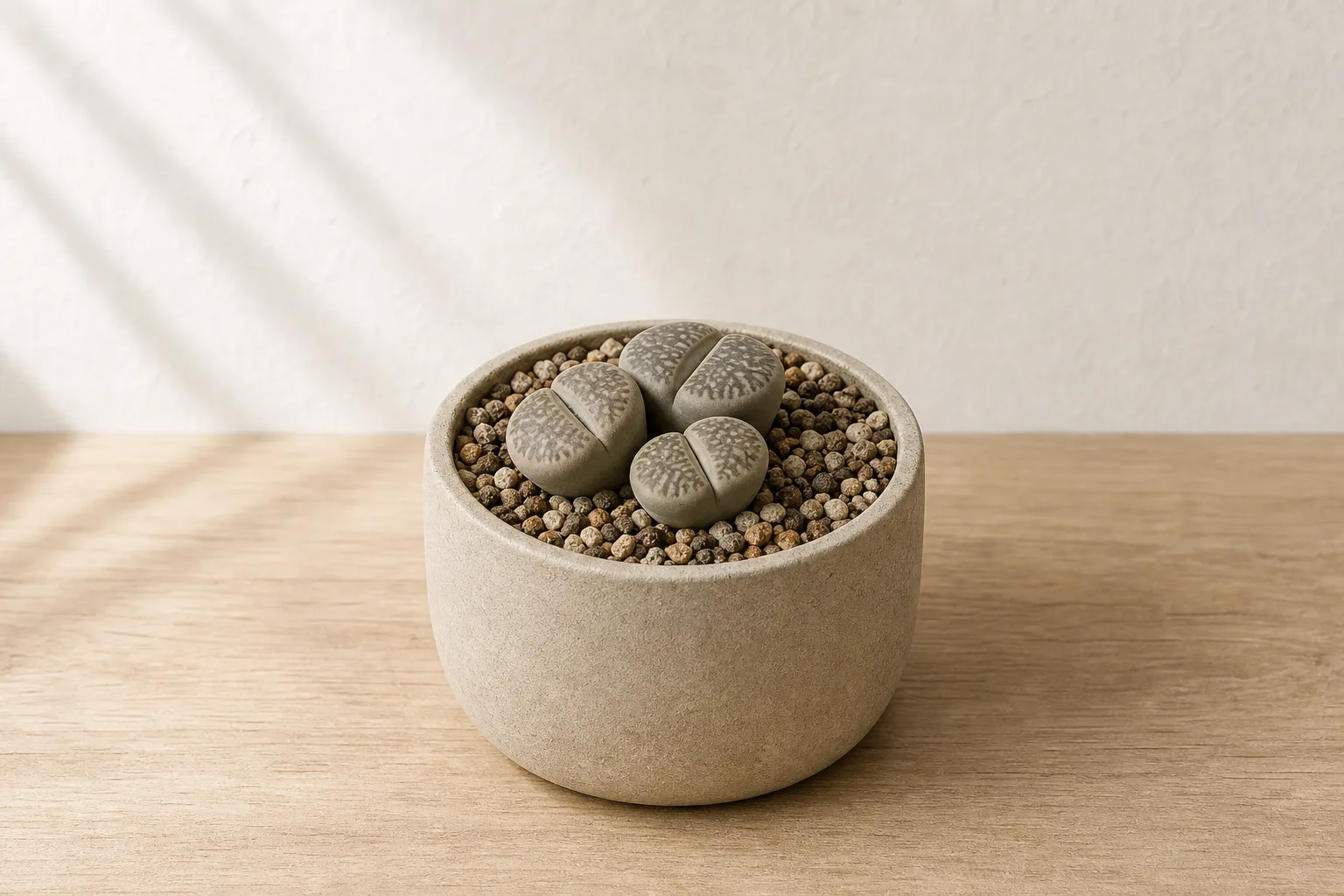
Lithops karasmontana
Living stone (Lithops karasmontana) is a tiny, nearly stemless succulent whose pair of fused, stone-patterned leaves blend into the quartz gravel of its Namibian home. It follows a strict seasonal cycle: it replaces its leaves each year and must be kept dry through much of its rest.
 Pet-friendlier
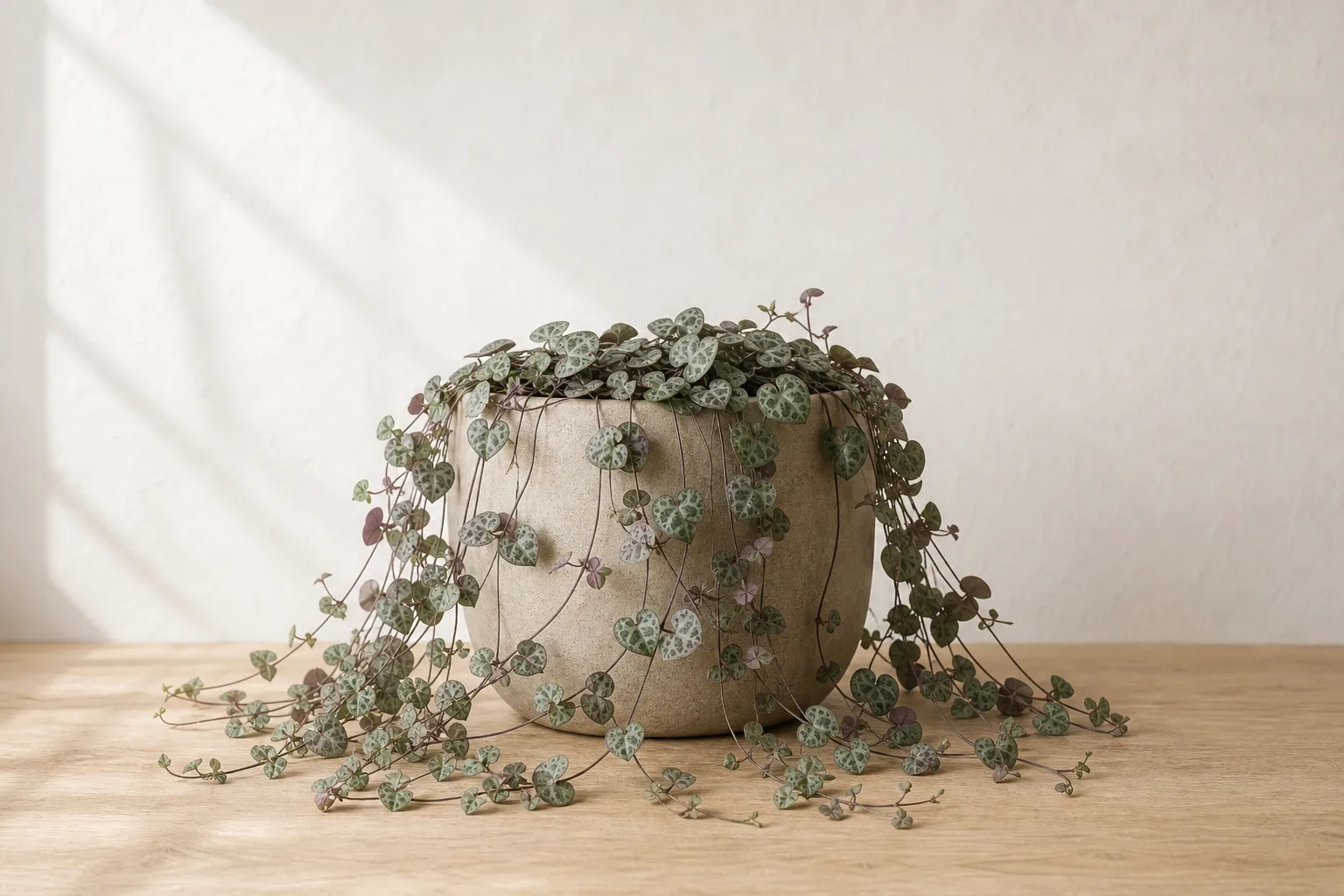
Ceropegia woodii
String of hearts (Ceropegia woodii) is a fine, trailing succulent vine with silver-marbled, heart-shaped leaves on wiry purple stems. Native to southern Africa, it forms aerial tubers along its vines, roots wherever a node touches moist soil, and is commonly listed as non-toxic to cats and dogs.
 intermediate
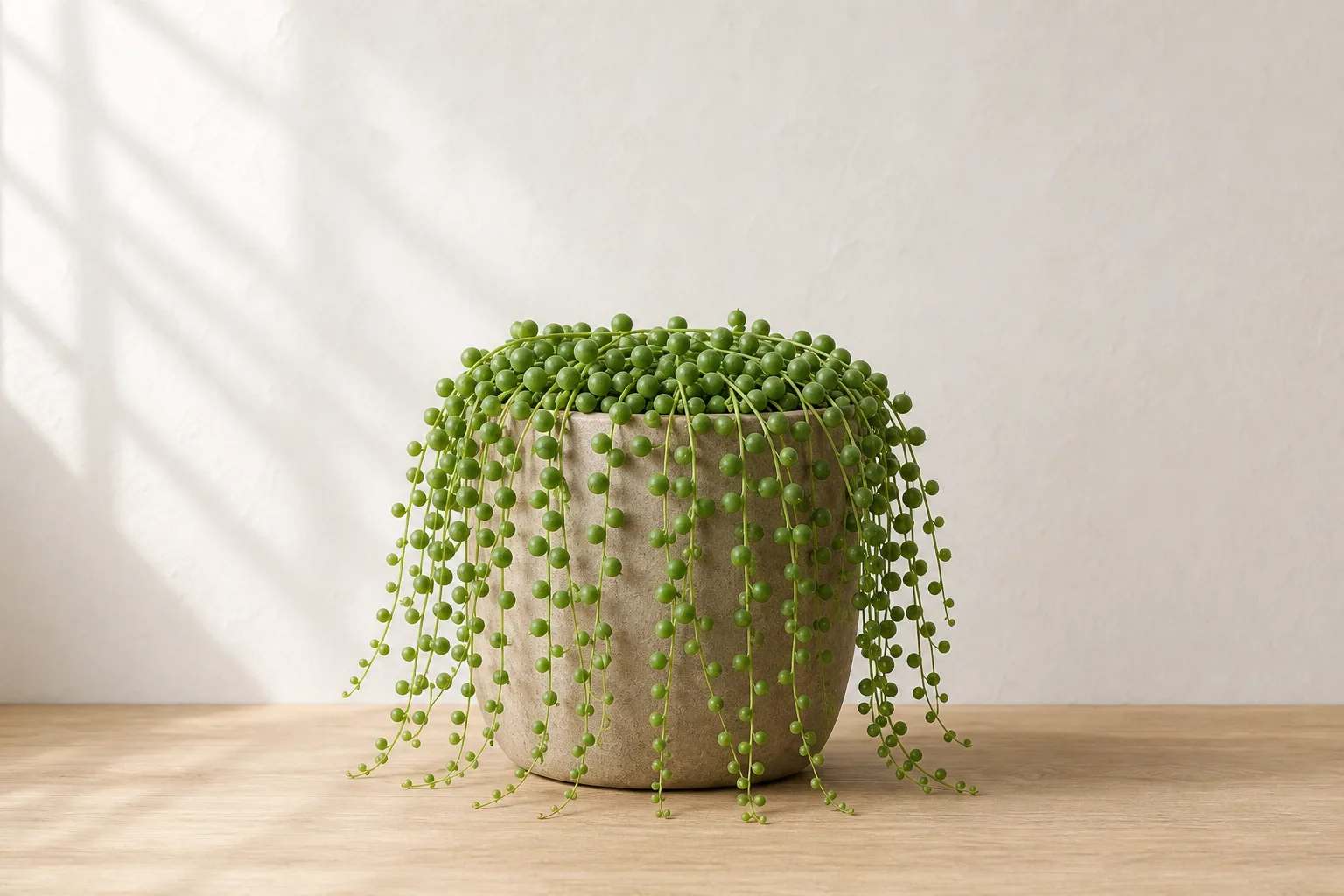
Curio rowleyanus
String of pearls (Curio rowleyanus) is a trailing succulent whose spherical, pea-like leaves with translucent 'windows' store water on wiry stems. Native to the drier parts of southwest Africa, it is grown in hanging baskets and is toxic to pets if chewed.
 beginner
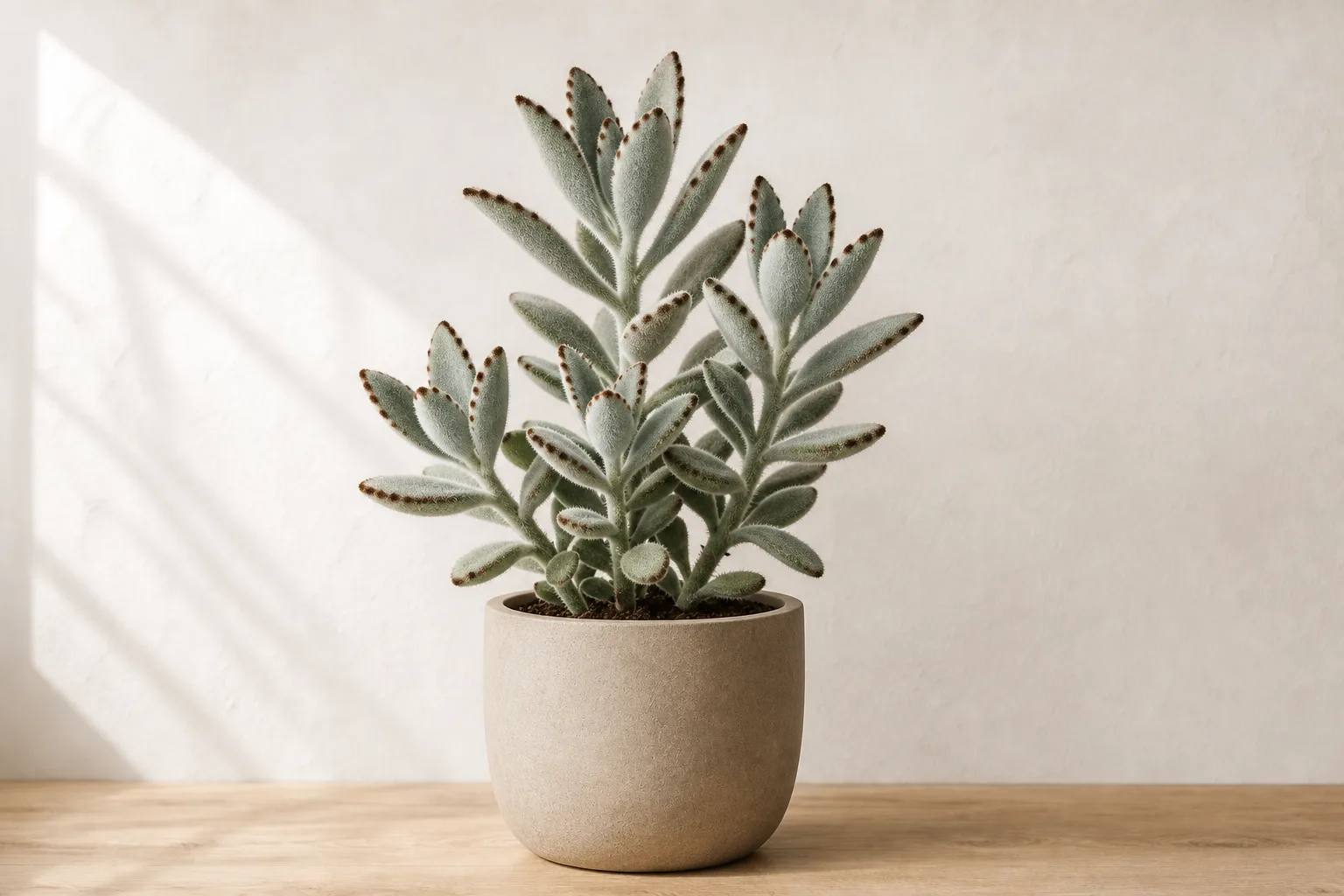
Kalanchoe tomentosa
Panda plant (Kalanchoe tomentosa) is a fuzzy-leaved succulent with felted, gray-green leaves edged in chocolate-brown. Native to the rocky granite country of central Madagascar, it is a slow, upright grower that is toxic to cats and dogs because of the bufadienolides in its tissues.
 intermediate
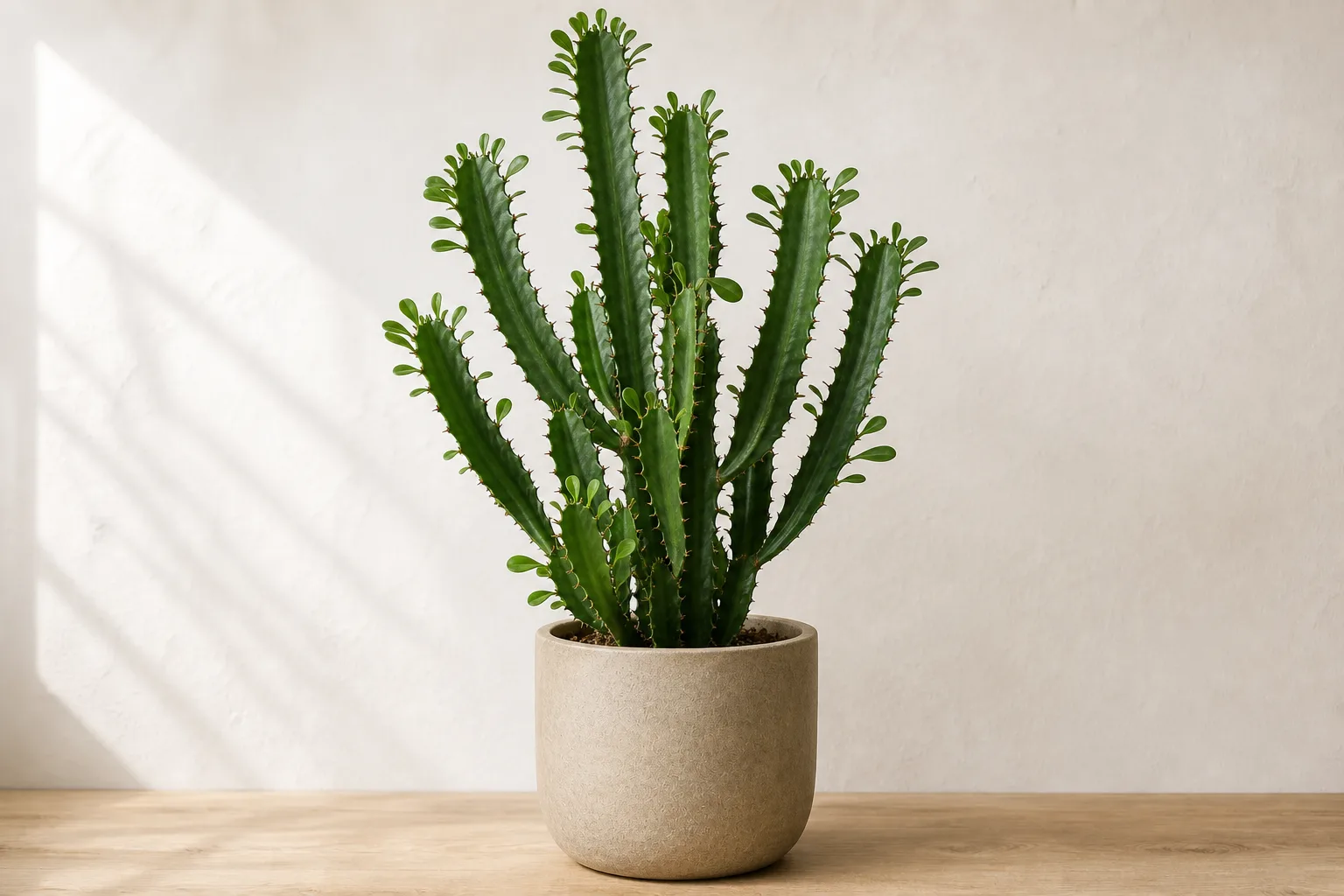
Euphorbia trigona
African milk tree (Euphorbia trigona) is a fast-growing, upright succulent shrub with three-angled green stems, small spines, and short-lived leaves. Native to seasonally dry forests from Gabon to Malawi, it is grown for its architectural candelabra form and must be handled with care because its white sap irritates skin and eyes.
 Pet-friendlier
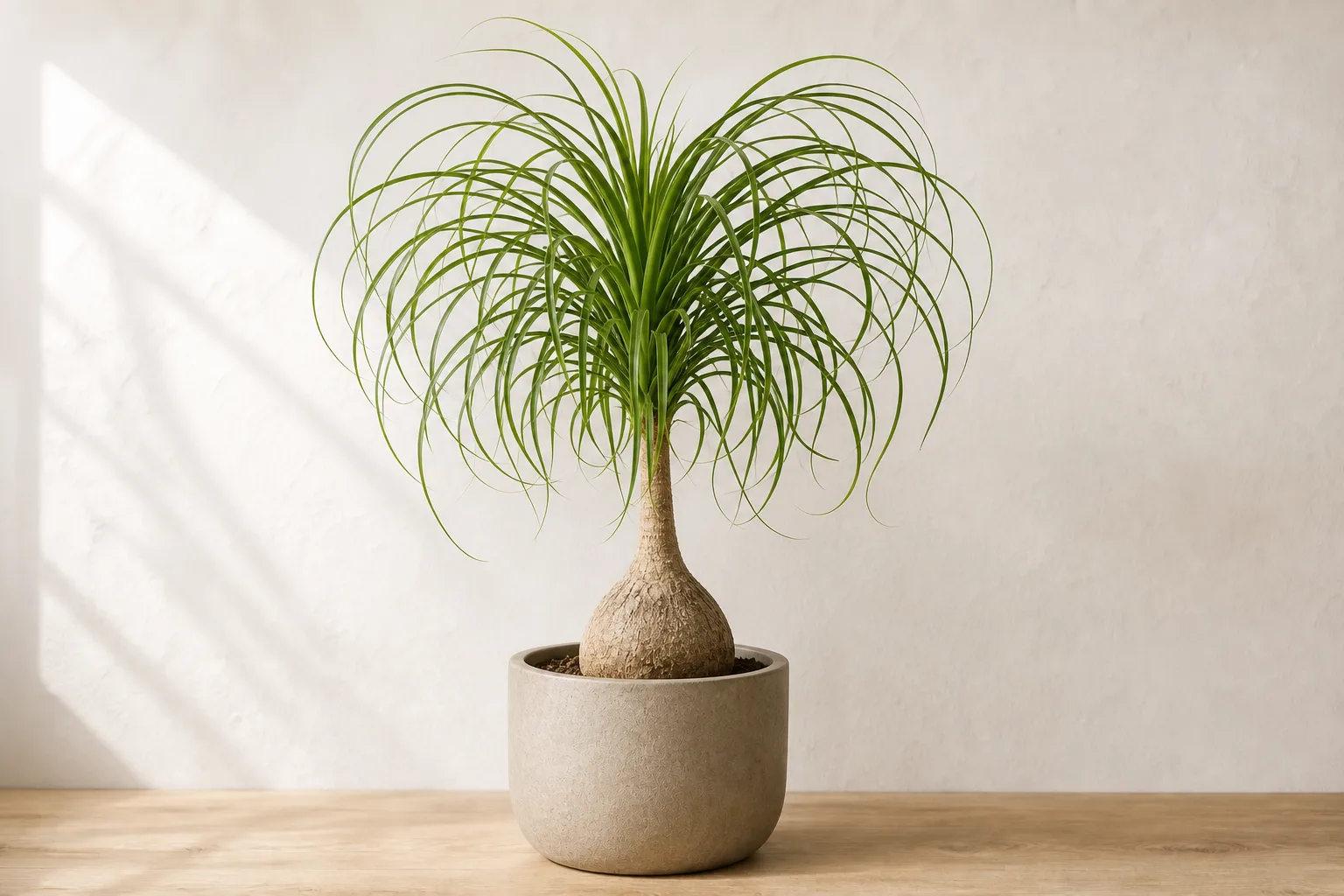
Beaucarnea recurvata
Ponytail palm (Beaucarnea recurvata) is not a true palm but a caudiciform succulent from the semi-desert regions of Mexico. Its swollen, trunk-like base stores water, and a fountain of arching, strap-like leaves erupts from the top. Slow-growing and long-lived, it thrives on bright light and long dry spells between deep waterings, making it nearly foolproof. The leaves are non-toxic to pets.
Water deeply rather than frequently, then wait until the mix is dry throughout before watering again.