Key takeaways
- Place it in bright filtered light; the purple leaf color deepens with more light.
- Allow the surface to dry between waterings, and let the plant rest if foliage dies back.
- Toxic to cats, dogs, and horses - Oxalis contains soluble calcium oxalates.
How to care for Purple Shamrock
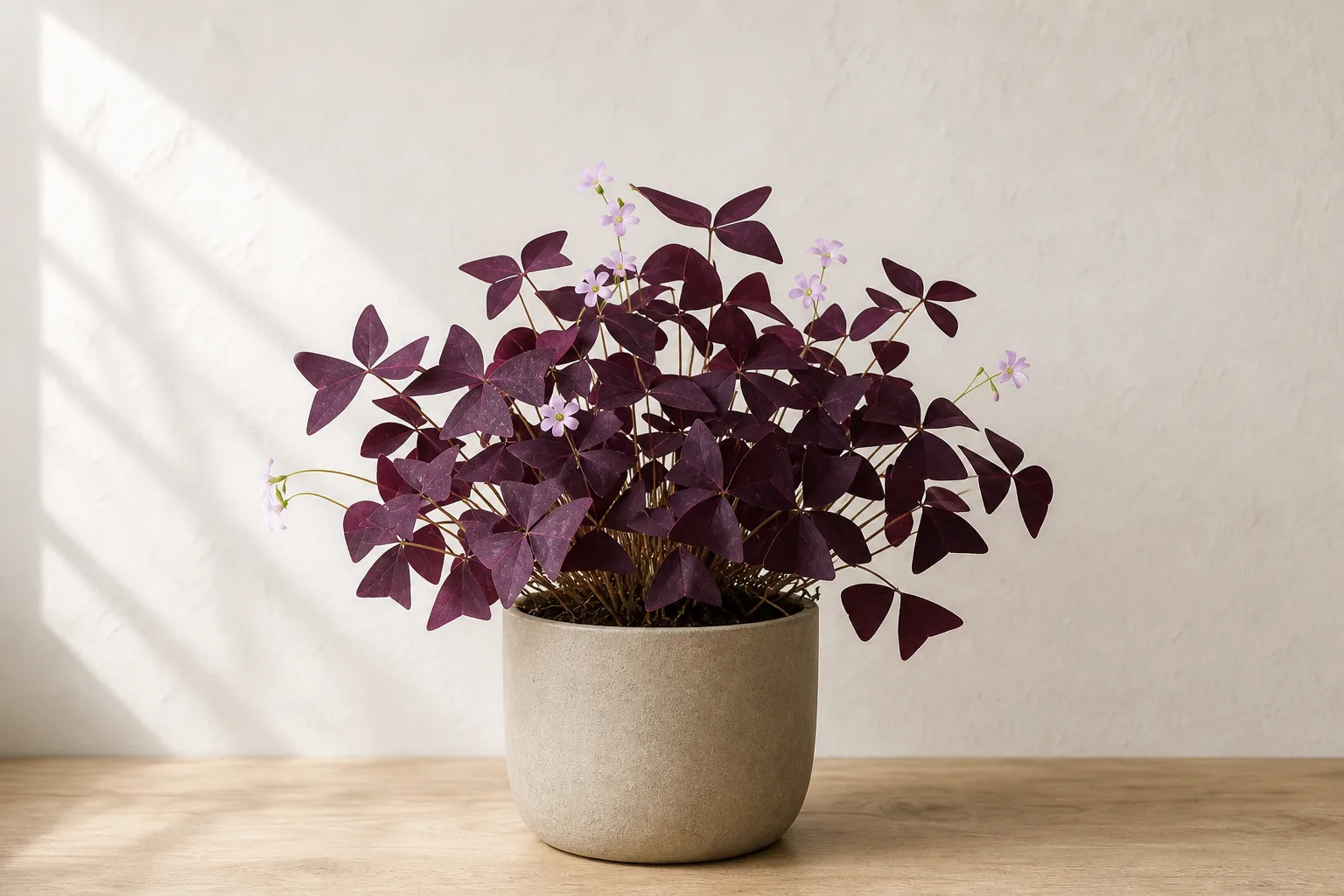
Purple shamrock (Oxalis triangularis) is a rhizomatous, herbaceous perennial in the wood sorrel family, native to South America, where it grows from fleshy, scaly underground corms or rhizomes. It is grown for its compound leaves of three triangular leaflets - deep maroon to purple in the popular forms - that fold down at night and reopen by day, a movement that gives the plant its charm.
Use a loamy potting mix with good drainage and allow the surface to dry between waterings. Bright filtered light keeps the color deep and the plant compact. Purple shamrock often goes dormant for a while in autumn or when it gets too hot, too dry, or too cold: the leaves die back, and the plant rests in its rhizomes until conditions improve. Cut back on watering and wait for new growth.
Light
Purple shamrock grows best in full sun to part shade outdoors and bright filtered light indoors - a sunny windowsill with a little protection from the hottest afternoon sun. More light deepens the purple leaf color and produces more flowers, while dim spots make the plant leggy and the leaves fade toward green. Leaves fold down at night and close when disturbed; this is normal and not a sign of stress.
Water
Water when the surface of the mix feels dry, then water thoroughly and let the excess drain. The plant is more forgiving of a slightly dry period than of constant moisture, which rots the rhizomes. When foliage dies back for its natural dormancy, cut back on watering and wait for new growth before resuming normal watering. In winter or low light, growth slows and the mix stays damp longer, so stretch the interval.
Soil and repotting
Use a well-drained, loamy potting mix and a container with a drainage hole. Purple shamrock is not fussy about soil pH. Repot in spring when the plant comes back into growth, moving up one pot size if the rhizomes are crowded. The underground rhizomes, which look like elongated bulbs with scale leaves, can be divided at repotting - each piece with a growth point will produce a new plant.
Temperature, humidity, and fertilizer
Purple shamrock is comfortable in normal indoor temperatures and tolerates average household humidity. It grows best in warmth and responds to bright light; very hot or very dry conditions can trigger a summer dormancy, while cold drafts in winter may cause the leaves to die back. Feed lightly with a balanced houseplant fertilizer during active growth, and stop feeding during dormancy. When growth resumes, resume feeding at label strength.
Pruning and propagation
Tidy the plant by removing spent flower stems and yellowed or collapsed leaves at the base. If the plant goes dormant, simply let the foliage die back and reduce watering. Propagation is by division: when you repot in spring, split the rhizomes, making sure each piece has a growth point, and pot them individually. You can also break off scale leaves from the rhizomes, which will produce new plants.
Common problems
Start with the pattern, current soil moisture, and recent changes. One symptom can have several causes, so change the most likely factor first and observe before making another major adjustment.
| Symptom | Check first | First action |
|---|---|---|
| Leaves collapsing and dying back | Whether this is natural dormancy, temperature, or moisture extremes | Reduce watering and wait for new growth; resume care when shoots appear. |
| Faded, pale leaves | Light level and how far the plant sits from the window | Move gradually to brighter light to restore the deep purple color. |
| Leggy, stretched growth | Available light | Move to a brighter position and pinch or remove stretched stems. |
| Soft, mushy rhizomes or base | Drainage and whether the pot is sitting in water | Stop watering, inspect the rhizomes, remove rotted parts, and repot in fresh mix. |
| Few or no flowers | Light level and whether the plant is in a resting phase | Give it brighter light and let it complete any dormancy before changing care. |
Pet and household safety
Purple shamrock (Oxalis triangularis) is toxic to dogs, cats, and horses, according to the ASPCA. The toxic principles are soluble calcium oxalates, which can cause salivation, tremors, and in rare cases kidney failure; NC State Extension notes that all parts of the plant have toxic potential, with serious effects usually limited to large ingestions, and that consuming Oxalis species can produce colic in horses. Keep the plant out of reach of pets and children, and contact a veterinarian after a concerning exposure.
Frequently asked questions
How often should I water a purple shamrock?
Water when the surface of the mix feels dry, then drain fully. In autumn or when foliage dies back, reduce watering and wait for new growth - dormancy is normal.
What light does a purple shamrock need?
Bright filtered light indoors, or full sun to part shade. More light deepens the purple color and encourages flowers; dim spots make it leggy and pale.
Where does the purple shamrock grow naturally?
Oxalis triangularis is native to South America, ranging from Peru through Brazil to northern Argentina, where it grows from corms or rhizomes in seasonally dry tropical conditions.
Why is my purple shamrock dying back?
It may be going dormant, which is normal in autumn or in very hot, dry, or cold conditions. Reduce watering and wait for new growth before resuming normal care.
How do I propagate a purple shamrock?
Divide the rhizomes when you repot in spring, ensuring each piece has a growth point. Scale leaves broken off the rhizomes will also form new plants.
Is purple shamrock safe for pets?
No. Oxalis contains soluble calcium oxalates that are toxic to cats, dogs, and horses, causing salivation and tremors, with kidney problems possible in large ingestions.
Sources and editorial review
This editorial draft is based on the sources below and awaits named horticulture-expert approval before publication.
- Oxalis triangularisRoyal Botanic Gardens, Kew (Plants of the World Online) · Checked
- Shamrock PlantASPCA · Checked
- Oxalis triangularis (Purple Shamrock)North Carolina State University Extension · Checked
- Oxalis triangularis subsp. triangularis (Shamrock)Missouri Botanical Garden · Checked
What works well
- Colorful purple foliage with a graceful night-time folding habit.
- Forgiving and easy to grow; tolerates occasional missed waterings.
- Reblooms readily and is simple to multiply by dividing the rhizomes.
What to consider
- Toxic to pets and people if eaten in quantity (soluble oxalates).
- Goes dormant and loses leaves if it gets too hot, dry, or cold.
- Spent flowers and old leaves need regular tidying.