Key takeaways
- Give it medium to bright indirect light; it tolerates lower light than most succulents, but hot direct sun can scorch the leaves.
- Water only when the potting mix has mostly dried out, and stretch the interval further in winter.
- Propagate by removing offsets that have a few leaves and some roots, then let the cut surface callus before planting.
How to care for Ox Tongue
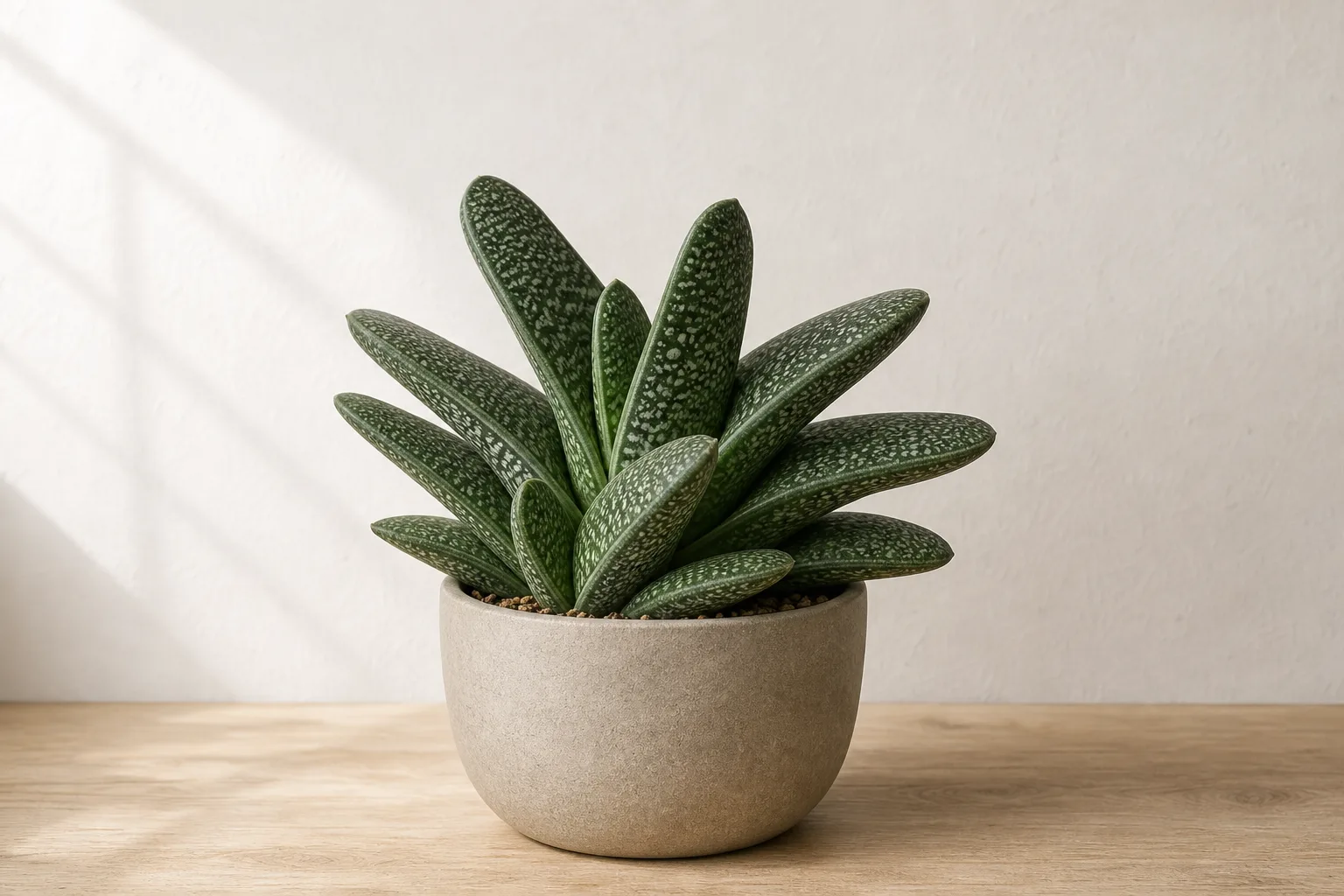
Ox tongue (Gasteria bicolor) is a compact succulent in the Asphodelaceae family, a close relative of aloe and haworthia. It grows on rocky slopes and outcrops in the Eastern Cape of South Africa, where it takes shelter in thicket shade, which is why it adapts to indoor positions that many succulents reject. Its thick, mottled leaves store water, so it responds best to a bright, filtered spot and a distinct dry period between waterings.
The main failure with ox tongue is overwatering, not neglect. Water when most of the mix has dried, keep the plant out of hot midday sun, and repot only when offsets crowd the pot. Use the plant's current leaf firmness and the mix itself as feedback rather than watering on a fixed weekday.
Light
Aim for medium to bright indirect light, such as an east window or a few feet back from a south or west window. Ox tongue tolerates dimmer rooms better than most succulents, but growth slows and the plant may lose its compact, evenly marked look in very low light. Harsh direct sun, especially through glass, can bleach or scorch the leaves. Move the plant gradually when changing its position so it can acclimate.
Water
Check the root zone before watering. Water thoroughly when most of the mix feels dry, then let excess drain and never leave the pot sitting in water. The interval changes with light, pot size, temperature, and root density, so use the mix rather than a calendar. In winter, when light and warmth drop, the mix dries more slowly and the interval should stretch. Soft, translucent leaves or a wobbly base usually mean the roots have been kept too wet.
Soil and repotting
Use a fast-draining succulent or cactus mix and a container with a drainage hole; a slightly snug pot is safer than a large one that holds moisture. Repot only when the plant is clearly crowded or roots emerge from the drainage holes, and keep the crown at the soil line. Gasterias tolerate being root-bound well, so most plants only need repotting every two to three years.
Temperature, humidity, and fertilizer
Ox tongue is comfortable in normal indoor temperatures, roughly 65-80°F (18-27°C), and prefers low humidity with good airflow. It needs protection from frost and from cold windowsills in winter. Feed lightly with a diluted succulent or cactus fertilizer once or twice during active growth in spring and summer; skip feeding in the cool season, when growth slows.
Pruning and propagation
Pruning is minimal: remove dried or damaged outer leaves as they age. Propagation is easiest by offsets - wait until a pup has a few leaves and some roots, detach it cleanly, let the wound callus for a day or two, and plant it in dry, gritty mix. Leaf cuttings can also root if allowed to callus first, though they grow more slowly. Offsets keep the parent plant tidy and give you new plants with no special equipment.
Common problems
Start with the pattern, current soil moisture, and recent changes. One symptom can have several causes, so change the most likely factor first and observe before making another major adjustment.
| Symptom | Check first | First action |
|---|---|---|
| Soft, translucent lower leaves | Whether the mix is still damp, whether the pot drains, and how long the soil has stayed wet | Withhold water until the mix dries; if the base feels mushy, unpot and inspect the roots before watering again. |
| Yellowing outer leaves | Root-zone moisture, drainage, and whether it is only the oldest leaves aging naturally | Pause watering and let the mix dry out; confirm the pot has a working drainage hole before changing anything else. |
| Bleached or scorched patches | Recent direct sun, especially through glass, and whether the plant was moved suddenly | Move the plant gradually to a brighter-filtered or shadier spot and give the scorched leaves time to grow out. |
| Stretched, pale growth | Available light and how far the plant sits from the window | Move gradually closer to a brighter filtered window and wait for the next leaves to tighten up. |
| White cottony patches at leaf bases | Leaf bases and crevices for mealybugs or scale, and any nearby plants | Isolate the plant and identify the pest before treating; remove visible insects and use a targeted control. |
Pet and household safety
Ox tongue (Gasteria bicolor) is commonly listed as non-toxic to cats and dogs. Non-toxic does not mean edible: chewing any plant or potting material can still upset a pet's stomach, so discourage persistent chewers and contact a veterinarian if a pet becomes unwell. As with most succulents, keep handling gentle because the thick leaves break easily.
Frequently asked questions
How often should I water an ox tongue?
Use the potting mix as the trigger. Water thoroughly when most of the mix has dried out, then drain. The interval changes with light, pot size, season, and root density, so avoid a fixed weekday schedule and stretch the interval in winter.
What light does an ox tongue need?
Medium to bright indirect light. It tolerates lower light than most succulents, but grows slower and less compact in dim rooms. Protect it from harsh midday sun, which can scorch the leaves.
Where does ox tongue grow naturally?
It is native to the Eastern Cape of South Africa, where it grows on rocky slopes and outcrops in thicket vegetation, often in partial shade. Mirroring that warm, filtered-light, low-water environment indoors gives the best results.
Why are my ox tongue leaves soft or yellow?
Most often overwatering. Check soil moisture and drainage first, and remember that the oldest outer leaves yellow and dry naturally with age. Do not add fertilizer until you have ruled out wet roots.
How do I propagate an ox tongue?
Offsets are the easiest route: remove a pup that has a few leaves and some roots, let the cut callus for a day or two, and pot it in dry, gritty mix. Leaf cuttings can root too but grow more slowly.
Is ox tongue safe for pets?
It is commonly listed as non-toxic to cats and dogs. Non-toxic does not mean edible, so still discourage chewing and contact a veterinarian if a pet becomes unwell after eating any plant material.
Sources and editorial review
This editorial draft is based on the sources below and awaits named horticulture-expert approval before publication.
- Gasteria bicolorRoyal Botanic Gardens, Kew (Plants of the World Online) · Checked
- Gasteria gracilis (Ox Tongue)North Carolina State University Extension · Checked
- Gasteria bicolor var. liliputanaRoyal Horticultural Society · Checked
- Toxic and non-toxic plantsASPCA · Checked
What works well
- Tolerates shadier rooms and windowsills that would stress most succulents.
- Slow, compact growth that rarely needs repotting.
- Commonly listed as non-toxic to cats and dogs.
What to consider
- Slow grower - rewarding over years, not weeks.
- Rot follows any pattern of wet soil or poor drainage.
- Can look pale and stretched in very dim corners.