Key takeaways
- Give it medium to bright indirect light; in strong light the silver marbling deepens.
- Water only when the mix has dried out, and reduce watering in winter.
- Propagate from stem sections with a node, or press an aerial tuber into a new pot to root it.
How to care for String of Hearts
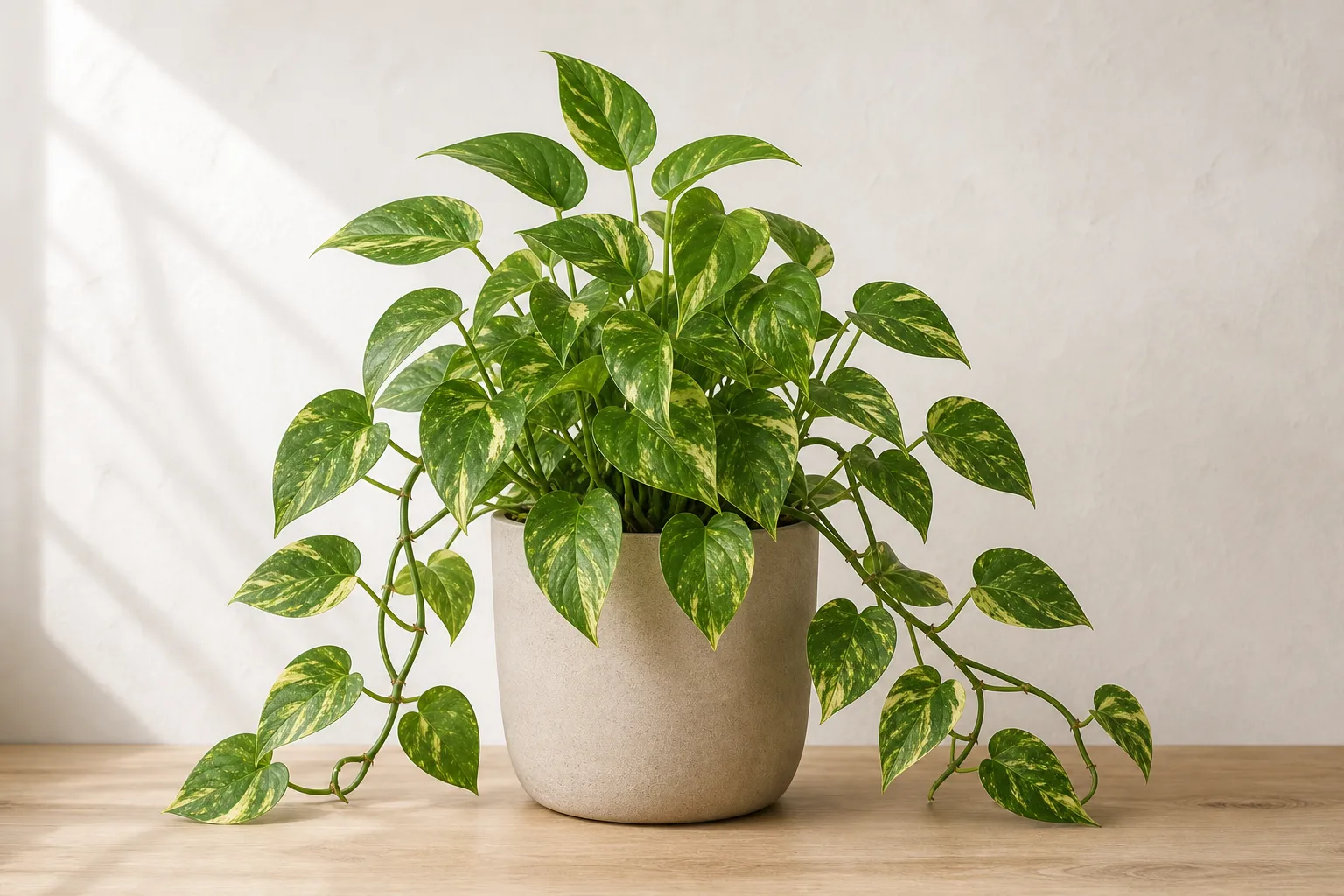
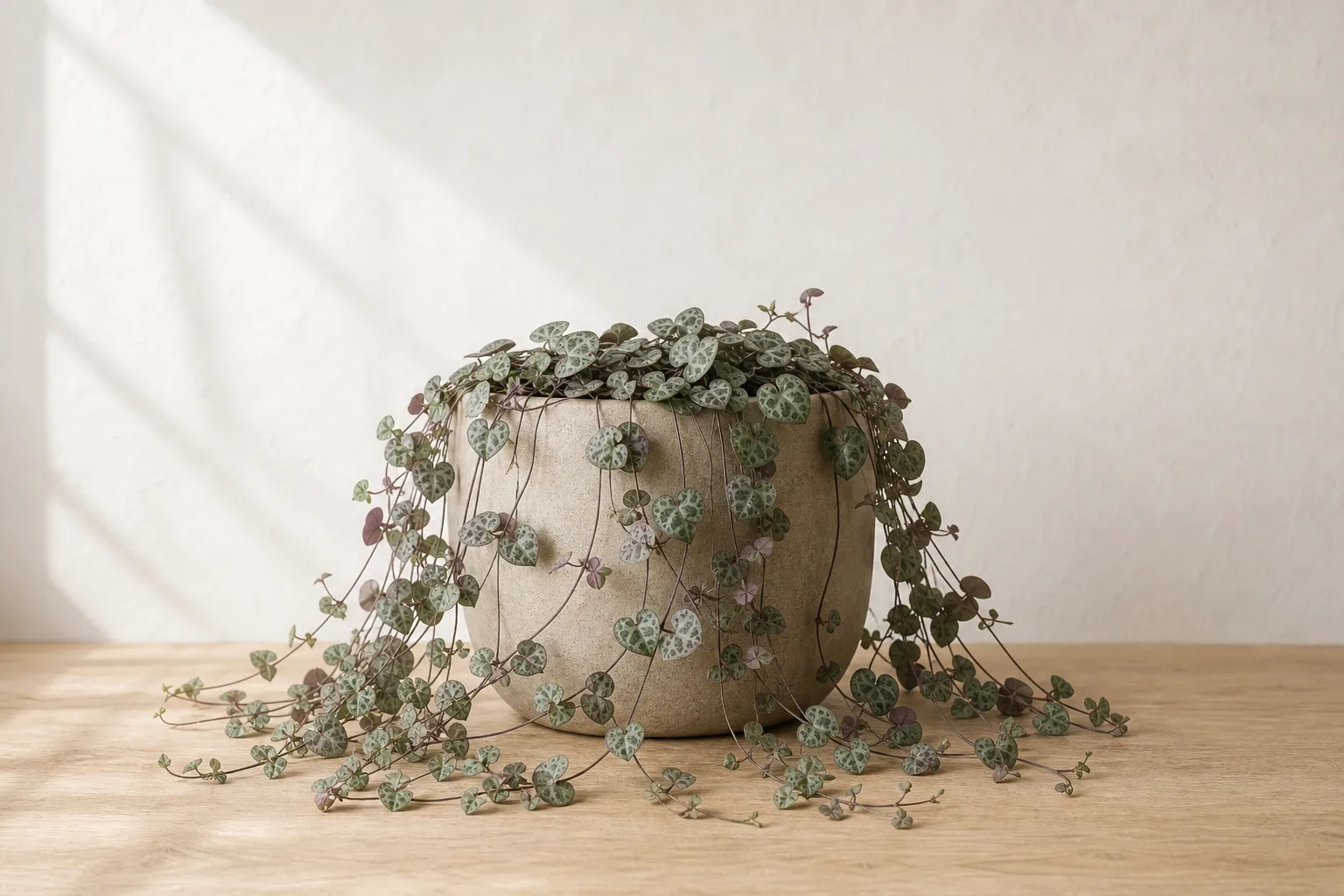
String of hearts (Ceropegia woodii) is a trailing, caudiciform succulent in the dogbane family (Apocynaceae), native to southern Africa from Zimbabwe to eastern South Africa, where it scrambles up through other vegetation on hillsides. Its wiry, purplish stems carry pairs of small heart-shaped leaves, dark green and marbled with silver above and purple beneath, and it produces bead-like aerial tubers along the stems.
This is a succulent, so the rules are bright filtered light, excellent drainage, and a genuine dry period between waterings. It grows best in a hanging pot or small trellis and likes to be crowded, so resist repotting. The plant tolerates dry soil much better than soggy soil - overwatering is the usual way it dies.
Light
String of hearts grows best in medium to bright indirect light, such as a west- or south-facing window behind a sheer curtain. In strong light the leaves develop deep green color and distinctive silver marbling; in too little light they turn pale green and the gaps between leaves widen. Protect the plant from harsh midday sun, which can scorch the foliage, and acclimatize it gradually if you move it outdoors for summer.
Water
Water only when the potting mix has dried out, then water thoroughly and drain. This succulent tolerates dry soil far better than soggy soil and is easily killed by overwatering. In winter, when the plant rests, reduce watering sharply and stop fertilizing. The plant communicates thirst through slightly wrinkled leaves, but check the mix itself before reaching for the watering can.
Soil and repotting
Use a freely draining mix - a commercial cactus and succulent blend, or potting medium amended with coarse sand, perlite, or pumice. String of hearts does best when crowded, so repot only when necessary, ideally in spring before new growth starts. The underground tubers can fill a pot over time, and the aerial tubers along the stems will root wherever they touch moist soil.
Temperature, humidity, and fertilizer
String of hearts prefers warm conditions, above about 60°F (16°C) in winter, and average household humidity. It can be moved outdoors in summer but must come back in before the first frost. Feed infrequently - at most monthly during active growth with a half-strength houseplant fertilizer - and give the plant a winter rest with reduced watering and no feeding.
Pruning and propagation
Trim overlong or leggy stems to keep the plant full, and remove any yellowed leaves. Propagation is easy: take stem cuttings with at least one node, root them in water or moist mix, or press an aerial tuber - preferably still attached to the vine - into the soil of another pot, keep it lightly moist, and sever it once rooted. Bottom heat speeds rooting of vine cuttings.
Common problems
Start with the pattern, current soil moisture, and recent changes. One symptom can have several causes, so change the most likely factor first and observe before making another major adjustment.
| Symptom | Check first | First action |
|---|---|---|
| Yellowing leaves and root rot | Whether the mix stays wet, whether the pot drains, and recent watering frequency | Stop watering until the mix dries out; repot in fresh, gritty mix only if the roots are damaged. |
| Wilted, shriveled leaves | How long since the last watering and the current light level | Water thoroughly if the mix is dry, then let it drain and resume a normal dry-down cycle. |
| Wide gaps between leaves | Available light and whether the plant has been moved | Move gradually to brighter filtered light and trim stems back to encourage denser growth. |
| Scorched, bleached leaves | Recent strong direct sun and whether the plant was moved abruptly | Move it gradually out of harsh sun and let new leaves grow in. |
| Sticky residue or cottony marks | Stems and leaf axils for aphids, mealybugs, or scale, and nearby plants | Isolate the plant, identify the pest, and use a targeted control rather than a broad spray. |
Pet and household safety
String of hearts (Ceropegia woodii) is commonly listed as non-toxic to cats and dogs. Non-toxic does not mean edible: chewing any plant or potting material can still upset a pet's stomach, so discourage persistent chewers and contact a veterinarian if a pet becomes unwell. Its fine trailing stems can tempt cats, so a hanging position often works well in pet homes.
Frequently asked questions
How often should I water a string of hearts?
Water only when the potting mix has dried out, then water thoroughly and drain. The interval changes with light, pot size, and season, and should stretch in winter.
What light does a string of hearts need?
Medium to bright indirect light. In strong light the leaves develop deeper silver marbling; in low light the foliage pales and the gaps between leaves widen.
Where does string of hearts grow naturally?
It is native to southern Africa, from Zimbabwe to eastern South Africa, where it scrambles up through other vegetation on warm, dry hillsides.
Why is my string of hearts going bare at the top?
Usually low light or a too-large pot. Move it gradually to brighter filtered light and keep it snug in its pot; trim stems to encourage bushier regrowth.
How do I propagate a string of hearts?
Stem cuttings with a node root readily, and aerial tubers can be pressed into moist mix to root. Sever a new plant only after it is established.
Is string of hearts safe for pets?
It is commonly listed as non-toxic to cats and dogs. Non-toxic does not mean edible, so still discourage chewing and contact a veterinarian if a pet becomes unwell.
Sources and editorial review
This editorial draft is based on the sources below and awaits named horticulture-expert approval before publication.
- Ceropegia woodiiRoyal Botanic Gardens, Kew (Plants of the World Online) · Checked
- Ceropegia woodii (String of Hearts)North Carolina State University Extension · Checked
- String of Hearts, Ceropegia woodiiUniversity of Wisconsin-Madison Division of Extension · Checked
- Toxic and non-toxic plantsASPCA · Checked
What works well
- Elegant trailing habit with marbled heart-shaped leaves.
- Roots easily from stems and aerial tubers.
- Commonly listed as non-toxic to cats and dogs.
What to consider
- Easily killed by overwatering or a heavy mix.
- Grows sparse and pale if light is too low.
- Repot rarely - it prefers to be crowded.