Key takeaways
- Give it bright filtered light - an east or west windowsill - and protect the leaves from hot midday sun.
- Water at the soil line when the top of the mix feels dry and never let the pot sit in water.
- Non-toxic to cats and dogs, making it a safe flowering plant for pet households.
How to care for Cape Primrose
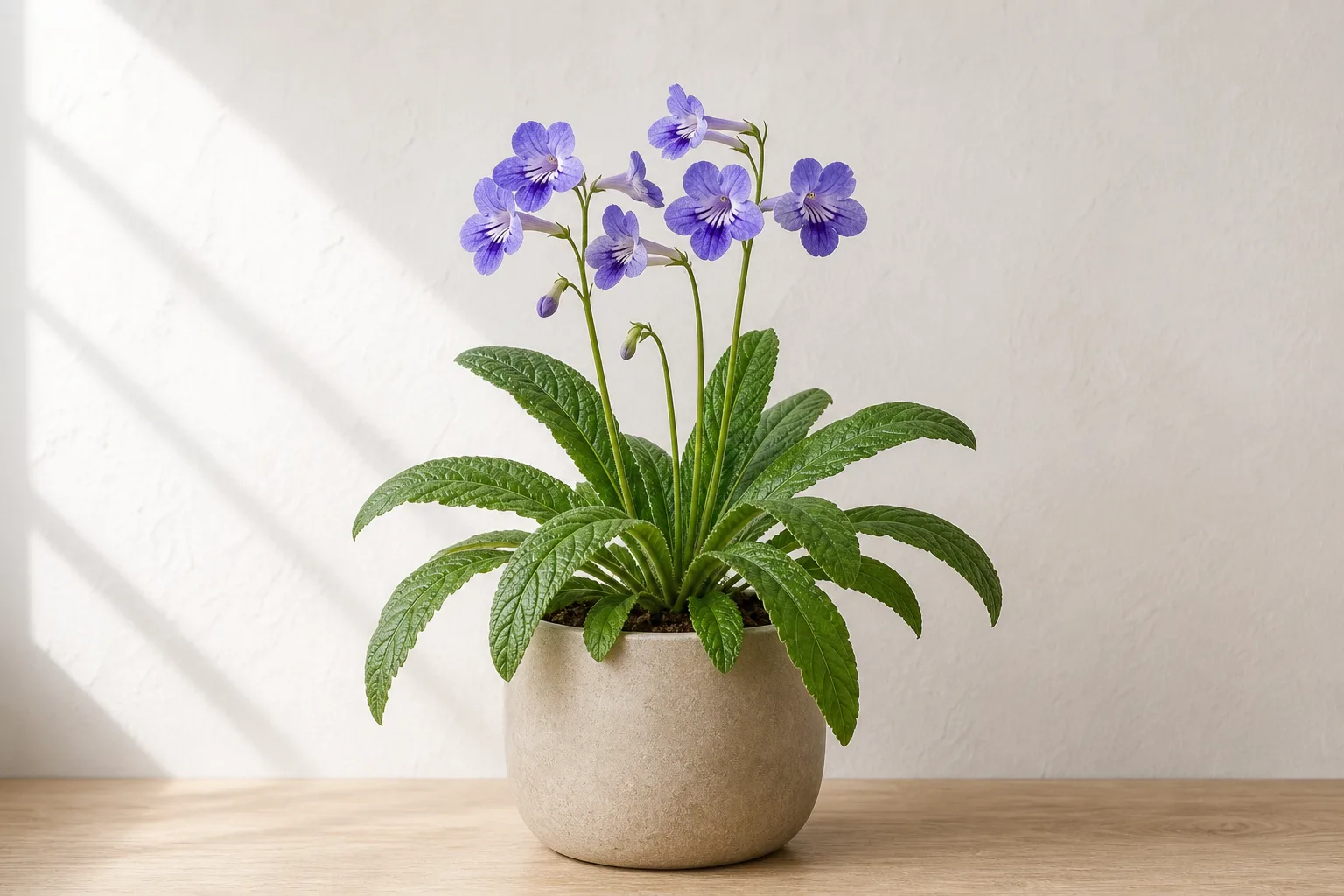
Cape primrose (Streptocarpus rexii) is a stemless perennial of the gesneriad family, native to the Cape Provinces and KwaZulu-Natal of South Africa, where it grows on shaded rock faces and forest margins. Instead of a stem, it forms a rosette of long, quilted, softly hairy leaves, and each leaf can push up successive flower stalks, which is why a well-cared-for plant keeps blooming for months rather than in short bursts.
The two most common failures are water sitting in the crown, which rots the plant from the center, and overwatering, which rots the roots. Water at the soil line or from the base, let the top of the mix dry before watering again, keep the plant in bright filtered light, and feed lightly during active growth. It performs best in cooler room temperatures and steady humidity rather than hot, dry air.
Light
Cape primrose flowers best in bright but indirect light. An east-facing windowsill is close to ideal, or a spot a few feet back from a south or west window with sheer curtain. Direct midday or afternoon sun through glass scorches the leaves, leaving pale, bleached patches. In low light the plant stops blooming and the leaves can become oversized and floppy. Move it gradually when changing position so it can adjust.
Water
Water when the top of the mix feels dry, then water thoroughly and let the excess drain. Never leave the pot standing in a saucer of water. Use room-temperature water and avoid splashing the leaves or crown - water pooling in the center causes crown rot, and cold water can spot the foliage. In winter, when growth slows, the mix stays damp longer, so stretch the interval. The plant recovers from a slightly dry period better than from soggy roots.
Soil and repotting
Use a light, fast-draining mix such as an African violet potting blend or a peat- or coco-based mix cut with perlite. Dense, water-retentive soil around the fleshy roots invites rot. Choose a shallow, wide pot with a drainage hole, since the root system is shallow. Repot only when roots visibly circle the pot, moving up one size; an oversized pot holds too much moisture. Keep the crown at the soil line when repotting.
Temperature, humidity, and fertilizer
Cape primrose does best in cool-to-moderate room temperatures, roughly 60-75°F (15-24°C), and appreciates a minimum of about 45-50°F (7-10°C) in winter. Average household humidity suits it, but dry heated air can crisp the leaf edges; set the pot on a tray of damp pebbles rather than misting the leaves. Feed every two weeks with a high-potash, half-strength liquid fertilizer from spring through early autumn, and stop feeding in winter. Overfeeding produces oversized, soft leaves.
Pruning and propagation
Deadhead spent flower stalks by removing them at the base of the leaf, which diverts energy into the next flush of flowers rather than seed. Remove yellowed or damaged leaves close to the crown to keep the rosette tidy and improve airflow. Propagation is easy from leaf cuttings: cut a healthy leaf across at 2-inch intervals, insert the cut edge in moist, well-draining mix, and small plantlets form along the cut edges within four to six weeks. Mature clumps can also be divided when repotted in spring.
Common problems
Start with the pattern, current soil moisture, and recent changes. One symptom can have several causes, so change the most likely factor first and observe before making another major adjustment.
| Symptom | Check first | First action |
|---|---|---|
| Rotting at the base of the leaves | Drainage, how wet the mix is, and whether water collects in the crown | Remove rotted leaves, let the mix dry, and switch to watering at the soil line. |
| Pale or bleached patches on leaves | Direct sun exposure and distance from the window | Move the plant gradually to bright filtered light away from hot midday sun. |
| Oversized or floppy leaves | Light level and how often fertilizer is applied | Move to brighter filtered light and reduce feeding until growth firms up. |
| No flowers, only leaves | Light level and whether spent stalks are still attached | Move to a brighter filtered-light spot and remove old flower stalks at the base. |
| Leaf tips browning or dying back | Watering rhythm, humidity, and whether it is winter dieback | Even out watering, raise humidity with a pebble tray, and trim natural dieback. |
Pet and household safety
Cape primrose (Streptocarpus spp.) is listed as non-toxic to dogs, cats, and horses by the ASPCA, so it is a good choice for pet households. As with any plant material, a pet that chews large amounts may experience mild stomach upset. The fuzzy leaves can be mechanically irritating, so keep the plant where pets are unlikely to chew and contact a veterinarian if you observe repeated vomiting, diarrhea, or lethargy. Non-toxic does not mean edible.
Frequently asked questions
How often should I water a cape primrose?
Use the top of the mix as the trigger: water when it feels dry, then drain fully. The interval changes with light, pot size, season, and root density, so avoid a fixed weekday schedule.
What light does a cape primrose need?
Bright filtered light, such as an east windowsill or a few feet back from a south or west window. Direct hot sun scorches the leaves, and very dim spots stop flowering.
Where does cape primrose grow naturally?
Streptocarpus rexii is native to the Cape Provinces and KwaZulu-Natal of South Africa, where it grows on shaded rock faces, stream banks, and forest margins in cool, moist conditions.
Why is my cape primrose not blooming?
Usually a light problem. Move it to brighter filtered light before assuming it needs fertilizer, and remove spent flower stalks at the base so energy goes into the next flush.
How do I propagate a cape primrose?
Take a healthy leaf in spring or early summer, cut it into 2-inch sections, and insert the cut edges in moist, well-draining mix. Plantlets form along the cut edges in four to six weeks. Clumps can also be divided at repotting.
Is cape primrose safe for pets?
Yes. The ASPCA lists Cape Primrose (Streptocarpus spp.) as non-toxic to dogs, cats, and horses, though heavy chewing of any plant can still cause mild stomach upset.
Sources and editorial review
This editorial draft is based on the sources below and awaits named horticulture-expert approval before publication.
- Streptocarpus rexiiRoyal Botanic Gardens, Kew (Plants of the World Online) · Checked
- Cape PrimroseASPCA · Checked
- Streptocarpus (Cape Primrose)North Carolina State University Extension · Checked
- Streptocarpus (Cape primrose) - RHS adviceRoyal Horticultural Society · Checked
What works well
- Flowers repeatedly over many months from each leaf base.
- Compact, low rosette fits small shelves and windowsills.
- Non-toxic to cats and dogs per the ASPCA.
What to consider
- Sensitive to water sitting in the crown or on the leaves.
- Overwatering rots the roots and lower leaves quickly.
- Prefers steady humidity and cooler temperatures than many tropicals.