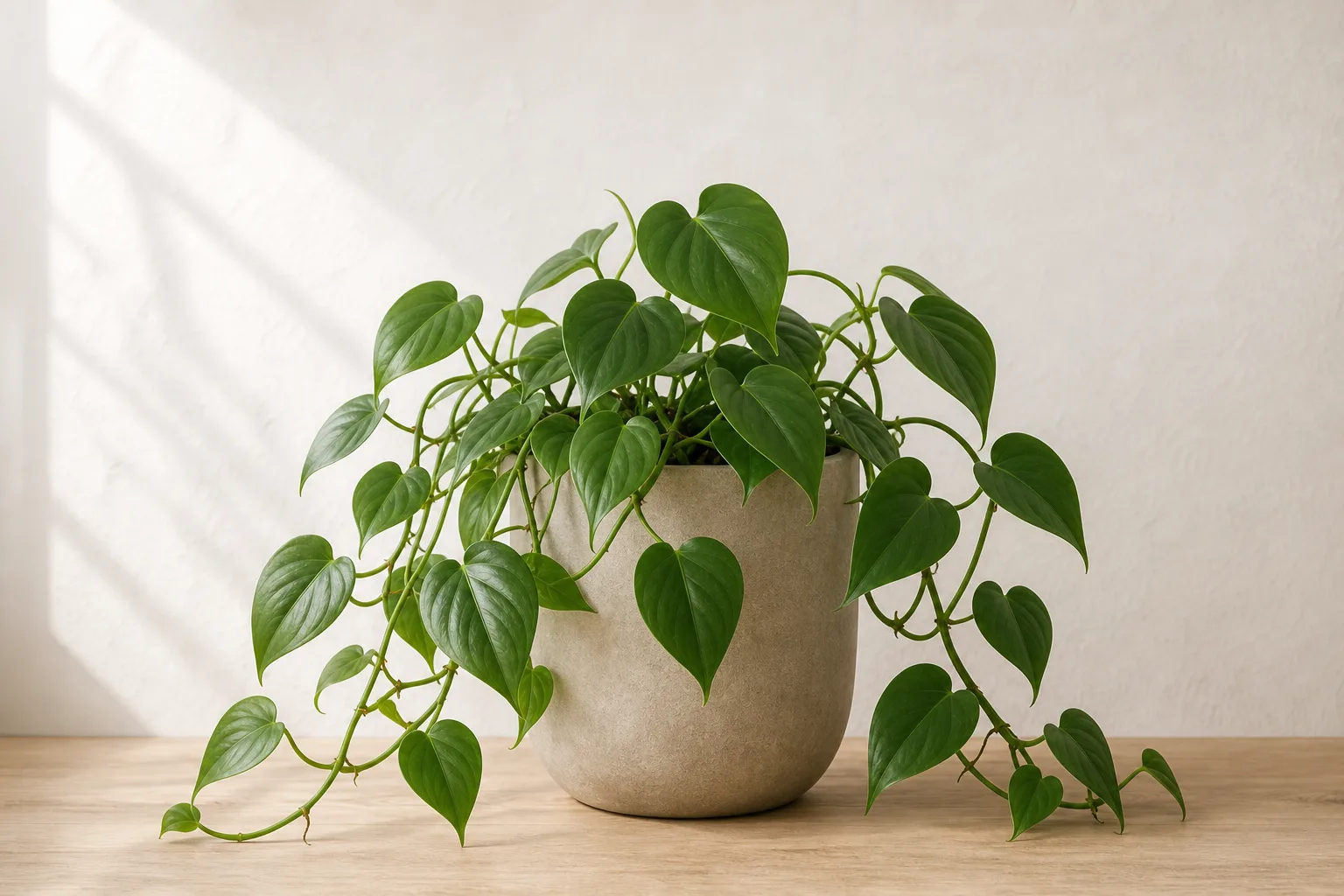
Key takeaways
- Give it low to bright indirect light; brighter filtered light produces fuller growth and larger leaves.
- Water when the top inch of the mix feels dry rather than on a fixed schedule.
- Keep it out of reach of cats and dogs - it contains calcium oxalate crystals that irritate the mouth.
How to care for Heartleaf Philodendron
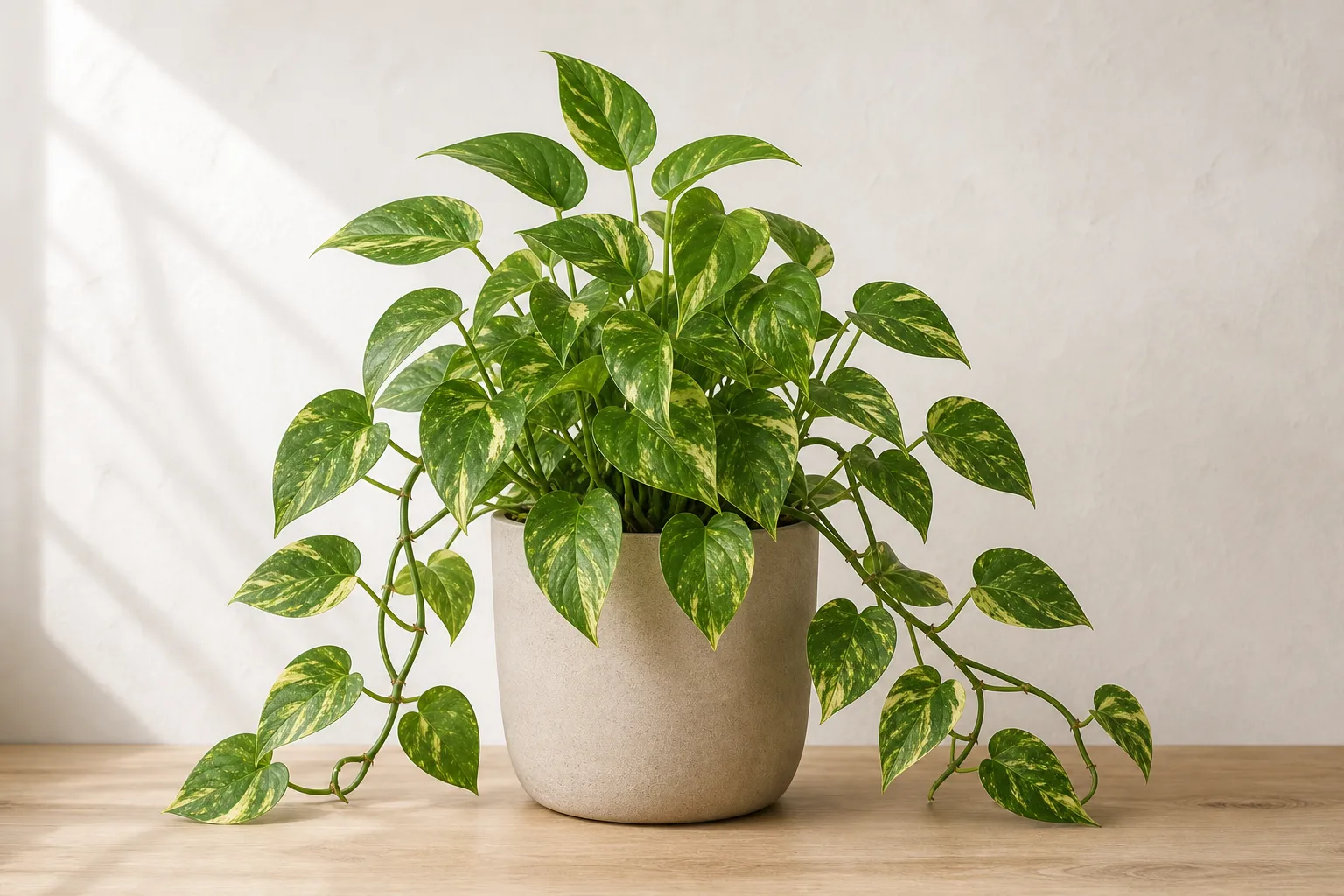
Heartleaf philodendron (Philodendron hederaceum) is a tropical aroid native to the forests of Central and South America and the Caribbean. In the wild it climbs tree trunks and trails across the forest floor, which is why it adapts so well to a shelf, hanging basket, or moss pole indoors. Its glossy, heart-shaped leaves are the draw, and the plant communicates stress clearly through leaf color and posture, so it is a good teacher for new growers.
The most common failure is overwatering, not drought. Let the top inch of the mix dry before watering, keep the plant in bright filtered light for the fullest growth, and prune lightly to keep trails bushy. Repot only when roots crowd the pot. Treat care as a response to the plant's current condition rather than a calendar.
Light
Aim for low to bright indirect light. Heartleaf philodendron survives in dim corners better than most aroids, but growth slows and stems stretch (become leggy) in low light, and leaves stay smaller. Bright, filtered light - an east window or a few feet back from a south or west window - produces the largest, healthiest foliage. Avoid harsh direct sun, which can scorch leaves. Move the plant gradually when changing its position so it can acclimate.
Water
Check the root zone before watering. Water thoroughly when the top inch of the mix feels dry, then let excess drain and never let the pot sit in a saucer of water. Yellow leaves usually signal too much moisture, not too little. In winter, when light and temperatures drop, the mix stays damp longer, so stretch the interval. The plant tolerates a missed watering better than constant saturation.
Soil and repotting
Use a well-draining, peat- or coco-based mix amended with perlite and a little orchid bark so roots are never sitting in soggy soil. A container with a drainage hole is essential. Repot every one to two years, or when roots circle the pot or emerge from the drainage holes. Handle the plant gently during repotting - its vining stems and aerial roots are easily damaged. Keep the crown at the soil line; do not bury the stems.
Temperature, humidity, and fertilizer
Heartleaf philodendron is comfortable in normal indoor temperatures (roughly 65-85°F / 18-29°C) and tolerates average household humidity, though higher humidity encourages faster growth and larger leaves. Keep it away from cold drafts and heating vents. Feed lightly every few months during active growth with a balanced houseplant fertilizer at label strength; too much fertilizer browns leaf tips. Brown tips can also mean dry air or mineral buildup from tap water.
Pruning and propagation
Pinch or trim trails to keep the plant full rather than leggy, and remove any yellowed leaves at the node. Propagation is almost foolproof: cut a 3-4 inch stem section just below a node (the bump where a leaf meets the stem), place it in water or moist soil, and roots typically form within one to two weeks. A node is required - a cutting without one will not root. Once rooted, pot it up and treat it like the parent. Plants can also be trained up a moss pole, where climbing exposure produces noticeably larger leaves.
Common problems
Start with the pattern, current soil moisture, and recent changes. One symptom can have several causes, so change the most likely factor first and observe before making another major adjustment.
| Symptom | Check first | First action |
|---|---|---|
| Yellowing leaves | Top-inch soil moisture, drainage, and whether it is older lower leaves (natural aging) | Pause watering and let the top of the mix dry; confirm the pot drains before changing anything else. |
| Brown or crisp leaf edges | Recent drying, low humidity, fertilizer or mineral buildup from tap water | Even out watering and flush the mix with plain water; move the plant away from dry vents. |
| Leggy, stretched growth | Available light and how far the plant sits from the window | Move gradually to brighter filtered light; prune trails back to a node to encourage bushier regrowth. |
| Drooping or soft stems | Whether the mix is wet or dry and recent temperature changes | Check the root zone first; water only if dry, and withhold water if the mix is still damp. |
| Sticky marks or webbing on leaves | Leaf undersides for aphids, mealybugs, scale, or spider mites, and nearby plants | Isolate the plant and identify the pest before treating; wipe leaves and use a targeted control. |
Pet and household safety
Heartleaf philodendron is toxic to cats, dogs, and horses if chewed. It contains insoluble calcium oxalate crystals that cause oral irritation, pain and swelling of the mouth and tongue, drooling, and sometimes vomiting or difficulty swallowing. The sap can also irritate human skin. Keep the plant out of reach of pets and children who chew plants, and contact a veterinarian or animal poison-control service after a concerning exposure. This species is not safe to chew.
Frequently asked questions
How often should I water a heartleaf philodendron?
Use the top inch of the mix as the trigger. Water thoroughly when it feels dry, then drain. The interval changes with light, pot size, season, and root density, so avoid a fixed weekday schedule.
What light does a heartleaf philodendron need?
Low to bright indirect light. It survives in dim spots but grows fuller and larger-leaved in bright filtered light. Keep it a few feet back from harsh south or west windows.
Where does heartleaf philodendron grow naturally?
It is native to the tropical forests of Central and South America and the Caribbean, where it climbs trees and trails across the forest floor. Mirroring that warm, humid, filtered-light environment indoors gives the best results.
Why are my philodendron leaves turning yellow?
Most often overwatering. Check soil moisture and drainage first, and remember that the oldest lower leaves yellow naturally with age. Do not add fertilizer until you have ruled out wet roots.
How do I propagate a heartleaf philodendron?
Stem cuttings with a node root readily in water or moist soil, usually within one to two weeks. Cut just below a node and keep at least one leaf; a node-less cutting will not root.
Is heartleaf philodendron safe for pets?
No. It contains calcium oxalate crystals that irritate the mouth and throat of cats and dogs. Keep it out of reach and contact a veterinarian after a concerning chew.
Sources and editorial review
This editorial draft is based on the sources below and awaits named horticulture-expert approval before publication.
- Philodendron hederaceumRoyal Botanic Gardens, Kew (Plants of the World Online) · Checked
- Philodendron hederaceumNorth Carolina State University Extension · Checked
- Heart-Leaf PhilodendronMissouri Botanical Garden · Checked
- Heartleaf PhilodendronASPCA · Checked
- Heartleaf PhilodendronUniversity of Florida IFAS Gardening Solutions · Checked
What works well
- Tolerates lower indoor light better than many foliage plants.
- Trails or climbs and roots readily from stem cuttings.
- Forgiving of occasional missed waterings.
What to consider
- Toxic to pets and children if chewed (calcium oxalate).
- Overwatering causes yellowing and root problems.
- Leggy growth in very dim spots.