Key takeaways
- Give it bright indirect light to full sun; a south-facing window is ideal, and direct sun only burns leaves in extreme situations.
- Water thoroughly only after the mix has dried, and restrict watering sharply in winter.
- Stem cuttings root readily - allow the cut end to callus for a few days before planting.
How to care for Elephant Bush
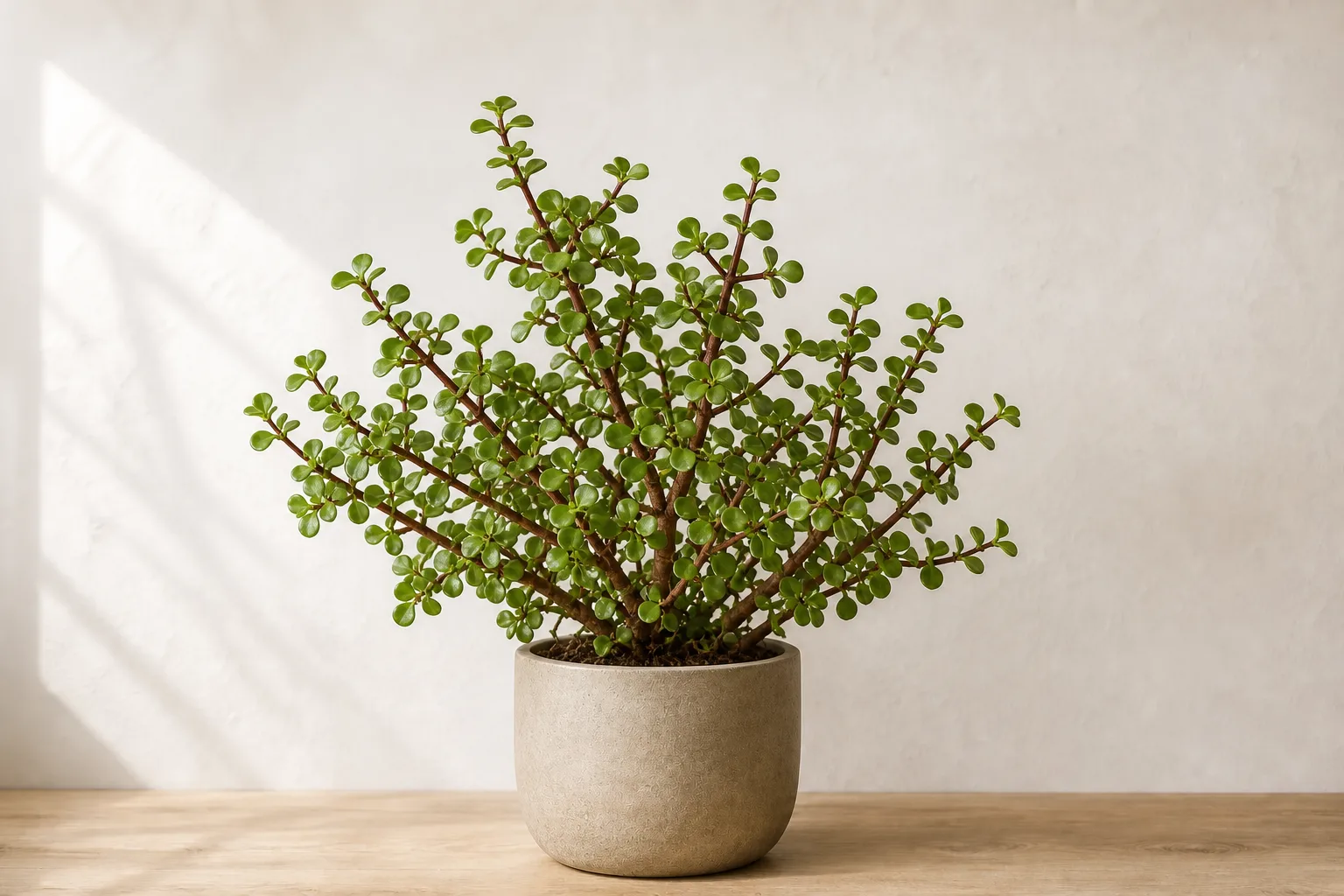
Elephant bush (Portulacaria afra) is a soft-wooded, semi-evergreen succulent shrub from the karoo thickets of southern Africa, ranging from the Little Karoo through the Eastern Cape into KwaZulu-Natal, Eswatini, and Mozambique. In the wild, elephants and other browsers strip its branches, which is part of why it tolerates heavy pinching and pruning indoors. Its small glossy leaves and reddish stems store water, so it is built for strong light and dry periods.
The common failure is overwatering, not drought. Give it the brightest spot you have, use a cactus or succulent mix that drains fast, and withhold water until the mix is dry - in a cool, dim winter this can stretch to weeks. Prune by pinching just above a pair of leaves to keep the plant bushy.
Light
Elephant bush needs bright light to thrive. A south-facing window is ideal; east or west exposures work too, and bright filtered light is acceptable. In too little light, stems stretch and the leaf spacing widens. Strong direct sun can flush leaves yellow or red at the tips, and an abrupt move from indoors to full sun outdoors can sunburn the foliage, so acclimatize gradually over a week or two.
Water
Water thoroughly only when the potting mix has dried, then let excess drain. The plant is very drought tolerant, so err on the dry side: in winter or in a dim, cool room, withhold water until lower leaves begin to wrinkle, which can take weeks or months. Soggy mix causes root rot, the most common cause of decline. If you move the plant outdoors for summer, resume watering once daylength and warmth increase, letting the soil dry to about an inch down between waterings.
Soil and repotting
Use a very well-drained cactus mix or a custom blend with pea gravel, pumice, or baked clay granules; avoid heavy sand that fills pore spaces. A container with large drainage holes is essential, and unglazed pottery helps excess moisture evaporate. Repot when the plant has filled its pot or roots push out the drainage holes, usually every two to three years. The plant tolerates being root-bound and can be trained in shallow bonsai containers.
Temperature, humidity, and fertilizer
Elephant bush prefers warm indoor conditions and normal to low humidity; it does not need misting. Move potted plants outdoors for the growing season only after frost danger has passed, and bring them back in when night temperatures drop below about 40°F (4°C). Feed container plants lightly with a balanced fertilizer during the growing season and stop in winter, when the plant rests.
Pruning and propagation
Elephant bush responds well to pruning: pinch or cut just above a pair of leaves to encourage dense branching, and remove any leggy or damaged stems. Propagation from stem cuttings is straightforward - take a healthy cutting in spring or summer, let the cut end callus for a couple of days, then root it in potting mix (it may also root in water). Even leaves knocked off while pruning can root on their own.
Common problems
Start with the pattern, current soil moisture, and recent changes. One symptom can have several causes, so change the most likely factor first and observe before making another major adjustment.
| Symptom | Check first | First action |
|---|---|---|
| Soft, yellow, or dropping leaves | Whether the mix is still wet, whether the pot drains, and recent watering frequency | Stop watering until the mix dries thoroughly; inspect the roots only if the base feels mushy. |
| Wrinkled, shriveled leaves | How long it has been since the last watering and the light level in the room | Water thoroughly if the mix is dry, then let it drain; keep the plant in the brightest spot available. |
| Leggy, wide-spaced growth | Available light and how far the plant sits from the window | Move gradually closer to a brighter window and pinch stems back to a leaf pair to encourage fullness. |
| Leaf drop after a move | Recent changes in light, temperature, or watering, and whether lower leaves are the ones falling | Give the plant stable bright light and avoid dramatic changes; only water when the mix is dry. |
| White cottony clusters on stems | Stems and leaf axils for mealybugs, and any nearby plants | Isolate the plant and identify the pest before treating; wipe the insects off and use a targeted control. |
Pet and household safety
Elephant bush (Portulacaria afra) is commonly listed as non-toxic to cats and dogs, and its leaves are even eaten by wildlife in its native range. Non-toxic does not mean edible for pets: chewing any plant or potting material can still upset a stomach, so discourage persistent chewers and contact a veterinarian if a pet becomes unwell.
Frequently asked questions
How often should I water an elephant bush?
Use the potting mix as the trigger. Water thoroughly when it has dried out, then drain; in winter or low light, withhold until the lower leaves wrinkle. The interval depends on light, pot size, and temperature, so avoid a fixed schedule.
What light does an elephant bush need?
Bright light, ideally a south-facing window or another strong position. It tolerates bright indirect light but stretches in dim rooms. Acclimatize gradually if moving it into direct sun.
Where does elephant bush grow naturally?
It is native to southern Africa, from the Little Karoo and Eastern Cape thickets north through KwaZulu-Natal, Eswatini, and Mozambique, where it grows on rocky slopes in warm, dry conditions.
Why is my elephant bush dropping leaves?
Usually a response to overwatering, a sudden move to lower light, or extreme drought. Check moisture and recent changes first, and avoid changing several care variables at once.
How do I propagate an elephant bush?
Stem cuttings root easily. Take a healthy cutting in spring or summer, let the cut end dry and callus for a couple of days, then plant it in well-drained mix; roots typically form within a few weeks.
Is elephant bush safe for pets?
It is commonly listed as non-toxic to cats and dogs. Non-toxic does not mean edible, so still discourage chewing and contact a veterinarian if a pet becomes unwell.
Sources and editorial review
This editorial draft is based on the sources below and awaits named horticulture-expert approval before publication.
- Portulacaria afraRoyal Botanic Gardens, Kew (Plants of the World Online) · Checked
- Elephant Bush, Portulacaria afraUniversity of Wisconsin-Madison Division of Extension · Checked
- Portulacaria afra (elephant bush)Royal Horticultural Society · Checked
- Toxic and non-toxic plantsASPCA · Checked
What works well
- Fast-growing and forgiving of missed waterings once established.
- Pinches and prunes into dense, bonsai-style shapes.
- Commonly listed as non-toxic to cats and dogs.
What to consider
- Susceptible to root rot in consistently moist mix.
- Drops leaves when moved to much lower light or left dry for very long.
- Needs strong light to stay compact and full.