Key takeaways
- Give it bright indirect light or direct sun; it needs several hours of bright light daily to set buds.
- Water thoroughly but let the mix dry out between waterings - a wet pot causes stem and root rot.
- Keep it out of reach of cats and dogs; the plant contains bufadienolides that can affect heart rhythm.
How to care for Flaming Katy
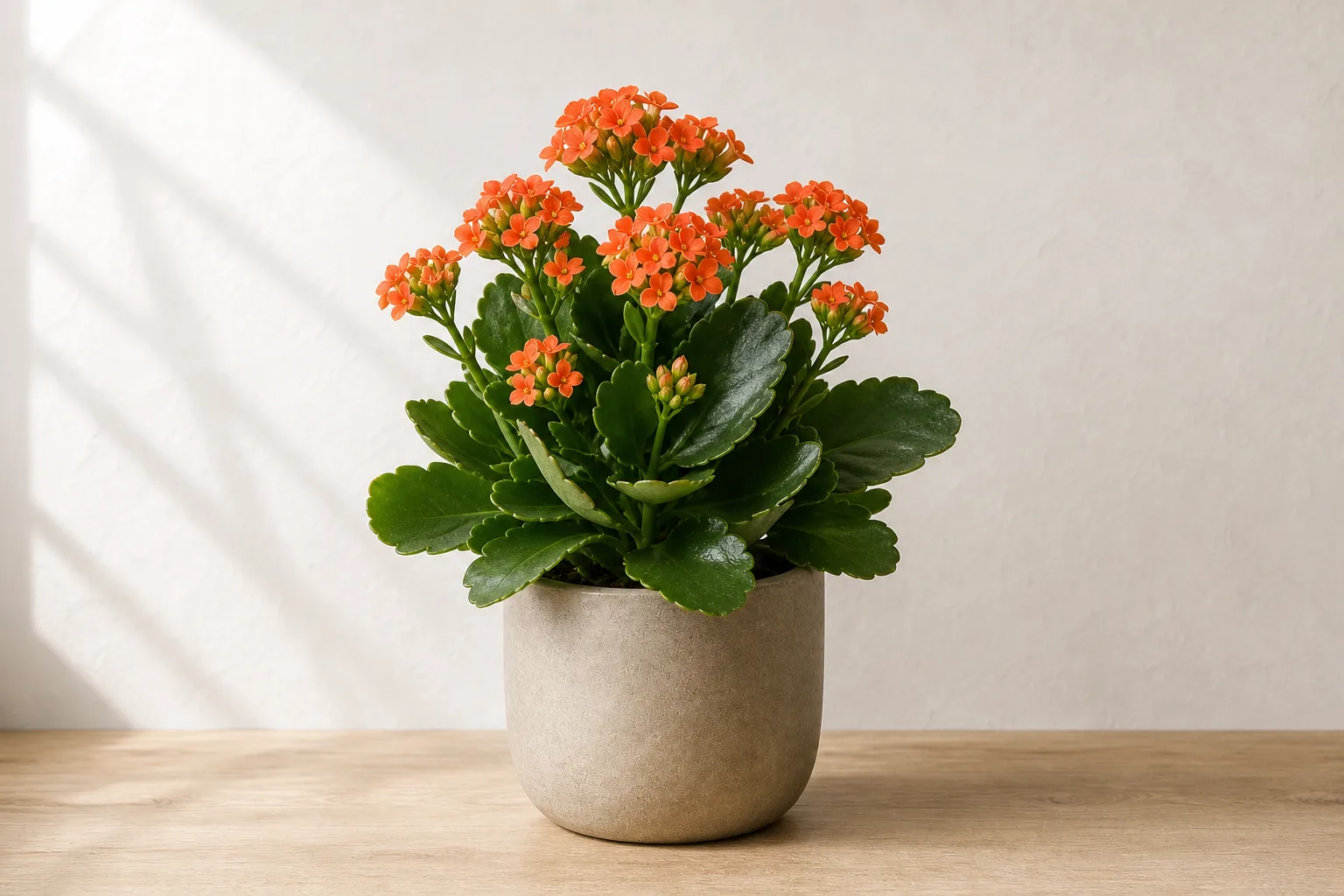
Flaming Katy (Kalanchoe blossfeldiana) is a flowering succulent in the stonecrop family (Crassulaceae), native to northeastern Madagascar. It has thick, glossy, scallop-edged leaves and large umbels of tiny tubular flowers held above the foliage in red, orange, pink, yellow, or white. The species is named for Robert Blossfeld, the German nurseryman who brought it to Europe in the 1930s.
Keep it in bright light - ideally several hours of bright indirect light or direct sun each day - in a well-drained succulent mix, and let the soil dry out between waterings. It is drought tolerant and much more likely to fail from a wet pot than from a dry one. Blooms last for weeks; to re-bloom indoors, the plant needs about six weeks of 14-hour nights in fall and winter.
Light
Aim for bright indirect light or full sun - a sunny windowsill or a spot a few feet back from a south or west window. Prolonged direct sun can scorch the leaves, so afternoon shade is recommended in hot windows. To set flower buds, the plant needs about six to eight hours of bright light daily, followed by roughly 14 hours of darkness for about six weeks in fall and winter. Dim conditions produce leggy growth and few flowers.
Water
Water thoroughly when the mix has dried out, then let excess drain and empty the saucer. These are drought-tolerant plants: it is best to allow the soil to dry between waterings and then water deeply. In fall and winter, when growth and flowering slow, water even less. Soft, translucent leaves or a dark, mushy stem usually mean the roots have been kept too wet.
Soil and repotting
Use a well-drained potting mix suited for cactus or succulents, and always use a container with a drainage hole. The soil should drain quickly and never stay soggy, since the fleshy stems and roots rot in standing water. Repot only when the plant is crowded, moving up one pot size in spring or summer, and keep the plant at the same depth it was growing before.
Temperature, humidity, and fertilizer
Flaming Katy prefers normal to cool indoor temperatures - roughly 60°F (16°C) at night and 70°F (21°C) during the day - and tolerates dry household air well. It is intolerant of frost and should be protected from temperatures near 45°F (7°C) or below. Feed actively growing plants with a balanced fertilizer, ideally one higher in phosphorus to promote flowering, and reduce feeding in winter.
Pruning and propagation
Deadhead spent flowers to encourage more blooms, and pinch back stems to promote flowering and keep the plant compact. Propagation is easy from stem or leaf cuttings - allow the cut surface to callus for a few days, then plant in dry succulent mix and water sparingly until roots form. Plantlets that occasionally appear at leaf margins can also be removed and potted up individually.
Common problems
Start with the pattern, current soil moisture, and recent changes. One symptom can have several causes, so change the most likely factor first and observe before making another major adjustment.
| Symptom | Check first | First action |
|---|---|---|
| Dark, mushy stem base | Whether the mix is wet, whether the pot drains, and how long the soil has stayed saturated | Withhold water, unpot to inspect the roots, and repot in dry, fast-draining mix if rot is confined to the roots. |
| Soft, translucent leaves | Root-zone moisture and recent watering history | Pause watering and let the mix dry out completely before watering again. |
| No flowers or failure to rebloom | Hours of bright light, and whether the plant receives uninterrupted 14-hour nights in fall and winter | Give the plant more daily bright light and about six weeks of long dark nights before expecting buds. |
| Leggy, stretched growth | Available light and how far the plant sits from the window | Move gradually to a brighter position and pinch stems back to encourage a fuller shape. |
| Mealybugs or aphids on stems and buds | Leaf undersides, stem joints, and nearby plants | Isolate the plant and identify the pest before treating; wipe with a targeted control. |
Pet and household safety
Flaming Katy (Kalanchoe blossfeldiana) is toxic to cats and dogs. It contains bufadienolides, compounds with digitalis-like effects that can cause vomiting, diarrhea, lethargy, and - in more serious cases - abnormal heart rhythms. The ASPCA lists Kalanchoe as toxic to cats and dogs, and NC State flags it as a medium-severity poisonous plant for pets. Keep the plant out of reach of cats and dogs, and contact a veterinarian or animal poison-control service after any concerning chew. This species is not safe to ingest.
Frequently asked questions
How often should I water a flaming Katy?
Water thoroughly only when the mix has dried out, then drain the saucer. Because it is a succulent, the interval is often longer than you expect - a dry pot is far safer than a wet one.
What light does a flaming Katy need?
Bright indirect light or direct sun, with about six to eight hours of bright light daily. Bud set in fall and winter also needs roughly 14 hours of darkness each night for about six weeks.
Where does flaming Katy grow naturally?
It is native to northeastern Madagascar, a seasonally dry tropical region, which explains its succulent leaves and drought tolerance.
Why is my flaming Katy not blooming again?
Almost always a light problem: the plant needs enough bright daylight plus a fall period of uninterrupted 14-hour nights to trigger buds. Give it that rhythm and be patient.
How do I propagate a flaming Katy?
Take stem or leaf cuttings, let the cut end callus for a few days, and plant in dry succulent mix. New plantlets at leaf margins can also be removed and potted on.
Is flaming Katy safe for pets?
No. It contains bufadienolides that can cause vomiting, diarrhea, and abnormal heart rhythms in cats and dogs. Keep it out of reach and contact a veterinarian after a concerning chew.
Sources and editorial review
This editorial draft is based on the sources below and awaits named horticulture-expert approval before publication.
- Kalanchoe blossfeldianaRoyal Botanic Gardens, Kew (Plants of the World Online) · Checked
- KalanchoeASPCA · Checked
- Kalanchoe blossfeldiana (Florist Kalanchoe)North Carolina State University Extension · Checked
- Kalanchoe blossfeldianaMissouri Botanical Garden Plant Finder · Checked
What works well
- Very long-lasting, colorful flowers that persist for weeks.
- Drought tolerant and forgiving of missed waterings.
- Compact, upright habit that fits small windowsills and tables.
What to consider
- Toxic to cats and dogs (bufadienolides).
- Re-blooming indoors requires a strict long-dark-night period.
- Overwatering quickly leads to stem rot and root rot.