Houseplants for Beginners: From Buying Your First Plant to Building a Care Routine
A practical, evidence-informed introduction to choosing a suitable plant, inspecting it before purchase, setting it up at home, and using a small set of tools well.
Key takeaways
- Choose for the light and routine you already have, not for the care routine you hope to adopt.
- Inspect leaves, stems, soil, and drainage before buying; a bargain plant with an active pest problem is rarely a bargain.
- Water according to root-zone moisture and plant response rather than a fixed weekly schedule.
- A pot with drainage, a suitable potting mix, and a simple way to check moisture matter more than a large tool collection.
- Give a new plant time to acclimate and keep it separate from an established collection while you monitor for pests.
Start with your space, not a shopping list
The most reliable first plant is one whose needs match the room before it arrives. Spend several days observing the intended position. Note the nearest window, the direction it faces, how long the area stays bright, whether direct sun reaches the leaves, and whether a roof overhang or nearby building blocks light. Also notice practical constraints: heating vents, cold drafts, pets, children, limited floor space, and how easily you can reach the pot for watering.
Indoor light falls quickly as distance from a window increases. A plant marketed as low-light tolerant still needs usable light for photosynthesis; tolerance generally means slower growth and survival under dimmer conditions, not healthy growth in a windowless corner. Flowering plants, strongly variegated foliage, many succulents, and most culinary herbs usually need more light than solid-green foliage plants. If the room is dim, choose a tolerant foliage plant or plan for a properly positioned grow light.
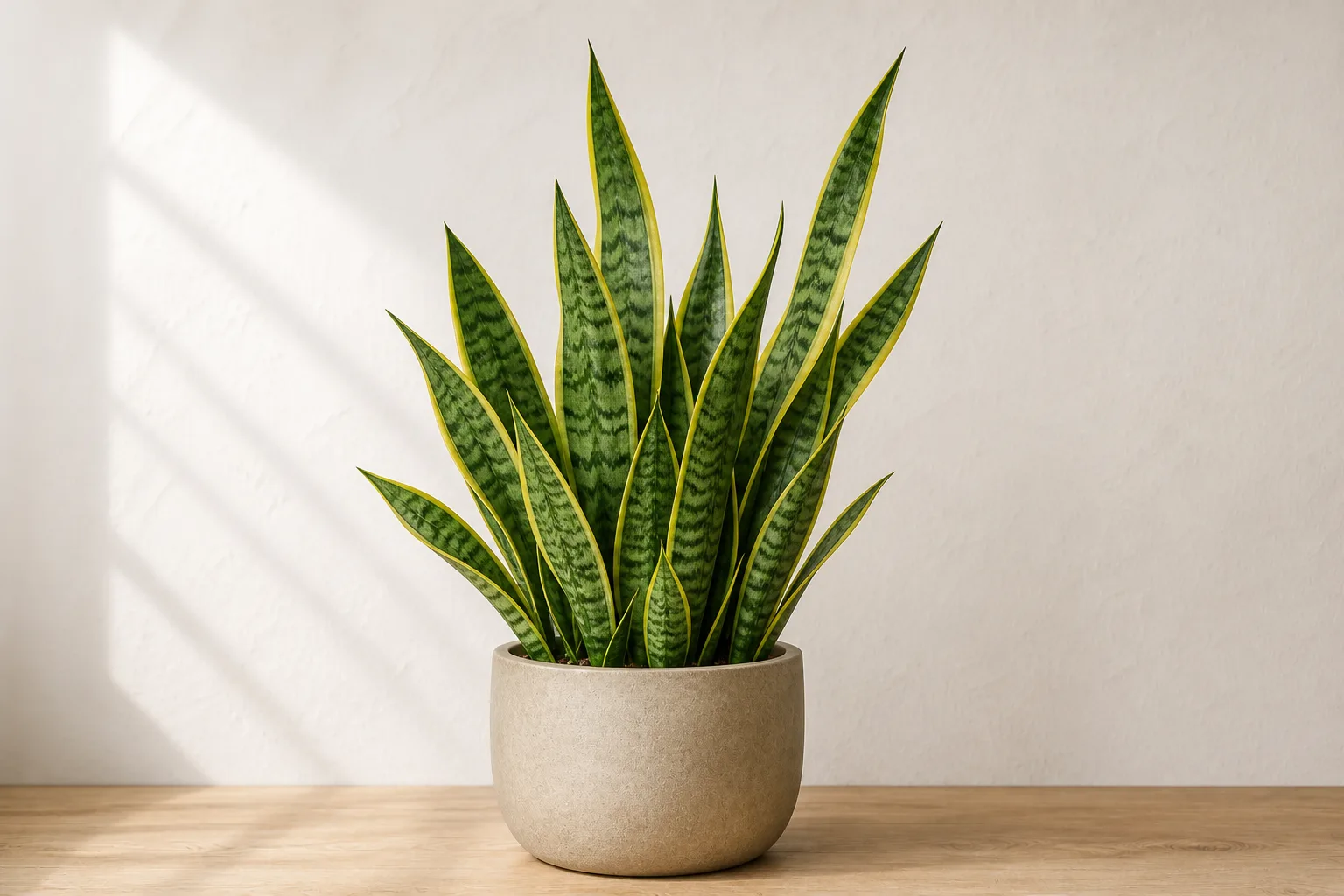
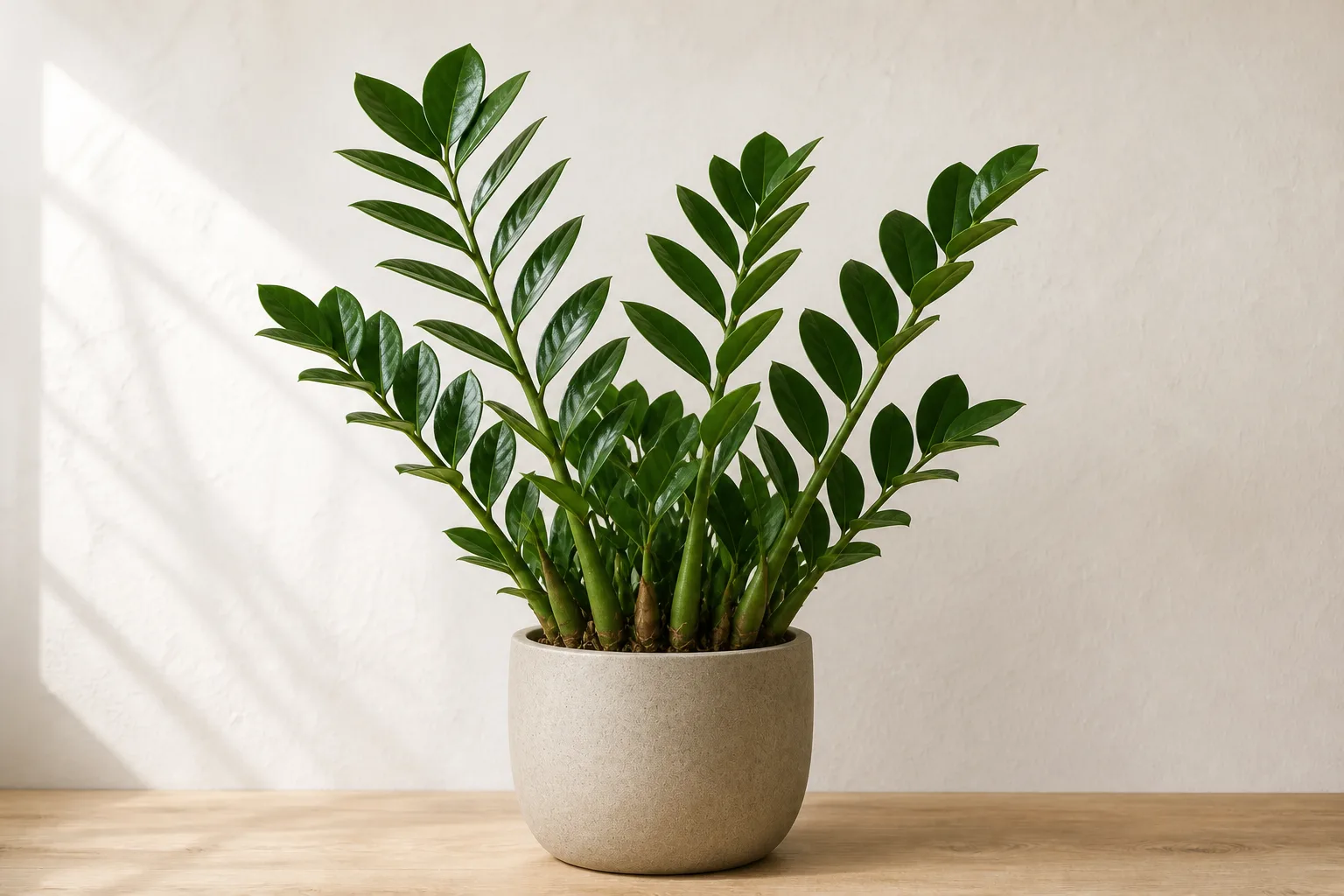
Match the plant to your attention pattern as well. Someone who travels or forgets watering is better served by a drought-tolerant snake plant, ZZ plant, or succulent than by a plant that needs evenly moist soil. Someone who enjoys checking plants frequently can manage a peace lily or fern more comfortably. Difficulty is not a measure of personal ability; it is a description of how narrow the plant's acceptable conditions are.
- Light: low, medium, bright indirect, or several hours of direct sun.
- Space: mature height, spread, trailing length, and whether support is required.
- Routine: how often you are realistically available to check moisture.
- Household: pet toxicity, child access, drafts, and heat sources.
How to buy a healthy plant
Read the label, but verify the plant's identity. Common names are reused across unrelated species, so record the botanical name whenever possible. The name lets you check mature size, toxicity, and care requirements against a reliable source. Avoid buying solely because a label says easy care or low light; those terms are not standardized and can hide important differences between species.
Look at the whole display before selecting an individual pot. If neighboring plants have webbing, sticky residue, cotton-like clusters, scale-like bumps, flying fungus gnats, or extensive spotting, pests may already be moving through the group. Examine both sides of leaves, the points where leaves meet stems, new growth, and the soil surface. A few torn leaves are cosmetic. Widespread yellowing, mushy stems, a sour smell, black roots, or severe wilting in wet soil suggest a root or disease problem that is harder to correct.
Check whether the container has a drainage hole and whether the root ball is stable. Roots circling inside a nursery pot are common and not automatically a reason to reject a plant, but a pot packed with brittle, dark, foul-smelling roots deserves caution. Very dry peat can pull away from the pot edge and become difficult to rewet; saturated, heavy mix can indicate poor watering practices. Choose a plant with firm growth, a stable root ball, and at least some active healthy foliage rather than the plant with the largest number of flowers.
- Confirm the botanical name and keep the label or a clear photo of it.
- Inspect leaf undersides, growing tips, stem joints, and the soil surface.
- Check for firm stems, stable roots, and a container that can drain.
- Ask when the plant was watered and whether it has recently been treated for pests.
The first two to three weeks at home
A new plant has just experienced transport, a change in light, different temperature and humidity, and often a different watering pattern. Place it in suitable light, keep it away from heating or cooling vents, and avoid stacking several other changes on top of that transition. Immediate repotting, pruning, fertilizing, and relocation may make it harder to identify why the plant reacts.
Keep the newcomer apart from established plants while you inspect it regularly. Penn State Extension advises isolating new indoor plants for about three weeks when practical. Watch for insects, webbing, sticky honeydew, distorted new leaves, unexplained speckling, or a sudden increase in flying gnats. Isolation does not need to be dramatic, but leaves should not touch other plants and shared tools should be cleaned before moving between plants.
Water only when the root zone indicates it is needed. A plant arriving wet may not need another drink for many days. Some leaf drop can follow a major change in conditions, but rapid collapse, a soft stem, or yellowing that advances while the mix remains wet needs investigation. Record the date, moisture condition, and action instead of responding with another automatic watering.
Understand indoor light without guessing
Light is the energy source behind growth. Too little light can produce pale foliage, long weak stems, wide gaps between leaves, loss of variegation, leaf drop, and failure to flower. Too much sudden direct sun can bleach or scorch leaves. The goal is not the brightest possible location for every plant; it is a stable location within that species' useful range.
Window direction is a starting clue, not a complete measurement. In the Northern Hemisphere, south- and west-facing windows often provide stronger light, east-facing windows give gentler morning sun, and north-facing windows are usually dimmer. Buildings, trees, curtains, seasonal sun angle, latitude, and distance from glass change the result. Observe actual sun patches and shadows instead of relying only on compass direction.
Rotate a plant a quarter turn every week or two if growth leans strongly toward the window, but do not constantly move it between unrelated light conditions. When increasing direct sun, acclimate gradually over one to two weeks. A grow light can supplement a dim room, but it must be close enough, bright enough, and used for a consistent daily period; a decorative bulb across the room may contribute very little usable light.
- Low light: enough ambient daylight for tolerant foliage plants, generally with slower growth.
- Medium light: bright room light without prolonged strong sun on the leaves.
- Bright indirect light: close to a bright window, with direct rays filtered or limited.
- Direct light: sun reaches the leaves; duration and intensity determine whether it is useful or damaging.
Water with evidence, not a calendar
A weekly reminder is useful for checking plants, but it should not be an instruction to water all of them. Water use changes with light, temperature, humidity, plant size, root health, pot material, potting mix, and season. Two identical plants in different rooms can dry at very different rates. Begin by feeling the upper mix, lifting the pot to learn its wet and dry weight, or inserting a wooden skewer into the root zone.
When watering is due, wet the root ball thoroughly and allow excess to leave through the drainage hole. Empty the saucer or cachepot so roots are not left standing in water. Repeated small sips can wet only part of the root ball and leave salts concentrated in the mix. If water runs immediately around a shrunken, very dry peat root ball, rehydrate slowly in several passes rather than assuming one fast pour reached the roots.
Overwatering is better understood as watering again before the root zone has regained enough air, not as using too much water in one thorough session. Succulents and snake plants usually need a deeper dry-down than peace lilies or many ferns. Yellow leaves can have several causes, so check moisture, roots, light, pests, and the position of affected leaves before deciding that the solution is more or less water.
Pots, drainage, and potting mix
Use a container with at least one functional drainage hole. A decorative cachepot can still work if the plant remains in a removable nursery pot and is allowed to drain fully after watering. Adding gravel to the bottom of a closed pot does not create drainage; excess water still has nowhere to leave. Choose a saucer wide enough to catch runoff without keeping the base submerged.
Potting mix should hold enough moisture for the plant while preserving air around roots. General indoor mixes work for many foliage plants, but aroids often benefit from coarse bark or similar structure, while succulents need a faster-draining mineral component. Garden soil is usually too dense for indoor containers and may introduce pests or pathogens. Use fresh, clean mix when repotting.
Do not automatically move a plant into a much larger pot. Excess mix around a small root ball can remain wet longer than the plant can use it. When roots genuinely fill the current container, move up one modest size—often about 1 to 2 inches wider for a small or medium plant. Repot because roots, drainage, or degraded mix indicate a need, not simply because the plant has entered your home.
A small, useful houseplant toolkit
Most beginners need fewer tools than product displays suggest. Start with items that improve observation, clean cutting, and controlled watering. The best watering tool is one you can aim at the potting mix without flooding the crown or furniture. The best cutting tool is sharp enough to make a clean cut and easy to disinfect between plants.
Store tools together so routine checks are easy. Clean blades before and after removing diseased tissue, and never use fertilizer or pest products without reading the label. Gloves are useful for irritating sap, sharp spines, potting mix, and pesticide labels that require them. A soft brush or cloth helps remove dust from sturdy foliage, but delicate, fuzzy, or waxy leaves may need a different cleaning method.
| Tool | Why it is useful | Priority |
|---|---|---|
| Narrow-spout watering can | Directs water to the mix and controls flow | Essential |
| Clean scissors or bypass snips | Removes damaged growth and takes cuttings cleanly | Essential |
| Saucer or removable cachepot | Protects surfaces while allowing drainage | Essential |
| Wooden skewers or chopsticks | Checks deeper moisture and loosens compacted mix gently | Useful |
| Soft cloth and small brush | Cleans sturdy leaves and helps with inspection | Useful |
| Hand lens | Makes early pest identification easier | Useful |
| Moisture meter | Offers a secondary reading but requires interpretation | Optional |
| Misting bottle | Useful for cleaning or targeted tasks; not a substitute for humidity | Optional |
Build a care routine that scales
A good routine separates inspection from intervention. Once a week, look at new growth, leaf undersides, stems, and the soil surface. Check moisture and lift pots. Water only the plants that are ready. Remove fallen material, empty standing water, and turn pots that are growing unevenly. This short inspection catches problems earlier than a monthly rescue session.
Once a month, clean suitable leaves, inspect drainage holes, review whether light has shifted with the season, and check supports or ties. Fertilizer is not food for a plant in the same sense as light; it supplies mineral nutrients used during growth. Fertilize only when the plant is actively growing and according to the product label. More fertilizer cannot compensate for inadequate light or unhealthy roots and can create salt buildup.
Keep simple records only when they help. A note of watering dates, repotting, pest treatment, and major moves is enough for most collections. Avoid turning care into a rigid spreadsheet that overrides observation. The purpose of a record is to reveal a pattern—such as a pot staying wet for three weeks—not to force every plant into the same interval.
- Weekly: inspect, check moisture, water selectively, and remove debris.
- Monthly: clean, rotate, check supports, and reassess seasonal light.
- Seasonally: review growth, roots, potting mix, fertilizer, and heating or cooling changes.
Common beginner mistakes—and better responses
The most common mistake is changing several variables at once. A yellow leaf leads to watering, fertilizer, a new pot, a darker room, and pest spray on the same day. The plant then has more stress, while the original cause becomes impossible to identify. Start with evidence: current moisture, recent care, light, temperature, roots if justified, and visible pests. Change the most likely factor, then observe.
Another mistake is treating normal aging as an emergency. An occasional oldest lower leaf may yellow and drop while healthy new growth continues. By contrast, rapid yellowing across the plant, distorted new leaves, wet soil that does not dry, or visible pests deserves action. Compare the pattern over time rather than reacting to one imperfect leaf.
Finally, do not expect a struggling plant to recover instantly. Existing leaf damage usually will not reverse; judge improvement by stable roots and healthy new growth. If the care environment cannot meet a species' needs, moving the plant to a more suitable location—or choosing a different plant—is sound horticulture, not failure.
Frequently asked questions
What is the easiest first houseplant?
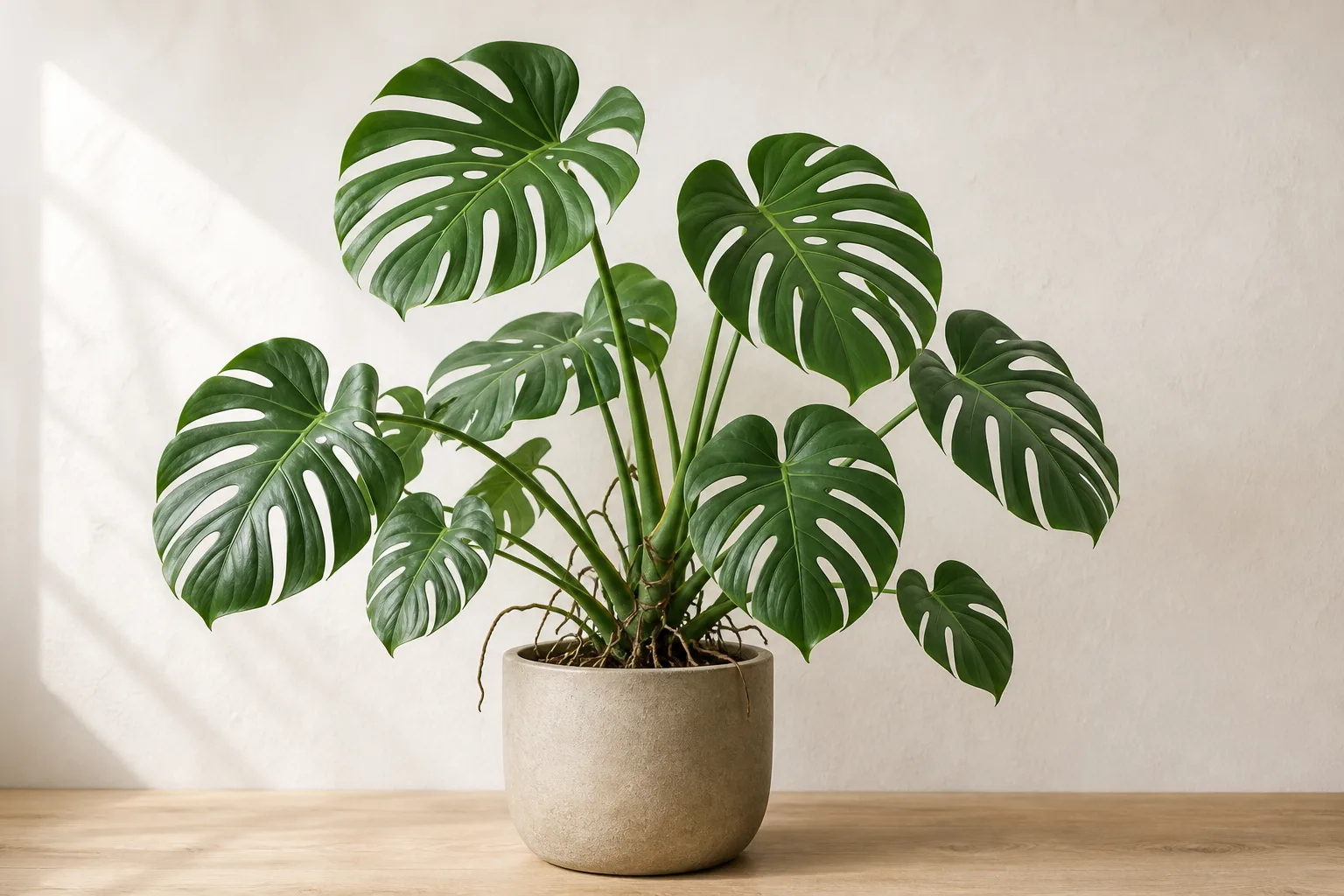
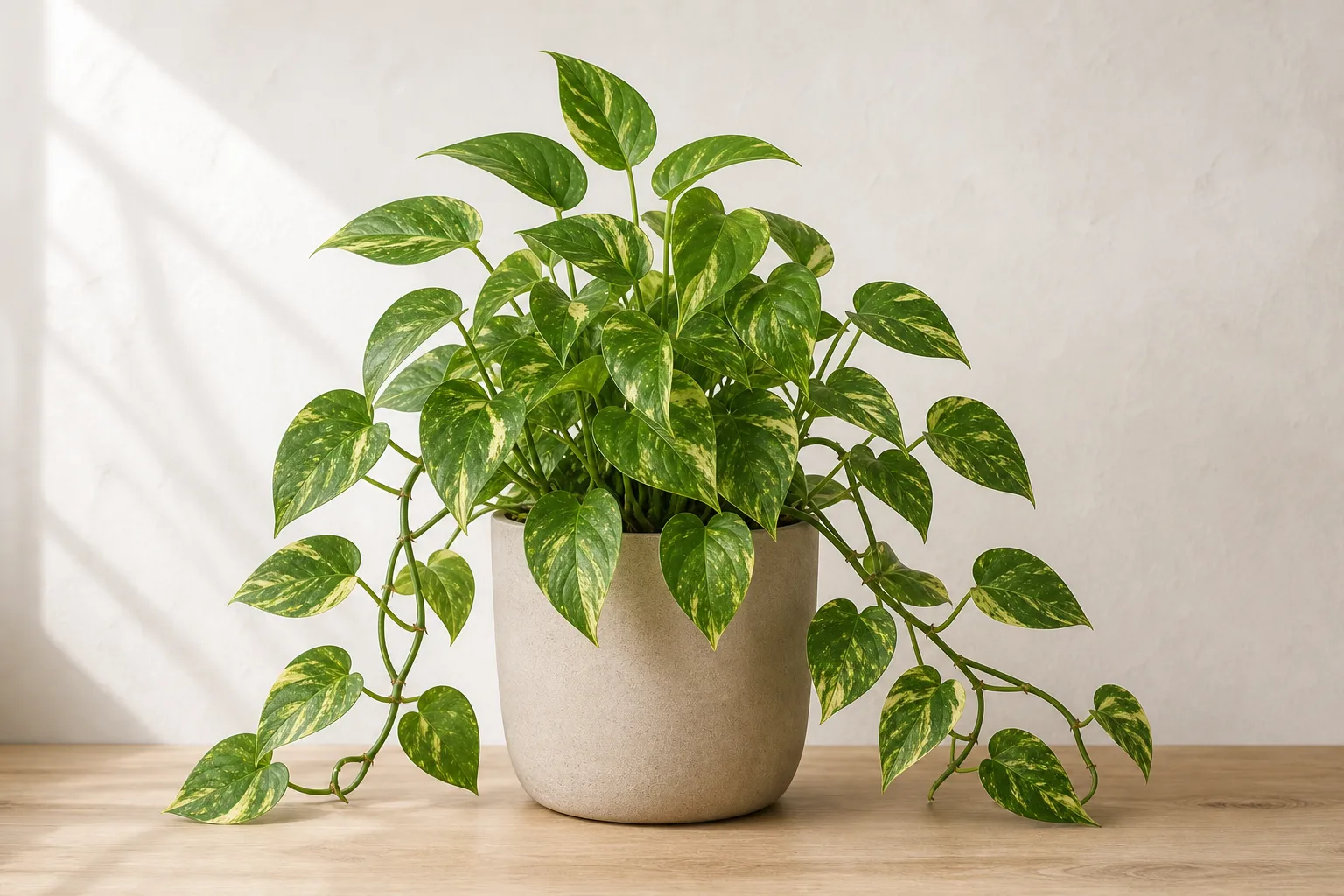
There is no single easiest plant for every home. Snake plants and ZZ plants suit people with lower light and infrequent watering, while golden pothos grows faster in medium to bright indirect light. Choose the plant whose light, space, and moisture needs match your conditions.
Should I repot a houseplant as soon as I buy it?
Usually not. If the nursery pot drains and the plant is stable, allow an acclimation period first. Repot immediately only when there is a clear problem such as a broken pot, severely degraded mix, active root rot, or roots so congested that water cannot enter the root ball.
How often should a beginner water houseplants?
Use a weekly check rather than a weekly watering rule. Water when the species-appropriate portion of the root zone has dried, then drain thoroughly. Light, season, pot size, and mix can change the interval substantially.
Do houseplants need misting?
Routine misting raises humidity only briefly and is not a substitute for a humidifier or a suitable room. It can be useful for cleaning or specific propagation tasks. Avoid leaving moisture on leaves when poor airflow or disease risk is a concern.
When should I start fertilizing a new plant?
Wait until the plant has acclimated and is producing active growth. The nursery mix may already contain fertilizer. Follow the label at a conservative rate, and do not fertilize a plant with root damage, severe drought, or an unresolved pest problem.
What should I do if my pet chews a plant?
Identify the plant by botanical name, remove access, and contact your veterinarian or an animal poison-control service promptly if toxicity is possible or symptoms appear. Do not rely on a general pet-safe label or induce vomiting without professional direction.
Sources and further reading
Plantwise uses extension services, horticultural institutions, and specialist safety references to support practical recommendations. Always pair general guidance with the exact botanical name and conditions in your home.
- Lighting for indoor plants and starting seedsUniversity of Minnesota Extension. Indoor light assessment, low-light definitions, and signs of insufficient or excessive light.
- Managing insects on indoor plantsUniversity of Minnesota Extension. Selecting healthy plants, inspection, sanitation, and pest prevention.
- Pest and Disease Problems of Indoor PlantsPenn State Extension. Inspection of new purchases, isolation, monitoring, and common pest symptoms.
- HouseplantsRoyal Horticultural Society. Beginner care topics including buying, watering, feeding, humidity, repotting, and potting mixes.
- Toxic and Non-Toxic PlantsASPCA Animal Poison Control. Plant identification, pet-toxicity reference, and poison-control guidance.