Key takeaways
- Bright filtered light keeps the leaf pattern strong; direct sun bleaches the colors.
- Keep the mix evenly moist in the growing season, drier in winter, and never soggy.
- Non-toxic to cats and dogs, a safe pick for pet households.
How to care for Prayer Plant
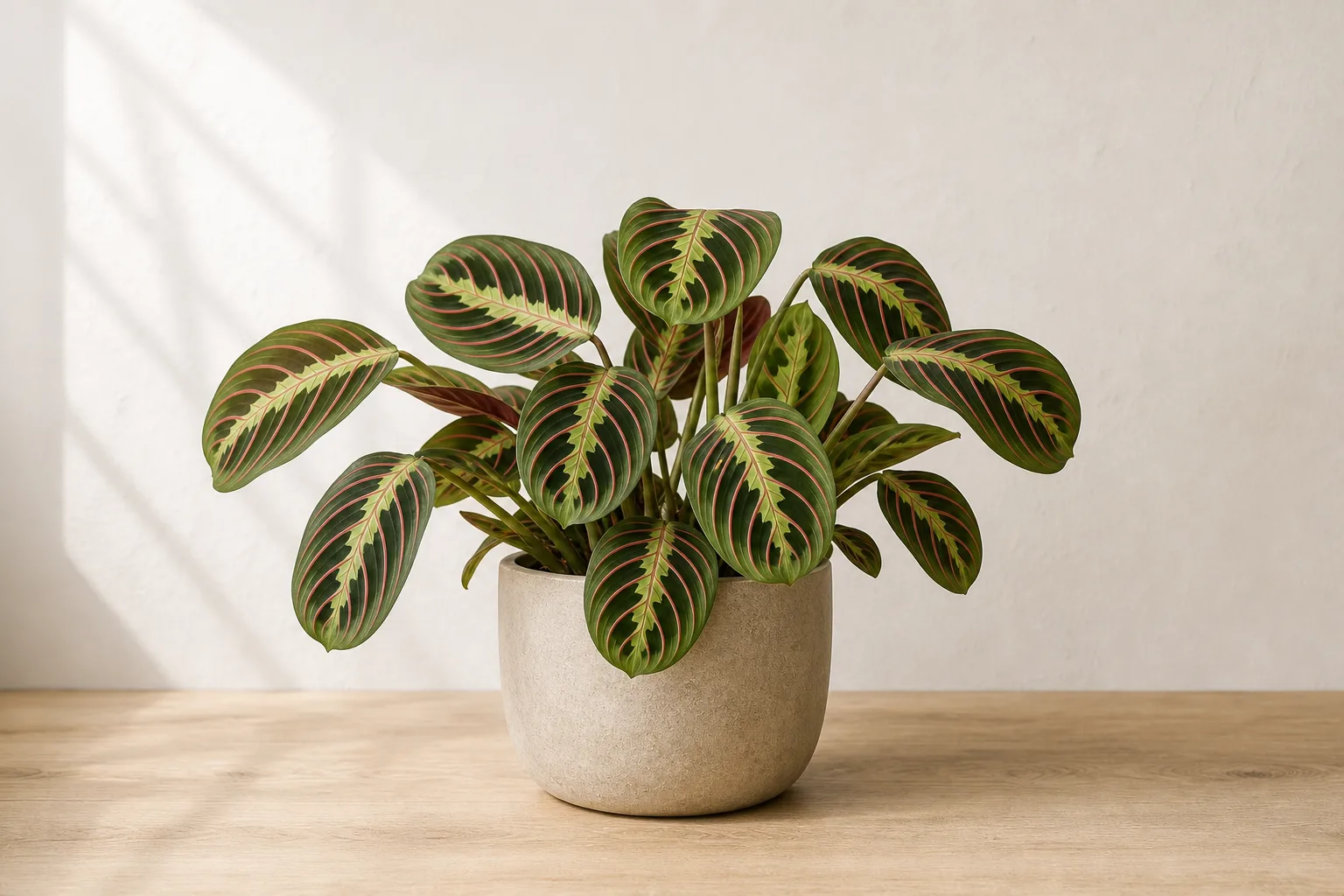
Prayer plant (Maranta leuconeura) is an evergreen, rhizomatous perennial in the arrowroot family, native to the tropical forests of central and eastern Brazil. Its oval, patterned leaves - marked with a pale midrib, dark blotches, and prominent red fishbone-pattern veins - fold upward at night like praying hands and flatten again by day, a daily movement that gives the plant its common name.
Care focuses on humidity, moisture, and warmth. Site it in bright indirect light, keep the potting mix evenly moist through the growing season, and hold back in winter. High humidity is important - a humidified room, wet-pebble tray, or nearby humidifier prevents the leaf-edge browning that dry indoor air causes. Protect it from direct sun, cold drafts, and low temperatures.
Light
Place prayer plant in bright, indirect light; it also tolerates low to medium light but grows best with steady filtered exposure. Too much sun bleaches the attractive leaf colors, so keep it out of direct light. An east or north window, or a spot a few feet back from a brighter window, works well. The leaf colors fade in very dim spots and when the plant is underfed, so brighten the position before reaching for fertilizer.
Water
Keep the potting soil evenly moist throughout the growing season, but hold back to allow the mix to dry out somewhat in winter. Check the top of the mix before watering and never let the pot sit in a saucer of water - poorly drained soil causes root rot. Prayer plant is sensitive to fluoride and to overfertilizing, both of which burn leaf edges, so use filtered water when your tap water is hard or softened.
Soil and repotting
Use a well-drained, soil-based or peaty potting mix in a container with drainage holes. The Missouri Botanical Garden recommends a soil-based mix with bright indoor light but no strong direct sun. Repot in spring when the plant becomes crowded, moving up one size; the rhizomatous root system also makes this the easiest time to divide. Keep the crown at the soil line and water gently after repotting.
Temperature, humidity, and fertilizer
Prayer plant prefers temperatures that stay above about 60 F (16 C), with no cold drafts and no low-temperature dips; it is intolerant of frost. High humidity is essential for its best condition - use a humidified room or a tray of wet pebbles. Fertilize monthly with a balanced houseplant fertilizer at label strength during the growing season, and reduce both feeding and watering from autumn to late winter.
Pruning and propagation
Remove yellowed or damaged leaves at the base and trim any leggy stems to keep the clump tidy. Propagate by division when repotting - separate rooted sections of the rhizome, each with several leaves, and pot them into fresh mix - or root stem cuttings with a node in water or moist mix. Keep divisions warm, humid, and out of direct sun until they establish.
Common problems
Start with the pattern, current soil moisture, and recent changes. One symptom can have several causes, so change the most likely factor first and observe before making another major adjustment.
| Symptom | Check first | First action |
|---|---|---|
| Brown or crispy leaf edges | Low humidity, fluoride in tap water, or overfertilizing | Raise humidity, switch to filtered water, and reduce feeding before changing other care. |
| Bleached or faded leaf colors | Direct sun exposure and light level | Move to bright indirect light, away from direct sun. |
| Yellowing leaves | Soil moisture, drainage, and natural aging of older leaves | Let the top of the mix dry and confirm the pot drains before changing other care. |
| Wilting or rolled leaves | Dry soil, low humidity, or cold drafts | Water if dry, raise humidity, and move the plant away from drafts. |
| Fine webbing or stippling | Spider mites or mealybugs on leaf undersides and stems | Isolate and identify the pest before treating; wipe foliage and use a targeted control. |
Pet and household safety
Prayer plant is non-toxic to cats, dogs, and horses, making it a safe choice for pet households. Non-toxic does not mean edible: chewing any plant or potting material can still upset a pet's stomach, so keep persistent chewers away and contact a veterinarian if a pet becomes unwell after eating plant material.
Frequently asked questions
How often should I water a prayer plant?
Keep the mix evenly moist in the growing season and drier in winter. Check the top of the soil before watering - the interval changes with light, pot size, and season, so use the mix as the trigger.
What light does a prayer plant need?
Bright indirect light, with tolerance for low to medium light. Direct sun bleaches the leaf colors, and dim spots fade them.
Why does my prayer plant fold its leaves at night?
It is nyctinastic movement: the leaves fold upward at night like praying hands and flatten by day, a daily response to light that gives the plant its common name.
Why are the leaf edges turning brown?
Usually low humidity, fluoride in tap water, or too much fertilizer. Raise humidity, use filtered water, and reduce feeding before changing other care.
How do I propagate a prayer plant?
Divide the rhizome when repotting, or root a stem cutting with a node in water or moist mix. Keep new plants warm, humid, and out of direct sun.
Is prayer plant safe for pets?
Yes, it is non-toxic to cats and dogs. Still discourage chewing, since any plant material can upset a pet's stomach.
Sources and editorial review
This editorial draft is based on the sources below and awaits named horticulture-expert approval before publication.
- Maranta leuconeuraRoyal Botanic Gardens, Kew (Plants of the World Online) · Checked
- Maranta leuconeura (Prayer Plant)North Carolina State Extension · Checked
- Maranta leuconeuraMissouri Botanical Garden · Checked
- Prayer PlantASPCA · Checked
What works well
- Fascinating nyctinastic leaf movement - leaves fold up each night.
- Striking fishbone veins and dark leaf blotches in a compact form.
- Non-toxic to cats and dogs.
What to consider
- Needs higher humidity and steady warmth; low humidity browns leaf edges.
- Direct sun and cold drafts quickly damage the foliage.
- Sensitive to fluoride and overfertilizing, which burn the leaves.