Key takeaways
- Give it bright light away from cold drafts and hot vents; 65-70°F suits it best.
- Water when the soil surface dries, then soak and drain - never let it sit in water.
- Toxic to cats, dogs, and horses: the milky sap irritates the mouth and stomach.
How to care for Poinsettia
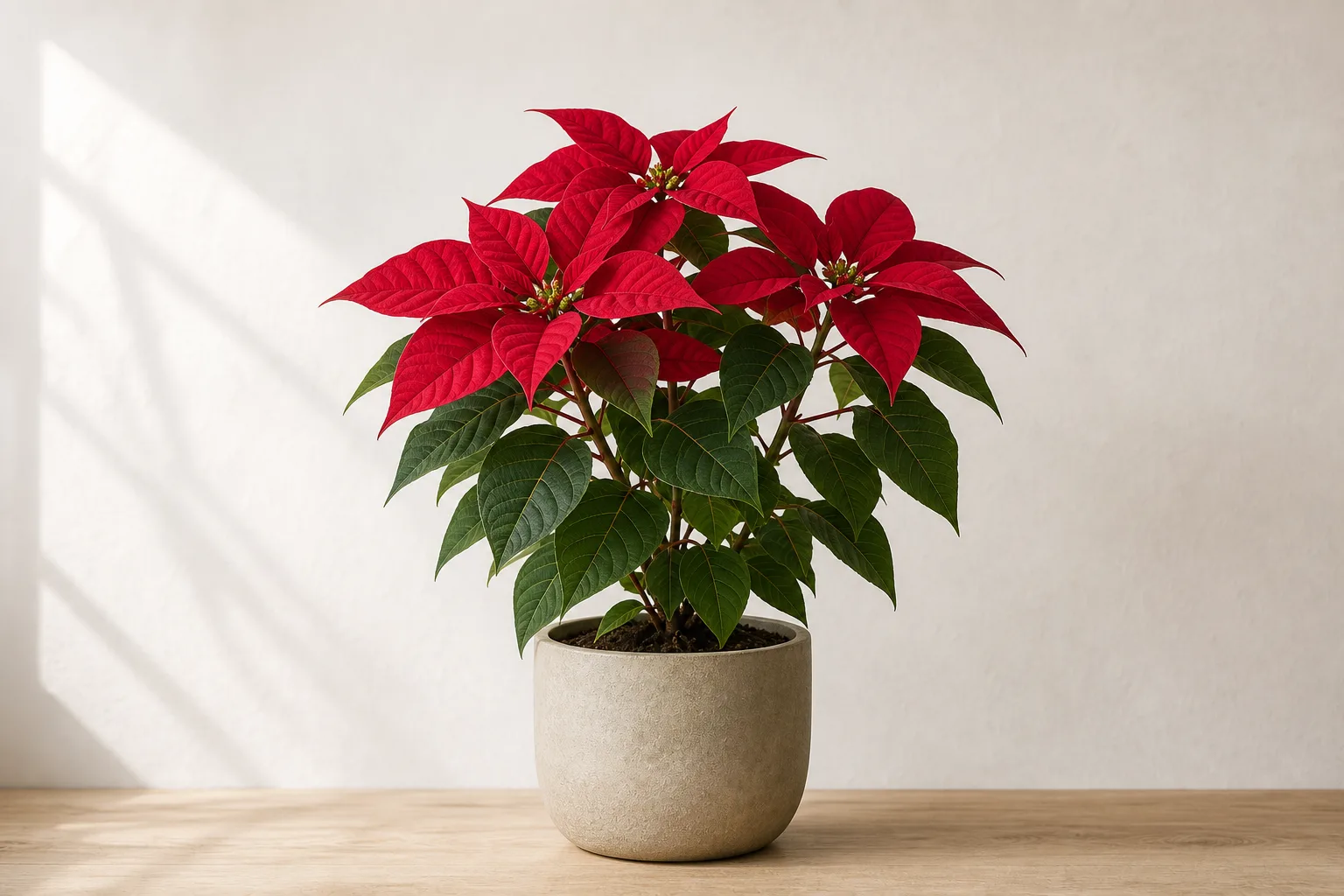
Poinsettia (Euphorbia pulcherrima) is a deciduous to semi-evergreen shrub or small tree native to the Pacific slope of Mexico and Guatemala, where it grows in coastal and mid-elevation, seasonally dry tropical forests. The colorful display we think of as its flowers is actually a ring of modified leaves, the bracts, that surround the small yellow cyathia at the center.
For a potted plant, keep it in a bright spot away from cold drafts and doors, water when the soil surface dries and then soak well, and allow excess water to drain away. Indoor household temperatures are fine; the plant prefers to be kept on the dry side. The white sap is an irritant, so wear gloves when handling broken stems and keep the plant out of reach of pets and children.
Light
Poinsettias like bright, indirect light indoors - a sunny window that is not too cold, away from doors and drafts. Keep the temperature around 65-70°F (18-21°C). If you move the plant outdoors in warm weather, use an eastern exposure or general shade once night temperatures stay above about 60°F (15°C). To re-bloom next winter, the plant needs complete darkness for at least 12 hours a night from late September, with bright light during the day.
Water
Water when the soil surface feels dry, then soak thoroughly and make sure all excess drains away and is discarded. Poinsettias prefer to be kept on the dry side; overwatering causes root and stem rot, and bracts drop. When the plant is in its holiday display, it needs little else. After blooming, if you keep it through the year, reduce water and let it go through a cooler, drier rest before growth resumes in spring.
Soil and repotting
Use a well-drained, peat-based potting mix, and make sure the container has a drainage hole. Poinsettias are usually sold in a suitable pot for the holiday season and need no repotting until spring. In spring, after the rest period, you can repot into a slightly larger container and start fertilizing to support new growth. Keep the plant pinched through summer to encourage the branching tips that will color in autumn.
Temperature, humidity, and fertilizer
Poinsettias prefer daytime temperatures of 65-70°F (18-21°C) and are damaged by cold drafts and by temperatures below about 50°F (10°C). Average household humidity is acceptable. Fertilizer is not needed during the holiday display; begin feeding in spring if you keep the plant year-round, and pinch and fertilize through summer. For re-blooming, maintain the long-night dark period from late September until the bracts show strong color in November.
Pruning and propagation
Cut the plant back in spring, around April, to shape it and encourage branching. Keep it pinched through summer to develop the tips that will produce color. Propagation is by stem cuttings taken in early summer: cut below a node, let the milky sap dry, and root the cutting in a moist peat-perlite mix with bottom heat. Handle cuttings with gloves because the sap is an irritant.
Common problems
Start with the pattern, current soil moisture, and recent changes. One symptom can have several causes, so change the most likely factor first and observe before making another major adjustment.
| Symptom | Check first | First action |
|---|---|---|
| Bracts and leaves dropping | Cold drafts, temperature swings, and whether the pot is too wet or too dry | Move the plant to a warmer, draft-free spot and correct watering; remove fallen material. |
| Wilting despite moist soil | Root zone for rot from overwatering | Let the mix dry at the surface and confirm the pot drains before watering again. |
| Yellowing, dropping lower leaves | Overwatering and drainage | Reduce watering and discard any standing water in the saucer. |
| Leggy, sparse growth in spring | Whether the plant was pruned and pinched through the season | Cut back in spring and pinch tips through summer for a fuller plant. |
| Whiteflies, mealybugs, or spider mites | Leaf undersides and nearby plants | Isolate the plant, identify the pest, and use a targeted control. |
Pet and household safety
Poinsettia (Euphorbia pulcherrima) is toxic to dogs, cats, and horses, according to the ASPCA, with irritant sap as the toxic principle. The sap is irritating to the mouth and stomach and can cause vomiting, though the toxicity is generally over-rated; NC State Extension notes the milky sap can also cause contact dermatitis and eye irritation in people. Handle the plant with gloves, keep it out of reach of pets and children, and contact a veterinarian if a pet has a concerning exposure. This species is not safe to chew.
Frequently asked questions
How often should I water a poinsettia?
Water when the soil surface feels dry, then soak and drain completely. The plant prefers the dry side; overwatering causes root and stem rot and bract drop.
What light does a poinsettia need?
Bright, indirect light in a warm spot away from drafts. For re-blooming, provide complete darkness for at least 12 hours a night from late September.
Where does the poinsettia grow naturally?
Euphorbia pulcherrima is native to the Pacific slope of Mexico and Guatemala, growing in coastal and mid-elevation, seasonally dry tropical forests.
How do I get my poinsettia to turn red again?
From late September, keep the plant in complete darkness for at least 12 hours nightly with bright light during the day, and continue watering and feeding until the bracts color.
How do I propagate a poinsettia?
Take stem cuttings in early summer, let the sap dry, and root them in moist peat-perlite mix with bottom heat. Wear gloves, since the sap is an irritant.
Is poinsettia safe for pets?
No. The sap is an irritant to the mouth and stomach and can cause vomiting, though it is generally over-rated in toxicity. Keep it out of reach and contact a veterinarian after a concerning exposure.
Sources and editorial review
This editorial draft is based on the sources below and awaits named horticulture-expert approval before publication.
- Euphorbia pulcherrimaRoyal Botanic Gardens, Kew (Plants of the World Online) · Checked
- PoinsettiaASPCA · Checked
- Euphorbia pulcherrima (Poinsettia)North Carolina State University Extension · Checked
- Euphorbia pulcherrima (Poinsettia)Missouri Botanical Garden · Checked
What works well
- Dramatic, long-lasting color in winter when little else is blooming.
- Reliable, classic holiday plant that is widely available.
- Largely forgiving if you err on the side of slightly dry.
What to consider
- Milky sap is an irritant to pets, people, and eyes.
- Bracts drop quickly if the plant chills, dries out, or is overwatered.
- Re-blooming next year requires a strict long-night dark period routine.