Key takeaways
- Give it bright indirect light; too much direct sun scorches the leaves.
- If growing in water, keep the roots covered and change the water weekly; in soil, keep the mix evenly moist.
- Keep it away from cats and dogs - as a dracaena it contains saponins and is toxic if chewed.
How to care for Lucky Bamboo
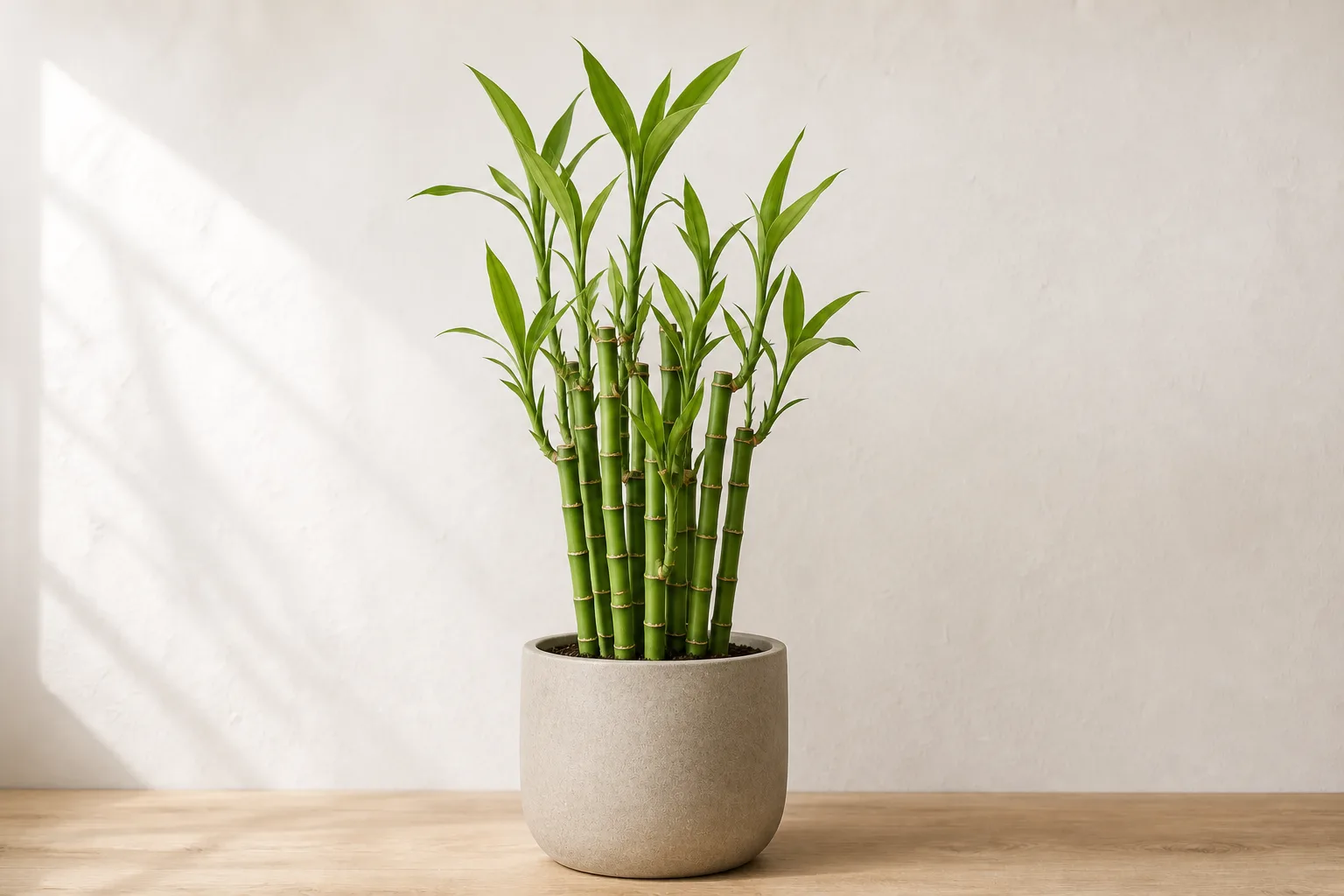
Lucky bamboo (Dracaena sanderiana) is a tropical perennial shrub from western Central Africa that is not bamboo at all - its bamboo-like appearance comes from a fleshy, upright stem with distinct nodes. In the home it is usually kept as a short cluster of canes in a glass of water, though it also grows well in moist potting soil.
The essential routines are simple: keep it in bright but indirect light, keep the roots covered with chlorine-free water, and change that water weekly to prevent bacteria, mosquitoes, and rot. In soil, keep the mix evenly moist but never saturated. Stems are often trained into spirals, braids, hearts, and loops by rotating them toward light.
Light
Lucky bamboo performs well in bright but indirect indoor light all year and tolerates dappled shade. Too much direct sun scorches or yellows the foliage and canes. A spot near an east or north window, or a few feet back from a brighter window, is ideal. Rotate the container occasionally so all sides receive light, which also helps keep braided or spiral stems growing evenly.
Water
If growing in water, keep the roots submerged and change the water weekly, using chlorine-free water; tap water left to sit overnight allows chlorine to dissipate. Put pebbles in the bottom of the vase to anchor the roots and add weight. In soil, keep the mix evenly moist - overwatering causes yellowing leaves and rotting stems. Leaf tip browning can indicate low humidity or chlorine in the water.
Soil and repotting
Lucky bamboo can be grown in soil in a container with drainage, using a standard well-draining houseplant mix, or in water with pebbles as a substrate. The Missouri Botanical Garden notes it is easily grown in evenly moist soil in part shade to full shade. Repot or refresh the water and pebbles when the roots fill the container; trim any soft or rotting roots with clean tools when you do.
Temperature, humidity, and fertilizer
Keep lucky bamboo in warm indoor temperatures and away from cold drafts and heating vents. Average household humidity is fine; low humidity can brown the leaf tips. If growing in water, add only a very weak liquid fertilizer a few times a year - too much fertilizer burns the roots. In soil, feed with a diluted balanced houseplant fertilizer during the growing season and skip feeding in winter.
Pruning and propagation
Cut a stalk to control height; the cane will not grow taller from the cut, but new growth appears below it, which is how stacked 'tiers' are created. Propagate from stem cuttings: cut a healthy section with a node and roots, remove lower leaves, and set it in water until roots develop. NC State Extension lists stem cuttings as the standard propagation method.
Common problems
Start with the pattern, current soil moisture, and recent changes. One symptom can have several causes, so change the most likely factor first and observe before making another major adjustment.
| Symptom | Check first | First action |
|---|---|---|
| Yellowing leaves or canes | Direct sun, chlorine in the water, overwatering, or stale water | Move to bright indirect light, switch to chlorine-free water, and change it weekly. |
| Soft, rotting stems or foul smell | Stagnant water and whether roots are healthy | Change the water immediately, trim soft roots, and rinse the container with clean water. |
| Brown leaf tips | Low humidity, chlorine, or mineral buildup | Use chlorine-free water and move the plant away from dry vents. |
| Wilting or drooping foliage | Root condition, water level, and temperature | Check that roots are covered with clean water; trim damaged roots and refresh the water. |
| Tiny insects on canes or leaves | Mealybugs, mites, or scale, and water quality | Isolate and identify the pest before treating; wipe canes and rinse foliage with clean water. |
Pet and household safety
Lucky bamboo is toxic to cats and dogs if chewed. As a Dracaena species, it contains saponins, which can cause vomiting (occasionally with blood), depression, anorexia, hypersalivation, and dilated pupils in cats. Keep it out of reach of pets and children who chew plants, and contact a veterinarian or animal poison-control service after a concerning exposure. This species is not safe to chew.
Frequently asked questions
How often should I change lucky bamboo water?
Change the water weekly and keep the roots covered with chlorine-free water. Stale water invites rot, bacteria, and mosquitoes, so a weekly refresh is the most reliable routine.
What light does lucky bamboo need?
Bright but indirect light; it also tolerates dappled shade. Direct sun scorches the leaves, and dim corners slow growth.
Where does lucky bamboo grow naturally?
It is native to western Central Tropical Africa through northeastern Angola, where it grows as a subshrub or shrub in the wet tropical biome - not in China, despite its common name.
Why are my lucky bamboo leaves turning yellow?
Usually too much direct sun, chlorine in the water, or overwatering in soil. Move it to filtered light and use chlorine-free water that is changed weekly.
How do I propagate lucky bamboo?
Cut a stem section with a node and roots, remove the lower leaves, and root it in water. New shoots form below any cut, which is how taller stacked stems are made.
Is lucky bamboo safe for pets?
No. It is a Dracaena and contains saponins that cause vomiting, drooling, and depression in cats and dogs. Keep it out of reach and contact a veterinarian after a concerning chew.
Sources and editorial review
This editorial draft is based on the sources below and awaits named horticulture-expert approval before publication.
- Dracaena sanderianaRoyal Botanic Gardens, Kew (Plants of the World Online) · Checked
- Dracaena sanderiana (Lucky Bamboo)North Carolina State Extension · Checked
- Dracaena sanderianaMissouri Botanical Garden · Checked
- DracaenaASPCA · Checked
What works well
- One of the easiest houseplants to grow - it thrives in plain water.
- Compact and slow-growing, ideal for desks and small spaces.
- Canes can be trained into decorative spirals, braids, and hearts.
What to consider
- Toxic to cats and dogs if chewed (saponins).
- Sensitive to chlorine and fluoride; stale water causes rot and foul smells.
- Direct sun burns the leaves and can yellow the canes.