Key takeaways
- Give it bright indirect light; it tolerates low light and some shade but grows best with steady filtered exposure.
- Allow the mix to dry between waterings in the growing season and reduce in winter.
- Non-toxic to cats and dogs, making it a safe choice for pet households.
How to care for Grape Ivy
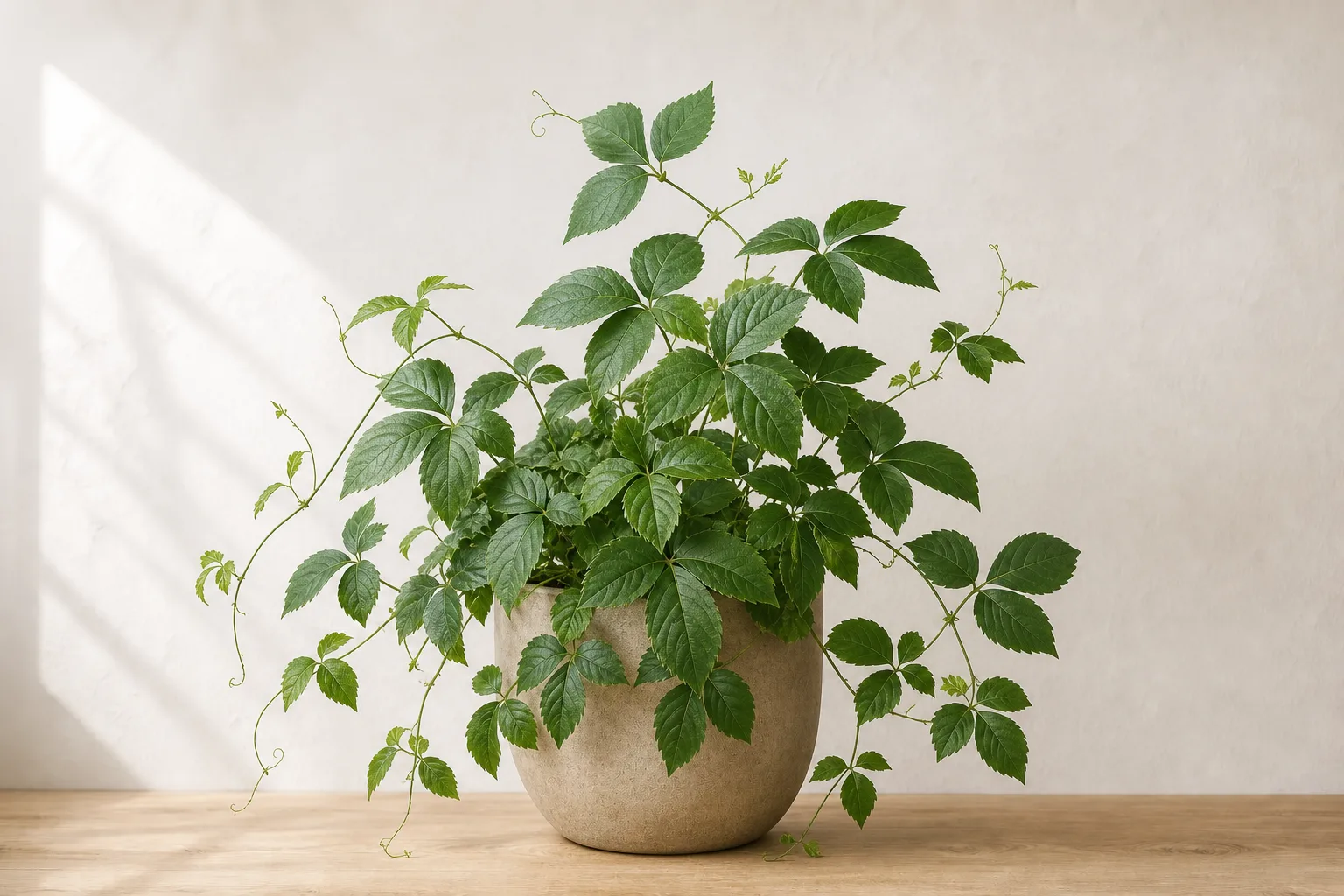
Grape ivy (Cissus alata) is a subtropical, evergreen, tendril-climbing vine in the grape family, native from Mexico to Bolivia and Trinidad. Its alternately compound leaves have glossy, toothed, rhombic leaflets with silky hairs on the undersides, and a forked tendril grows opposite each leaf - the key identification feature. In the wild it climbs 10 feet or more; indoors it is best in a hanging basket or trained up a trellis.
Care is forgiving: site it in bright indirect light, water when the top of the mix dries, and keep it in average to cool indoor temperatures. It tolerates low humidity and varied light better than many tropical vines, but it is sensitive to extremes - both a soggy pot and severe drought make it drop leaves. Pinch or prune at any time to keep the shape tidy.
Light
Grape ivy prefers bright, indirect light but tolerates a variety of lighting conditions, including lower light and partial shade. An east or north window, or a few feet back from a brighter window, keeps the foliage dense and glossy. It can take some direct morning sun but does not need it. In very dim spots growth slows and the plant becomes sparse, so choose the brightest spot that avoids harsh midday sun.
Water
Allow the plant to dry out between waterings during the growing season, then water thoroughly and let excess drain. Apply consistent moisture from spring to fall and reduce watering in winter. Both extremes cause leaf drop - a pot left soggy risks root rot, while prolonged dryness wilts and sheds leaves. Check the root zone before watering rather than following a fixed schedule.
Soil and repotting
Use a well-drained, peaty potting mix in a container with drainage holes, which the Missouri Botanical Garden recommends for indoor container growth. Grape ivy grows well in a soil-based mix and does not need repotting often - every couple of years, or when roots crowd the pot, moving up one size. Refresh the top layer of mix if salts accumulate from tap water.
Temperature, humidity, and fertilizer
Grape ivy prefers average to cool indoor temperatures, with a winter minimum around 50 F (10 C), and it tolerates low relative humidity well - a trait that makes it easier than most vines in heated homes. Avoid very hot, stuffy rooms, which encourage spider mites. Feed four times a year during the growing season with a balanced houseplant fertilizer at label strength; dark green leaves indicate adequate feeding, while pale leaves may signal more is needed.
Pruning and propagation
Prune grape ivy to shape at any time - cutting just above a leaf keeps it bushy and controls length. Propagate easily from stem cuttings taken with a node or two; root them in moist mix or water, keeping them warm and lightly humid until roots form. The plant also roots where trailing stems touch soil, so pinning a stem to the mix can produce new plants.
Common problems
Start with the pattern, current soil moisture, and recent changes. One symptom can have several causes, so change the most likely factor first and observe before making another major adjustment.
| Symptom | Check first | First action |
|---|---|---|
| Leaf drop | Whether the mix is too wet or too dry and recent changes | Check the root zone and steady the watering; grape ivy sheds leaves at both extremes. |
| Yellowing leaves | Soil moisture, drainage, and leaf age | Let the top of the mix dry and confirm the pot drains before changing other care. |
| Sparse, leggy growth | Light level and distance from the window | Move gradually to brighter filtered light and prune to encourage density. |
| Fine webbing or stippling | Spider mites on leaf undersides, especially in warm dry rooms | Isolate the plant, rinse or wipe foliage, raise humidity, and treat once the pest is confirmed. |
| Cottony clumps or waxy bumps | Mealybugs or scale along stems and leaf joints | Isolate and identify the pest before treating; wipe affected areas and use a targeted control. |
Pet and household safety
Grape ivy is non-toxic to cats, dogs, and horses, making it a safe choice for pet households. Non-toxic does not mean edible: chewing any plant or potting material can still upset a pet's stomach, so keep persistent chewers away and contact a veterinarian if a pet becomes unwell after eating plant material.
Frequently asked questions
How often should I water grape ivy?
Water when the top of the mix feels dry, keeping it consistently moist from spring to fall and drier in winter. Check the root zone first, since leaf drop happens at both the wet and dry extremes.
What light does grape ivy need?
Bright indirect light is best; it tolerates lower light and partial shade. Avoid harsh midday sun, which can stress the foliage.
Where does grape ivy grow naturally?
It is native from Mexico to Bolivia and Trinidad, where it climbs trees as a liana in the wet tropical biome - the reason it adapts so well to hanging baskets indoors.
Why are my grape ivy leaves dropping?
Usually the mix is either too wet or too dry. Check the root zone, steady the watering, and confirm the pot drains before changing anything else.
How do I propagate grape ivy?
Take a stem cutting with a node and root it in moist mix or water; stems also root where they touch moist soil, so pinning a stem to the pot can create a new plant.
Is grape ivy safe for pets?
Yes, it is non-toxic to cats and dogs. Still discourage chewing, since any plant material can upset a pet's stomach.
Sources and editorial review
This editorial draft is based on the sources below and awaits named horticulture-expert approval before publication.
- Cissus alataRoyal Botanic Gardens, Kew (Plants of the World Online) · Checked
- Cissus alata (Grape Ivy)North Carolina State Extension · Checked
- Cissus alataMissouri Botanical Garden · Checked
- Grape IvyASPCA · Checked
What works well
- Adaptable and tolerant of lower light and dry air.
- Shiny, textured foliage that fills hanging baskets or a trellis.
- Non-toxic to cats and dogs.
What to consider
- Leaves drop if the plant is kept too wet or too dry.
- Susceptible to spider mites, mealybugs, and scale indoors.
- Prefers cooler conditions and struggles in very hot, stuffy rooms.