Key takeaways
- Give it medium to bright indirect light; direct sun scorches the stems.
- Water when the top of the mix dries; keep the root zone evenly moist, not soggy.
- It is spineless, trailing, and listed as non-toxic to cats and dogs.
How to care for Mistletoe Cactus
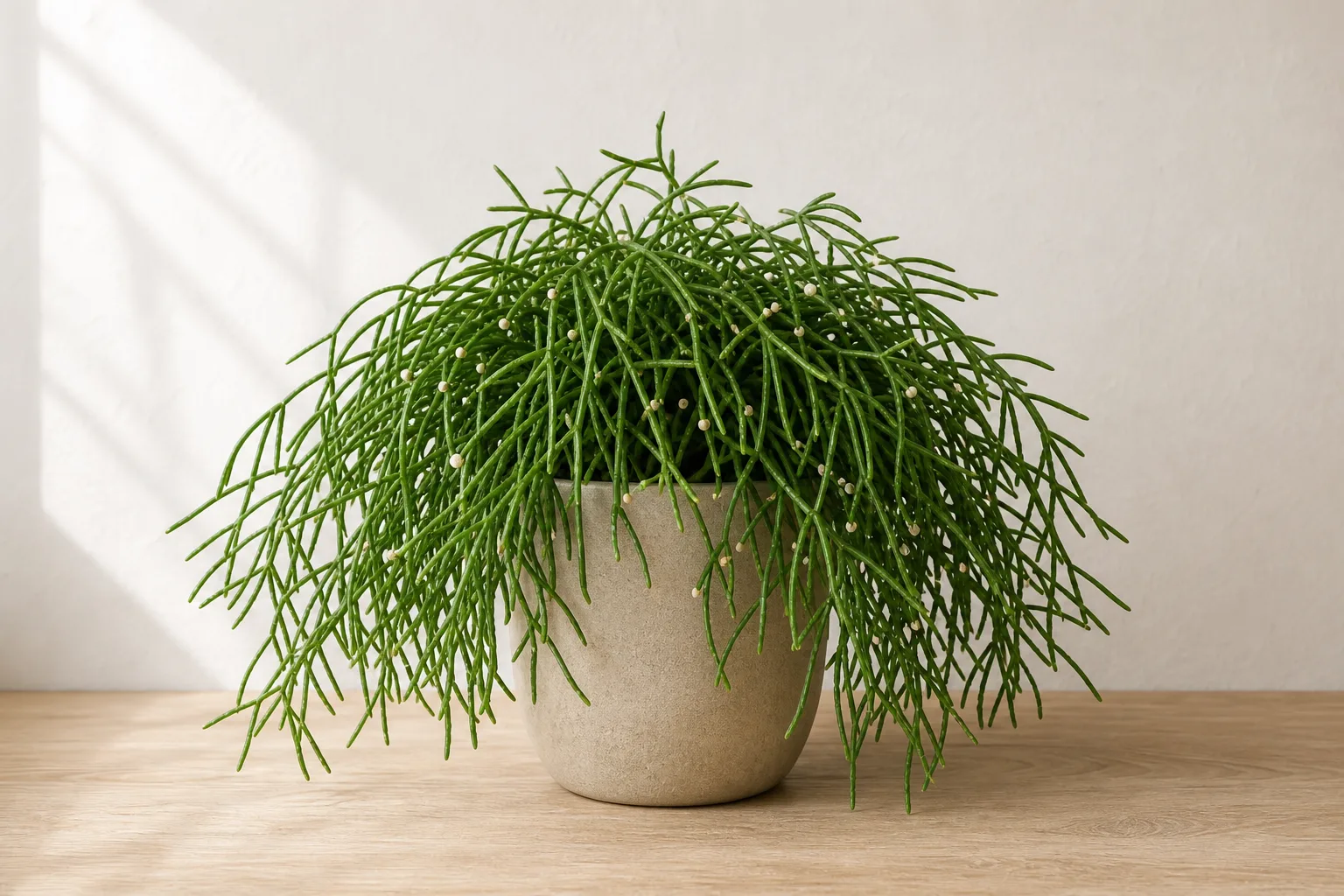
Mistletoe cactus (Rhipsalis baccifera) is an epiphyte that grows on trees in tropical and subtropical America, Africa, and Madagascar - a cactus with a remarkably wide natural range, including parts of Florida where it is rare and protected. Its stems are slender, cylindrical, and spineless, branching and trailing like green spaghetti, and mature plants produce small white flowers followed by round, translucent white or pink berries that give the plant its common name.
This is a low-maintenance hanging-basket plant once its forest-cactus needs are understood: bright, filtered light; a gritty but moisture-retentive mix; and more even watering than a desert cactus would ever want. It is listed as non-toxic to cats and dogs and rarely has pest problems beyond mealybugs. Trailing stems can be trimmed to keep the plant bushy, and stem cuttings root readily.
Light
Rhipsalis baccifera prefers medium to bright indirect light - an east window, or a spot near a north window, works well; a few feet back from a bright south or west window also suits it. As a forest understory epiphyte it does not want harsh direct sun, which can scorch the stems. In very low light, growth slows and stems grow thin and sparse. Move the plant gradually if you change its position.
Water
Water when the top inch of the mix feels dry, then let excess drain and empty the saucer. Mistletoe cactus appreciates more consistent moisture than desert cacti - its stems pucker and lose rigidity when thirsty - but the root zone must never sit soggy. Reduce watering in winter when growth slows. If you are unsure, water slightly less; this cactus tolerates brief dryness better than it tolerates waterlogged roots.
Soil and repotting
Use a well-draining, slightly acidic mix with good aeration - a cactus blend with extra perlite, or a houseplant mix lightened with bark - in a hanging basket or pot with a drainage hole. Repot every two to three years in spring when roots fill the container, going up one size. Because stems trail and root easily where they touch mix, the plant is naturally forgiving of repotting. Keep newly repotted plants slightly drier until new growth begins.
Temperature, humidity, and fertilizer
Mistletoe cactus prefers warm-to-average rooms (roughly 60-80°F / 16-27°C) and benefits from higher humidity, so a pebble tray or bright bathroom helps in dry homes. It is not frost-tolerant and should stay above about 50°F (10°C). Feed monthly during spring and summer with a balanced houseplant fertilizer at half strength, and skip feeding in winter. Good air circulation also helps keep the stems healthy.
Pruning and propagation
Pruning is optional but keeps the plant bushy: trim trailing stems back to a joint with clean scissors, and remove any dried or damaged sections. Propagation is easy from stem cuttings - take a few inches of healthy stem, let the cut end callus for a day, and root it in damp mix or water. Cuttings establish quickly in bright, indirect light. Mature plants may also drop small berries that can be sown as seed.
Common problems
Start with the pattern, current soil moisture, and recent changes. One symptom can have several causes, so change the most likely factor first and observe before making another major adjustment.
| Symptom | Check first | First action |
|---|---|---|
| Puckered or shriveled stems | Whether the mix is too dry or the plant has gone thirsty too long | Water thoroughly and let excess drain; stems should plump within days. |
| Mushy, discolored stem bases | Watering frequency, drainage, and whether the pot sits in water | Reduce watering, confirm drainage, and inspect the roots for rot. |
| Pale, scorched patches on stems | Direct sun exposure and light intensity | Move the plant to bright, filtered light and adjust gradually. |
| Thin, sparse, stretched growth | Available light and how far the plant hangs from a window | Move gradually to brighter filtered light and reduce winter watering. |
| White cottony insects or sticky residue | Stem joints and undersides for mealybugs | Isolate the plant, remove visible pests, and treat with a targeted control. |
Pet and household safety
Mistletoe cactus (Rhipsalis baccifera) is listed as non-toxic to cats, dogs, and horses. Non-toxic does not mean edible: chewing any plant material can still cause mild stomach upset, so keep persistent chewers away and contact a veterinarian if a pet becomes unwell.
Frequently asked questions
How often should I water a mistletoe cactus?
Water when the top inch of mix feels dry, then drain excess. It wants more even moisture than desert cacti but never a soggy root zone; reduce watering in winter.
What light does a mistletoe cactus need?
Medium to bright indirect light. It is a forest epiphyte and scorches in harsh sun, while very dim corners make the stems thin and sparse.
Is it really a cactus?
Yes - Rhipsalis is a true cactus, but an epiphytic forest cactus with spineless, trailing stems. Its native range spans tropical America, Africa, and Madagascar.
Why are the stems puckering?
Usually thirst. The stems lose rigidity and pucker when the plant has gone too dry; water thoroughly and let excess drain, and they should plump up.
How do I propagate a mistletoe cactus?
By stem cuttings. Take a few inches of healthy stem, let the cut end callus for a day, and root it in damp mix or water in bright, indirect light.
Is a mistletoe cactus safe for pets?
Yes, it is listed as non-toxic to cats, dogs, and horses. Still discourage chewing, since any plant material can cause stomach upset.
Sources and editorial review
This editorial draft is based on the sources below and awaits named horticulture-expert approval before publication.
- Rhipsalis bacciferaRoyal Botanic Gardens, Kew (Plants of the World Online) · Checked
- Toxic and Non-Toxic Plants ListASPCA · Checked
- Rhipsalis bacciferaNorth Carolina State University Extension · Checked
- Rhipsalis bacciferaRoyal Horticultural Society · Checked
What works well
- Graceful, spineless trailing stems for hanging baskets.
- Tolerant of a wider moisture range than desert cacti.
- Listed as non-toxic to cats and dogs.
What to consider
- Thin stems are easily damaged by harsh sun.
- Wants higher humidity than most homes provide.
- Slow-growing and slow to establish from small cuttings.