Key takeaways
- Give it medium to bright indirect light; avoid harsh direct sun.
- Water when the top of the mix dries, keeping the root zone evenly moist.
- Set buds with long dark nights and cooler fall temperatures; it is non-toxic to pets.
How to care for Christmas Cactus
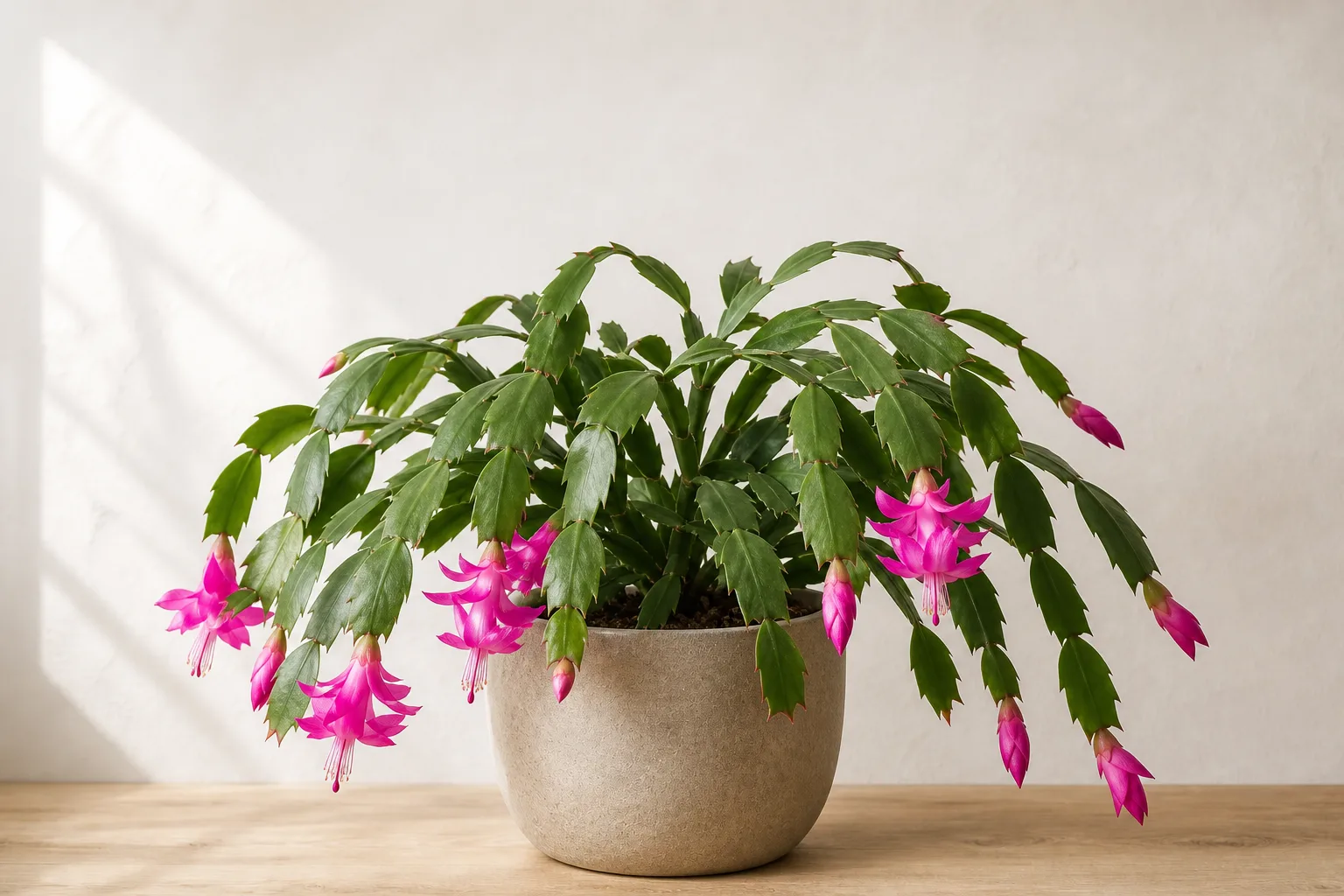
Christmas cactus (Schlumbergera truncata) grows naturally on trees and rocks in the coastal forests of southeastern Brazil, which is why it behaves nothing like a desert cactus. Its stems are flattened, segmented, and nearly spineless, and its flowers - red, pink, purple, orange, or white - open around the winter holidays, driven by shorter days and cooler nights. It is compact and arching, ideal for a bright windowsill or hanging basket.
Care is simple once you accept that this cactus wants the opposite of desert conditions: bright, filtered light and a mix that stays lightly moist, never soaked and never bone-dry. The flowering secret is seasonal: cool nights and long uninterrupted dark periods in fall trigger bud set. It is listed as non-toxic to cats and dogs, which makes it one of the few flowering houseplants that is safe in pet households.
Light
Schlumbergera truncata prefers medium to bright indirect light - an east window or a few feet back from a south or west window. Direct summer sun can bleach and yellow the stems, so keep it out of harsh midday rays; brighter winter light helps bud development. In too little light, stems stay soft and the plant fails to flower. Move the plant gradually when relocating, especially while buds are forming, since sudden changes can make buds drop.
Water
Water when the top inch or so of the mix feels dry, then let excess drain and empty the saucer. Unlike desert cacti, this plant tolerates moderate moisture well but rots if left soggy, and it also resents long dry spells, which make stem segments pucker and wither. Reduce watering after flowering through winter, and resume more regular moisture in spring and summer when new growth begins. Water quality is not as critical as for prayer plants, but rainwater is a safe choice.
Soil and repotting
Use a well-draining mix with good aeration - a cactus blend lightened with perlite, or a houseplant mix with added bark - in a pot with a drainage hole. Schlumbergera flowers best when slightly pot-bound, so repot only every two to three years, in spring, and go up just one size. After repotting, water sparingly until new growth appears. Keep the pot stable during bud formation; moving or repotting a plant in bud often causes the buds to drop.
Temperature, humidity, and fertilizer
Christmas cactus likes warm days (roughly 65-80°F / 18-27°C) and benefits from cooler nights in fall, around 55-65°F (13-18°C), which encourage bud set. Average indoor humidity is fine, though it appreciates a pebble tray in very dry rooms. Feed monthly with a balanced houseplant fertilizer at half strength from spring through summer, then reduce feeding in fall and stop once buds form. Keep it away from drafts, heating vents, and temperature swings.
Pruning and propagation
Prune after flowering by twisting or cutting off a few stem segments at the joints to shape the plant and encourage branching; segments removed this way root easily. For propagation, take two or three segmented sections, let the cut end callus for a day or two, and push them into damp mix. Keep the cuttings in bright, indirect light and lightly moist until roots form. Pruning in spring also gives the plant a fuller, more balanced habit for the next bloom.
Common problems
Start with the pattern, current soil moisture, and recent changes. One symptom can have several causes, so change the most likely factor first and observe before making another major adjustment.
| Symptom | Check first | First action |
|---|---|---|
| Flower buds dropping | Recent moves, temperature swings, drying out, or light changes during bud set | Keep the plant in one stable spot with long dark nights and even moisture while buds form. |
| Limp or puckered stem segments | Whether the mix is too dry or the pot has been left to soak | Check the root zone; water if dry, and drain the saucer if the pot is waterlogged. |
| Yellowed or bleached stems | Direct sun exposure and light intensity | Move the plant to bright, filtered light and let the mix dry slightly between waterings. |
| Root rot or mushy base | Watering frequency, pot drainage, and the mix's aeration | Reduce watering, confirm drainage, and repot in a well-draining mix if rot is confirmed. |
| No flowers in winter | Fall light exposure, night temperatures, and whether the plant had long dark periods | Give the plant 13-plus hours of darkness and cooler nights for several weeks in fall to trigger bud set. |
Pet and household safety
Christmas cactus (Schlumbergera truncata) is listed as non-toxic to cats, dogs, and horses. Non-toxic does not mean edible: chewing any plant material can still cause mild stomach upset, so keep persistent chewers away and contact a veterinarian if a pet becomes unwell.
Frequently asked questions
How often should I water a Christmas cactus?
Water when the top inch or so of the mix feels dry, then let excess drain. It tolerates moderate moisture but not soggy soil or long dry spells; reduce watering in winter after bloom.
Why is my Christmas cactus not flowering?
Most often because fall nights were not long or dark enough. Give it 13-plus hours of uninterrupted darkness and cooler nights (55-65°F) for several weeks in fall to set buds.
Is a Christmas cactus really a cactus?
Yes, but it is an epiphytic forest cactus, not a desert cactus. It grows on trees and rocks in Brazil and wants filtered light and more even moisture than desert cacti.
Why are the flower buds dropping?
Bud drop usually follows a sudden change - a move, temperature swing, draft, or a missed watering. Keep the plant in a stable spot with even moisture while buds form.
How do I propagate a Christmas cactus?
By rooting stem segments. Take two or three joined segments, let the cut end callus for a day or two, and plant them in damp mix in bright, indirect light.
Is a Christmas cactus safe for pets?
Yes, it is listed as non-toxic to cats, dogs, and horses. Still discourage chewing, since any plant material can cause stomach upset.
Sources and editorial review
This editorial draft is based on the sources below and awaits named horticulture-expert approval before publication.
- Schlumbergera truncataRoyal Botanic Gardens, Kew (Plants of the World Online) · Checked
- Christmas CactusASPCA · Checked
- Schlumbergera truncataNorth Carolina State University Extension · Checked
- Schlumbergera truncataMissouri Botanical Garden · Checked
What works well
- Vivid winter flowers in reds, pinks, purples, and whites.
- Listed as non-toxic to cats and dogs.
- Long-lived and easy when watered evenly.
What to consider
- Bud drop follows moves, temperature swings, or missed waterings.
- Flowering depends on fall light and temperature control.
- Rots in soggy soil and resents long dry spells.