Key takeaways
- Keep it cool - 60-65°F (16-18°C) - and in bright, indirect light for the longest bloom.
- Water when the top of the mix feels dry, watering at the edge of the pot to keep the crown and tuber dry.
- Keep it out of reach of cats and dogs; the tuber contains toxic terpenoid saponins.
How to care for Florist Cyclamen
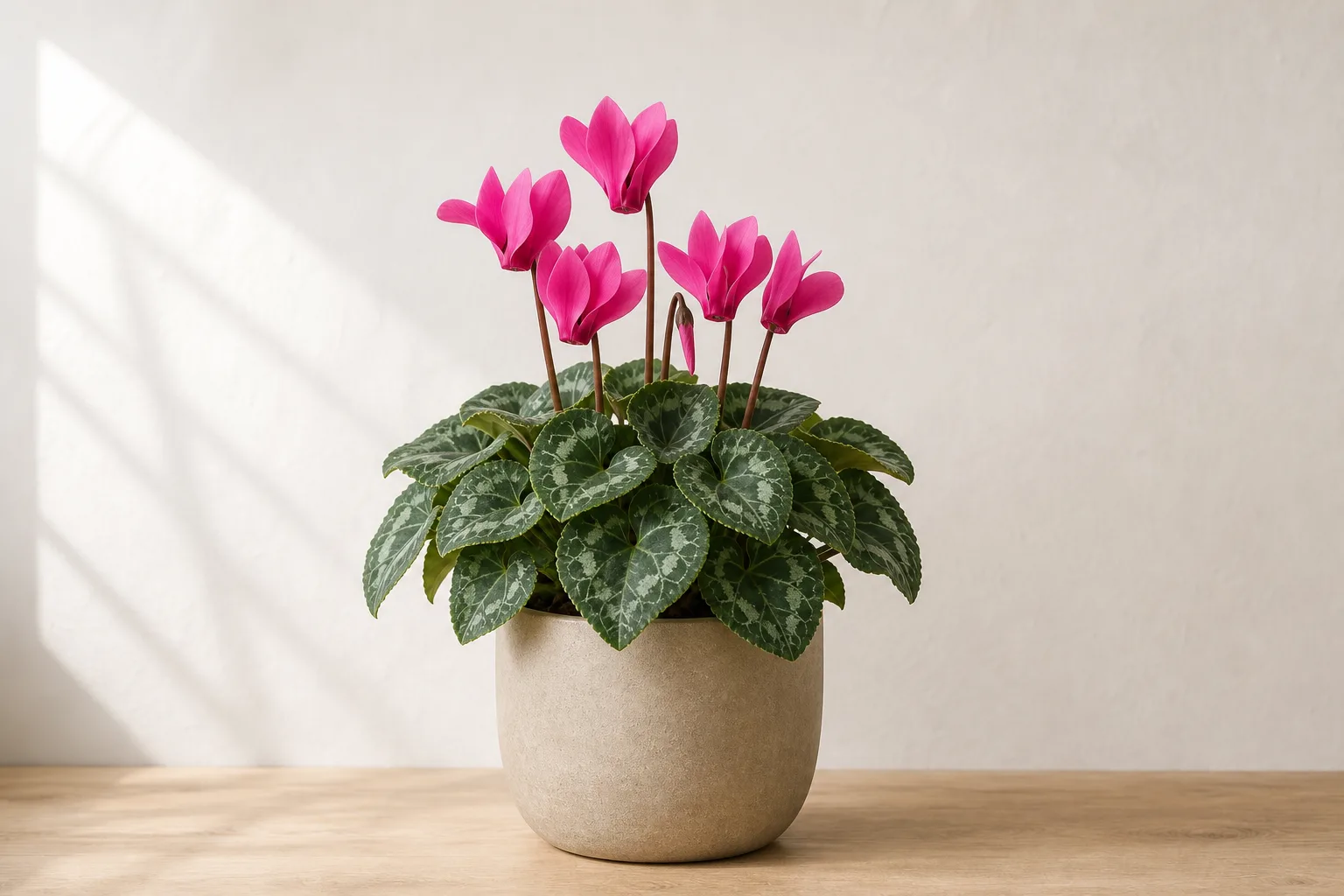
Florist cyclamen (Cyclamen persicum) is a flowering herbaceous perennial that grows from a tuber, native to rocky slopes and pine and oak woodlands from Algeria to the eastern Mediterranean. Its summers there are hot and dry and winters cool and wet, which is why the plant blooms in the cool season and rests in summer. The flowers, which resemble delicate butterflies, rise on slender stems above heart-shaped leaves marbled with silver.
Keep it in bright, indirect light in a cool room - about 60-65°F (16-18°C) - and water when the top of the mix feels dry, watering along the edge of the pot so the crown and tuber stay dry. It is best grown under glass and is frost tender. When the plant finishes blooming and the leaves yellow in summer, it enters dormancy and needs much less water until growth resumes in fall.
Light
Aim for bright, indirect light or partial shade - an east or north window, or a spot set back from a brighter one. Low light makes the plant weak, with smaller blooms and paler leaves. The plant re-blooms in winter with proper light, moisture, and cool temperatures. In summer dormancy, keep the pot in a shaded, dry spot rather than in bright sun.
Water
Water when the top of the mix feels dry, watering along the edge of the pot or at the base rather than over the crown. Avoid watering the crown of the plant, which can rot the tuber. Water should not sit in the saucer. When the plant becomes dormant in summer, reduce watering sharply, then resume regular watering as new growth begins in fall. Both overwatering and letting the pot sit in water cause tuber rot.
Soil and repotting
Use a light, organically rich, well-drained potting mix in a pot with a drainage hole. The tuber should sit with its top near the soil surface - not buried deeply - and the crown must stay dry. Repot only when the tuber is crowded, generally in late summer or fall when growth resumes, moving up one pot size and handling the tuber gently. Keep the plant slightly snug rather than over-potted.
Temperature, humidity, and fertilizer
Florist cyclamen performs best in cool temperatures around 60-65°F (16-18°C) with moderate humidity, which extends the flower display. Warmer rooms shorten the bloom. Avoid hot and cold drafts near vents and radiators. Resume regular watering and feed with a dilute, balanced houseplant fertilizer as new growth begins in fall, then reduce feeding as the plant enters summer dormancy. Cool, bright conditions are the key to a long flowering season.
Pruning and propagation
Remove spent flowers and yellowing leaves by twisting or pulling them off at the base, which also keeps the crown open to airflow. Propagation is from seed - fresh seed germinates in about 20 to 30 days - though seedlings take time to reach bloom size, so most growers simply buy a new plant. The tuber can also be divided in late summer, but division is risky because the tuber is prone to rot.
Common problems
Start with the pattern, current soil moisture, and recent changes. One symptom can have several causes, so change the most likely factor first and observe before making another major adjustment.
| Symptom | Check first | First action |
|---|---|---|
| Soft, rotting crown or tuber | Whether water was poured over the crown, how long the pot has stayed wet, and drainage | Stop overhead watering, let the mix dry, and inspect the tuber - discard if it has gone mushy. |
| Yellowing, dropping leaves | Root-zone moisture and whether the plant is entering its natural summer dormancy | Check soil moisture; reduce watering if the plant is finishing its bloom cycle rather than treating for pests. |
| Flowers fading quickly | Room temperature, available light, and placement near heat sources | Move the plant to a cooler, brighter position and keep it away from vents and radiators. |
| Weak stems and small blooms | Available light and how far the plant sits from the window | Move gradually to brighter filtered light and give the plant cool temperatures. |
| Cyclamen mites or aphids on new growth | Undersides of young leaves and flower buds for puckering or distortion | Isolate the plant and identify the pest before treating; use a targeted control. |
Pet and household safety
Florist cyclamen (Cyclamen persicum) is toxic to cats, dogs, and horses. It contains terpenoid saponins, and the tuber is the most toxic part. Chewing or ingestion can cause salivation, vomiting, and diarrhea, and large ingestions of the tuber can lead to abnormal heart rhythm, seizures, and even death. The ASPCA lists Cyclamen as toxic to dogs, cats, and horses, and NC State flags it as a low-severity poison with a poisonous root. Keep the plant out of reach of pets and contact a veterinarian or animal poison-control service after any concerning exposure.
Frequently asked questions
How often should I water a florist cyclamen?
Water when the top of the mix feels dry, at the edge of the pot so the crown and tuber stay dry, and never leave the pot sitting in water. The interval stretches during summer dormancy and shortens as growth resumes in fall.
What light does a florist cyclamen need?
Bright, indirect light or partial shade. It blooms best in cool rooms with bright filtered light, and low light produces weak stems, smaller blooms, and paler leaves.
Where does florist cyclamen grow naturally?
It is native from Algeria to the eastern Mediterranean, where it grows on rocky slopes and in pine and oak woodlands with hot, dry summers and cool, wet winters.
Why are the leaves on my cyclamen turning yellow?
Usually either overwatering or the plant's natural move into summer dormancy, when the leaves yellow and drop. Check soil moisture first; if the plant has finished blooming, reduce watering.
How do I propagate a florist cyclamen?
Fresh seed is the standard route and germinates in about 20-30 days, though seedlings take a while to bloom. Tubers can also be divided in late summer, but the tuber is prone to rot, so division is risky.
Is florist cyclamen safe for pets?
No. It contains terpenoid saponins, and the tuber is the most toxic part. Keep it out of reach of cats and dogs and contact a veterinarian after any concerning chew or ingestion.
Sources and editorial review
This editorial draft is based on the sources below and awaits named horticulture-expert approval before publication.
- Cyclamen persicumRoyal Botanic Gardens, Kew (Plants of the World Online) · Checked
- CyclamenASPCA · Checked
- Cyclamen persicum (Florist's Cyclamen)North Carolina State University Extension · Checked
- Cyclamen persicumMissouri Botanical Garden Plant Finder · Checked
What works well
- Elegant, long-lasting flowers through fall and winter.
- Likes cool rooms, which most houseplants avoid.
- Heart-shaped, silver-marbled leaves are attractive even out of bloom.
What to consider
- Toxic to cats and dogs, with the tuber the most dangerous part.
- Declines and goes dormant in summer; re-blooming indoors takes planning.
- Crown rot and tuber rot follow overhead watering or a wet pot.