Key takeaways
- Give it bright indirect light; the colorful top burns quickly in direct sun.
- Water only when the mix is completely dry, and aim water at the rootstock.
- The grafted top cannot photosynthesize, so the health of the whole plant depends on the rootstock.
How to care for Moon Cactus
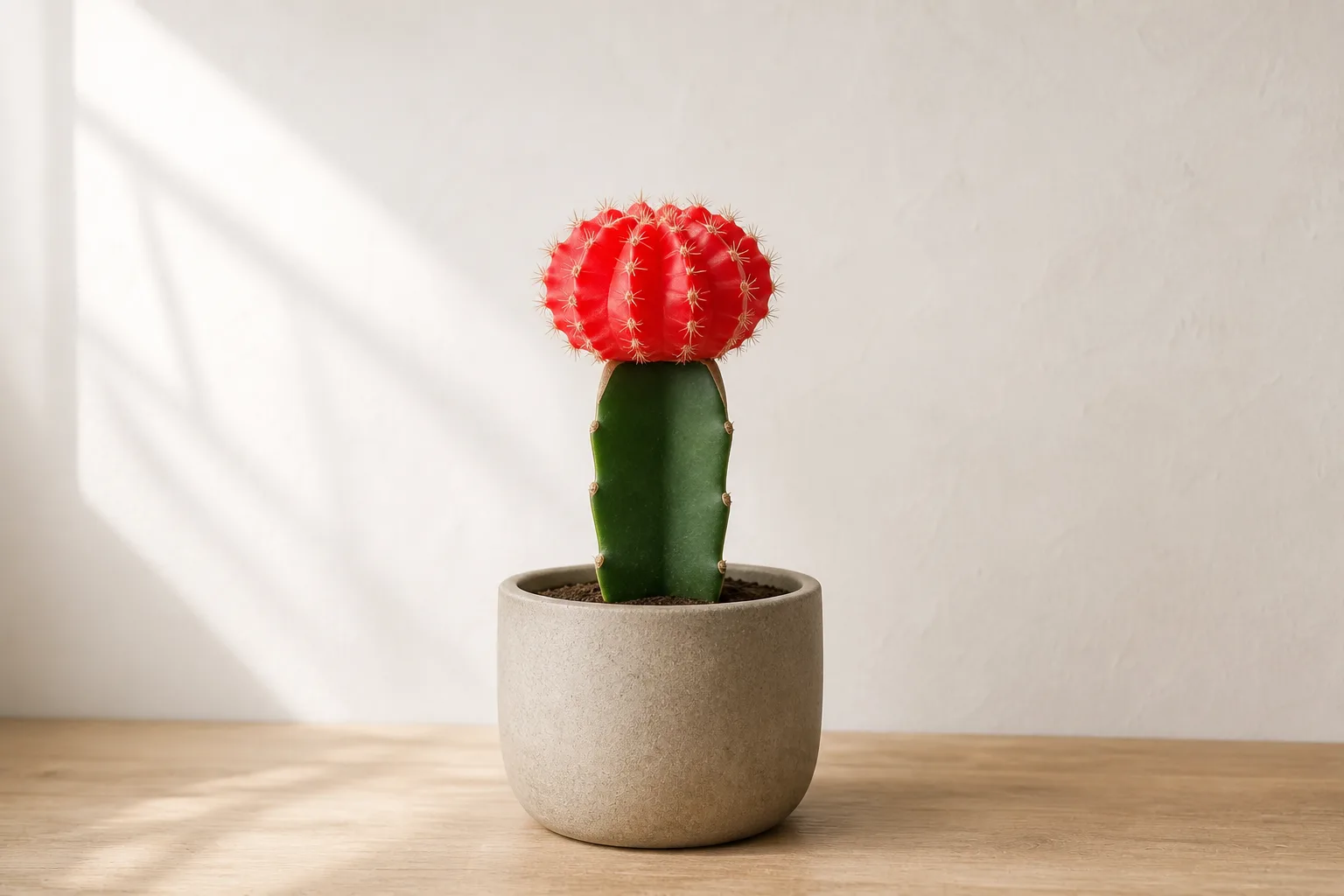
Moon cactus is a grafted plant: the colorful top is a chlorophyll-free mutant of Gymnocalycium mihanovichii, a small cactus from Paraguay and northern Argentina, and it is grafted onto a green rootstock, usually a Hylocereus species, which photosynthesizes for both. Because the top cannot make its own food, the health of the whole plant depends on the graft and the rootstock. In bright indirect light with sparse watering, this is an easy, slow-growing novelty for a small pot.
The most important thing to understand is that the two halves have different lives. The rootstock is a vigorous, thirsty cactus while the scion is delicate and burns easily in strong sun - so the plant wants bright indirect light, not full desert sun, and a watering rhythm based on the rootstock. The colorful top grows slowly and may produce offsets, and it will only rarely flower. The graft is a point of weakness: handle the plant gently and keep it out of reach of pets that may knock it over.
Light
Moon cactus prefers bright indirect light - an east window or a spot a short distance back from a bright south or west window. The colorful scion lacks chlorophyll and burns quickly in direct sun, so keep it out of harsh rays. The green rootstock tolerates stronger light, but the plant as a whole does best filtered. In too little light the rootstock stretches and the top grows pale. Acclimate any move gradually.
Water
Water the plant only when the mix has dried out completely, then let excess drain. The rootstock stores water and the plant is vulnerable to rot when the mix stays wet - the most common cause of a dying moon cactus. In a bright room that might mean every two to three weeks in the growing season and much less in winter. The colorful top should never be watered directly; aim water at the mix around the rootstock.
Soil and repotting
Use a fast-draining cactus mix with extra perlite or coarse sand, in a small pot with a drainage hole. Repot in spring only when the rootstock has filled the pot, and go up one small size. The graft sits at the top of the rootstock - keep it above the soil line and handle the plant by the rootstock or pot, never by the top. After repotting, wait several days before watering so the roots can settle.
Temperature, humidity, and fertilizer
Moon cactus prefers warm, average room conditions (roughly 65-85°F / 18-29°C) and low humidity; most homes are fine. It is not frost-tolerant and should stay above about 50°F (10°C). Feed sparingly, once or twice during spring and summer with a diluted cactus fertilizer, and skip feeding in winter. The scion benefits from a little protection from intense heat and sun, since it burns more easily than the rootstock.
Pruning and propagation
There is little to prune. Remove any soft, shriveled, or damaged growth with clean tools, and detach offsets that appear on the colorful top - these can sometimes be regrafted or, if they carry a little chlorophyll (like 'Hibotan Nishiki' varieties), rooted on their own. Propagation from the rootstock is by stem cuttings taken from healthy green growth. Offsets of the scion without chlorophyll cannot survive without a graft.
Common problems
Start with the pattern, current soil moisture, and recent changes. One symptom can have several causes, so change the most likely factor first and observe before making another major adjustment.
| Symptom | Check first | First action |
|---|---|---|
| Wrinkled or shriveled top | Whether the rootstock has water and whether the graft area is healthy | Water the mix if dry; if the top is damaged or rotting at the graft, the scion may need to be regrafted. |
| Mushy or rotting base | Watering frequency, drainage, and how long the mix stays wet | Stop watering, let the mix dry completely, and inspect the rootstock for rot. |
| Burned, bleached, or scorched scion | Direct sun exposure and light intensity | Move the plant to bright indirect light and acclimate gradually. |
| Stretched, thin rootstock | Available light and distance from the window | Move gradually to brighter filtered light and reduce watering. |
| Pest marks or sticky residue | The graft junction, ribs, and undersides for mealybugs or scale | Isolate the plant, inspect the graft area, and treat with a targeted control. |
Pet and household safety
Moon cactus is not listed as toxic by the ASPCA and no chemical toxicity is documented for Gymnocalycium mihanovichii, but it is classed as not pet-safe in this catalog because the colorful, chlorophyll-free scion is delicate and the graft is easily damaged by curious pets. A pet that knocks the plant over or chews the stems can be exposed to small spines and plant material that may cause mouth irritation or stomach upset. Keep it out of reach and contact a veterinarian if a pet becomes unwell.
Frequently asked questions
Why is my moon cactus dying from the bottom up?
The rootstock is rotting, almost always from overwatering. Let the mix dry completely between waterings and confirm the pot drains; once rot spreads, the scion cannot survive without a healthy rootstock.
Can the colorful top live on its own?
No - the top lacks chlorophyll and cannot photosynthesize, so it depends on the green rootstock. That is why the graft is essential and why the plant is sold as a pair.
What light does a moon cactus need?
Bright indirect light. The colorful top burns quickly in direct sun, while too little light makes the rootstock stretch and the top grow pale.
How often should I water a moon cactus?
Only when the mix is completely dry, aiming water at the mix around the rootstock and never at the top. In winter, water much less.
How do I propagate a moon cactus?
The rootstock can be rooted from stem cuttings. Offsets on the colorful top usually lack chlorophyll and can only survive by regrafting onto a new rootstock.
Is a moon cactus safe for pets?
It is not listed as toxic, but it is not pet-safe in this catalog because the fragile graft is easily damaged by pets and the small spines can irritate. Keep it out of reach and contact a veterinarian if a pet becomes unwell.
Sources and editorial review
This editorial draft is based on the sources below and awaits named horticulture-expert approval before publication.
- Gymnocalycium mihanovichiiRoyal Botanic Gardens, Kew (Plants of the World Online) · Checked
- Toxic and Non-Toxic Plants ListASPCA · Checked
- Gymnocalycium mihanovichiiNorth Carolina State University Extension · Checked
- How to grow houseplant cacti and succulentsRoyal Horticultural Society · Checked
What works well
- Vivid, unusual colors make it a striking desktop novelty.
- Small and slow-growing, ideal for tiny pots.
- Undemanding when given bright light and sparse watering.
What to consider
- The chlorophyll-free scion dies quickly if the graft or rootstock fails.
- Not pet-safe in this catalog because the fragile graft is easily damaged by pets.
- Sensitive to direct sun, cold, and overwatering.