Key takeaways
- Provide bright indirect light and high humidity; the leaf edges brown quickly in dry air.
- Keep the mix consistently moist but well-drained - this plant dislikes both soggy and bone-dry soil.
- Non-toxic to cats and dogs per the ASPCA, though heavy chewing can still upset a pet's stomach.
How to care for Zebra Plant
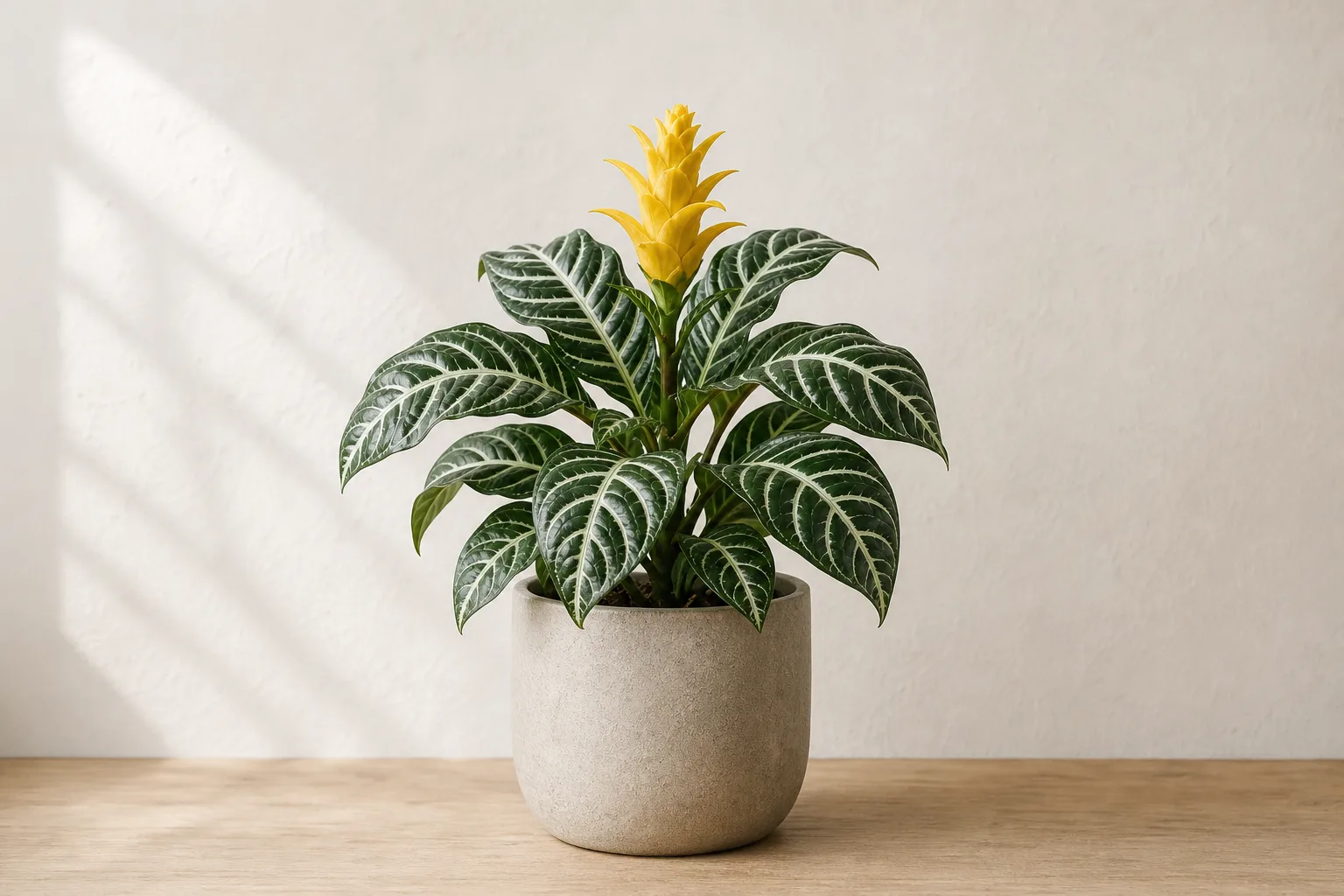
Zebra plant (Aphelandra squarrosa) is a broadleaf evergreen shrub from the Atlantic forests of northeastern and southeastern Brazil, where it grows in warm, moist, shady understory. It is grown for its ovate, glossy dark green leaves with dramatic white veins - the stripes behind its common name - and for the upright spike of bright yellow bracts that crowns each stem after flowering.
Give it plenty of warm, bright, indirect light and high humidity, and keep the mix evenly moist without letting the pot sit in water. Water frequently but lightly rather than rarely and deeply, since extremes in either direction make the bottom leaves brown and drop. Prune stems back after flowering - the cuttings root easily, which is the best way to keep a reliable plant in your home.
Light
Zebra plant wants bright, indirect light and does best a few feet back from a bright east or west window, or in dappled shade. Direct sun scorches the foliage, while too little light fades the white veining and discourages flowering. Prolonged bright indirect light encourages the yellow bracts to form. Acclimate the plant gradually if you move it to a brighter position.
Water
Keep the mix evenly moist during the growing season and never let it dry out completely, but avoid soggy conditions - the plant does not like wet feet. Water frequently and lightly, and always let excess drain. In winter, when growth slows into semi-dormancy, reduce watering without stopping entirely. Brown leaf tips usually point to low humidity or dry air rather than drought, so check the room before changing how much you water.
Soil and repotting
Use a well-drained, peat-based potting mix with good aeration, and a container with a drainage hole. The plant prefers acidic soil. Repot annually by moving up one pot size, which gives the roots room and refreshes the mix. Handle it gently, and after repotting keep it in a humid, warm spot while it settles. Repotting is also the moment to take stem cuttings so you have young plants ready to replace an aging one.
Temperature, humidity, and fertilizer
Zebra plant needs warmth and high humidity. Keep temperatures above about 65°F (18°C) and away from cold drafts, and raise humidity with a pebble tray, a humidifier, or a bright bathroom. In dry heated rooms the leaf edges turn brown and the plant struggles. Feed with a weak fertilizer solution every few weeks during active growth, and reduce feeding in winter. During winter semi-dormancy, resume feeding as new growth appears in late winter.
Pruning and propagation
After flowering, cut the stems back to two pairs of leaves to keep the plant compact and prevent it from becoming leggy and dropping leaves. The stems you remove root readily as cuttings: take a tip cutting, plant it in moist mix, and keep it humid until roots form. Propagation from pruning is the reliable way to keep this plant in your home, since individual plants are often short-lived.
Common problems
Start with the pattern, current soil moisture, and recent changes. One symptom can have several causes, so change the most likely factor first and observe before making another major adjustment.
| Symptom | Check first | First action |
|---|---|---|
| Lower leaves browning and dropping | Soil moisture, temperature, and whether the plant just bloomed | Check the root zone; water if dry, and correct temperature or overwatering before changing anything else. |
| Brown or crisp leaf tips and edges | Humidity level and dry air from vents or drafts | Raise humidity with a pebble tray or humidifier and move the plant away from dry airflow. |
| Faded or weak white veining | Light level and how far the plant sits from the window | Move gradually to brighter filtered light to restore contrast. |
| Drooping leaves or stems | Whether the mix is wet or dry and recent temperature changes | Check the root zone; water if dry, and withhold water while inspecting if the mix is still damp. |
| Leaf spots or webbing | Leaf undersides for aphids, scale, whitefly, spider mites, or mealybugs | Isolate the plant, identify the pest, and use a targeted control rather than broad spraying. |
Pet and household safety
The zebra plant (Aphelandra squarrosa) is listed as non-toxic to dogs, cats, and horses by the ASPCA, and NC State Extension also flags it as non-toxic for pets. As with any plant, a pet that chews large amounts may have mild stomach upset. Keep the plant where pets are unlikely to chew, and contact a veterinarian if you see persistent vomiting, diarrhea, or lethargy. Non-toxic does not mean edible.
Frequently asked questions
How often should I water a zebra plant?
Water frequently and lightly, keeping the mix evenly moist but never soggy. Check the top of the mix rather than following a schedule; dry soil drops leaves, and wet feet cause root problems.
What light does a zebra plant need?
Bright indirect light for most of the day, which also encourages flowering. Direct sun scorches the leaves, and dim spots fade the white veining.
Where does the zebra plant grow naturally?
Aphelandra squarrosa is native to the Atlantic forests of northeastern and southeastern Brazil, growing in warm, humid, shaded understory conditions.
Why are the leaves on my zebra plant falling off?
Most often the soil dried out, the plant got too cool, or it received too much sun; wet conditions can also drop leaves. Check the root zone and the room before changing anything.
How do I get a zebra plant to bloom?
Provide prolonged bright indirect light, steady warmth, and humidity, and feed lightly during growth. After flowering, prune back and keep conditions even for a future bloom.
Is the zebra plant safe for pets?
Yes. The ASPCA lists Saffron Spike Zebra (Aphelandra squarrosa) as non-toxic to dogs, cats, and horses, though chewing any plant can cause mild stomach upset.
Sources and editorial review
This editorial draft is based on the sources below and awaits named horticulture-expert approval before publication.
- Aphelandra squarrosaRoyal Botanic Gardens, Kew (Plants of the World Online) · Checked
- Saffron Spike ZebraASPCA · Checked
- Aphelandra squarrosa (Saffron Spike Zebra, Zebra Plant)North Carolina State University Extension · Checked
- Aphelandra squarrosa (Zebra Plant)Missouri Botanical Garden · Checked
What works well
- Striking zebra-striped foliage gives year-round interest even between blooms.
- Long-lasting spikes of golden-yellow bracts.
- Non-toxic to cats, dogs, and horses per the ASPCA.
What to consider
- Demanding about humidity, warmth, and steady moisture.
- Tends to drop lower leaves when the soil dries out or stays too wet.
- Often short-lived; keep cuttings going from pruning to replace an aging plant.