Key takeaways
- Bright indirect light or partial shade with high humidity keeps the leaf pattern vivid.
- Keep the mix moist but not soggy, and use filtered or rain water to avoid fluoride burn.
- Non-toxic to cats and dogs, a safe pick for pet households.
How to care for Peacock Plant
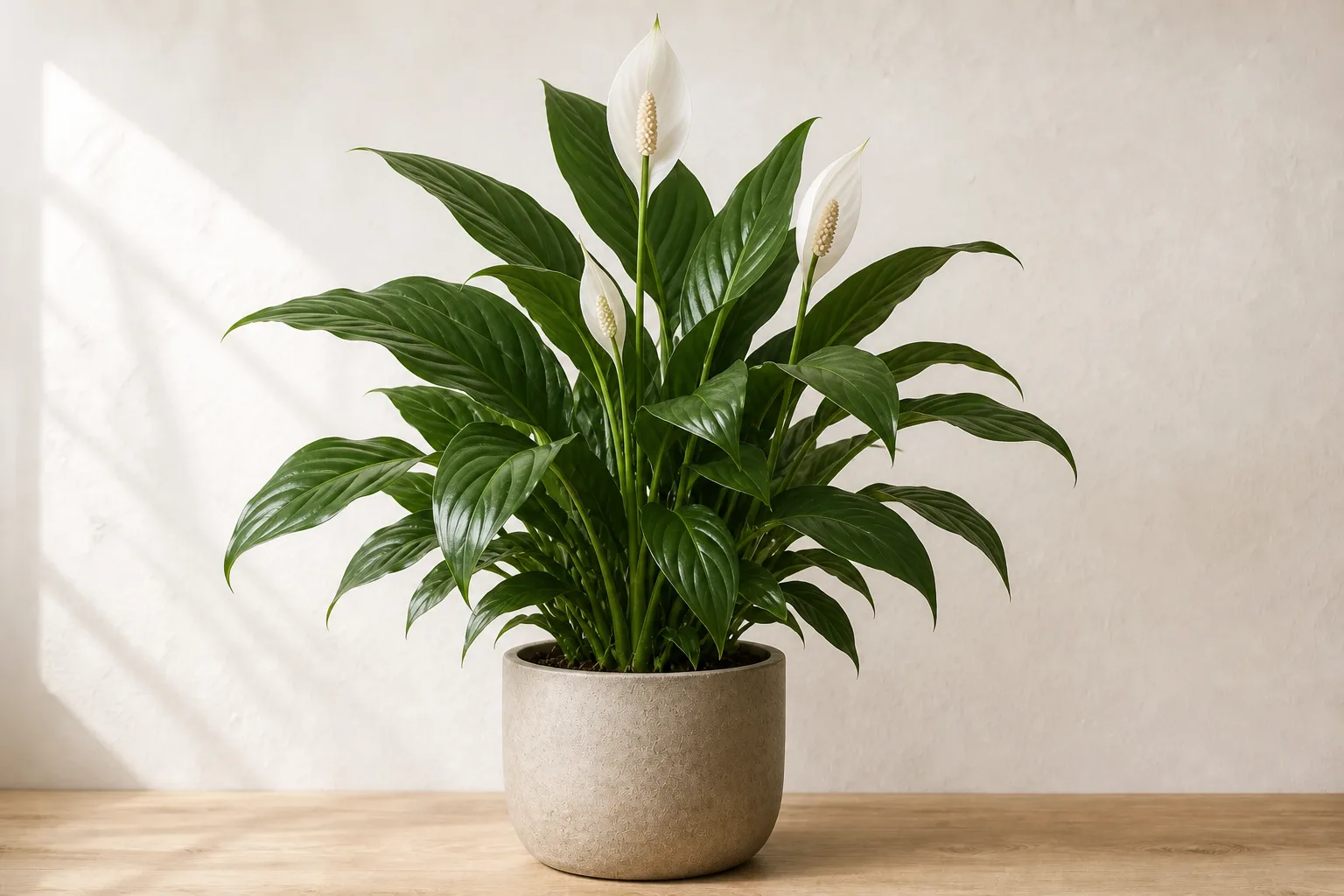
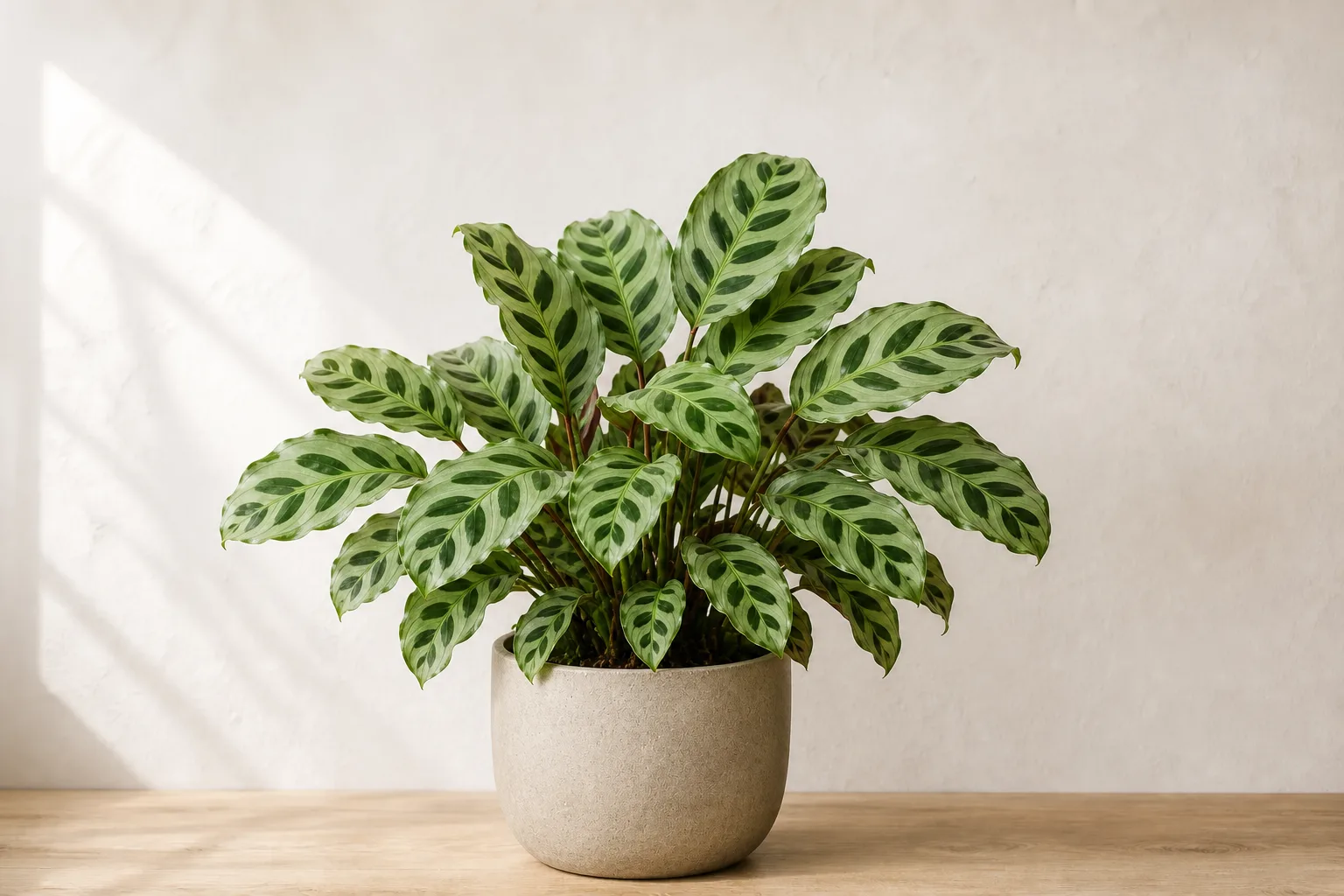
Peacock plant (Goeppertia makoyana) is an evergreen perennial in the prayer plant family, native to the tropical rainforests of southeastern Brazil (Espírito Santo). Its papery-thin, oval leaves are pale green to creamy with dark green feathered patterns and rounded blotches along the veins, while the undersides repeat the pattern in reddish purple. Like its relatives, it folds its leaves up in the evening and reopens them at sunrise.
This plant rewards consistent conditions. Give it warm, humid, shaded spots, bright indirect light, and a potting mix kept moist but never soggy. It is intolerant of low humidity, wet or dry soil, low or inconsistent temperatures, cold drafts, direct sun, and very low light - meet those basics and the foliage stays flawless; miss them and the leaf edges brown or roll.
Light
Peacock plant prefers bright, indirect sun or partial shade and does not want direct light, which burns the leaves. A spot a few feet back from an east or north window works well. In inadequate light the foliage color fades and the pattern weakens, so keep it bright enough to hold the variegation but out of harsh sun. High humidity and stable warmth matter as much as the light level.
Water
Keep the soil moist but not wet or soggy, watering when the top of the mix begins to dry, and reduce watering during winter while growth slows. Distilled or rain water is recommended because fluoride in tap water causes leaf browning. Always use a pot with drainage and empty the saucer - overwatering causes root rot, while dry soil makes leaves roll or brown.
Soil and repotting
Plant in a moist, well-drained potting mix with high organic matter, adding perlite to improve drainage. A container with drainage holes is essential. Divide the rhizomatous roots in late spring to make new plants and renew vigor; the Missouri Botanical Garden suggests dividing every two years. Repot when roots crowd the pot, moving up one size and keeping the mix lightly moist afterward.
Temperature, humidity, and fertilizer
Maintain temperatures between 65 and 75 F (18-24 C) with humidity around 60 percent for this plant to thrive; it is intolerant of low humidity, low or inconsistent temperatures, and cold drafts. In dry homes use a humidifier, pebble tray, or a bright terrarium. Fertilize every four weeks with a balanced houseplant fertilizer at label strength during the growing season, and decrease watering and stop fertilizing in winter.
Pruning and propagation
Remove damaged or yellowed leaves at the base with clean tools, and dust the broad leaves gently with a damp cloth so dust does not slow photosynthesis. Propagate by dividing the rhizome in late spring - separate rooted clumps with several leaves and pot them into fresh mix. Keep divisions warm, humid, and out of direct sun while they reestablish.
Common problems
Start with the pattern, current soil moisture, and recent changes. One symptom can have several causes, so change the most likely factor first and observe before making another major adjustment.
| Symptom | Check first | First action |
|---|---|---|
| Brown leaf edges | Low humidity, fluoride in tap water, or dry soil | Raise humidity, switch to filtered or rain water, and steady the watering before changing other care. |
| Curled or rolled leaves | Low humidity, dry soil, or cold drafts | Water if dry, raise humidity, and move the plant away from drafts and vents. |
| Faded leaf pattern | Light level and distance from the window | Move gradually to brighter filtered light to restore the pattern contrast. |
| Scorched or burned patches | Direct sun exposure and recent placement | Move to bright indirect light, away from direct sun. |
| Wilting or soft stems | Whether the mix is wet or dry and root condition | Check the root zone; water if dry, and inspect roots for rot if the mix is still damp. |
Pet and household safety
Peacock plant is non-toxic to cats, dogs, and horses, making it a safe choice for pet households. Non-toxic does not mean edible: chewing any plant or potting material can still upset a pet's stomach, so keep persistent chewers away and contact a veterinarian if a pet becomes unwell after eating plant material.
Frequently asked questions
How often should I water a peacock plant?
Water when the top of the mix begins to dry, keeping the soil moist but never soggy, and reduce in winter. Use filtered or rain water if your tap water is hard, since fluoride browns the leaf edges.
What light does a peacock plant need?
Bright indirect light or partial shade, with no direct sun. Low light fades the leaf pattern; harsh sun burns the papery foliage.
Where does peacock plant grow naturally?
It is native to the tropical rainforests of southeastern Brazil (Espírito Santo), which is why it wants warm, humid, shaded conditions indoors.
Why are the leaf edges turning brown?
Usually low humidity, fluoride in tap water, or soil that dried out. Raise humidity, switch to filtered water, and steady the watering before changing other care.
How do I propagate a peacock plant?
Divide the rhizome in late spring, separating rooted clumps with several leaves into fresh mix. Dividing every couple of years also renews vigor.
Is peacock plant safe for pets?
Yes, it is non-toxic to cats and dogs. Still discourage chewing, since any plant material can upset a pet's stomach.
Sources and editorial review
This editorial draft is based on the sources below and awaits named horticulture-expert approval before publication.
- Goeppertia makoyanaRoyal Botanic Gardens, Kew (Plants of the World Online) · Checked
- Goeppertia makoyana (Peacock Plant)North Carolina State Extension · Checked
- Calathea makoyanaMissouri Botanical Garden · Checked
- CalatheaASPCA · Checked
What works well
- Breathtaking leaf pattern with cream, dark green, and purple undersides.
- Compact clumping habit (1-2 feet) suited to tables and offices.
- Non-toxic to cats and dogs.
What to consider
- Demanding about humidity, water quality, and stable warmth.
- Direct sun, dry air, or cold drafts quickly mark the leaves.
- Low light fades the foliage color and weakens the pattern.