Key takeaways
- Place it in bright light to full sun; too little light leaves the stems sparse and stretched.
- Water only after the mix has nearly dried out, and reduce watering in winter.
- Handle the pot as little as possible - leaves break off easily, and each dropped leaf can root into a new plant.
How to care for Burro's Tail
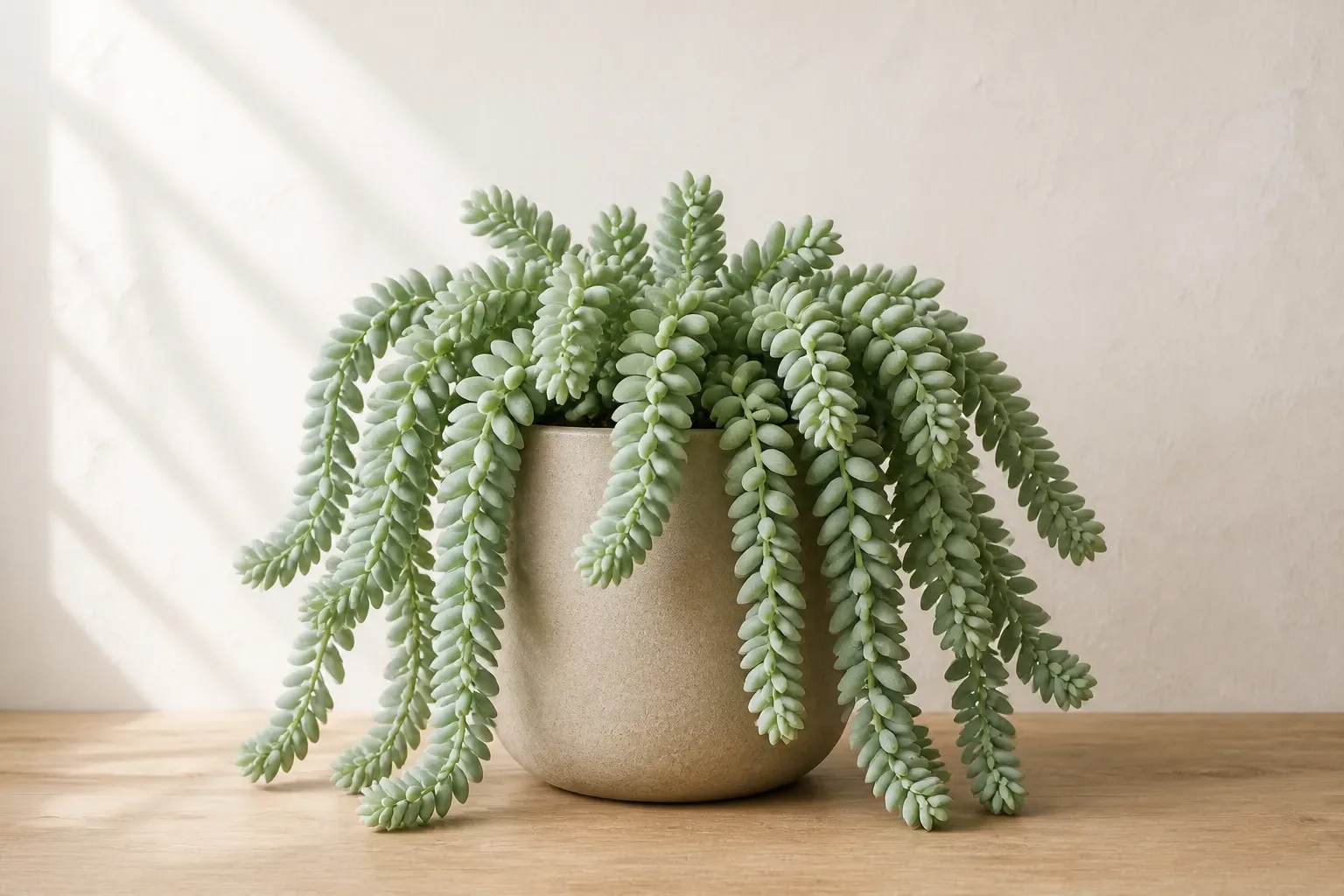
Burro's tail (Sedum morganianum) is a trailing succulent from the Crassulaceae family, native to seasonally dry tropical forests and cliffs in the Mexican states of Veracruz, Puebla, and Chiapas. Its plump, blue-green leaves are tightly packed around prostrate stems that can trail to 24 inches or more in a hanging basket. The leaves are covered in a powdery bloom that rubs off on contact, and they detach easily - a natural way the plant spreads.
Give it bright light, a fast-draining mix, and a distinct dry period between waterings. The most common problems come from overwatering and from handling the plant too much. Place it where it will not be bumped, and let the mix, not a calendar, tell you when to water.
Light
Burro's tail grows best in bright light to full sun, such as a sunny windowsill or a spot in bright filtered light. In insufficient light, the stems grow longer between leaf clusters, leaving the tails sparse and pale. Very intense light can bleach the blue-green leaves yellowish. Move the plant gradually when changing its position so it can acclimate, and keep it out of high-traffic areas where it may be knocked.
Water
Water only after the potting mix has nearly or completely dried out, then water thoroughly and drain. The leaves store water and wrinkle slightly when thirsty, which is a useful cue. Reduce watering sharply in fall and winter, when the plant rests and the mix dries slowly - an indoor plant may need water as rarely as once a month in cool, dim conditions. Overwatering causes root rot and sudden leaf drop, so when in doubt, wait.
Soil and repotting
Use a well-drained cactus mix or regular potting medium generously amended with perlite, pumice, or baked clay granules; avoid sand, which fills pore spaces. A hanging container with drainage holes suits its trailing habit. Repot in spring only when the plant has completely filled its pot, because it does well when snug and the leaves are so fragile that repotting is disruptive. Wait about a week after repotting before watering, then water sparingly until the plant re-establishes.
Temperature, humidity, and fertilizer
Burro's tail prefers warm, bright conditions with low humidity and good airflow. It can move outdoors in summer once night temperatures are consistently above about 40°F (4°C), but acclimatize it gradually to prevent sunburn. Fertilize lightly, once or twice during the growing season, with a balanced houseplant or succulent fertilizer at reduced strength; overfeeding can make growth soft.
Pruning and propagation
Pruning is mostly about removing damaged stems and keeping the plant tidy - it responds well to being pinched back, and bare spots on stems often branch. Propagation is easy from stem or leaf cuttings: for a stem cutting, strip the lower leaves, let the end dry for a day or two, and push it into well-drained mix. Single leaves removed from the stem will also form roots and a tiny rosette, though they take longer to grow into a full plant. Handle everything gently.
Common problems
Start with the pattern, current soil moisture, and recent changes. One symptom can have several causes, so change the most likely factor first and observe before making another major adjustment.
| Symptom | Check first | First action |
|---|---|---|
| Sudden leaf drop | Recent handling, overwatering, or a bump - leaves detach at the lightest touch | Reduce handling, check that the mix is not staying wet, and let the soil dry out before watering again. |
| Wrinkled, flattened leaves | How long since the last watering and the current light level | Water thoroughly if the mix is dry, then let it drain; resume a normal dry-down cycle. |
| Sparse, stretched stems | Available light and how far the plant sits from the window | Move gradually to a brighter position and pinch stems back to encourage denser regrowth. |
| Pale or bleached leaves | Very intense direct light and recent moves | Move the plant gradually out of the harshest light and let new leaves grow in. |
| White woolly clusters at leaf bases | Leaf bases and stem crevices for mealybugs, and nearby plants | Isolate the plant, identify the pest, and use a targeted control without drenching the foliage. |
Pet and household safety
Burro's tail (Sedum morganianum) is commonly listed as non-toxic to cats, dogs, and horses. Non-toxic does not mean edible: chewing any plant or potting material can still upset a pet's stomach, so discourage persistent chewers and contact a veterinarian if a pet becomes unwell. Its powdery leaf coating rubs off on fingers, so wash hands after handling.
Frequently asked questions
How often should I water a burro's tail?
Use the potting mix as the trigger. Water thoroughly only after the mix has nearly dried out, then drain. The interval changes with light, pot size, and season, and can stretch to about once a month in winter.
What light does a burro's tail need?
Bright light to full sun. In too little light the stems grow sparse and stretched; very intense light can bleach the leaves. Move it gradually when repositioning.
Where does burro's tail grow naturally?
It is native to seasonally dry forests and cliffs in the Mexican states of Veracruz, Puebla, and Chiapas, where it grows in bright, warm, well-drained conditions.
Why are the leaves falling off my burro's tail?
Most often physical disturbance - the leaves detach at the lightest touch - or overwatering. Handle the pot as little as possible and let the mix dry out between waterings.
How do I propagate a burro's tail?
Stem cuttings root readily, and individual leaves will form roots and a tiny rosette. Let cut ends callus for a day or two, then set them on or in well-drained mix.
Is burro's tail safe for pets?
It is commonly listed as non-toxic to cats, dogs, and horses. Non-toxic does not mean edible, so still discourage chewing and contact a veterinarian if a pet becomes unwell.
Sources and editorial review
This editorial draft is based on the sources below and awaits named horticulture-expert approval before publication.
- Sedum morganianumRoyal Botanic Gardens, Kew (Plants of the World Online) · Checked
- Sedum morganianum (Burro's Tail)North Carolina State University Extension · Checked
- Sedum morganianum (burro's tail)Royal Horticultural Society · Checked
- Toxic and non-toxic plantsASPCA · Checked
What works well
- Dramatic, textural trailing habit that looks great in a hanging basket.
- Propagates easily from stem cuttings or single leaves.
- Commonly listed as non-toxic to cats and dogs.
What to consider
- Leaves fall off at the slightest touch, making repotting and moving stressful.
- Root rot follows overwatering, especially in winter.
- Grows slowly and takes years to develop long tails.