Key takeaways
- Give it bright indirect light and steady warmth; harsh direct sun scorches the leaves.
- Water when the top of the mix begins to dry and keep the root zone evenly moist - never soggy.
- Keep it out of reach of cats and dogs; it contains insoluble calcium oxalate crystals.
How to care for Flamingo Flower
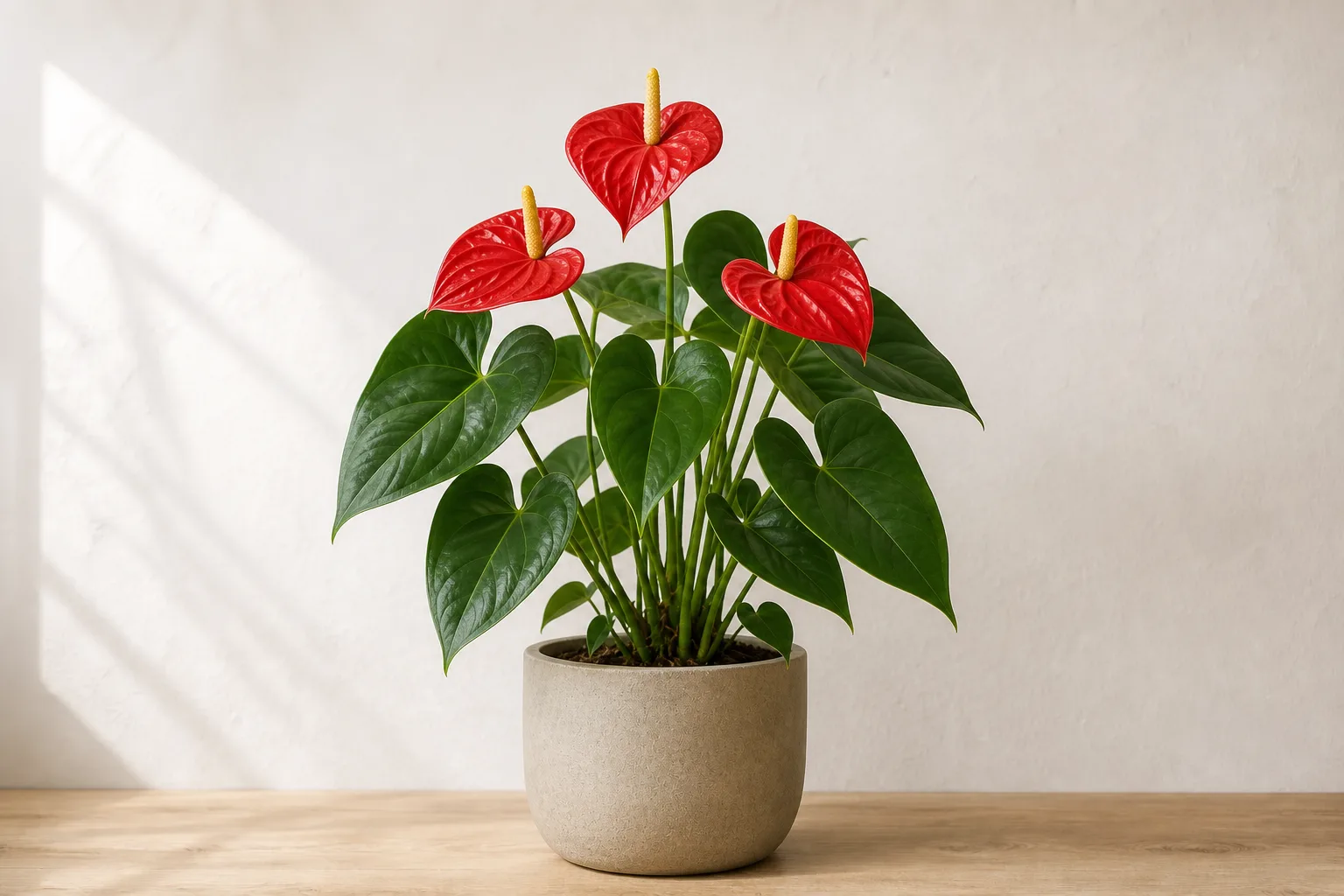
Flamingo flower (Anthurium andraeanum) is an epiphytic evergreen tropical perennial of the arum family, native to Colombia and Ecuador, where it grows in warm, shady, humid rainforest. Indoors it is grown for its dark, glossy, heart-shaped leaves and long-lasting waxy spathes - the flattened, colored part people read as the flower - with a creamy tail-like spadix at the center.
Keep it in bright but indirect light, water when the top of the mix starts to dry, and protect it from direct sun, cold drafts, and dry air. It prefers high humidity and consistent moisture, and it does not need a winter rest. Plants bloom most freely in warm, bright, humid positions; in too little light the spathes become fewer and the stems stretch.
Light
Aim for bright, indirect light - part or diffused sun in summer and bright indirect light in winter. A spot a few feet back from a south or west window, or a bright east window, suits it well. Avoid full sun, which can scorch the foliage, but do not tuck it into deep shade: in too little light the plant may stop blooming and the stems elongate. Move the plant gradually when changing its position so it can acclimate.
Water
Check the root zone before watering. Water thoroughly when the top of the mix begins to dry, then let excess drain and empty the saucer. The mix should stay consistently moist through the growing season but must never sit in standing water, which rots the roots. Dry air and underwatering brown the leaf tips, while a constantly wet pot causes yellowing and root problems. Soils should not be allowed to dry out completely.
Soil and repotting
Use a well-drained, peaty potting mixture - the Missouri Botanical Garden suggests adding a layer of pot shards at the bottom - in a container with a drainage hole. An airy, chunky mix suits the plant's epiphytic roots. Repot about every two years, moving up one pot size; frequent repotting also helps flush unabsorbed mineral salts from the soil. Sphagnum moss over the soil surface can keep exposed surface roots moist.
Temperature, humidity, and fertilizer
Flamingo flower is comfortable in regular indoor temperatures through the summer, with a minimum of about 60°F (16°C) in winter. It prefers high humidity, which is why it grows well in bathrooms, terraria, or plant cabinets; dry air browns leaf edges. Feed with a diluted, balanced houseplant fertilizer during active growth - a higher-phosphorus feed can encourage more blooms. Avoid cold drafts and keep the leaves clean of dust.
Pruning and propagation
Pruning is light: remove spent spathes and any yellowing leaves at the base, and trim away damaged foliage as it appears. Indoors, the most reliable propagation is division - when repotting, separate rooted offsets from the clump and pot them up individually. Stem cuttings with a node can also root in a warm, humid mix, though division is the faster route. Give new divisions the same warm, bright, humid conditions as the parent.
Common problems
Start with the pattern, current soil moisture, and recent changes. One symptom can have several causes, so change the most likely factor first and observe before making another major adjustment.
| Symptom | Check first | First action |
|---|---|---|
| Brown or crisp leaf edges | Dry air, uneven watering, or drafty placement near vents or cold windows | Even out watering, raise local humidity, and move the plant away from drafts before doing anything else. |
| Yellowing leaves | Top-inch soil moisture, drainage, and whether the pot sits in a saucer of water | Pause watering and confirm the pot drains; check the roots if the mix has stayed wet. |
| Few or no spathes | Available light and how far the plant sits from the window | Move gradually to brighter filtered light; the plant needs bright, indirect conditions to rebloom. |
| Scorched or bleached patches | Recent direct sun, especially through glass, and whether the plant was moved suddenly | Move the plant gradually away from direct sun to a bright filtered position. |
| Sticky residue or webbing on leaves | Leaf undersides for mealybugs, spider mites, scale, or whitefly, and nearby plants | Isolate the plant and identify the pest before treating; wipe leaves and use a targeted control. |
Pet and household safety
Flamingo flower (Anthurium andraeanum) is toxic to cats, dogs, and horses if chewed. Like other Anthurium species, it contains insoluble calcium oxalate crystals that cause oral irritation, pain and swelling of the mouth, tongue, and lips, excessive drooling, vomiting, and difficulty swallowing. The sap can also irritate human skin, so wear gloves when pruning or repotting. Keep the plant out of reach of pets and children who chew plants, and contact a veterinarian or animal poison-control service after a concerning exposure. This species is not safe to chew.
Frequently asked questions
How often should I water a flamingo flower?
Use the root zone as the trigger: water thoroughly when the top of the mix begins to dry, then drain. The interval changes with light, pot size, temperature, and root density, so avoid a fixed weekday schedule.
What light does a flamingo flower need?
Bright, indirect light. It blooms best with part or diffused sun in summer and bright indirect light in winter, and it stops blooming or stretches in too much shade.
Where does flamingo flower grow naturally?
It is native to Colombia and Ecuador, where it grows as an epiphytic evergreen in warm, shady, humid rainforest. Mirroring that warmth and humidity indoors gives the best results.
Why are the leaves on my flamingo flower turning yellow?
Most often overwatering or a pot left sitting in water. Check soil moisture and drainage first, and remember that the oldest lower leaves can also yellow with age.
How do I propagate a flamingo flower?
Divide rooted offsets from the clump when repotting, or root stem cuttings with a node in a warm, humid mix. Divisions establish faster and are the most reliable indoor method.
Is flamingo flower safe for pets?
No. It contains insoluble calcium oxalate crystals that irritate the mouth and throat of cats and dogs. Keep it out of reach and contact a veterinarian after a concerning chew.
Sources and editorial review
This editorial draft is based on the sources below and awaits named horticulture-expert approval before publication.
- Anthurium andraeanumRoyal Botanic Gardens, Kew (Plants of the World Online) · Checked
- Flamingo FlowerASPCA · Checked
- AnthuriumNorth Carolina State University Extension · Checked
- Anthurium andraeanumMissouri Botanical Garden Plant Finder · Checked
What works well
- Long-lasting, showy spathes that rebloom through the year in good conditions.
- Glossy, evergreen foliage that reads well in bright, humid rooms.
- Flower stems last well when grown as a potted plant.
What to consider
- Toxic to pets and people if chewed (insoluble calcium oxalates).
- Needs consistent moisture and humidity; neglect or dry air browns leaf tips.
- More demanding of warmth and steady conditions than many foliage aroids.