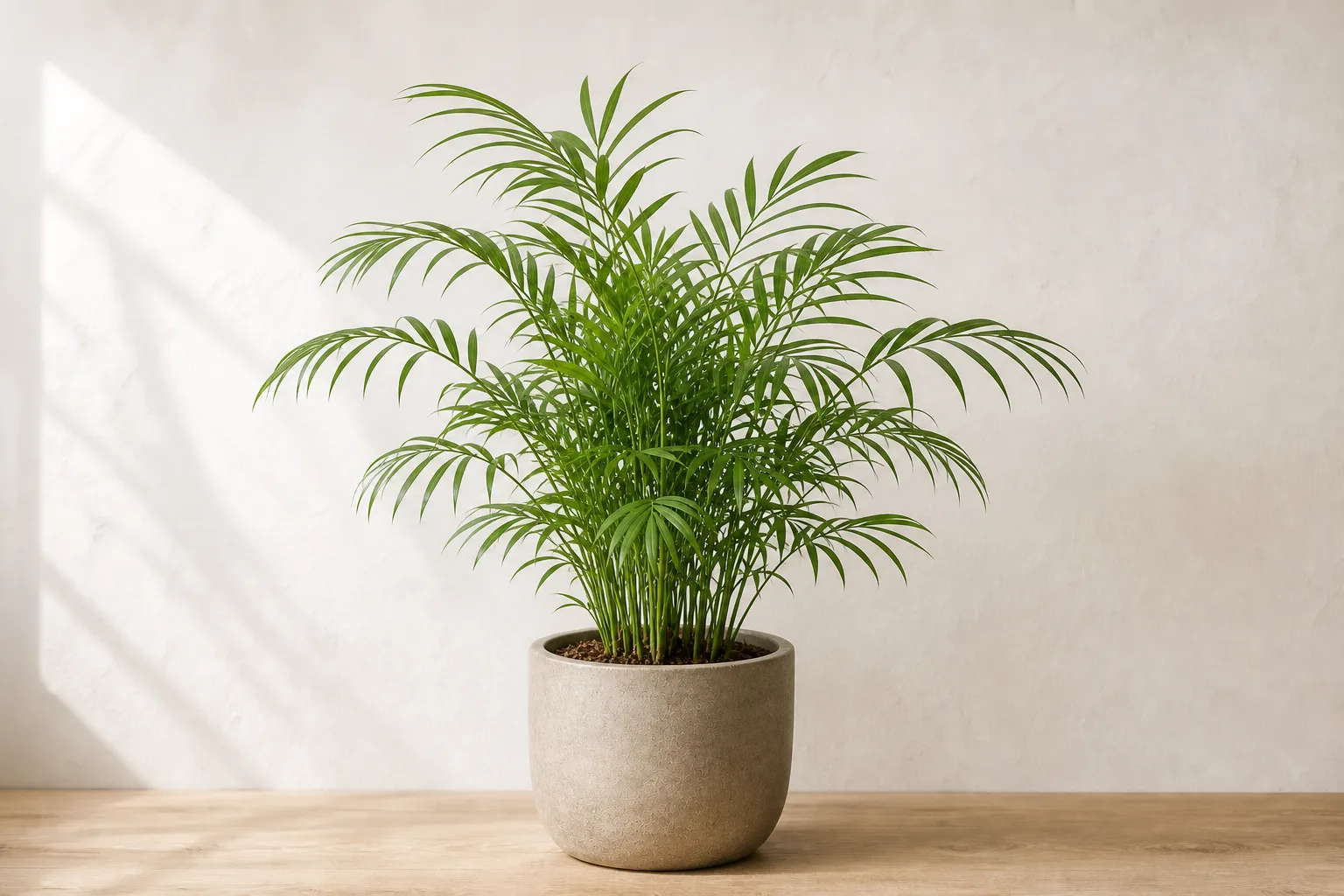
Key takeaways
- Medium indirect light supports best growth.
- Keep evenly moist but never saturated.
- Generally considered non-toxic to cats and dogs.
How to care for Parlor Palm
Parlor palm is an understory palm that grows slowly and accepts gentler light than many houseplants. A lush retail pot often contains several seedlings together, so occasional loss of a weaker stem does not necessarily mean the whole plant is failing.
Light
Low light is tolerated, but medium filtered light supports fuller growth. Avoid hot direct sun, which can scorch the narrow leaflets, and do not expect rapid growth simply by moving a long-shaded palm into harsh exposure.
Water
Water when the top inch of mix has dried, then drain the pot. The palm prefers moderate moisture but is vulnerable to soggy soil; use the drying pattern rather than a fixed weekly schedule.
Soil and repotting
Use a humus-rich, well-drained indoor mix. Repot only when necessary because parlor palms grow slowly; if a pot contains several seedlings, avoid breaking the root mass apart just to make more plants.
Temperature, humidity, and fertilizer
Average humidity is workable, but dry drafts can encourage brown tips and spider mites. Keep the palm away from cold vents, feed lightly during active growth, and wipe dusty fronds with a damp cloth rather than using leaf-shine products.
Pruning and propagation
Remove fully brown fronds at the base with clean tools, leaving green tissue in place where possible. Commercially grown parlor palms are usually started from seed; division is only reasonable when distinct rooted plants already share a pot.
Common problems
Start with the pattern, current soil moisture, and recent changes. One symptom can have several causes, so change the most likely factor first and observe before making another major adjustment.
| Symptom | Check first | First action |
|---|---|---|
| Brown tips | Dry drafts, irregular moisture, salts, and pests | Stabilize conditions and inspect leaf undersides |
| Yellow fronds | Wet mix, natural lower-frond aging, and drainage | Check roots before watering again |
| Crisp patches | Direct sun or heat exposure | Move to filtered light |
| Fine webbing | Spider mites in dry air | Isolate, wash foliage, and improve conditions |
| Slow growth | Season and normal plant pace | Expect slow growth; avoid overfertilizing |
Pet and household safety
Parlor palm is listed non-toxic to cats and dogs by ASPCA. It is still wise to discourage chewing because any plant material can upset a pet's stomach; contact a veterinarian if a pet becomes unwell after eating foliage.
Frequently asked questions
How often should I water Parlor Palm?
Water when the top inch of mix dries, then drain excess.
Can Parlor Palm live in low light?
Yes, though medium indirect light supports fuller growth.
Why are parlor palm tips brown?
Review dry drafts, irregular watering, salts, and spider mites.
Should I mist Parlor Palm?
A damp cloth and stable room conditions are more useful than routine misting.
Can I divide Parlor Palm?
Only when distinct rooted plants share the pot; most are propagated from seed.
Is Parlor Palm safe for pets?
ASPCA lists it non-toxic to cats and dogs, though chewing can still upset a stomach.
Sources and editorial review
This editorial draft is based on the sources below and awaits named horticulture-expert approval before publication.
- Chamaedorea elegansNC State Extension · Checked
- Chamaedorea elegans Mart.Royal Botanic Gardens, Kew — Plants of the World Online · Checked
- ChamaedoreaASPCA · Checked
- Spring houseplant careUniversity of Minnesota Extension · Checked
What works well
- Pet-friendlier
- Tolerates lower light
- Compact when young
What to consider
- Slow growing
- Sensitive to soggy soil
- May attract spider mites in dry air