Key takeaways
- Bright to medium indirect light with high humidity keeps the vein pattern vivid.
- Water when the top of the mix begins to dry - it wilts fast when too dry but revives after a drink.
- Non-toxic to cats and dogs, a safe pick for pet households.
How to care for Nerve Plant
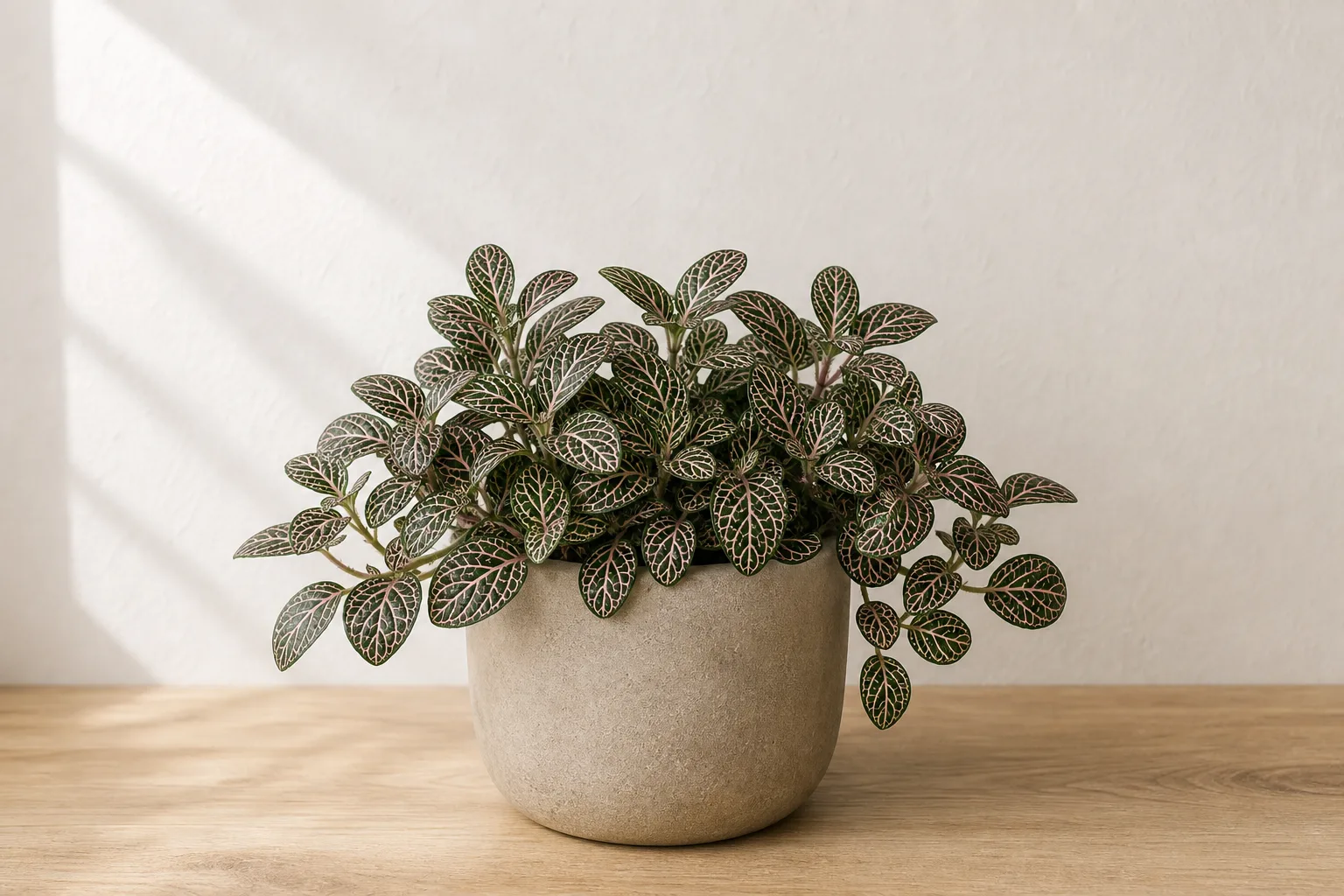
Nerve plant (Fittonia albivenis) is a creeping evergreen perennial native to the tropical rainforests of South America, where it grows as a low ground cover in deep shade. Its olive-green ovate leaves are netted with white, pink, or red veins - the colorful feature that gives the plant its common name. It stays small, reaching about 8 inches tall and 18 inches across, and its creeping stems root wherever they touch moist soil.
Care is about matching those rainforest conditions: bright to medium light, steady moisture, warmth, and higher humidity. The plant signals thirst dramatically - it collapses into a wilted heap when dry and usually recovers within hours of watering. Keep it out of direct sun and dry drafts, and pinch stems to keep the habit bushy.
Light
Nerve plant thrives in bright to medium indirect light and performs well under fluorescent lighting, which makes it a good office plant. An east or north window, or a few feet back from a brighter one, works well. Direct sun scorches the leaves, while very dim light fades the vein pattern and stretches the stems. It tolerates lower light for short periods but grows best with steady filtered exposure.
Water
Water when the top of the mix begins to dry, keeping the soil evenly moist but never soggy - roughly twice a week in most homes, adjusted for light and pot size. If it gets too dry, the plant wilts dramatically but recovers within hours of a drink. Overwatering causes yellowing leaves and root rot, so confirm the pot drains and empty the saucer after watering.
Soil and repotting
Plant nerve plant in a well-drained, peaty or soil-based potting mix in a small container with drainage holes; its shallow roots mean it does not need a large pot. Dwarf forms are excellent in the humidified atmosphere of a terrarium. Repot in spring when roots fill the container, moving up one size, and refresh the mix every couple of years.
Temperature, humidity, and fertilizer
Nerve plant prefers warm rooms, with temperatures always above about 55 F (13 C), and high humidity - a humidifier, wet-pebble tray, or terrarium all help. Withering leaves often signal a need for more humidity rather than more water. Feed lightly with a balanced houseplant fertilizer at label strength during the growing season and skip feeding in winter. Pinching flower buds keeps the plant focused on foliage.
Pruning and propagation
Pinch off the ends of growing stems to keep the plant full and bushy, and remove any flower buds if you prefer foliage over the small, insignificant blooms. Propagate easily from stem cuttings - take a section with a node or two and root it in moist mix or water. Because the creeping stems root at the nodes where they touch the soil, a stem pinned to the mix also forms a new plant.
Common problems
Start with the pattern, current soil moisture, and recent changes. One symptom can have several causes, so change the most likely factor first and observe before making another major adjustment.
| Symptom | Check first | First action |
|---|---|---|
| Sudden collapse or wilting | Whether the mix is dry and how recently it was watered | Water thoroughly and the plant usually revives within hours; keep the mix evenly moist going forward. |
| Brown or crispy leaf edges | Dry air, direct sun, or dry soil | Raise humidity, move out of direct sun, and steady the watering before changing anything else. |
| Yellowing leaves | Overwatering, poor drainage, and soil moisture | Let the top of the mix dry and confirm the pot drains before changing other care. |
| Faded vein color | Light level and how far the plant sits from the window | Move gradually to brighter filtered light to restore the vein contrast. |
| Cottony clumps or tiny insects | Mealybugs, scale, or spider mites on stems and leaf undersides | Isolate and identify the pest before treating; wipe affected areas and use a targeted control. |
Pet and household safety
Nerve plant is non-toxic to cats, dogs, and horses, making it a safe choice for pet households. Non-toxic does not mean edible: chewing any plant or potting material can still upset a pet's stomach, so keep persistent chewers away and contact a veterinarian if a pet becomes unwell after eating plant material.
Frequently asked questions
How often should I water a nerve plant?
Water when the top of the mix begins to dry, roughly twice a week in typical rooms. It wilts dramatically when dry but recovers within hours of watering; keep it evenly moist but not soggy.
What light does a nerve plant need?
Bright to medium indirect light, including fluorescent office light. Direct sun scorches the leaves, and very dim light fades the veining.
Where does nerve plant grow naturally?
It is native to the tropical rainforests of South America (Colombia, Peru, Bolivia, northern Brazil, and Venezuela), where it creeps across the shaded forest floor in high humidity.
Why does my nerve plant keep wilting?
Usually the mix has dried out - this plant signals thirst dramatically. Water thoroughly and it usually recovers within hours; then steady the routine so the mix does not fully dry between waterings.
How do I propagate a nerve plant?
Take a stem cutting with a node or two and root it in moist mix or water; stems also root where they touch moist soil, so pinning a stem to the pot creates a new plant.
Is nerve plant safe for pets?
Yes, it is non-toxic to cats and dogs. Still discourage chewing, since any plant material can upset a pet's stomach.
Sources and editorial review
This editorial draft is based on the sources below and awaits named horticulture-expert approval before publication.
- Fittonia albivenisRoyal Botanic Gardens, Kew (Plants of the World Online) · Checked
- Fittonia albivenis (Nerve Plant)North Carolina State Extension · Checked
- Fittonia albivenis (Verschaffeltii Group)Missouri Botanical Garden · Checked
- Nerve PlantASPCA · Checked
What works well
- Showy, colorful veining in white, pink, or red on deep green leaves.
- Compact, low-growing habit ideal for desks, terrariums, and small pots.
- Non-toxic to cats and dogs.
What to consider
- Wilts dramatically when the soil dries out, though it usually recovers.
- Needs higher humidity and steady warmth to look its best.
- Direct sun scorches the leaves and dry air browns the edges.