Key takeaways
- Bright filtered light keeps it compact; it tolerates low light but gets leggy and less dense.
- Keep the mix evenly moist in growth and cooler in winter - hot, dry rooms invite spider mites.
- Keep it away from cats and dogs; the foliage is toxic and more harmful than the berries.
How to care for English Ivy
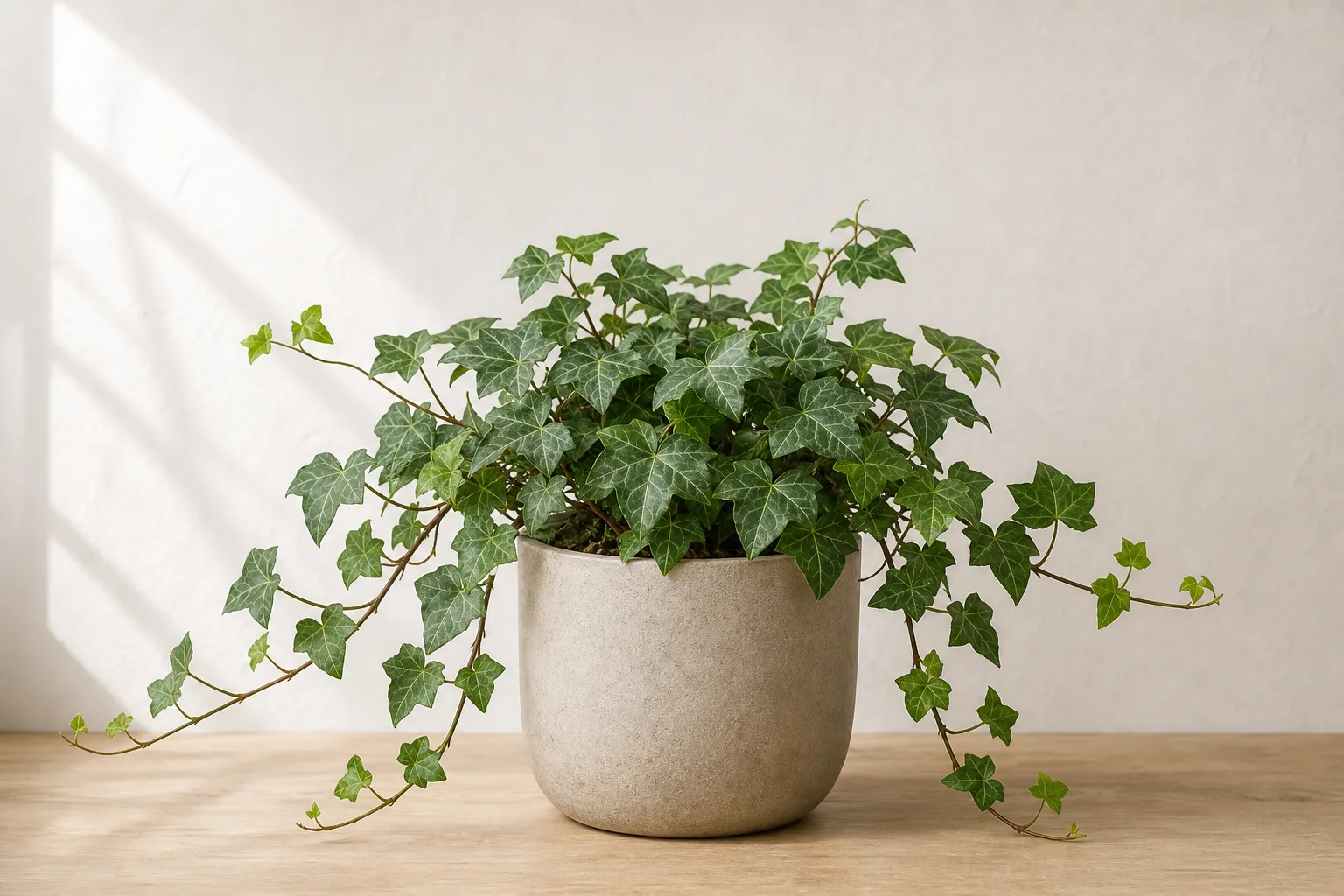
English ivy (Hedera helix) is a woody evergreen vine native to Europe, Scandinavia, and Russia, brought to the United States by early settlers. Outdoors it can climb 50 feet or more into tree canopies by clinging aerial rootlets; indoors it is grown as a compact trailing plant for hanging baskets, topiary, or trellises.
It grows in two stages: the familiar climbing, lobed-leaf juvenile form, and an adult shrubby form with unlobed leaves and flowers. Indoors you almost always grow the juvenile form. Keep it in bright filtered light, cool-to-moderate temperatures, and watch closely for spider mites, which thrive in warm, dry rooms - the most common indoor failure with this vine.
Light
English ivy tolerates a wide range of light - from full sun outdoors to deep shade - but indoors it looks best in bright, filtered light. Low light produces leggy, sparse growth with wider spacing between leaves. An east or north window, or a few feet back from a brighter window, keeps it compact. In very bright, hot windows the leaves can scorch, especially when the air is dry.
Water
Water when the top of the mix begins to dry, keeping the soil evenly moist but never waterlogged, and let excess drain from the saucer. The plant tolerates a variety of moisture levels but performs best with consistent moisture. Reduce watering in winter, when growth slows and the plant prefers cooler, drier rest. Both overwatering and underwatering cause leaf drop, so check the root zone first.
Soil and repotting
Use an average, well-drained, organically rich potting mix in a container with drainage holes. English ivy is not fussy about soil, but good drainage prevents root rot. Repot in spring when roots fill the pot, moving up one size, and refresh the mix every couple of years. Because the plant is invasive in many regions outdoors, keep it in a container rather than planting it in the garden.
Temperature, humidity, and fertilizer
English ivy prefers cool to moderate indoor temperatures - cooler rooms in the 50s to 60s F (10-18 C) keep it thriving - and it dislikes hot, dry, stuffy air, which invites spider mites. Average household humidity is usually workable, though raising humidity in heated winter rooms helps. Feed lightly with a balanced houseplant fertilizer at label strength during spring and summer and not in winter.
Pruning and propagation
Pinch or trim trailing stems regularly to keep the plant full and to control length; cut just above a leaf. Propagate easily from stem cuttings with a node or two rooted in water or moist mix - ivy roots readily. Keep the soil lightly moist and provide bright filtered light while cuttings establish. Note that the sap can irritate skin, so wear gloves when pruning.
Common problems
Start with the pattern, current soil moisture, and recent changes. One symptom can have several causes, so change the most likely factor first and observe before making another major adjustment.
| Symptom | Check first | First action |
|---|---|---|
| Fine webbing and stippled leaves | Spider mites on leaf undersides, especially in warm dry rooms | Isolate the plant, rinse or wipe the foliage, raise humidity, and use a targeted control once the mite is confirmed. |
| Bare, leggy stems | Light level and whether the plant is crowded | Move to brighter filtered light and pinch stems back to encourage denser regrowth. |
| Leaf drop | Whether the mix is too wet or too dry and recent changes | Check the root zone and steady the watering; ivy drops leaves at both extremes. |
| Yellowing leaves | Overwatering, poor drainage, and leaf age | Let the top of the mix dry and confirm the pot drains before changing other care. |
| Sticky residue or cottony clumps | Mealybugs, scale, or aphids along stems and leaf undersides | Isolate and identify the pest before treating; wipe affected areas and use a targeted control. |
Pet and household safety
English ivy is toxic to cats, dogs, and horses if chewed. It contains triterpenoid saponins (hederagenin) that cause vomiting, abdominal pain, hypersalivation, and diarrhea, and the foliage is more toxic than the berries. The sap can also irritate human skin. Keep the plant out of reach of pets and children who chew plants, and contact a veterinarian or animal poison-control service after a concerning exposure. This species is not safe to chew.
Frequently asked questions
How often should I water English ivy?
Water when the top of the mix begins to dry, keeping it evenly moist but not waterlogged, and reduce in winter. Check the root zone first, since ivy drops leaves from both overwatering and underwatering.
What light does English ivy need?
Bright filtered light indoors keeps it compact; it tolerates low light but grows leggy. Avoid hot direct sun in dry rooms.
Where does English ivy grow naturally?
It is native to Europe, Scandinavia, and Russia, where it climbs trees and covers the ground - a vigorous habit that makes it invasive in many regions outside its range.
Why does my ivy keep getting spider mites?
Spider mites thrive in warm, dry indoor air. Raise humidity, keep the plant in cooler bright conditions, and check the leaf undersides regularly.
How do I propagate English ivy?
Take a stem cutting with a node or two and root it in water or moist mix; ivy roots readily. Wear gloves, since the sap can irritate skin.
Is English ivy safe for pets?
No. It contains triterpenoid saponins that cause vomiting and abdominal pain in cats and dogs. Keep it out of reach and contact a veterinarian after a concerning chew.
Sources and editorial review
This editorial draft is based on the sources below and awaits named horticulture-expert approval before publication.
- Hedera helixRoyal Botanic Gardens, Kew (Plants of the World Online) · Checked
- Hedera helix (English Ivy)North Carolina State Extension · Checked
- Hedera helixMissouri Botanical Garden · Checked
- English IvyASPCA · Checked
What works well
- Classic trailing form that works in hanging baskets and on trellises.
- Grows in a wide range of light, from low to bright filtered.
- Fast-growing and easy to shape with regular pinching.
What to consider
- Toxic to pets if chewed (triterpenoid saponins).
- Very prone to spider mites in warm, dry indoor air.
- Can be invasive outdoors; best kept as a container plant.