Key takeaways
- Give it bright indirect light to full sun; a south or west window is ideal.
- Water deeply only when the mix is completely dry, and much less in winter.
- Handle it with gloves or tongs - the fine glochids detach and irritate skin.
How to care for Bunny Ears Cactus
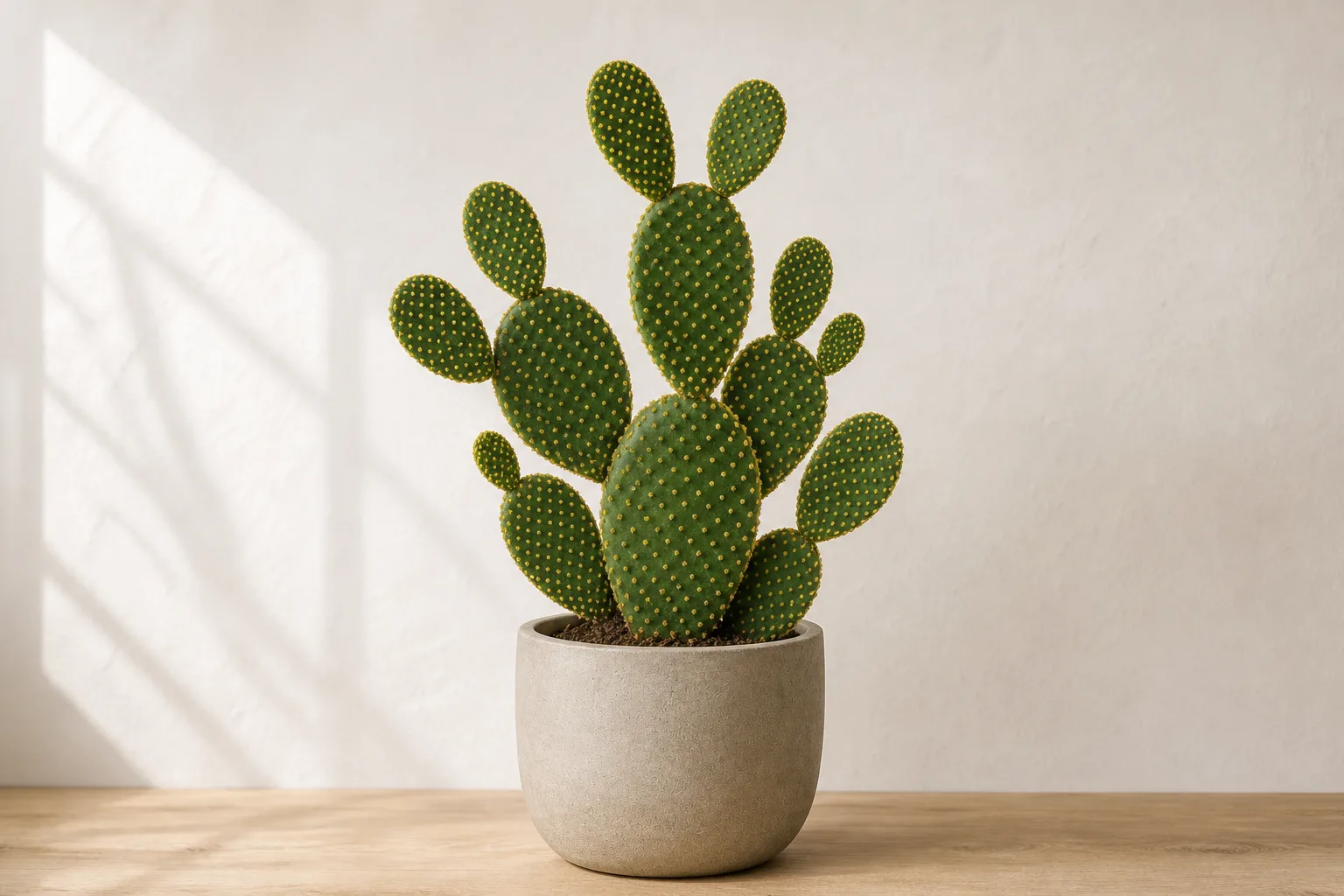
Bunny ears cactus (Opuntia microdasys) grows on arid hillsides in central and northern Mexico, forming clumps of flattened, oval stem segments that look like rabbit ears. The pads are studded with areoles full of fine, barbed bristles called glochids, which detach at the lightest touch and are far more irritating than they look - this is a plant to admire and handle with tongs, folded newspaper, or gloves. In late spring it may open pale yellow flowers, though indoor plants rarely bloom.
As a desert cactus it wants the brightest spot in the home, a fast-draining mix, and a genuine dry-down between waterings. In winter it prefers a cooler, drier rest. It is a hardy, slow-growing plant that rarely asks for attention, and its main hazards to people and pets are mechanical - those barbed glochids - rather than chemical toxicity. It is flagged as not pet-safe because of that injury risk.
Light
Opuntia microdasys needs bright indirect light to full sun - a south or west window is ideal, with as much direct sun as it will take. Strong light keeps the pads firm and encourages the dense golden glochids that give the plant its look. In dim light the pads elongate and the plant becomes weak and pale. If a plant has been grown in softer light, move it into stronger sun gradually over a week or two to avoid sunburn.
Water
Water deeply only when the mix has dried out completely, then let all excess drain. In a bright, warm room that might mean every two to three weeks in the growing season, and once a month or less in winter. The pads store water, so when in doubt, wait - overwatering is the quickest way to rot a bunny ears cactus. In winter, keep the plant cooler and almost dry to give it the dormant rest it needs.
Soil and repotting
Use a very fast-draining cactus or succulent mix with extra perlite, pumice, or coarse sand, in a pot with a drainage hole. Terracotta helps the mix dry quickly. Repot in spring when the clump fills the pot, and go up only one size. Handle the pads only with tongs, thick gloves, or folded newspaper, because the glochids detach on contact. Let the plant settle dry for several days after repotting before the first watering.
Temperature, humidity, and fertilizer
Bunny ears cactus prefers warm, dry conditions (roughly 65-90°F / 18-32°C) and low humidity, which most homes provide easily. It is not frost-tolerant and should stay above about 45-50°F (7-10°C); a cool winter rest around 50-65°F with very little water suits it well. Feed sparingly - a diluted cactus fertilizer once or twice in spring and summer - and skip feeding in winter.
Pruning and propagation
There is little to prune; remove any soft or damaged pads at the joint with clean tools. Propagation is by pad (segment) cuttings: detach a healthy pad at its joint, let the cut end callus for a week or two, and stand it upright on damp cactus mix until roots form. Always use tongs or gloves when handling pads, since the glochids are easily dislodged. New plants grow slowly, which is normal for this cactus.
Common problems
Start with the pattern, current soil moisture, and recent changes. One symptom can have several causes, so change the most likely factor first and observe before making another major adjustment.
| Symptom | Check first | First action |
|---|---|---|
| Mushy, soft, or yellowing pads | Watering frequency, drainage, and whether the mix stays wet | Stop watering, let the mix dry completely, and inspect the roots for rot. |
| Shriveled, wrinkled pads | How long the mix has been dry and the season | Water deeply and let excess drain; pads should firm up over days. |
| Thin, elongated pads | Light levels and distance from the window | Move gradually to stronger, direct light and reduce winter watering. |
| Pale or bleached pad surfaces | A sudden move into intense sun and recent light changes | Acclimate the plant to stronger light gradually rather than abruptly. |
| Glochids stuck in skin or paws | Where the bristles are embedded and whether the area is swollen | Remove visible glochids with tape or tweezers; see a professional if any remain embedded or cause swelling. |
Pet and household safety
Opuntia microdasys is not chemically toxic to cats and dogs, but it is classed as not pet-safe because its fine, barbed glochids detach at the slightest touch and can lodge in a pet's mouth, paws, or skin, causing persistent irritation and discomfort. Treat the plant as a household hazard: keep it out of reach, wear gloves or use tongs when handling it, and contact a veterinarian if a pet develops swelling, drooling, or trouble eating after contact.
Frequently asked questions
How often should I water a bunny ears cactus?
Only when the mix is completely dry - every two to three weeks in bright, warm conditions and much less in winter. The pads store water, so dryness is safer than extra water.
Why does it have 'ears' instead of spines?
The pads are flattened stem segments, and the fuzzy-looking spots are areoles full of fine barbed bristles called glochids. They detach on contact and are highly irritating, so handle the plant with protection.
What light does a bunny ears cactus need?
Bright indirect light to full sun; a south or west window is ideal. Strong light keeps the pads firm and the glochids dense; dim light causes weak, elongated growth.
Can it bloom indoors?
Occasionally. Mature plants may open pale yellow flowers in late spring, but indoor plants rarely bloom without ideal light and a cool winter rest.
How do I propagate a bunny ears cactus?
By pad cuttings. Detach a healthy pad at the joint with tongs, let the cut end callus for a week or two, and stand it on damp cactus mix until roots form.
Is a bunny ears cactus safe for pets?
It is not chemically toxic, but it is not pet-safe: the barbed glochids detach easily and can become embedded in a pet's mouth or paws. Keep it out of reach and contact a veterinarian if a pet shows swelling or trouble eating.
Sources and editorial review
This editorial draft is based on the sources below and awaits named horticulture-expert approval before publication.
- Opuntia microdasysRoyal Botanic Gardens, Kew (Plants of the World Online) · Checked
- Toxic and Non-Toxic Plants ListASPCA · Checked
- Opuntia microdasysNorth Carolina State University Extension · Checked
- Opuntia microdasysRoyal Horticultural Society · Checked
What works well
- Distinctive, slow-growing pads shaped like bunny ears.
- Very tolerant of drought, heat, and dry indoor air.
- Propagates easily from pad cuttings.
What to consider
- Fine barbed glochids detach on contact and irritate skin and paws.
- Not pet-safe: glochids can lodge in a pet's mouth or paws.
- Rarely flowers indoors and grows slowly.