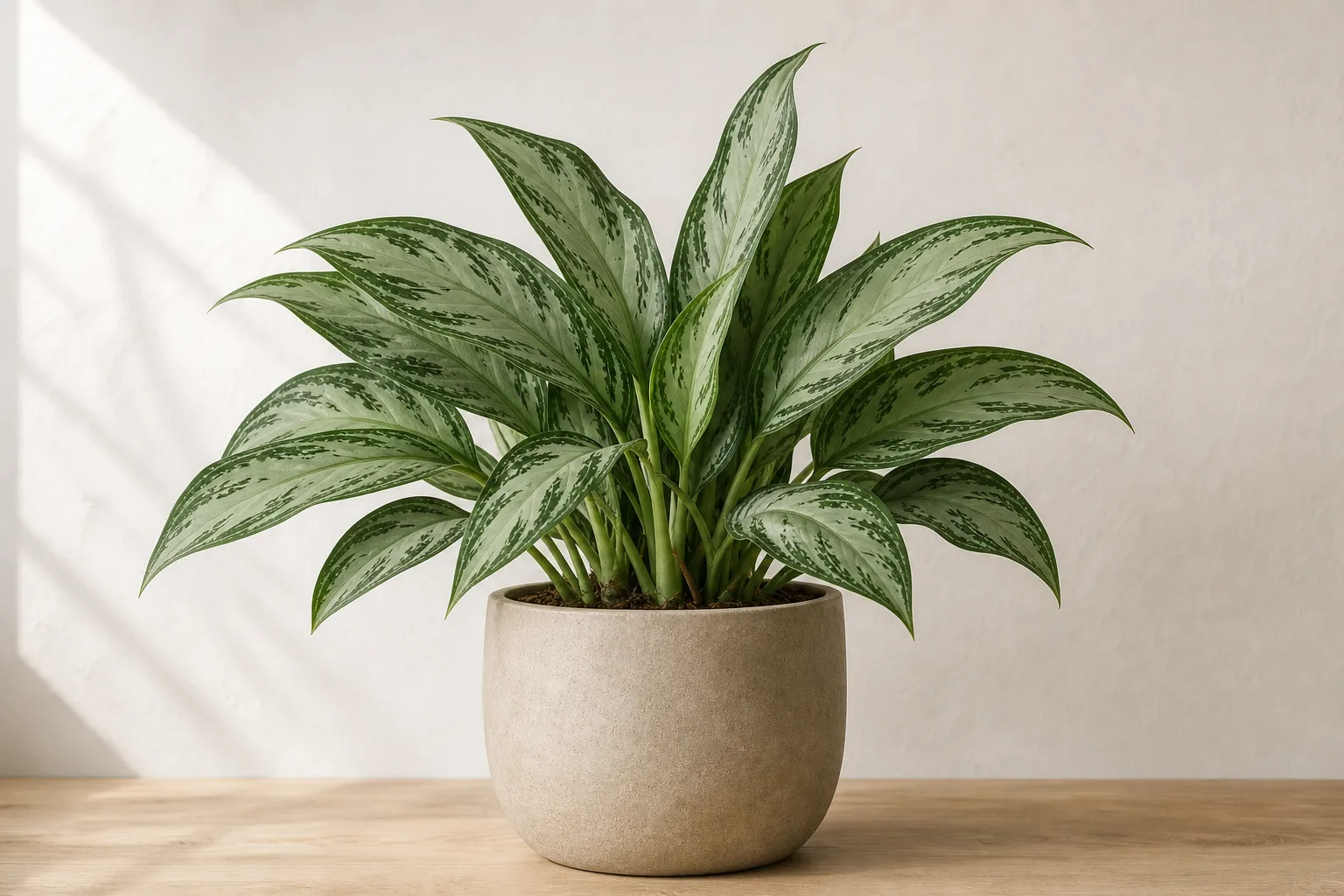
Key takeaways
- Thrives in low to bright indirect light, including fluorescent office light.
- Water when the top of the mix is partly dry; reduce in winter and never let it sit wet.
- Keep out of reach of pets and children - it contains calcium oxalate crystals.
How to care for Chinese Evergreen
Chinese evergreen (Aglaonema commutatum) is an understory perennial from the Philippines and Sulawesi, which is why it handles the low, diffuse light of an indoor room so well. Its thick, elliptic leaves are marked with silver-gray blotches, and the plant grows slowly enough to stay on a desktop or in a corner for months without outgrowing its space.
Care is mostly about restraint: steady warmth, even moisture without soggy soil, and protection from drafts and direct sun. Keep the mix lightly moist during the growing season and ease off in winter. Repot only every few years. Because it is an aroid, keep it away from pets and children who chew plant material.
Light
Chinese evergreen does best in low to bright indirect light and is one of the few foliage plants that tolerates fluorescent office lighting. Solid green forms tolerate the lowest light; heavily variegated ones want a bit more brightness to hold their pattern. Avoid direct sun, which scorches the leaves. A north or east window, or a spot several feet from a brighter window, is ideal.
Water
Water when the top of the mix is partly dry, keeping it evenly moist but never soggy. Overwatering is the main cause of root rot and yellowing. In winter, when growth slows, reduce watering and let the surface dry a little more between drinks. Use a pot with a drainage hole and empty any saucer after watering. Brown leaf tips can signal dry air, drafts, or mineral buildup from tap water.
Soil and repotting
Use a well-draining, peat-based houseplant mix; some growers add perlite and a little sand for extra drainage and slight acidity. Repot only every two to three years, or when roots fill the container, moving up only one pot size. Chinese evergreen grows slowly, so frequent repotting is unnecessary and can set it back. Keep the crown at the soil line and use a pot with drainage.
Temperature, humidity, and fertilizer
Keep temperatures around 70-72°F (21-22°C) and never below about 55°F (13°C); cold drafts and sudden temperature drops cause leaf damage. Average household humidity is acceptable, though higher humidity helps. Feed once or twice a year with a general-purpose houseplant fertilizer at label strength - this is a light feeder, and overfeeding browns the leaf tips. Wipe leaves occasionally with a damp cloth to keep them dust-free.
Pruning and propagation
Pinch off flower buds if you want the plant to focus energy on foliage, and remove yellowed or damaged leaves at the base. Propagate by division when repotting - separate rooted clumps with several stems - or by stem cuttings: take a 4-6 inch section with a node or two, root it in water or moist mix, and pot it up once roots form. Spring and summer are the best seasons for either method.
Common problems
Start with the pattern, current soil moisture, and recent changes. One symptom can have several causes, so change the most likely factor first and observe before making another major adjustment.
| Symptom | Check first | First action |
|---|---|---|
| Yellowing leaves | Top-inch soil moisture, recent overwatering, and natural aging of older leaves | Let the mix dry at the surface and confirm drainage before changing other care. |
| Brown leaf tips | Dry air, drafts, overfertilizing, or mineral buildup from tap water | Move away from vents, flush the mix with plain water, and reduce feeding. |
| Drooping or wilting | Whether the mix is wet or dry and recent temperature changes | Check the root zone; water if dry, withhold and inspect roots if wet. |
| Pale or faded variegation | Light level and whether a variegated form is in too-dim a spot | Move gradually to brighter filtered light to restore pattern contrast. |
| Sticky residue or cottony clumps | Leaf undersides for mealybugs, aphids, scale, or spider mites | Isolate and identify the pest before treating; wipe leaves and use a targeted control. |
Pet and household safety
Chinese evergreen is toxic to cats, dogs, and horses if chewed. It contains insoluble calcium oxalate crystals that cause oral irritation, pain and swelling of the mouth and tongue, drooling, and sometimes vomiting or difficulty swallowing. The sap can also mildly irritate skin. Place it where curious pets and children cannot reach it, and contact a veterinarian or animal poison-control service after a concerning exposure.
Frequently asked questions
How often should I water Chinese evergreen?
Water when the top of the mix is partly dry, keeping it evenly moist but not soggy. Reduce watering in winter when growth slows, and always empty the saucer.
What light does Chinese evergreen need?
Low to bright indirect light, including fluorescent office light. Solid green forms tolerate the lowest light; variegated forms want a bit more brightness.
Where does Chinese evergreen come from?
It is native to the Philippines and Sulawesi (Central Malesia), growing as a shade-loving understory plant - which explains its tolerance of low indoor light.
Why are the leaf tips turning brown?
Usually dry air, drafts, too much fertilizer, or mineral buildup from tap water. Flush the mix with plain water and move the plant away from vents.
How do I propagate Chinese evergreen?
By division when repotting, or by stem cuttings with a node rooted in water or moist mix. Spring and summer give the best results.
Is Chinese evergreen safe for pets?
No. It contains calcium oxalate crystals that irritate the mouth and throat of cats and dogs. Keep it out of reach and seek veterinary advice after a concerning chew.
Sources and editorial review
This editorial draft is based on the sources below and awaits named horticulture-expert approval before publication.
- Aglaonema commutatumMissouri Botanical Garden · Checked
- Aglaonema commutatumRoyal Botanic Gardens, Kew (Plants of the World Online) · Checked
- Chinese EvergreenASPCA · Checked
- How to Plant and Grow Chinese EvergreenBetter Homes & Gardens · Checked
What works well
- One of the best houseplants for low and artificial light.
- Slow-growing and low-maintenance; rarely needs repotting.
- Attractive patterned foliage in compact form.
What to consider
- Toxic to pets and humans if chewed (calcium oxalate).
- Sensitive to cold drafts and dry air (brown leaf tips).
- Overwatering causes root rot.