Key takeaways
- Give it bright light - full sun outdoors or the brightest window indoors for good flowering.
- Keep the mix moist but well-drained, and keep the crown level with the soil surface.
- Non-toxic to cats, dogs, and horses per the ASPCA.
How to care for Gerbera Daisy
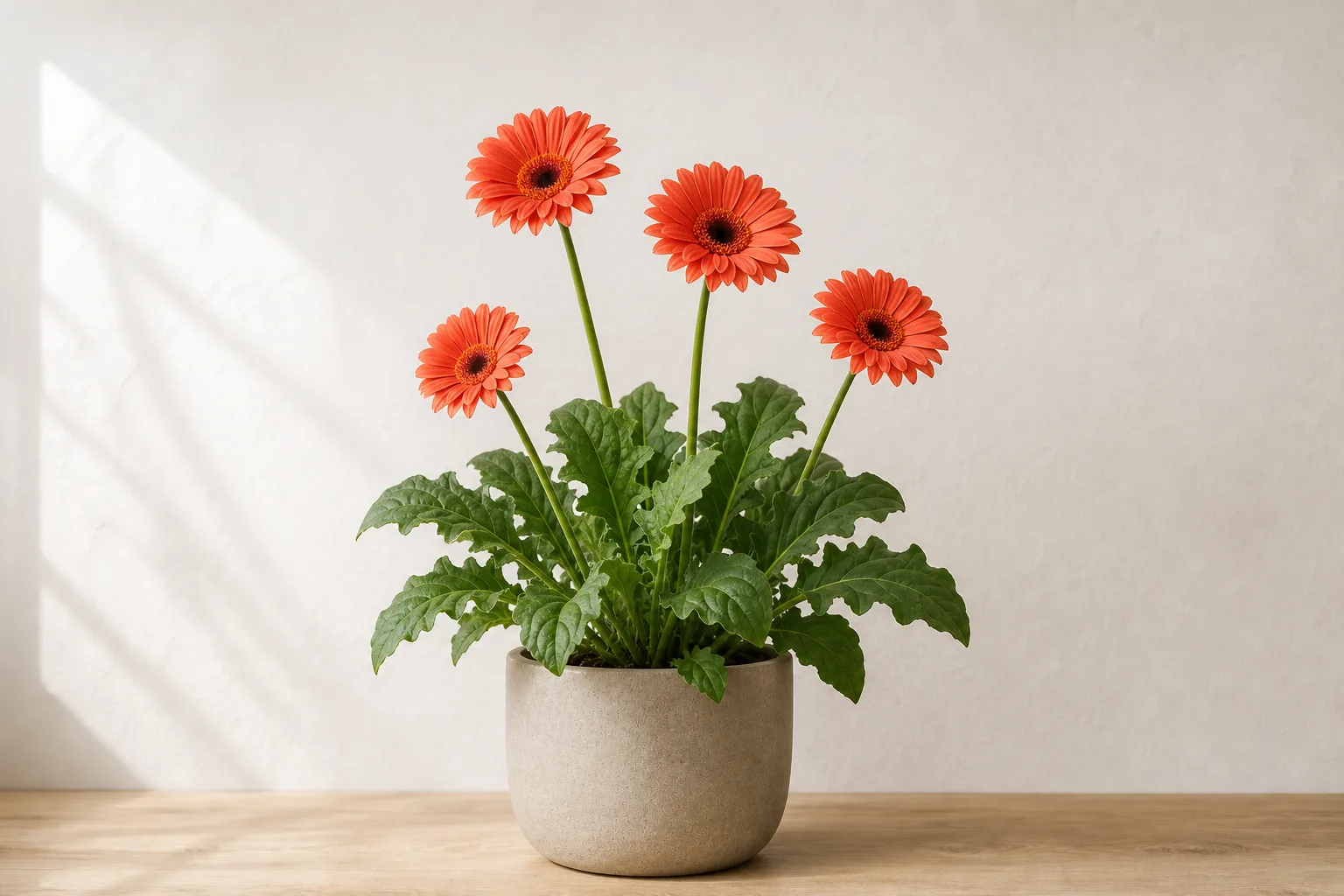
Gerbera daisy (Gerbera jamesonii) is a stemless, clump-forming, tender perennial in the aster family, native from the Northern Provinces of South Africa through Eswatini. From a basal rosette of slender, spoon-shaped, often lobed dark green leaves, naked flowering stems rise to 12-18 inches, each bearing a solitary daisy-like flower up to 4 inches across in red, yellow, orange, pink, or white around a darker center.
Give it full sun or the brightest spot you can, a moist, well-drained soil rich in organic matter, and good air circulation. Water at the soil level and keep the crown level with the soil so it stays dry and healthy. Deadhead spent flowers to keep blooms coming, and protect the plant from hot afternoon sun in warm climates. In winter, reduce water and keep the plant in bright light with enough moisture to prevent the mix from drying out completely.
Light
Gerbera daisies flower best in full sun - at least six hours of direct sun - when grown outdoors, and in the brightest indoor position you have, such as a south-facing window. Indoors, protect them from harsh, hot midday sun through glass, and give them some afternoon shade in hot summer climates. Too little light produces lush leaves but few flowers. Rotate the pot occasionally for even growth and move the plant gradually if you change its position.
Water
Keep the soil moist but well-drained, watering when the surface begins to dry and letting excess water escape. Soggy soil causes root rot and crown rot, so a pot with a drainage hole is essential. Water at the soil line and avoid splashing the crown and leaves, which encourages gray mold and other crown diseases. In winter, allow the mix to dry more between waterings while preventing it from drying out completely.
Soil and repotting
Use a moist, well-drained, organically rich potting mix, and keep the crown level with the soil surface - planting too deep invites crown rot. Gerberas have deep root systems that resent disturbance, so repot only when necessary, moving up one pot size and handling the roots gently. To overwinter an outdoor plant, sink the pot in the garden during warm months and lift it before frost, or keep it potted and move it to a cool, bright, frost-free spot.
Temperature, humidity, and fertilizer
Gerbera daisies perform best in climates with warm summer days and cool nights, and they tolerate average household humidity. Indoors, normal room temperatures suit them, but they need good airflow to keep the crown dry. Fertilize lightly during active growth with a balanced liquid fertilizer at half strength, and reduce feeding in winter. Deadheading spent flowers regularly prolongs the bloom season.
Pruning and propagation
Deadhead spent flowers by removing the entire stem at the base, which keeps the plant blooming and tidy. Remove damaged or yellowing leaves from the rosette to improve airflow. Propagation is by division in late summer: separate the basal offsets, each with roots and leaves, and pot them up to overwinter. Seed is also possible, sown indoors six to eight weeks before the last frost, but named varieties do not come true from seed.
Common problems
Start with the pattern, current soil moisture, and recent changes. One symptom can have several causes, so change the most likely factor first and observe before making another major adjustment.
| Symptom | Check first | First action |
|---|---|---|
| Crown rot or mushy base | Whether the crown is planted too deep, water in the crown, and drainage | Raise the crown to soil level, water at the soil line, and confirm the pot drains freely. |
| Gray mold on flowers or leaves | Airflow, overhead watering, and dense foliage | Improve ventilation, water at the soil line, and remove affected plant parts. |
| Few or no flowers | Light level and whether spent blooms are removed | Move to full sun or the brightest window and deadhead regularly. |
| Wilting despite moist soil | Root rot from soggy soil or a crown planted too deep | Inspect the root zone, improve drainage, and correct crown depth before changing anything else. |
| Thrips, spider mites, or whiteflies | Leaf undersides and nearby plants | Isolate the plant, identify the pest, and use a targeted control. |
Pet and household safety
Gerbera daisy (Gerbera jamesonii) is listed as non-toxic to dogs, cats, and horses by the ASPCA, and NC State Extension flags the species as non-toxic for pets. As with any plant material, a pet that chews large amounts may experience mild stomach upset. Keep the plant where pets are unlikely to chew and contact a veterinarian if you observe persistent vomiting, diarrhea, or lethargy. Non-toxic does not mean edible.
Frequently asked questions
How often should I water a gerbera daisy?
Water when the surface of the mix begins to dry, keeping the soil moist but never soggy. Water at the soil line to keep the crown dry, and let excess drain.
What light does a gerbera daisy need?
Full sun to bright light - at least six hours of direct sun outdoors, or the brightest south-facing window indoors for reliable flowering.
Where does the gerbera daisy grow naturally?
Gerbera jamesonii is native from the Northern Provinces of South Africa through Eswatini, growing as a rosette-forming perennial in subtropical grassland.
Why is my gerbera daisy not blooming?
Almost always a light problem. Move it to full sun or the brightest window, and deadhead spent flowers so energy goes into new blooms.
How do I propagate a gerbera daisy?
Divide the basal offsets in late summer, each with roots and leaves, and pot them up to overwinter. Seed-grown plants do not come true from seed.
Is gerbera daisy safe for pets?
Yes. The ASPCA lists Gerber Daisy (Gerbera jamesonii) as non-toxic to dogs, cats, and horses, though heavy chewing of any plant can still cause mild stomach upset.
Sources and editorial review
This editorial draft is based on the sources below and awaits named horticulture-expert approval before publication.
- Gerbera jamesoniiRoyal Botanic Gardens, Kew (Plants of the World Online) · Checked
- Gerber DaisyASPCA · Checked
- Gerbera jamesonii (Gerbera Daisy)North Carolina State University Extension · Checked
- Gerbera jamesonii (Transvaal Daisy)Missouri Botanical Garden · Checked
What works well
- Large, vivid flowers that last well as cut blooms.
- Long bloom season from spring through fall, and sometimes year-round indoors.
- Non-toxic to cats, dogs, and horses per the ASPCA.
What to consider
- Needs bright light to flower well; dim rooms produce few blooms.
- Sensitive to soggy soil and crown moisture, which cause rot.
- Deep roots resent disturbance, making repotting and overwintering tricky.