Key takeaways
- Bright light, including direct sun, keeps it compact and healthy.
- Water deeply only when the mix is dry; the swollen base stores water, so overwatering is the real risk.
- Non-toxic to cats and dogs; a safe, low-maintenance choice.
How to care for Ponytail Palm
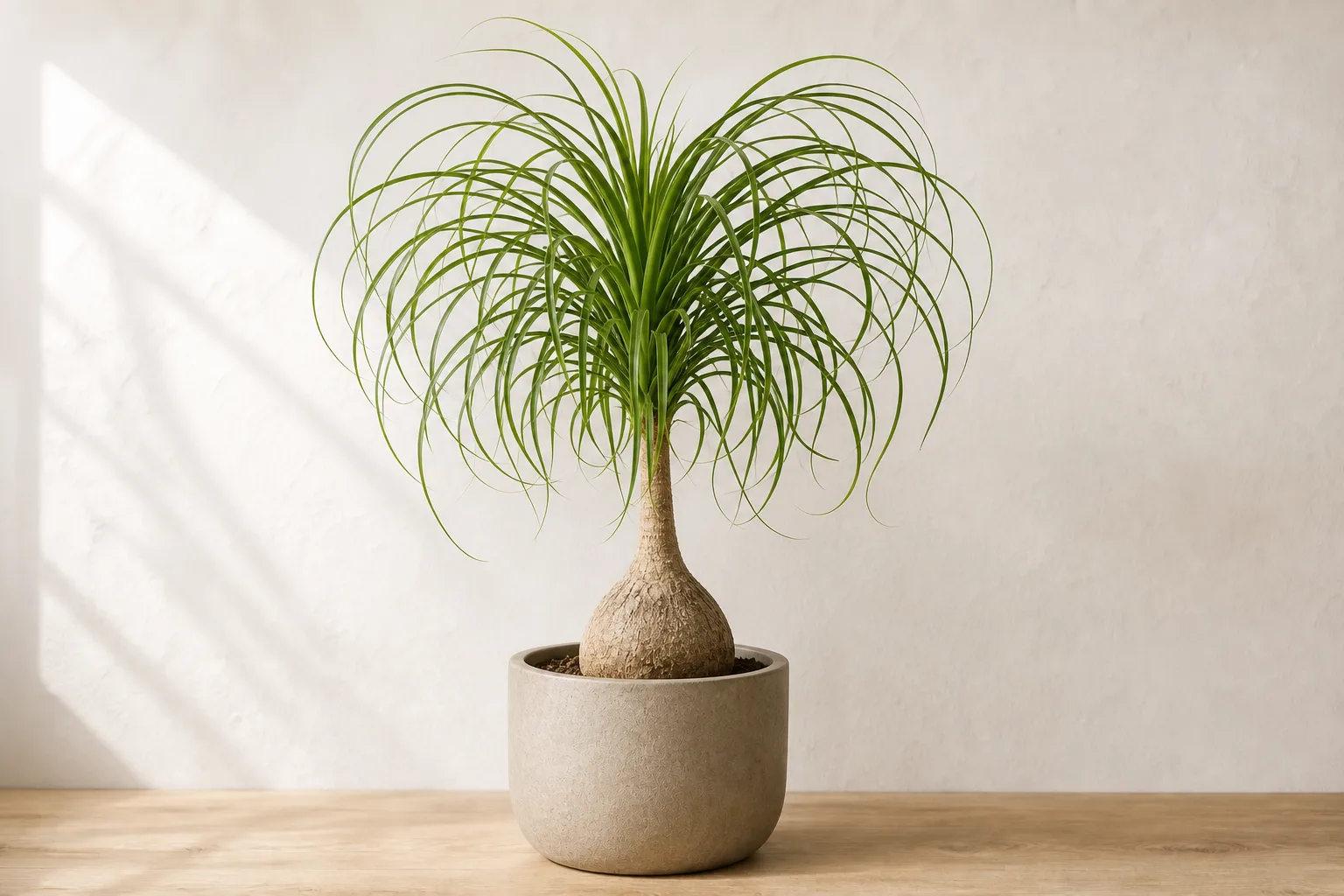
Ponytail palm (Beaucarnea recurvata) is a succulent, not a palm, native to the semi-desert regions of Mexico. Its signature swollen base - sometimes called an elephant's foot - is a water reservoir, which is why it shrugs off dry spells that would wilt other houseplants. Indoors it grows slowly and can live for decades, even outliving its owner if kept small in a pot.
Care comes down to light and restraint. Give it the brightest spot you can, use a fast-draining cactus mix, and water deeply only after the mix has dried out - then let it drain. Overwatering, not drought, is what kills ponytail palms. Reduce watering sharply in winter, keep it above about 50°F (10°C), and repot only every few years. Do not bury the caudex below the soil line.
Light
Ponytail palm wants bright light and tolerates direct sun better than most houseplants - a south or west window, or as much bright indirect light as you can provide, keeps it compact. Outdoors it grows in full sun. In too little light the plant stretches and the leaves go thin and limp. If you move it outside for summer, acclimatize it gradually over a few days in part shade to avoid sunburn.
Water
Water deeply but infrequently. In active growth, soak the mix and let it dry out completely before the next watering - roughly every one to two weeks depending on pot size, light, and heat. The swollen base stores water, so the plant tolerates a missed watering far better than chronic wetness. In winter, cut back to roughly monthly or less, mimicking its dry native season. Always use a pot with drainage and empty the saucer; a soft, mushy base is rot, not thirst.
Soil and repotting
Use a fast-draining cactus or succulent mix; add sharp sand or gravel to regular potting soil if needed. The caudex should sit at or above the soil line - planting it too deep traps moisture against the base and invites rot. Ponytail palms like to be slightly root-bound and can go years between repots; move up only one pot size, about every two to three years, and wait at least a week before watering after repotting. Terracotta pots help the mix dry faster.
Temperature, humidity, and fertilizer
Comfortable in normal indoor temperatures of about 65-80°F (18-27°C); it can survive brief dips toward 50°F (10°C) but is not frost-hardy, so keep it away from cold windows in winter. Low humidity is fine - this is a desert plant that does not need misting. Feed lightly with a diluted cactus or succulent fertilizer every other month in spring and summer; skip feeding in fall and winter. Overfertilizing causes brown leaf tips and weak growth.
Pruning and propagation
Pruning is minimal: trim brown leaf tips for appearance and remove only dead foliage. The only practical home propagation is via pups - small offsets that occasionally sprout from the base of the caudex. Wait until a pup is at least 4-6 inches tall, cut it away with a clean knife in spring, let the cut callous for a few days, optionally dust with rooting hormone, and pot it in dry cactus mix. Seed propagation is possible but slow and not practical for most growers.
Common problems
Start with the pattern, current soil moisture, and recent changes. One symptom can have several causes, so change the most likely factor first and observe before making another major adjustment.
| Symptom | Check first | First action |
|---|---|---|
| Soft or mushy base (caudex) | Soil wetness, recent overwatering, and drainage | Stop watering, let the mix dry, and inspect roots; repot into dry gritty mix if rot is present. |
| Brown leaf tips | Underwatering, overwatering, overfertilizing, or tap-water minerals | Check the mix and watering first; flush salts and reduce feeding. |
| Yellowing leaves | Overwatering and poor drainage | Let the soil dry completely and confirm the pot drains freely. |
| Leggy, weak growth | Light level and distance from the window | Move to a brighter spot, ideally with some direct sun. |
| White cottony or brown bumps on leaves | Mealybugs or scale at leaf bases and along the trunk | Isolate and wipe off; treat with insecticidal soap or neem oil. |
Pet and household safety
Ponytail palm is non-toxic to cats and dogs - the leaves are not poisonous. The leaf edges are finely serrated, though, and can irritate a pet's mouth if chewed, so it is still wise to keep persistent chewers away and to contact a veterinarian if a pet becomes unwell after eating any plant material. Non-toxic does not mean edible.
Frequently asked questions
How often should I water a ponytail palm?
Deeply but infrequently - when the mix has dried out completely, about every one to two weeks in active growth and monthly or less in winter. The swollen base stores water, so underwatering is easier to fix than overwatering.
What light does a ponytail palm need?
Bright light, including direct sun; a south or west window is ideal. Too little light causes leggy, weak growth.
Where does ponytail palm come from?
It is native to the semi-desert regions of Mexico (and nearby Belize and Guatemala), which is why it stores water in its swollen base and tolerates dry, sunny conditions.
Why is the base of my ponytail palm soft?
Usually overwatering and rot at the caudex. Stop watering, let the mix dry, and check the roots; a firm but deflated base just means it is time to water.
How do I propagate a ponytail palm?
From pups (basal offsets) at least 4-6 inches tall, removed in spring, calloused, and potted in dry cactus mix. Seed is possible but slow; most home growers use pups.
Is ponytail palm safe for pets?
Yes - the leaves are non-toxic to cats and dogs. The serrated edges can irritate a chewing pet's mouth, so keep persistent chewers away and call a vet if a pet seems unwell.
Sources and editorial review
This editorial draft is based on the sources below and awaits named horticulture-expert approval before publication.
- Beaucarnea recurvataArizona State University Arboretum · Checked
- Beaucarnea recurvataRoyal Botanic Gardens, Kew (Plants of the World Online) · Checked
- Ponytail Palm, Beaucarnea recurvataUniversity of Wisconsin-Madison Extension · Checked
- How to Grow and Care for a Ponytail PalmThe Spruce · Checked
What works well
- Extremely drought-tolerant and low-maintenance.
- Slow-growing and long-lived; tolerates benign neglect.
- Non-toxic to pets.
What to consider
- Sensitive to overwatering and rot at the base.
- Needs bright light; leggy in dim spots.
- Serrated leaf edges can irritate a chewing pet's mouth.