Key takeaways
- Give it medium to bright indirect light; strong light keeps the banding vivid.
- Water only when the mix is fully dry - this plant rots from overwatering.
- Listed as non-toxic to cats and dogs and propagates easily from offsets.
How to care for Zebra Haworthia
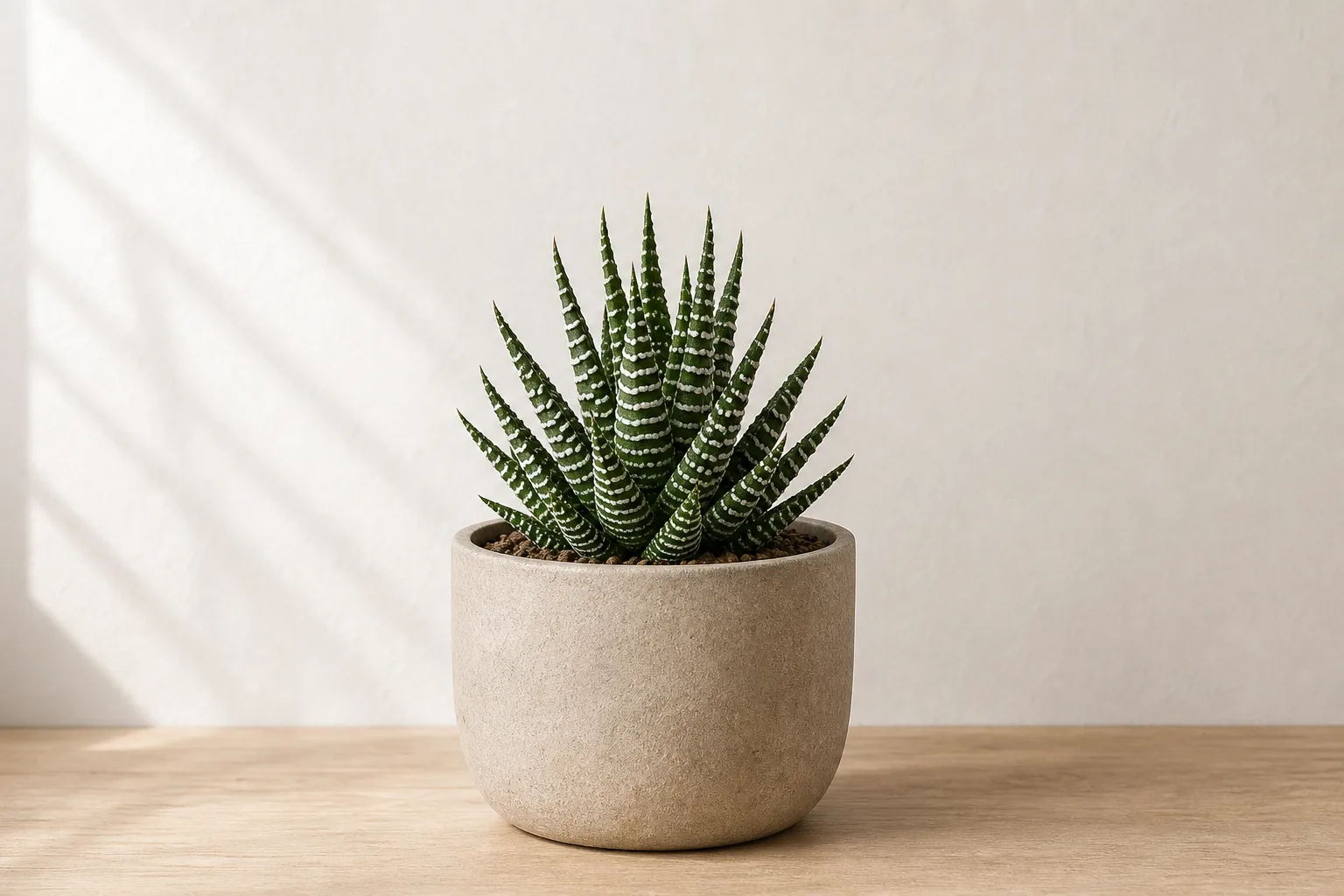
Zebra haworthia (Haworthiopsis attenuata) is a small succulent from the Cape Provinces of South Africa, where it grows partly buried in sand under harsh conditions. Its stiff, pointed leaves form tight rosettes and carry bands of white tubercles on both surfaces - the zebra pattern that gives the plant its name. It stays small, usually a few inches tall, and slowly forms clumps of offsets, which is why it suits a windowsill, desk, or terrarium.
This is a forgiving houseplant for beginners as long as two habits hold: give it bright, filtered light, and let the mix dry completely between waterings. It tolerates the dry air of heated homes well and is listed as non-toxic to cats and dogs. The most common failure by far is overwatering - the plant stores water in its leaves and rots when the root zone stays wet.
Light
Haworthiopsis attenuata prefers medium to bright indirect light - an east window or a bright shelf a short distance back from a south or west window. It tolerates lower light than many succulents, but the leaves stretch and the white banding fades in dim corners. Avoid harsh, direct midday sun, which can bleach or scorch the leaves. If the plant starts to stretch, move it gradually into brighter light rather than making an abrupt change.
Water
Water thoroughly only after the mix has dried completely, then let all excess drain and empty the saucer. In a bright, warm room that might mean every two to three weeks; in lower light or winter it can stretch to a month or more. When unsure, wait - zebra haworthia tolerates drought far better than constant moisture. Keep water out of the rosette's center to avoid crown rot, and reduce watering sharply in winter.
Soil and repotting
Use a fast-draining cactus or succulent mix, often improved with extra perlite, pumice, or coarse sand, in a small pot with a drainage hole. Repot in spring when offsets crowd the pot or roots fill the container - usually every two to three years. Because the plant is slow-growing, it is happy in a snug pot; go up only one size when you repot. After repotting, wait a few days before watering so any damaged roots can callus.
Temperature, humidity, and fertilizer
Zebra haworthia does well in average room temperatures (roughly 60-80°F / 16-27°C) and tolerates the low humidity of most homes. It is not frost-tolerant and dislikes cold drafts, so keep it above about 50°F (10°C). Feed lightly, at most a few times during spring and summer with a diluted succulent fertilizer, and skip feeding entirely in winter. Overfeeding is more harmful than underfeeding for this plant.
Pruning and propagation
There is little to prune: remove dried or damaged outer leaves at the base, and trim spent flower stalks after the small tubular flowers finish. Propagation is by offsets - remove small rosettes that have roots attached and pot them in a cactus mix. Let the cut surface dry for a day or two before planting to reduce rot risk. Leaf cuttings are occasionally used, but offsets are by far the most reliable route for this species.
Common problems
Start with the pattern, current soil moisture, and recent changes. One symptom can have several causes, so change the most likely factor first and observe before making another major adjustment.
| Symptom | Check first | First action |
|---|---|---|
| Soft, translucent, or mushy leaves | How often the mix is watered and whether the pot drains | Stop watering and let the mix dry completely; inspect the roots and repot if rot has set in. |
| Stretched, pale growth | Light levels and how far the plant sits from a window | Move gradually into brighter filtered light rather than a sudden change. |
| Leaves turning brown or reddish | Recent direct sun exposure and light intensity | Move the plant out of harsh midday sun and let the mix dry. |
| Shriveled or wrinkled leaves | Whether the mix has been dry for a long stretch | Water thoroughly and let excess drain; the leaves should plump up over a few days. |
| White cottony patches or sticky marks | Leaf bases and crevices for mealybugs and scale | Isolate the plant and remove pests with a targeted method before treating. |
Pet and household safety
Zebra haworthia is listed as non-toxic to cats and dogs. Non-toxic does not mean edible: chewing any plant material can still cause mild stomach upset, so keep persistent chewers away and contact a veterinarian if a pet becomes unwell.
Frequently asked questions
How often should I water a zebra haworthia?
Only when the mix is fully dry - often every two to three weeks in a bright room and much less in winter. When unsure, wait: this succulent tolerates drought far better than overwatering.
What light does a zebra haworthia need?
Medium to bright indirect light. Bright light keeps the rosettes compact and the white banding vivid; dim corners cause stretching and fading.
How big does a zebra haworthia get?
It stays small, typically a few inches tall and wide, and slowly forms clumps of offsets. It is an ideal succulent for a windowsill or desk.
Why are the leaves turning soft and translucent?
That is usually overwatering. Stop watering, let the mix dry completely, and check the roots for rot before resuming a drier routine.
How do I propagate a zebra haworthia?
By removing offsets that have roots attached, letting them dry for a day or two, and potting them in cactus mix. Offsets are the most reliable route.
Is a zebra haworthia safe for pets?
Yes, it is listed as non-toxic to cats and dogs. Still discourage chewing, since any plant material can cause stomach upset.
Sources and editorial review
This editorial draft is based on the sources below and awaits named horticulture-expert approval before publication.
- Haworthiopsis attenuataRoyal Botanic Gardens, Kew (Plants of the World Online) · Checked
- HaworthiaASPCA · Checked
- Haworthiopsis attenuataNorth Carolina State University Extension · Checked
- Haworthia (plant guide)Royal Horticultural Society · Checked
What works well
- Compact and slow-growing, ideal for small spaces.
- Very tolerant of dry indoor air and occasional neglect.
- Listed as non-toxic to cats and dogs.
What to consider
- Rot follows overwatering more quickly than drought damage.
- Stretches and fades in too little light.
- Grows very slowly, so patience is required.