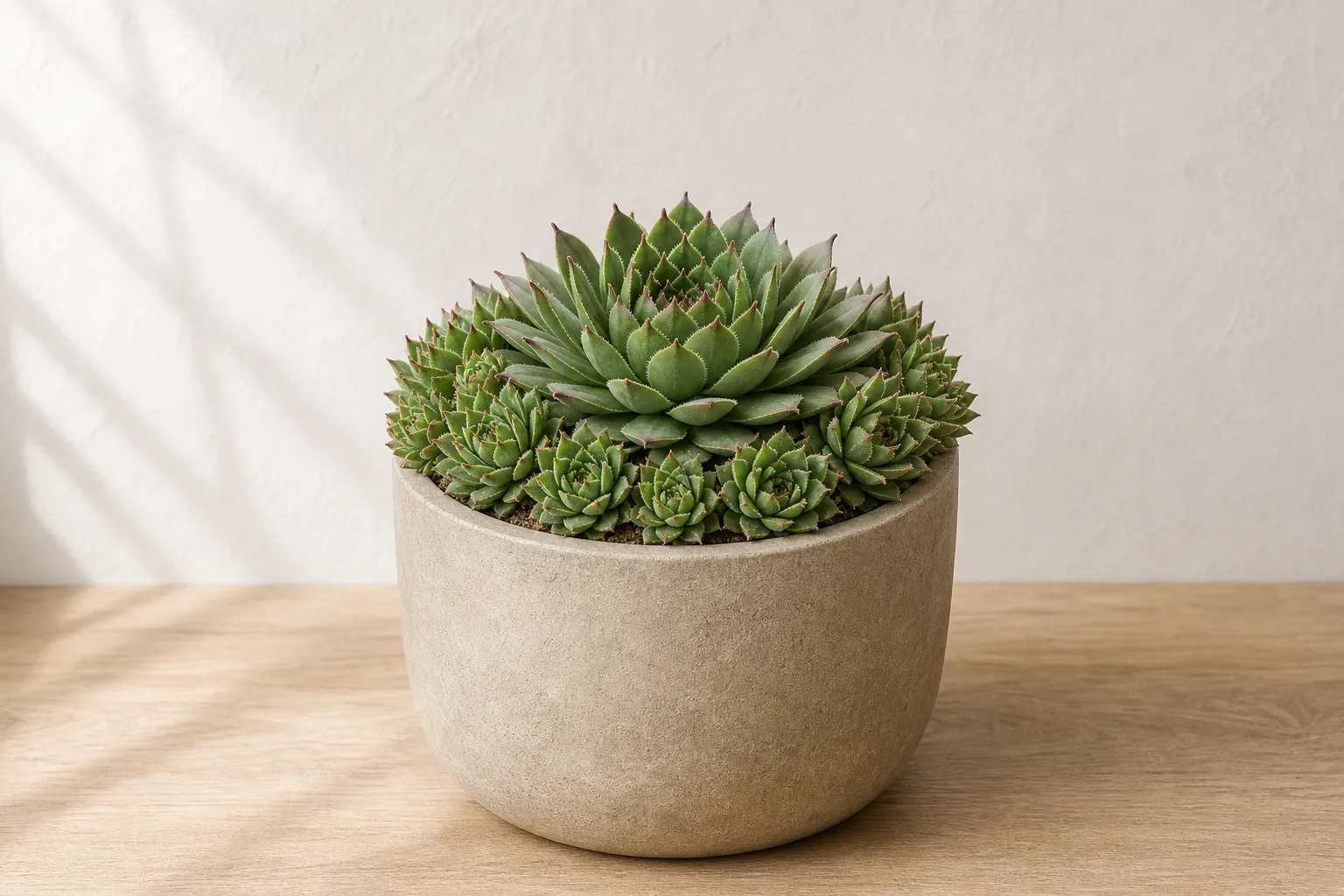
Key takeaways
- Give it as much bright light as an indoor setting can provide; it is otherwise prone to stretching.
- Use lean, sharply drained soil and water only when the mix is dry - overwatering causes crown rot.
- After a rosette flowers and dies, remove it so the offsets around it can spread.
How to care for Hens and Chicks
Hens and chicks (Sempervivum tectorum) is a mat-forming rosette succulent native to the mountains of southern Europe, from the Pyrenees to the western Balkans. The mother rosette, or 'hen', spreads by horizontal stems that produce offsets, or 'chicks', which root around it. Its thick, pointed, often purple-tipped leaves are built for strong sun and lean, rocky soil - the plant was historically grown on rooftops in Europe.
Indoors, the main challenge is giving it enough light and enough drainage. Place it in the brightest spot you have, use a fast-draining gritty mix, and water sparingly. When a rosette flowers, it sets seed and dies; remove the spent rosette so the chicks can fill in the space.
Light
Hens and chicks needs as much bright light as an indoor setting can provide - a sunny south-facing windowsill is best. It tolerates some light shade outdoors, but indoors, low light makes the rosettes stretch and lose their tight, geometric form. Acclimatize the plant gradually if moving it into stronger direct sun, and rotate the pot occasionally so all sides receive light.
Water
Water sparingly and only when the potting mix has dried out, then let excess drain. This is a drought-tolerant plant that performs best in dry to medium moisture with sharp drainage. In winter or low light, water even less. Avoid letting water sit in the rosette's center, which invites crown rot - the most common problem after a wet, poorly drained mix.
Soil and repotting
Use a sharply drained, gritty succulent mix; the plant likes sandy or gravelly soils and tolerates poor mix. A shallow container with a drainage hole suits its shallow root system. Repot only when the clump has filled its container or drainage slows, and be gentle with the offsets. Individual chicks can be detached and replanted to start new clusters.
Temperature, humidity, and fertilizer
Hens and chicks is cold hardy outdoors in many climates, but indoors it prefers cool to moderate temperatures and low humidity with good airflow. It tolerates a wide temperature range and does not need misting. Fertilizer is rarely necessary - the plant is adapted to poor soil, and rich mix or frequent feeding produces soft, weak growth. If you feed, use a diluted succulent fertilizer once or twice in the growing season.
Pruning and propagation
Remove dead or dried outer leaves to keep the rosettes tidy, and remove flowering rosettes after they bloom, since each one dies after setting seed. Propagation is by offsets: gently detach a 'chick' that has a few leaves and some roots, let it callus briefly, and plant it in gritty mix. Offsets root quickly in dry, well-drained conditions.
Common problems
Start with the pattern, current soil moisture, and recent changes. One symptom can have several causes, so change the most likely factor first and observe before making another major adjustment.
| Symptom | Check first | First action |
|---|---|---|
| Stretched, loose rosettes | Available light and how far the plant sits from the window | Move gradually to the brightest spot available and avoid overwatering while it adjusts. |
| Mushy, dark center of a rosette | Whether the mix stays wet and whether water collects in the rosette's center | Withhold water, improve drainage, and remove the affected rosette before rot spreads. |
| Shriveled lower leaves | How long since the last watering and the current light level | Water sparingly if the mix is dry, then let it drain; adjust the dry-down interval. |
| Rosette flowering and dying | Whether a tall flowering stalk is emerging - death after bloom is the plant's normal cycle | Remove the spent rosette after flowering so the surrounding offsets can spread. |
| Rust or rot on leaves | Humidity, airflow, and whether the mix stays wet | Improve airflow, let the mix dry, and remove affected leaves with clean tools. |
Pet and household safety
Hens and chicks (Sempervivum tectorum) is commonly listed as non-toxic to cats and dogs. Non-toxic does not mean edible: chewing any plant or potting material can still upset a pet's stomach, so discourage persistent chewers and contact a veterinarian if a pet becomes unwell.
Frequently asked questions
How often should I water hens and chicks?
Sparingly, and only when the mix has dried out. The plant is drought tolerant and prone to crown rot in wet conditions, so the interval can stretch in winter or low light.
What light does hens and chicks need?
As much bright light as possible - a sunny windowsill is ideal. In low light the rosettes stretch and lose their tight form.
Where does hens and chicks grow naturally?
It is native to the mountains of southern Europe, from the Pyrenees to the western Balkans, where it grows in rocky, well-drained soils in full sun.
Why did my hens and chicks rosette die?
A rosette flowers once and then dies - that is the plant's normal cycle. Remove the spent rosette so the offsets ('chicks') around it can fill in and spread.
How do I propagate hens and chicks?
Detach offsets that have a few leaves and some roots, let them callus briefly, and plant them in gritty, well-drained mix. They root quickly.
Is hens and chicks safe for pets?
It is commonly listed as non-toxic to cats and dogs. Non-toxic does not mean edible, so still discourage chewing and contact a veterinarian if a pet becomes unwell.
Sources and editorial review
This editorial draft is based on the sources below and awaits named horticulture-expert approval before publication.
- Sempervivum tectorumRoyal Botanic Gardens, Kew (Plants of the World Online) · Checked
- Sempervivum tectorum (Hens and Chicks)North Carolina State University Extension · Checked
- Sempervivum tectorum (house leek)Missouri Botanical Garden Plant Finder · Checked
- Toxic and non-toxic plantsASPCA · Checked
What works well
- Very hardy and forgiving of poor, dry conditions.
- Multiplies reliably by offsets, filling a container over time.
- Commonly listed as non-toxic to cats and dogs.
What to consider
- Stretches and loses its tight rosette shape in low light.
- Crown rot follows overwatering or standing moisture.
- Each rosette dies after it flowers, which is normal.