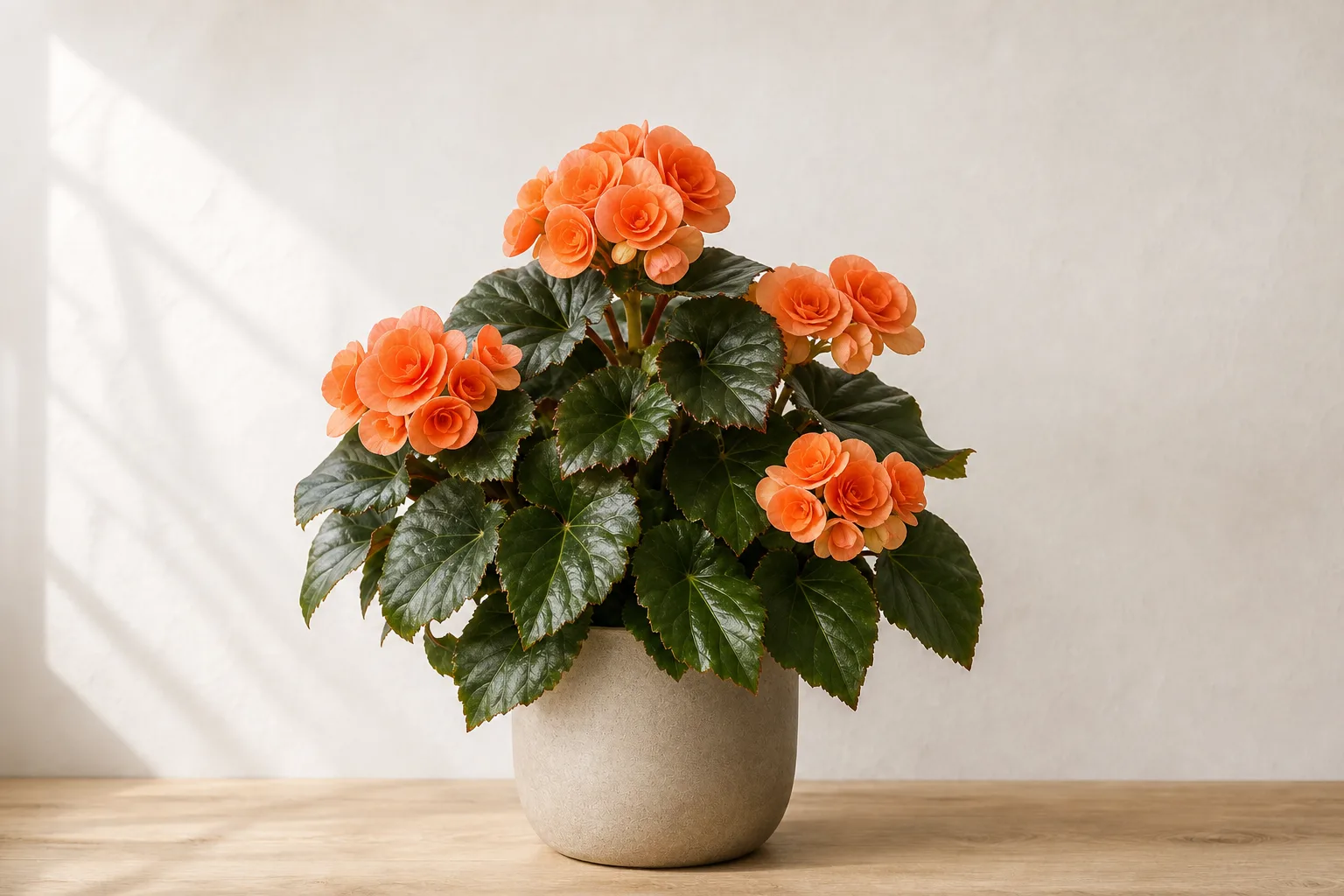
Key takeaways
- Give it bright filtered light - an east window or set-back south window suits it best.
- Water when the top inch dries, keeping the mix evenly moist but never soggy.
- Keep it out of reach of cats and dogs; it contains soluble calcium oxalates, with the tubers most toxic.
How to care for Rieger Begonia
Rieger begonia (Begonia × hiemalis), also called winter-flowering or elatior begonia, is an artificial hybrid in the begonia family, produced by crossing Begonia socotrana with tuberous begonias. It is bred for a winter bloom cycle, with large, mostly double or semi-double flowers in pink, red, orange, yellow, and white held above glossy, waxy leaves.
Give it bright, filtered light - the light near an east-facing window, or a few feet back from a south-facing window - and steady, moderate moisture. It grows best in cool conditions around 60-65°F (16-18°C), with humidity above about 50%. The plant is a photoperiodic bloomer, so consistent day-length conditions help it hold its winter flowers.
Light
Aim for bright, filtered light with no direct sunlight in spring through fall - an east window is ideal, or a spot set back from a south window. In winter, while the plant is in bloom, it prospers with a few hours of direct sun each day, such as near an unobstructed south- or west-facing window. Move the plant gradually when changing its light exposure to avoid stress. Too little light produces weak growth and fewer flowers.
Water
Water when the top inch of soil feels dry, watering thoroughly in the morning with tepid water, and discard the runoff from the saucer after about 15 minutes. Keep the mix evenly moist but never soggy - both extremes make buds drop and leaves wilt. Water at the soil surface rather than overhead, because constantly wet leaves encourage mildew and spotting. In cooler, lower-light periods, reduce watering frequency slightly.
Soil and repotting
Use a rich, organic, well-draining potting mix - a good houseplant compost with peat or coco coir plus perlite or fine bark - in a pot with drainage holes. The mix should hold nutrients and moisture while letting water move through quickly, so the roots never sit in a waterlogged mass. Repot in spring when the plant is clearly root-bound, moving up one pot size, and avoid oversized pots that hold moisture.
Temperature, humidity, and fertilizer
Rieger begonia grows best at cool to moderate indoor temperatures, roughly 60-65°F (16-18°C), and should never be exposed to temperatures below 50°F (10°C). Avoid hot and cold drafts near vents, radiators, doors, and windows. A relative humidity above 50% is preferred - use a pebble tray or humidifier during the heating season, but avoid heavy misting onto flowers and leaves. Feed every two to four weeks during active growth with a dilute, water-soluble fertilizer.
Pruning and propagation
Pinch above a leaf node to promote bushier growth, and remove spent flowers to extend the display. Take 3-inch stem cuttings after flowering finishes, let them harden off for about ten days, then pot them into light mix to root. Cut back leggy stems to just above the third or fourth leaf to keep the plant compact. Rieger begonias are often treated as seasonal plants, but they can be carried over with a drier rest period after flowering.
Common problems
Start with the pattern, current soil moisture, and recent changes. One symptom can have several causes, so change the most likely factor first and observe before making another major adjustment.
| Symptom | Check first | First action |
|---|---|---|
| Buds dropping or flowers wilting | Root-zone moisture, recent temperature swings, and placement near drafts or heat vents | Even out watering and move the plant away from drafts and heat sources before changing anything else. |
| Yellowing leaves | Top-inch soil moisture, drainage, and whether the plant is getting enough light | Check the root zone first; water only if dry, and move gradually to brighter filtered light. |
| Powdery mildew or gray mold on leaves | Wet foliage, stagnant air, and whether leaves touch the potting medium | Water at the soil surface, improve air circulation, and remove affected leaves. |
| Leggy, weak growth | Available light and distance from the window | Move gradually to brighter filtered light and pinch stems back to encourage branching. |
| Mealybugs, mites, or whitefly | Leaf undersides, stem joints, and nearby plants | Isolate the plant and identify the pest before treating; use a targeted control. |
Pet and household safety
Rieger begonia (Begonia × hiemalis) is toxic to cats, dogs, and horses if chewed. It contains soluble calcium oxalates, and the most toxic part is the underground root and tuber area. Clinical signs in dogs and cats include vomiting and salivation, and grazing animals may develop kidney problems. The sap can also irritate human skin, so wear gloves when handling the plant. Keep it out of reach of pets and children who chew plants, and contact a veterinarian or animal poison-control service after a concerning exposure.
Frequently asked questions
How often should I water a Rieger begonia?
Water when the top inch of soil feels dry, using tepid water in the morning, and empty the saucer after about 15 minutes. Keep the mix evenly moist but never soggy; both extremes cause bud drop.
What light does a Rieger begonia need?
Bright, filtered light with no direct sun in spring through fall - an east window is ideal. In winter, while blooming, it can take a few hours of direct sun near a south or west window.
Why is my Rieger begonia dropping its buds?
Usually uneven watering or a sudden change in temperature or light. Check root-zone moisture and move the plant away from drafts and heat sources, changing one factor at a time.
Where does the Rieger begonia come from?
It is an artificial hybrid - Begonia × hiemalis - created by crossing Begonia socotrana with tuberous begonias, developed for its winter bloom cycle by breeders such as Otto Rieger.
How do I propagate a Rieger begonia?
Take 3-inch stem cuttings after flowering, let them harden off for about ten days, then pot them into light mix. Pinch young plants to encourage branching.
Is Rieger begonia safe for pets?
No. It contains soluble calcium oxalates, and the tubers are the most toxic part. Keep it out of reach of cats and dogs and contact a veterinarian after a concerning chew.
Sources and editorial review
This editorial draft is based on the sources below and awaits named horticulture-expert approval before publication.
- Begonia × hiemalisRoyal Botanic Gardens, Kew (Plants of the World Online) · Checked
- BegoniaASPCA · Checked
- BegoniaNorth Carolina State University Extension · Checked
- Winter-flowering Begonia (Begonia × hiemalis): Houseplant CareNew York Botanical Garden · Checked
What works well
- Profuse, long-lasting flowers through winter, when most houseplants rest.
- Compact, tidy habit suited to tables and windowsills.
- Flower colors and double forms rival cut flowers.
What to consider
- Toxic to pets and people if chewed (soluble calcium oxalates).
- Sensitive to uneven watering - buds drop when the roots dry out or sit wet.
- Wet leaves and stagnant air invite mildew and botrytis.