Key takeaways
- Give it low to bright indirect light; brighter filtered light keeps the silver variegation strong.
- Water when the top of the mix feels dry and let excess drain - a soggy pot causes yellowing and root rot.
- Keep it out of reach of cats and dogs; the leaves contain insoluble calcium oxalate crystals.
How to care for Silver Satin Pothos
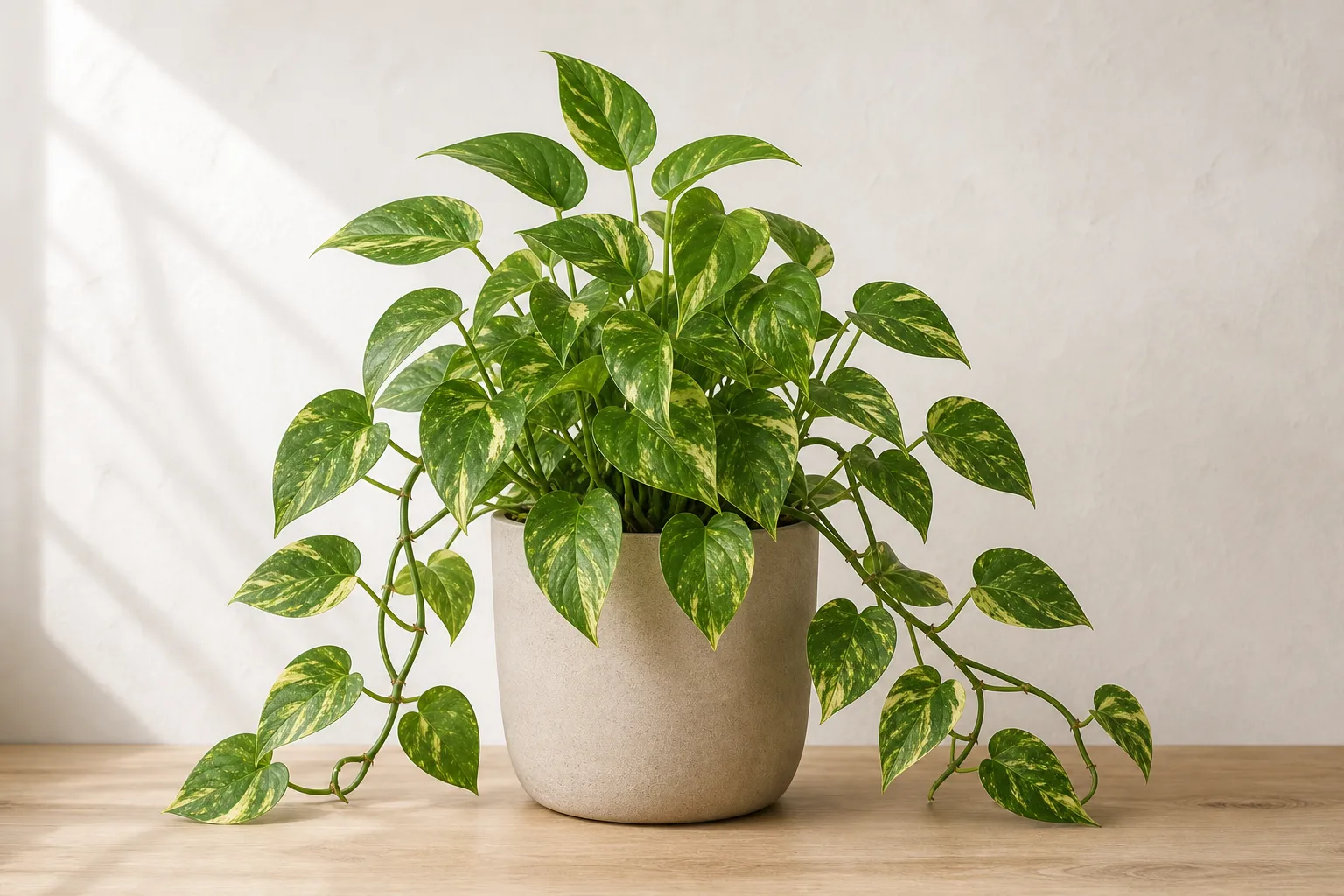
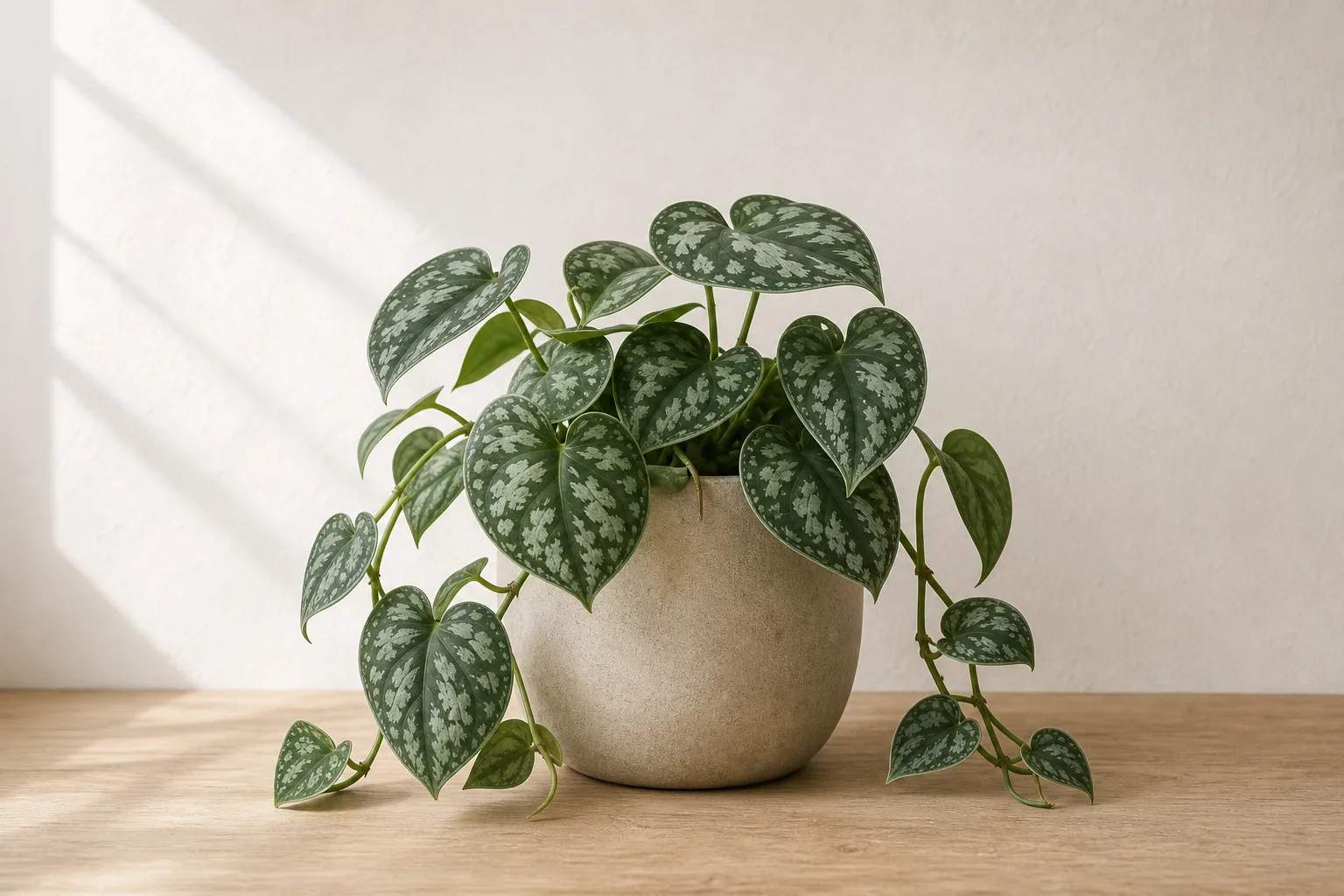
Silver satin pothos (Scindapsus pictus) is a slow-growing evergreen climber in the arum family, native to the tropical forests of Bangladesh and Malesia. In the wild it climbs tree trunks with rootlets, which is why it does so well trained up a moss pole or allowed to trail from a pot. Its matte, silver-blotched leaves give it a satin finish that is easy to distinguish from golden pothos.
Keep it in bright but filtered light, water when the top of the mix dries, and protect it from direct sun, cool drafts, and temperatures below about 60 F (16 C). Pinch the stems occasionally to keep the plant full, and remember that the silvery variegation fades in very dim spots.
Light
Aim for low to bright indirect light. Satin pothos survives in dimmer corners, but it grows slower and the silver blotches become less pronounced when light is scarce. Bright, filtered light - an east window or a spot a few feet back from a south or west window - keeps the variegation at its best. Avoid direct sun, which can scorch the leaves, and acclimate the plant gradually if you move it to a brighter position.
Water
Check the root zone before watering. Water thoroughly when the top inch of the mix feels dry, then let excess drain and empty the saucer. The plant is more forgiving of a slightly dry period than of constant moisture: yellow leaves usually signal overwatering, while curled leaves more often mean it is too dry. Reduce watering in winter when light and growth slow, and use a container with a drainage hole.
Soil and repotting
Use a well-draining, peat-based potting mix, which the Missouri Botanical Garden recommends for best indoor container growth, and make sure the pot has a drainage hole. Keep the mix consistently moist during the growing season without leaving it soggy. Repot only when roots crowd the container or emerge from the drainage holes, moving up one pot size and handling the vining stems gently.
Temperature, humidity, and fertilizer
Room temperatures of 65-85 F (18-29 C) suit this tropical vine, and it does not tolerate cooler air well, so keep it away from cold drafts and heating vents. Average household humidity is workable, though higher humidity supports faster, fuller growth. Feed monthly with a balanced houseplant fertilizer at label strength during the growing season and reduce feeding in winter; overfeeding browns leaf tips.
Pruning and propagation
Pinch or trim trailing stems just above a leaf to keep the plant bushy rather than leggy. Propagation is simple: take a 4-inch stem cutting below a node (the bump where a leaf meets the stem) in spring or early summer and root it in water or moist mix - a node is required for roots to form. Once roots develop, pot the cutting and care for it like the parent plant.
Common problems
Start with the pattern, current soil moisture, and recent changes. One symptom can have several causes, so change the most likely factor first and observe before making another major adjustment.
| Symptom | Check first | First action |
|---|---|---|
| Yellowing leaves | Top-inch soil moisture, drainage, and whether only the oldest lower leaves are affected | Pause watering, let the mix dry at the surface, and confirm the pot drains before changing anything else. |
| Brown or scorched patches | Direct sun exposure and distance from the window | Move the plant gradually to bright filtered light rather than harsh direct sun. |
| Faded silver variegation | Light level and how far the plant sits from the window | Move gradually to a brighter filtered-light position to restore pattern contrast. |
| Drooping or soft stems | Whether the mix is wet or dry and recent temperature changes | Check the root zone; water if dry, and withhold water while inspecting roots if the mix is still damp. |
| Sticky residue or webbing | Leaf undersides for spider mites, mealybugs, or scale, and nearby plants | Isolate the plant and identify the pest before treating; wipe leaves and use a targeted control. |
Pet and household safety
Silver satin pothos is toxic to cats, dogs, and horses if chewed. It contains insoluble calcium oxalate crystals that cause oral irritation, pain and swelling of the mouth, tongue, and lips, excessive drooling, vomiting (not in horses), and difficulty swallowing. Keep it out of reach of pets and children who chew plants, and contact a veterinarian or animal poison-control service after a concerning exposure. This species is not safe to chew.
Frequently asked questions
How often should I water a silver satin pothos?
Use the top of the mix as the trigger: water thoroughly when the top inch feels dry, then drain. The interval changes with light, pot size, season, and root density, so avoid a fixed weekday schedule.
What light does a silver satin pothos need?
Low to bright indirect light. It tolerates dimmer spots but shows its best silver variegation and fullest growth in bright filtered light, away from direct sun.
Where does silver satin pothos grow naturally?
It is native from southeastern Bangladesh through western and central Malesia (including Thailand, Malaysia, Indonesia, and the Philippines), where it climbs tree trunks as a tropical evergreen climber.
Why are the leaves on my satin pothos turning yellow?
Most often overwatering. Check soil moisture and drainage first, and remember that the oldest lower leaves can yellow naturally. Do not add fertilizer until you have ruled out wet roots.
How do I propagate a silver satin pothos?
Take a stem cutting with a node and root it in water or moist mix; roots typically form within a couple of weeks. A cutting without a node will not root.
Is silver satin pothos safe for pets?
No. It contains calcium oxalate crystals that irritate the mouth and throat of cats and dogs. Keep it out of reach and contact a veterinarian after a concerning chew.
Sources and editorial review
This editorial draft is based on the sources below and awaits named horticulture-expert approval before publication.
- Scindapsus pictusRoyal Botanic Gardens, Kew (Plants of the World Online) · Checked
- Scindapsus pictus (Satin Pothos)North Carolina State Extension · Checked
- Scindapsus pictus 'Argyraeus'Missouri Botanical Garden · Checked
- Satin PothosASPCA · Checked
What works well
- Slow, tidy trailing habit that suits shelves and hanging baskets.
- Tolerates lower indoor light while keeping its patterned foliage.
- Roots readily from stem cuttings with a node.
What to consider
- Toxic to pets and people if chewed (calcium oxalate).
- Direct sun scorches the leaves, and cool air damages foliage.
- Overwatering quickly leads to root rot.