Key takeaways
- Provide several hours of strong light.
- Soak, then let the mix dry fully.
- The gel and latex can upset pets if eaten.
How to care for Aloe Vera
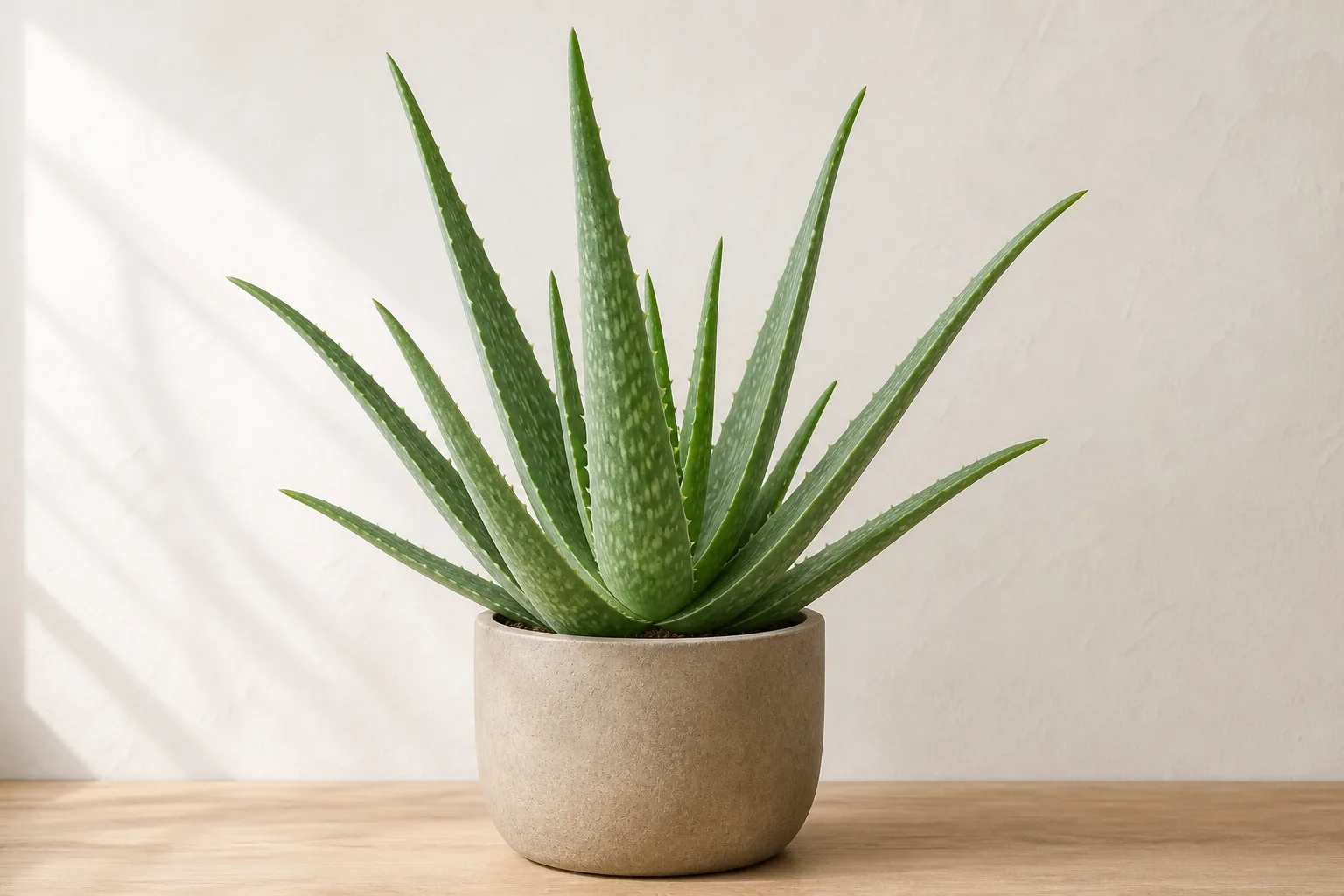
Aloe vera is a rosette succulent that stores water in fleshy leaves. Its success depends on strong light, a gritty mix, and a dry interval between thorough waterings; treating it like a tropical foliage plant is the common failure mode.
Light
Give the strongest light available and acclimate any move into direct sun gradually. A south- or west-facing window can work when exposure is introduced in stages; sudden hot sun can leave pale or scorched patches.
Water
Soak the pot only after the mix has dried fully, then drain it completely. Water much less often in winter or lower light. Soft translucent leaves and a wet pot indicate root stress, while slightly thin leaves in a dry pot can be a cue to water.
Soil and repotting
Use a gritty cactus or succulent mix in a drainage-holed pot. Repot when offsets crowd the base or roots fill the container, choosing only one modestly larger size so the new mix can dry reliably.
Temperature, humidity, and fertilizer
Low household humidity is appropriate. Keep aloe out of frost and cold wet conditions. Feed lightly, if at all, during active growth; excess fertilizer cannot make up for weak light or saturated roots.
Pruning and propagation
Remove damaged outer leaves at the base with clean tools. Pot offsets once they have their own roots, using a small pot and dry-leaning succulent mix. Leaf pieces are not a dependable way to make a new Aloe vera plant.
Common problems
Start with the pattern, current soil moisture, and recent changes. One symptom can have several causes, so change the most likely factor first and observe before making another major adjustment.
| Symptom | Check first | First action |
|---|---|---|
| Soft translucent leaves | Wet mix and root condition | Stop watering and inspect drainage |
| Thin wrinkled leaves | Whether the mix is fully dry | Water thoroughly if roots are healthy |
| Brown sun patches | A recent increase in direct sun | Reduce exposure and acclimate gradually |
| No offsets | Plant maturity, light, and season | Keep conditions steady; do not overfeed |
| Mix stays wet | Pot size, soil grit, and drainage | Use a faster-draining mix and delay watering |
Pet and household safety
Aloe vera is toxic to cats and dogs if chewed. ASPCA lists saponins and anthraquinones, with vomiting, lethargy, or diarrhea among possible signs. Keep it out of reach and seek veterinary or poison-control guidance after a concerning exposure.
Frequently asked questions
How often should I water Aloe Vera?
Only after the mix has dried fully, then soak and drain it.
Does Aloe Vera need full sun?
Strong light is important; acclimate direct sun gradually.
Why are aloe leaves soft?
Check wet soil and root stress first.
Can I propagate an aloe leaf?
Offsets or division are more dependable than leaf pieces.
Why is my aloe turning brown?
Review sudden sun exposure, cold, and wet roots.
Is Aloe Vera safe for pets?
No. Keep it away from cats and dogs that chew plants.
Sources and editorial review
This editorial draft is based on the sources below and awaits named horticulture-expert approval before publication.
- Aloe Vera — Aloe veraNC State Extension · Checked
- Aloe vera (L.) Burm.f.Royal Botanic Gardens, Kew — Plants of the World Online · Checked
- AloeASPCA · Checked
- Spring houseplant careUniversity of Minnesota Extension · Checked
What works well
- Drought tolerant
- Compact
- Produces offsets
What to consider
- Toxic to pets
- Needs strong light
- Very sensitive to wet soil