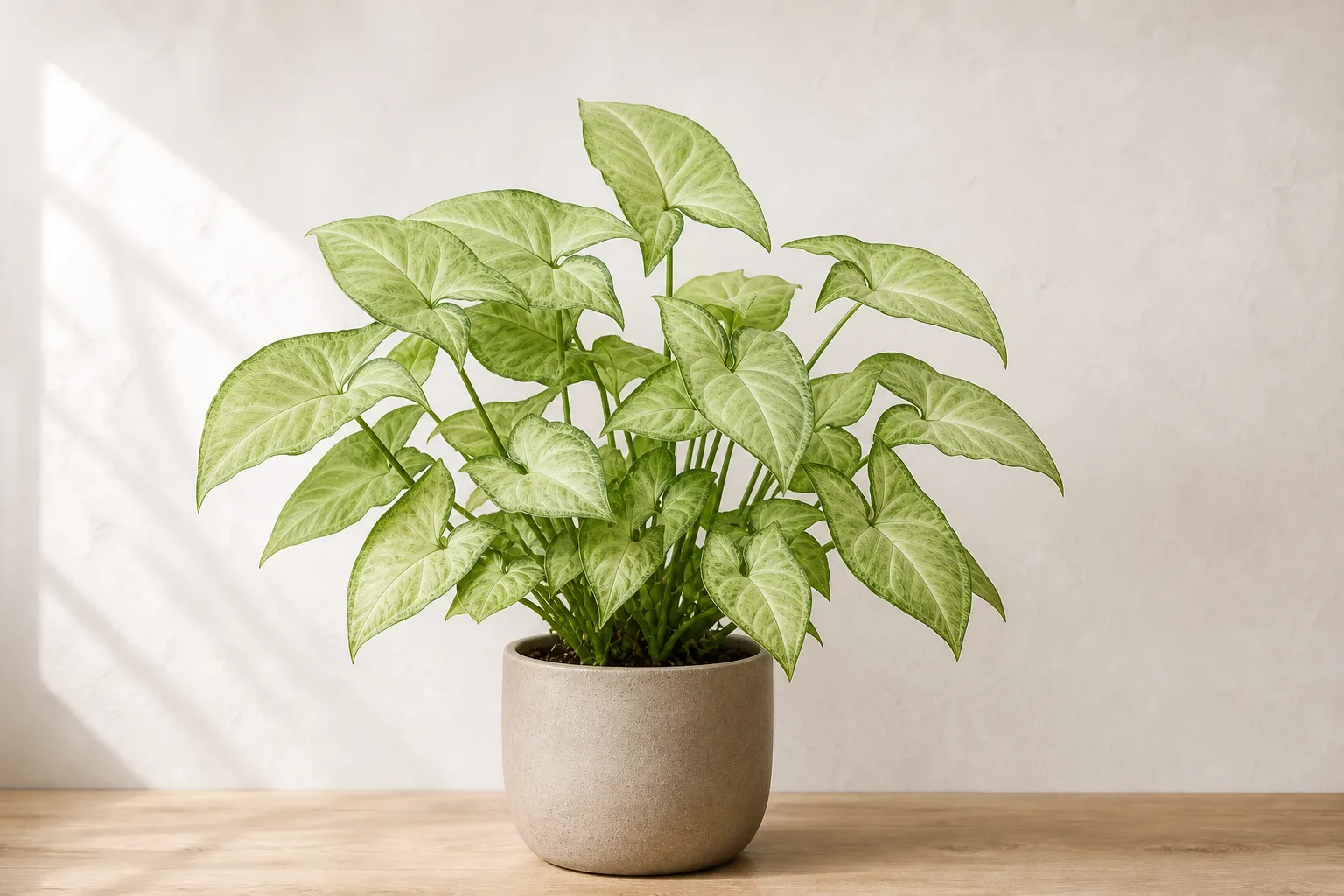
Key takeaways
- Give it bright indirect light and warm, humid air; direct sun burns the foliage.
- Water when the top of the mix begins to dry, keeping it evenly moist but never soggy.
- Keep it out of reach of cats and dogs - it contains insoluble calcium oxalate crystals.
How to care for Arrowhead Vine
Arrowhead vine (Syngonium podophyllum) is a tropical perennial vine native from Mexico through Central and northern South America. Its leaves change shape as it matures: the juvenile form is arrow- or heart-shaped and often silver-variegated, while adult leaves become lobed or divided into five to eleven leaflets. This leaf transition is normal and does not mean the plant is unhealthy.
Give it warm, humid conditions and bright indirect light. Keep the potting mix evenly moist during the growing season, reduce watering in fall and winter, and pinch climbing stems if you want to keep the bushier, arrow-shaped juvenile look. Direct sun, cold drafts, and soggy roots are the main things to avoid.
Light
Aim for bright indirect light. Arrowhead vine tolerates lower light but grows best in bright, filtered conditions - an east or north window, or a spot set back from a brighter one. Direct sun burns or bleaches the foliage, so keep it out of harsh south or west light. Warm rooms with high humidity suit it best; dry air and dim corners slow growth and fade leaf variegation.
Water
Water regularly during the growing season, keeping the mix evenly moist but never soggy, and let the top of the soil begin to dry between waterings. Reduce watering from fall to late winter, when growth slows. Always use a pot with drainage and empty the saucer - standing water in the pot is a common cause of root rot, soft stems, and yellowing leaves.
Soil and repotting
Plant in a well-draining, soil-based or peat-based potting mix in a container with drainage holes. The Missouri Botanical Garden recommends high humidity and bright indirect light for best container results, with a moss pole for climbing forms. Repot every couple of years or when roots crowd the pot, moving up one size and keeping the soil level the same around the crown.
Temperature, humidity, and fertilizer
Arrowhead vine prefers warm, humidified rooms and does poorly in cool drafts. Keep it above about 60 F (16 C), and raise humidity with a pebble tray or humidifier if your home is dry. Feed with a balanced houseplant fertilizer at label strength every two to four weeks during spring and summer, then stop or cut back in fall and winter. Overfertilizing causes leaf tip burn.
Pruning and propagation
Pinch or trim stems to control size and encourage a fuller plant; cutting off climbing stems as they lengthen keeps the arrowhead leaf form. Propagate easily from stem cuttings - take a 4- to 6-inch section with a node, root it in water or moist mix, and pot it up once roots form. Division during repotting is also reliable for established clumps.
Common problems
Start with the pattern, current soil moisture, and recent changes. One symptom can have several causes, so change the most likely factor first and observe before making another major adjustment.
| Symptom | Check first | First action |
|---|---|---|
| Yellowing leaves | Soil moisture, drainage, and whether the pattern spread quickly | Let the mix dry at the surface and confirm the pot drains before changing other care. |
| Bleached or scorched foliage | Direct sun exposure and position relative to windows | Move the plant to bright indirect light and away from harsh sun. |
| Drooping or soft stems | Whether the mix is wet or dry and recent temperature changes | Check the root zone; water if dry, and withhold water and inspect roots if the mix is damp. |
| Stretched, thin growth | Available light and how far the plant sits from the window | Move gradually to brighter filtered light and pinch stems to encourage bushier growth. |
| Sticky residue or cottony clumps | Leaf undersides for mealybugs, aphids, scale, or spider mites | Isolate the plant and identify the pest before treating; wipe leaves and use a targeted control. |
Pet and household safety
Arrowhead vine is toxic to cats, dogs, and horses if chewed. It contains insoluble calcium oxalate crystals that cause oral irritation, pain and swelling of the mouth, tongue, and lips, excessive drooling, vomiting (not in horses), and difficulty swallowing. The sap can also irritate human skin. Keep it out of reach of pets and children who chew plants, and contact a veterinarian or animal poison-control service after a concerning exposure. This species is not safe to chew.
Frequently asked questions
How often should I water an arrowhead vine?
Water regularly during the growing season, keeping the mix evenly moist but not soggy, and reduce in fall and winter. Check the top of the soil first - water when it begins to dry rather than on a fixed schedule.
What light does an arrowhead vine need?
Bright indirect light is best; it tolerates medium light but burns in direct sun. An east or north window, or a spot set back from a brighter one, works well.
Where does arrowhead vine grow naturally?
It is native from Mexico through Central and northern South America (roughly Mexico to Ecuador and tropical America), where it climbs trees as an evergreen liana in warm, humid forest.
Why are my arrowhead vine leaves turning yellow?
Usually overwatering or poor drainage. Check soil moisture and the pot first, and remember that older lower leaves yellow naturally with age. Do not fertilize until wet roots are ruled out.
How do I propagate an arrowhead vine?
Take a stem cutting with a node and root it in water or moist mix, or divide an established plant during repotting. Cuttings without a node will not root.
Is arrowhead vine safe for pets?
No. It contains calcium oxalate crystals that irritate the mouth and throat of cats and dogs. Keep it out of reach and contact a veterinarian after a concerning chew.
Sources and editorial review
This editorial draft is based on the sources below and awaits named horticulture-expert approval before publication.
- Syngonium podophyllumRoyal Botanic Gardens, Kew (Plants of the World Online) · Checked
- Syngonium podophyllum (Arrowhead Vine)North Carolina State Extension · Checked
- Syngonium podophyllumMissouri Botanical Garden · Checked
- Arrow-Head VineASPCA · Checked
What works well
- Easy, low-maintenance grower for hanging baskets or moss poles.
- Juvenile arrowhead leaves stay compact; adult leaves become attractively lobed.
- Grows well in medium to bright filtered indoor light.
What to consider
- Toxic to pets and humans if chewed (calcium oxalate).
- Direct sun bleaches or burns the leaves.
- Overwatering causes root rot and soft stems.