 beginner
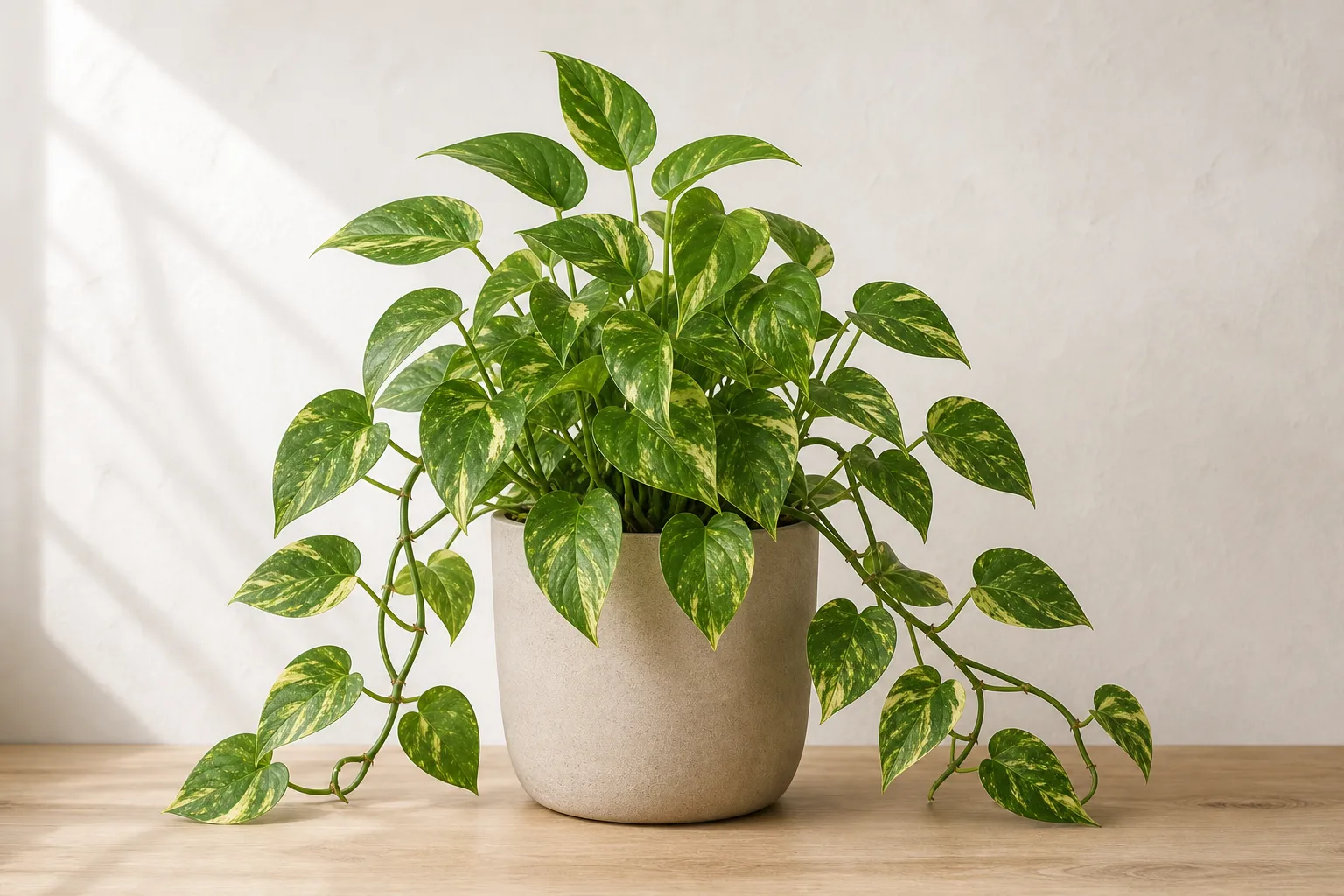
Golden Pothos
Epipremnum aureum
A forgiving trailing plant with green and gold heart-shaped leaves.
Low light means a plant can maintain itself away from a bright window; it does not mean no light. These options cope better than most while still benefiting from brighter filtered exposure.
This collection brings plant profiles and care guidance together around the conditions that define low-light plants.
Start by mapping the light you actually have. North-facing windows, rooms set back from the glass, and spaces lit mostly by ceiling fixtures all count as low light, but they are not equal: a plant two feet from a north window still receives meaningfully more energy than one across the room. Watch a candidate spot for a full day before committing a plant to it.
In lower light, every care input slows down. Growth, water use, and drying time all decrease, which means the most common failure is watering on the same schedule that worked near a window. Choose a plant from this collection, then judge it over a full month: steady posture and an occasional new leaf are success in low light, not rapid growth.
beginnerEpipremnum aureum
A forgiving trailing plant with green and gold heart-shaped leaves.
 beginner
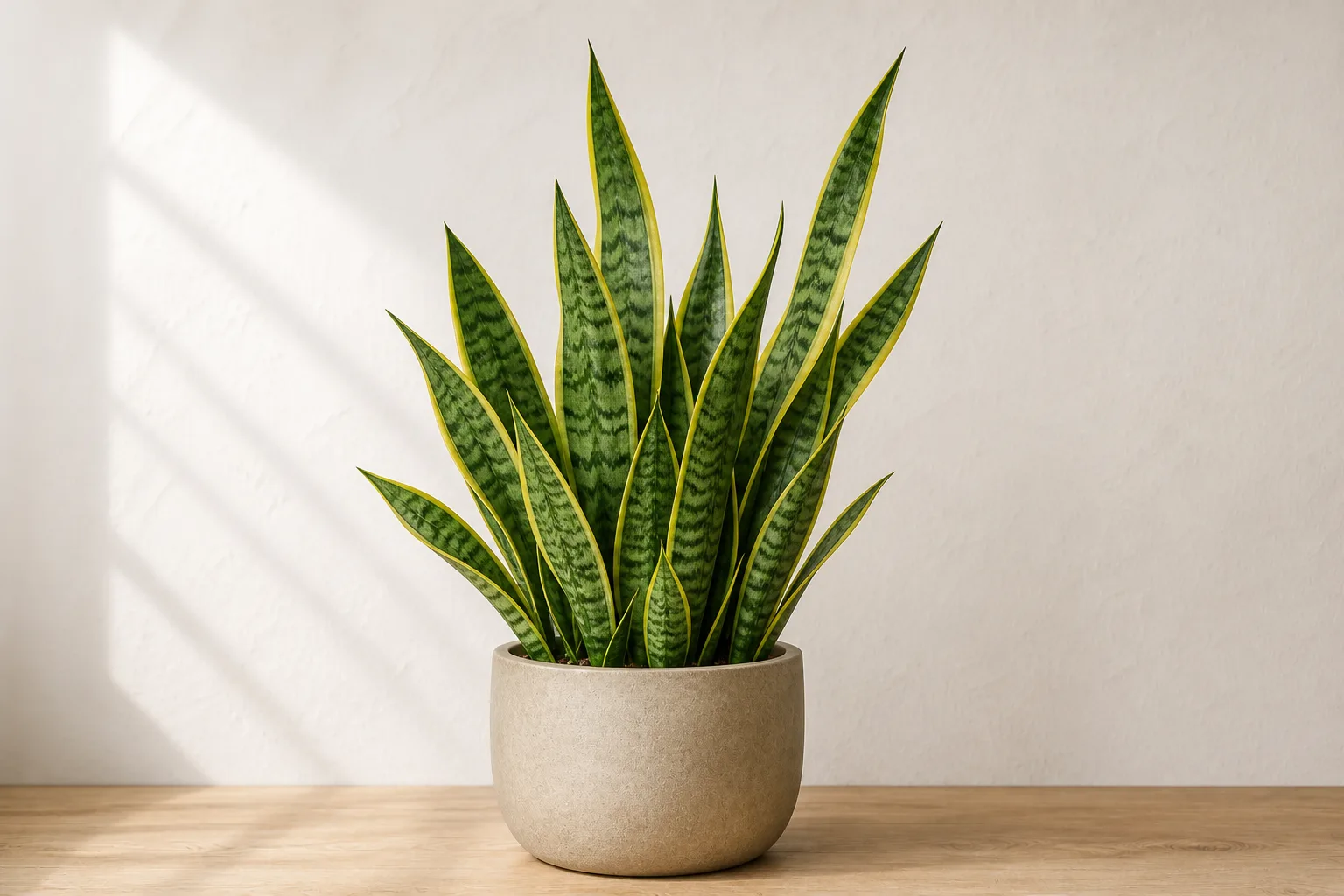
Dracaena trifasciata
Architectural upright leaves and genuinely low watering needs.
 beginner
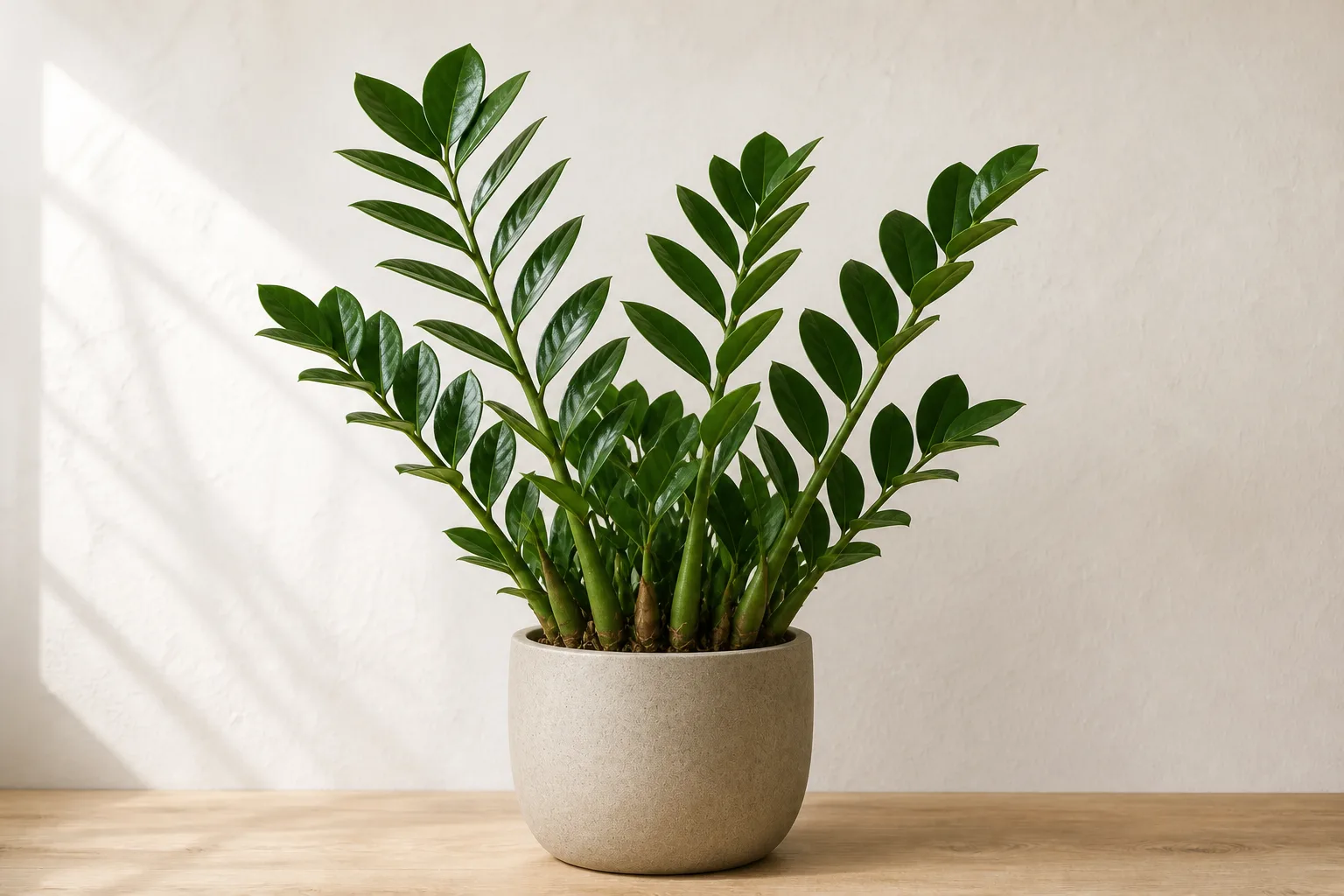
Zamioculcas zamiifolia
Glossy leaflets and water-storing rhizomes make this a steady low-light performer.
 intermediate
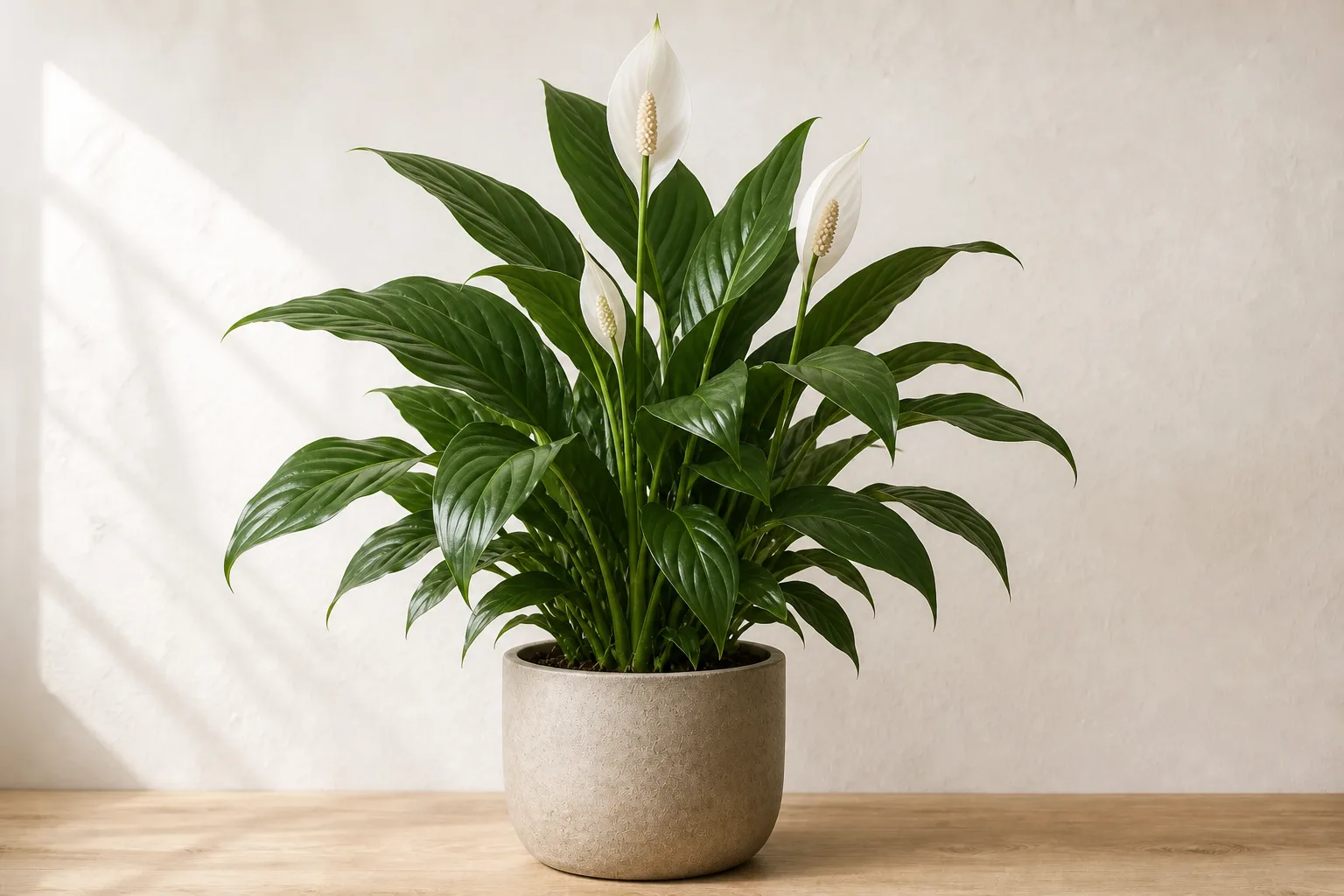
Spathiphyllum wallisii
Deep green leaves and white spathes that signal thirst with a visible droop.
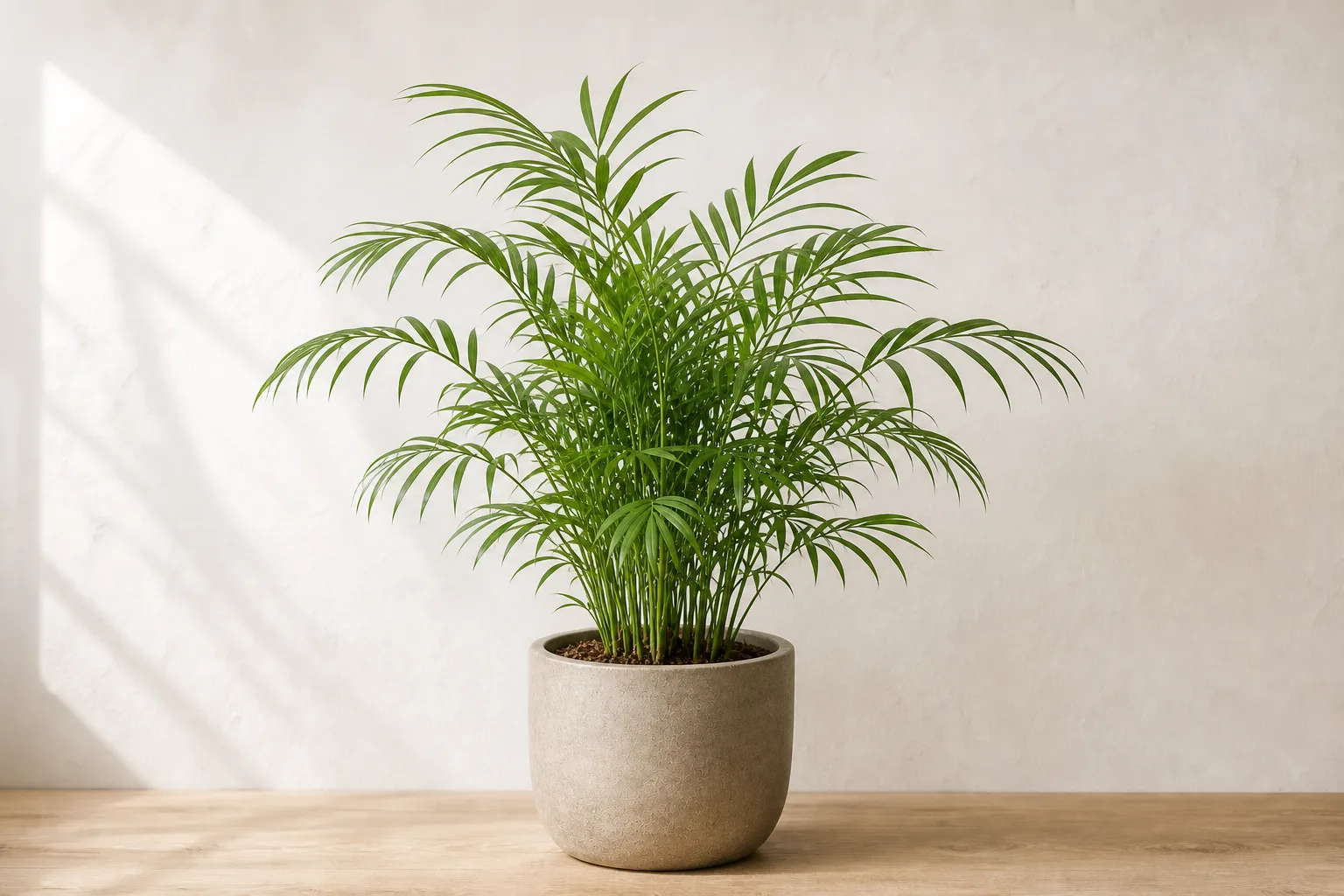 Pet-friendlier
Chamaedorea elegans
A compact palm that accepts lower light and is considered non-toxic to pets.
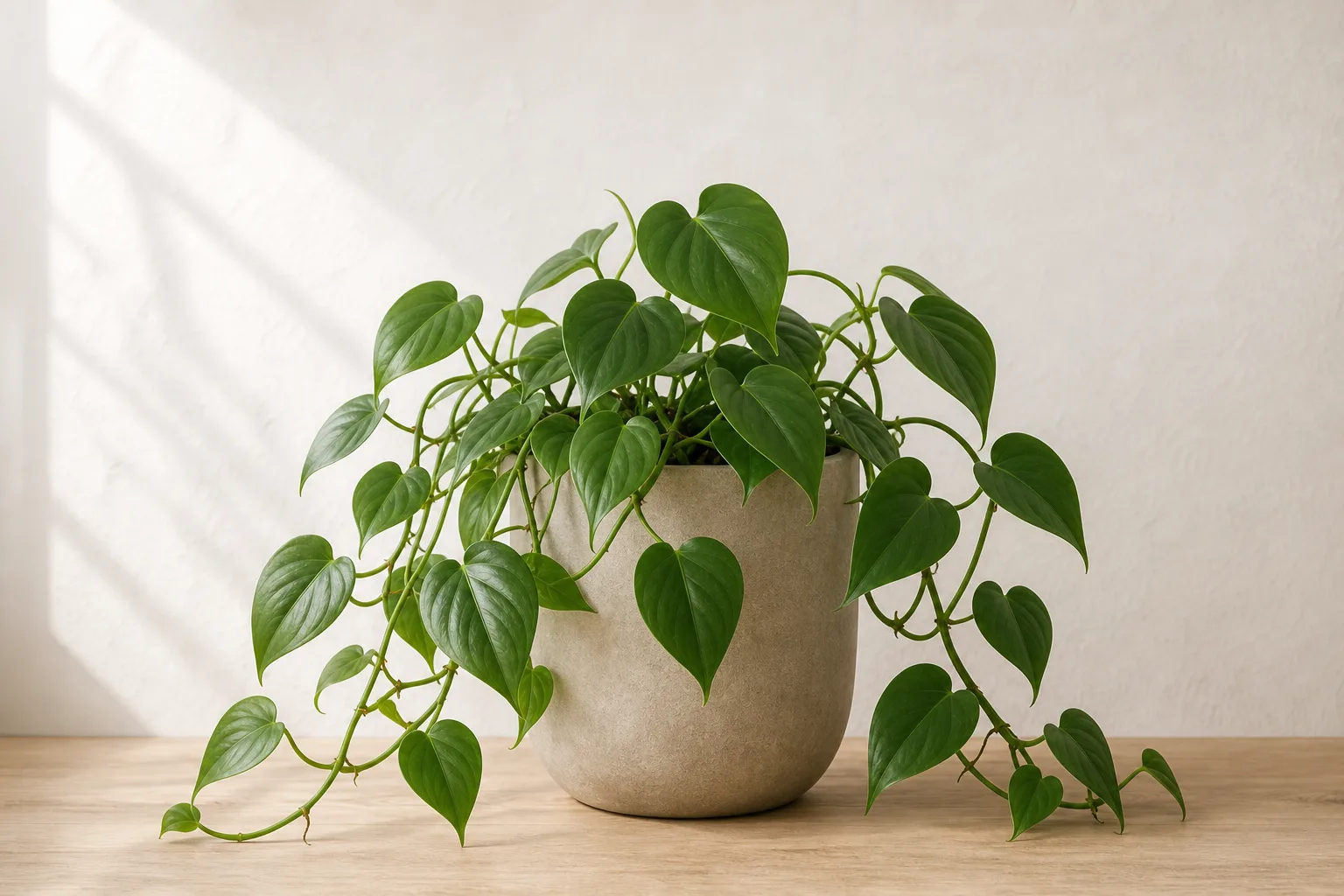 beginner
Philodendron hederaceum
Heartleaf philodendron (Philodendron hederaceum) is a vining aroid grown for its glossy, heart-shaped leaves and forgiving nature. Native to the tropical forests of Central and South America and the Caribbean, it climbs and trails readily, making it a staple for shelves, hanging baskets, and moss poles. It tolerates lower light better than most houseplants, but grows fuller and larger-leaved with bright, filtered exposure.
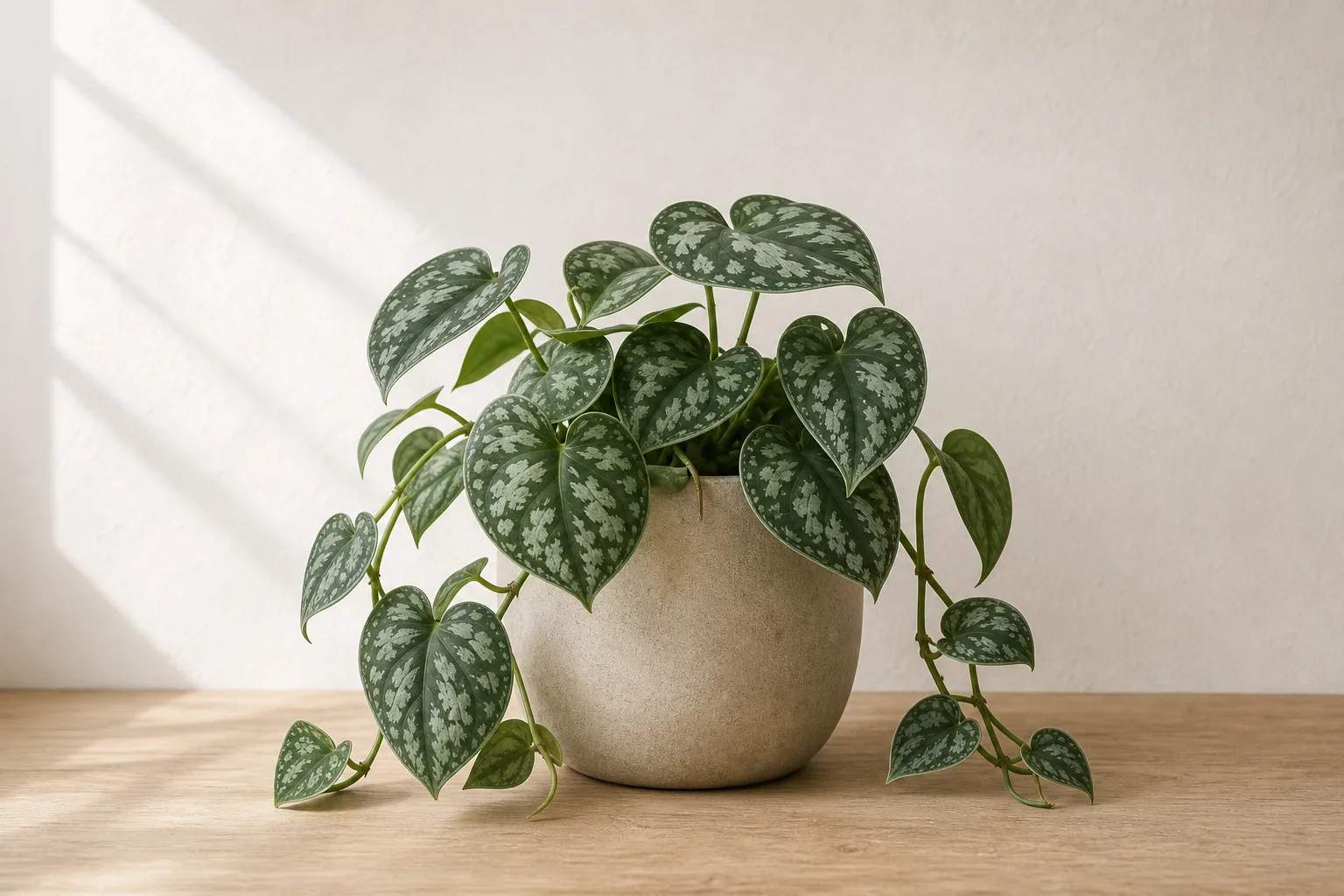 beginner
Scindapsus pictus
Silver satin pothos (Scindapsus pictus) is a trailing tropical aroid grown for its matte green leaves splashed with silvery blotches. Native from Bangladesh through western and central Malesia, it climbs by rootlets in the wild and trails gracefully from a shelf, hanging basket, or moss pole indoors.
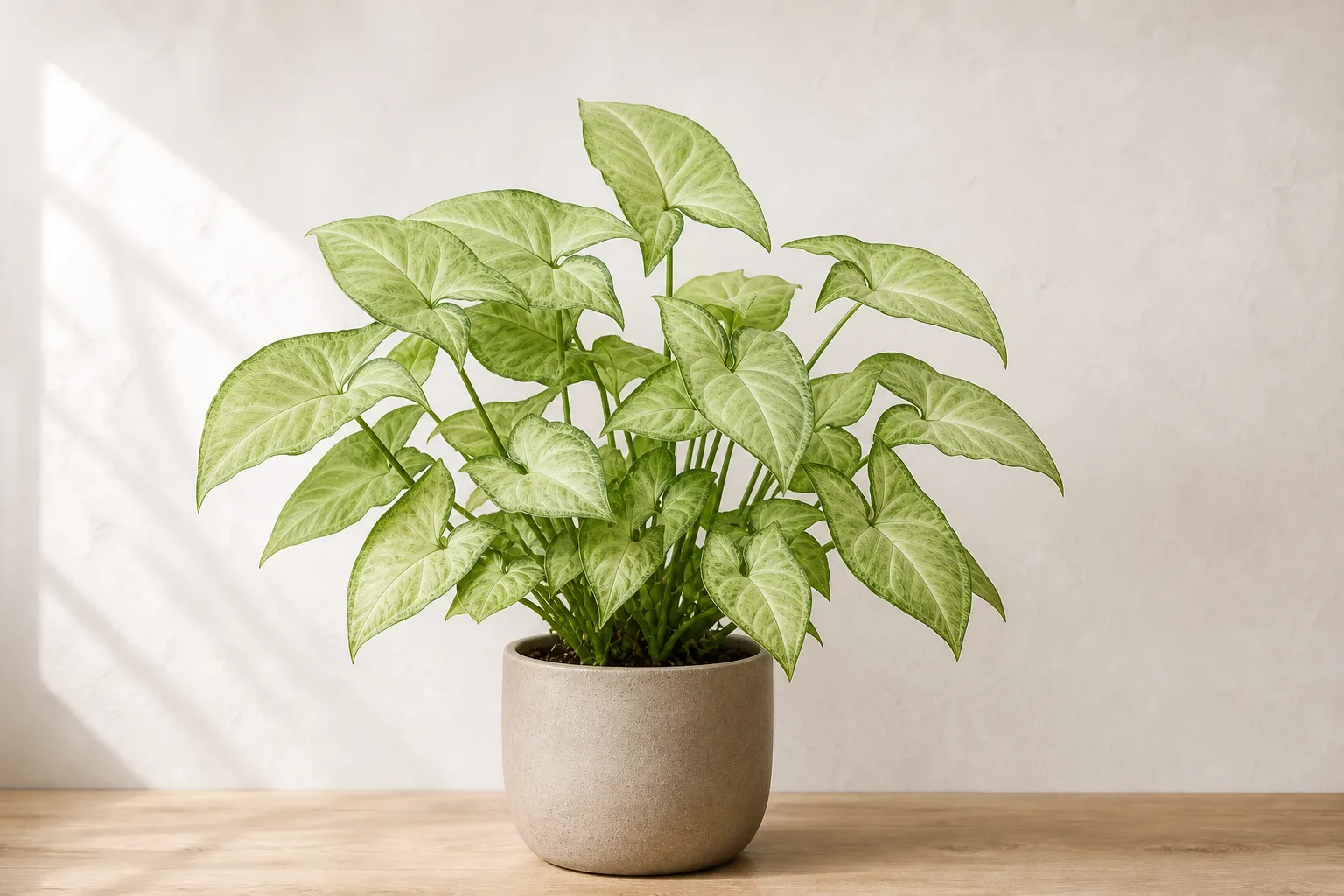 beginner
Syngonium podophyllum
Arrowhead vine (Syngonium podophyllum) is a climbing aroid from Mexico to tropical America, grown for its arrow-shaped juvenile leaves that mature into deeply lobed, multi-part leaves. Indoors it trails from a basket or climbs a moss pole with very little fuss.
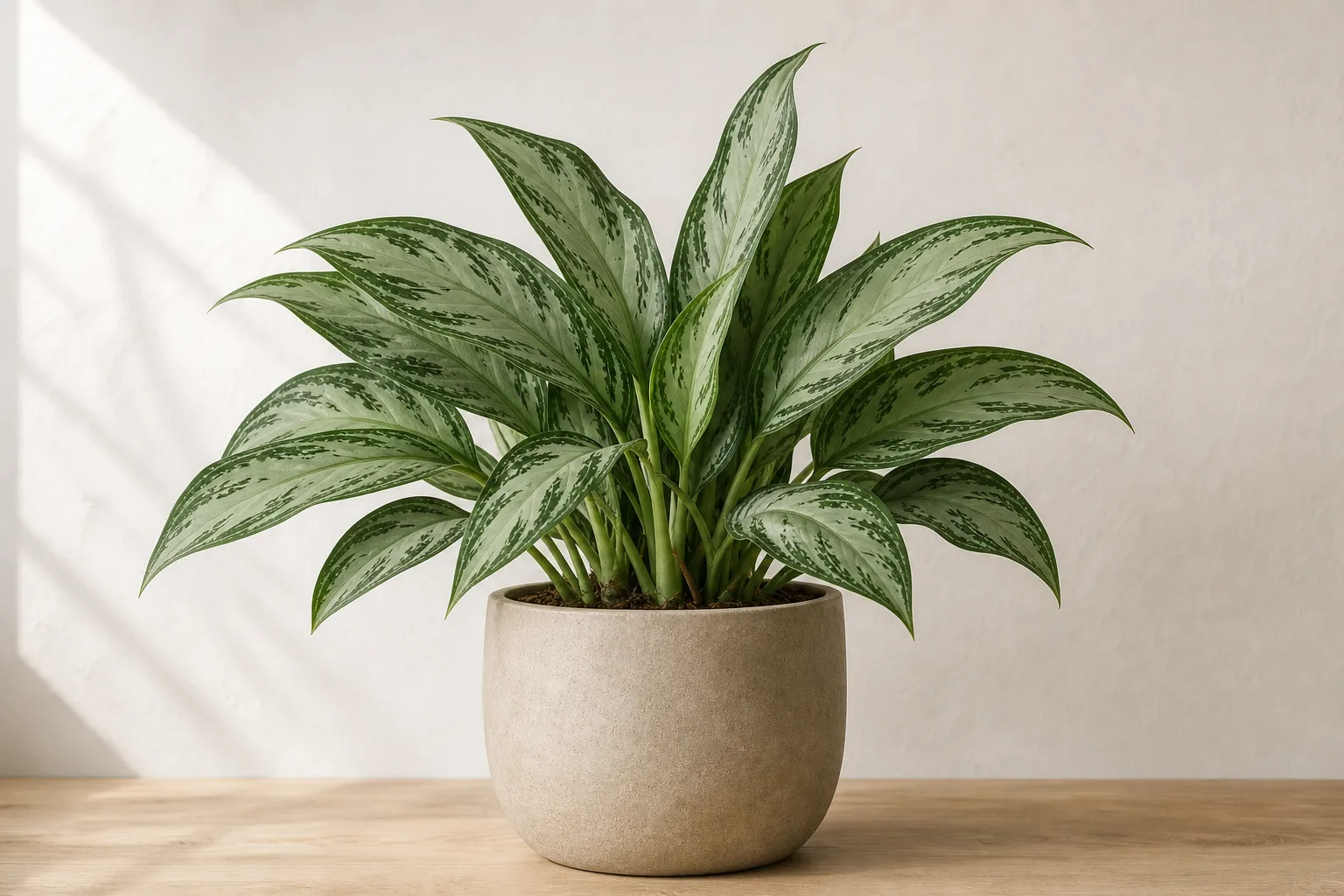 beginner
Aglaonema commutatum
Chinese evergreen (Aglaonema commutatum) is a slow-growing foliage plant prized for its patterned, silver-and-green leaves and remarkable tolerance of low indoor light. Native to the Philippines and Sulawesi in Central Malesia, it sits well on a desk or in a dim corner where few other plants thrive. It is a durable, beginner-friendly houseplant, but - like other aroids - it is toxic if chewed.
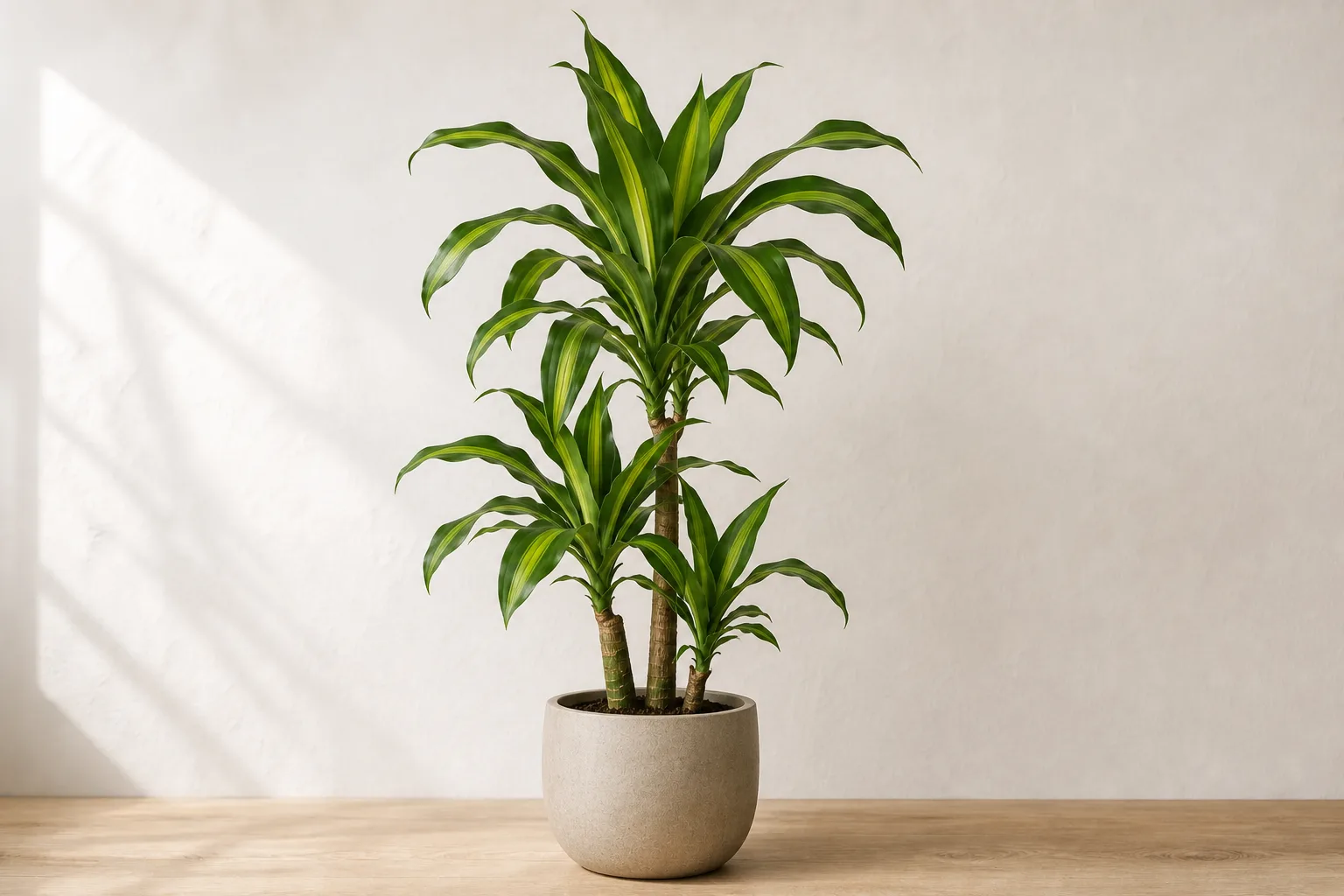 beginner
Dracaena fragrans
Corn plant (Dracaena fragrans) is a tropical African shrub grown indoors as a tall, cane-form foliage plant with arching, sword-shaped leaves. Its woody stem sheds lower leaves over time, and the leaf rosettes cluster near the top like a small indoor tree.
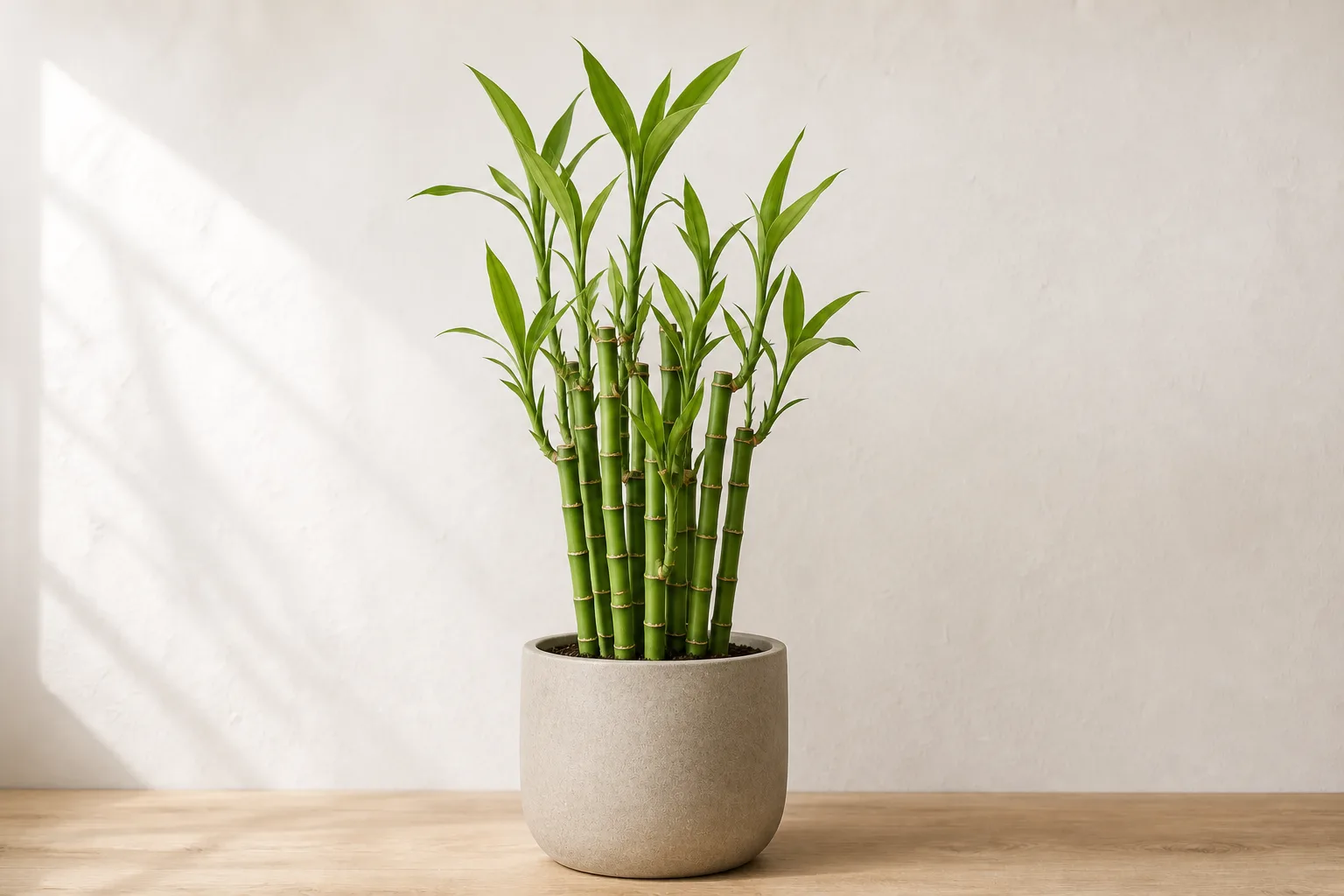 beginner
Dracaena sanderiana
Lucky bamboo (Dracaena sanderiana) is not bamboo at all but a tropical African dracaena with fleshy, bamboo-like canes, often trained into spirals, braids, or hearts. It grows happily in water with pebbles or in moist soil, making it one of the easiest and most symbolic houseplants.
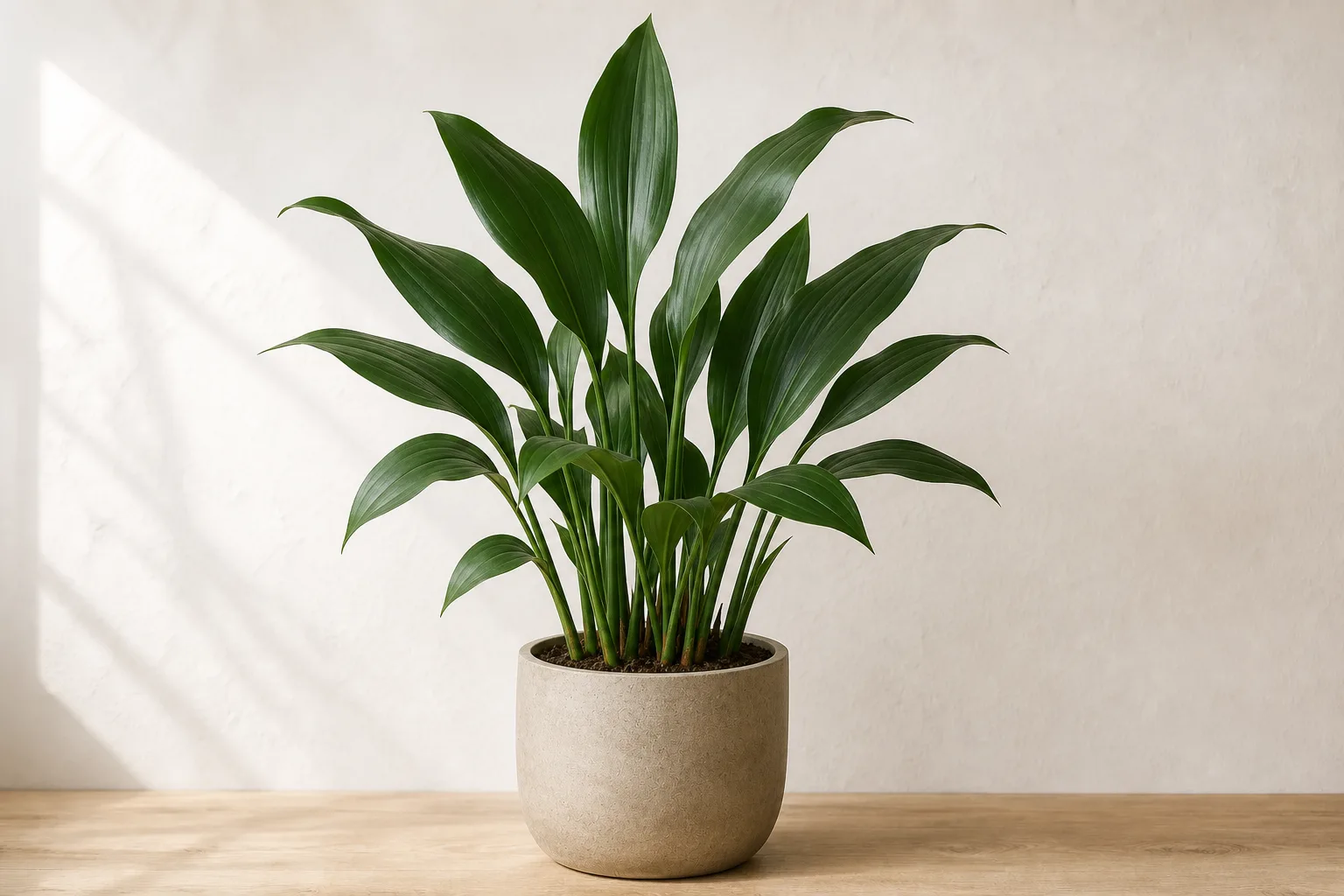 Pet-friendlier
Aspidistra elatior
Cast iron plant (Aspidistra elatior) is a shade-tolerant perennial from Japan, grown for its arching, glossy, lance-shaped leaves that rise directly from a creeping rhizome. Its famous toughness - handling low light, drought, and neglect - makes it one of the most forgiving houseplants.
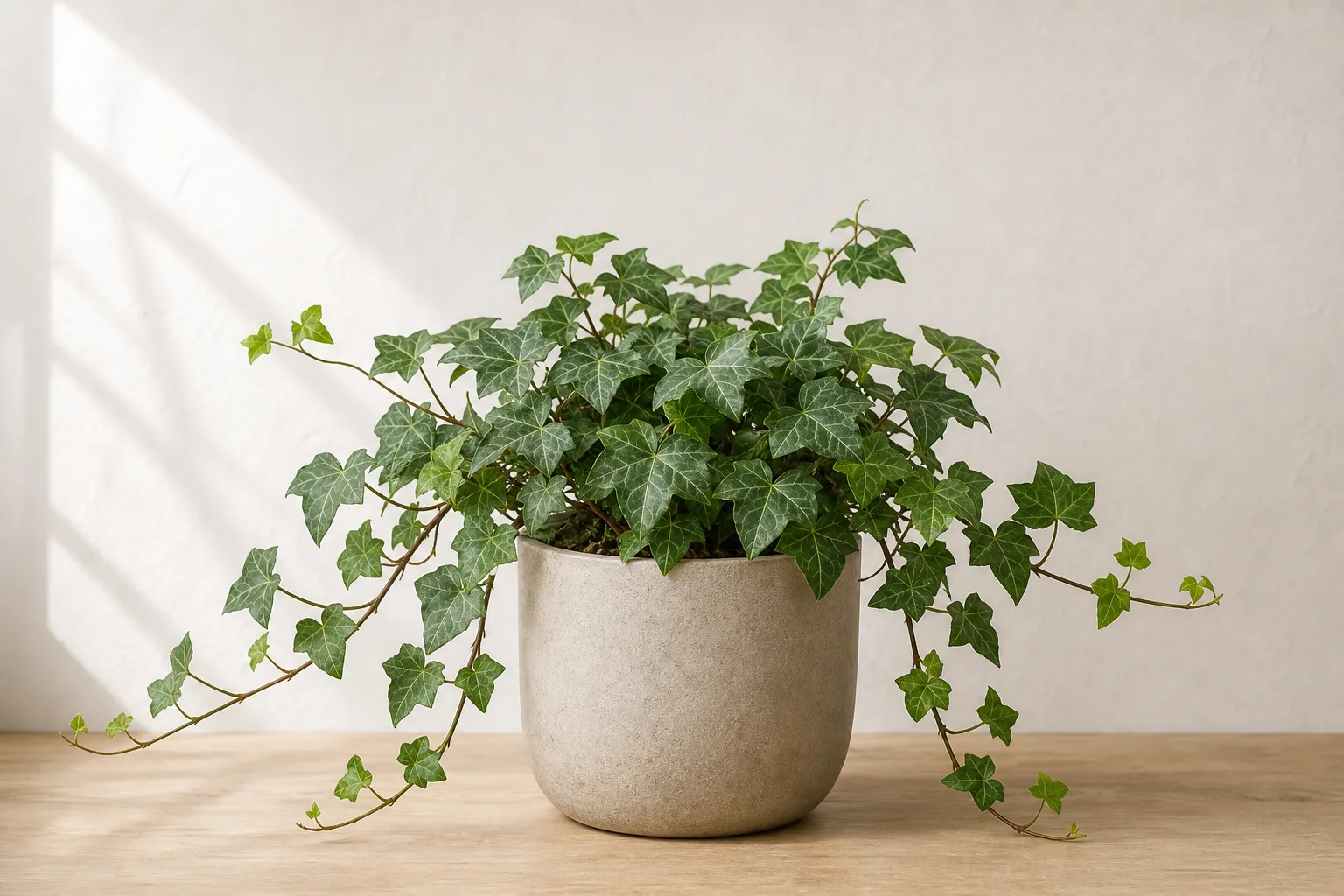 intermediate
Hedera helix
English ivy (Hedera helix) is a vigorous evergreen vine from Europe that clings by aerial rootlets and trails or climbs with equal ease. Indoors it is grown for its lobed, glossy leaves in hanging baskets, though it needs cool-to-moderate conditions and regular pest checks.
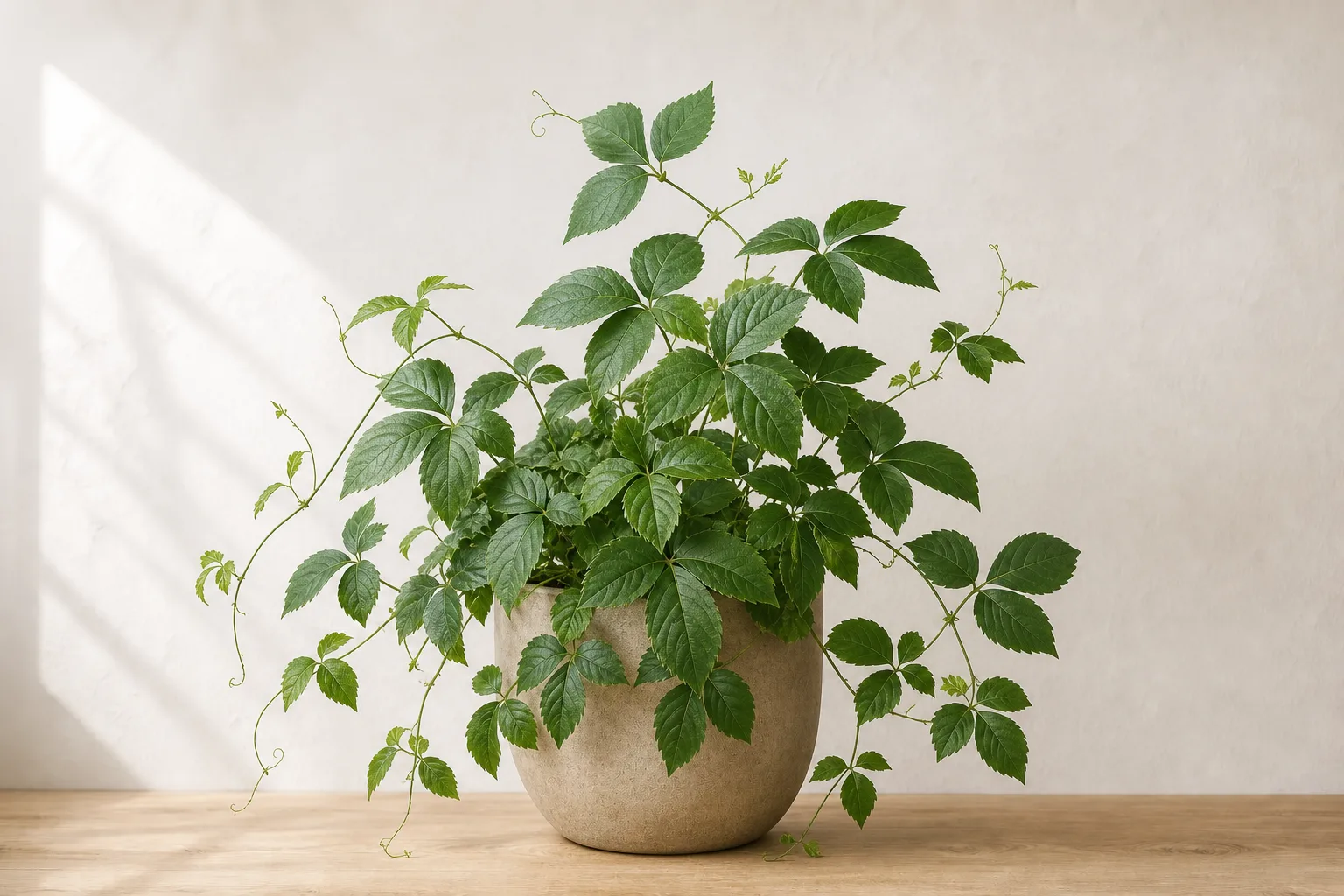 Pet-friendlier
Cissus rhombifolia
Grape ivy (Cissus alata, long known as Cissus rhombifolia) is a subtropical evergreen vine in the grape family, native from Mexico to Bolivia and Trinidad. Its glossy, toothed, three-part leaves trail gracefully from a hanging basket or climb a trellis by forked tendrils.
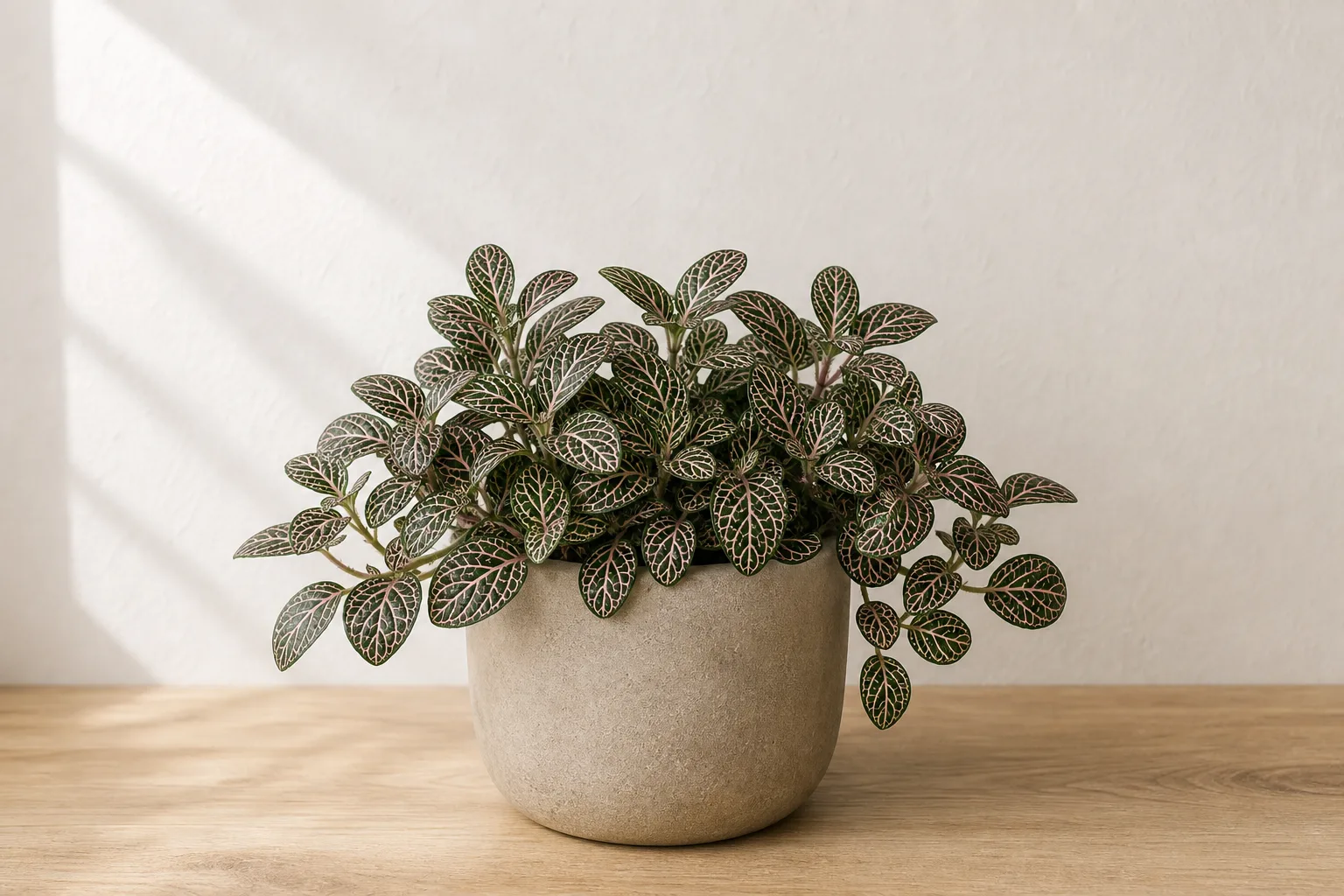 Pet-friendlier
Fittonia albivenis
Nerve plant (Fittonia albivenis) is a creeping evergreen from the tropical rainforests of South America, prized for deep olive-green leaves netted with white, pink, or red veins. It is a small, low-growing plant that thrives in humid terrariums, pots, and hanging baskets.
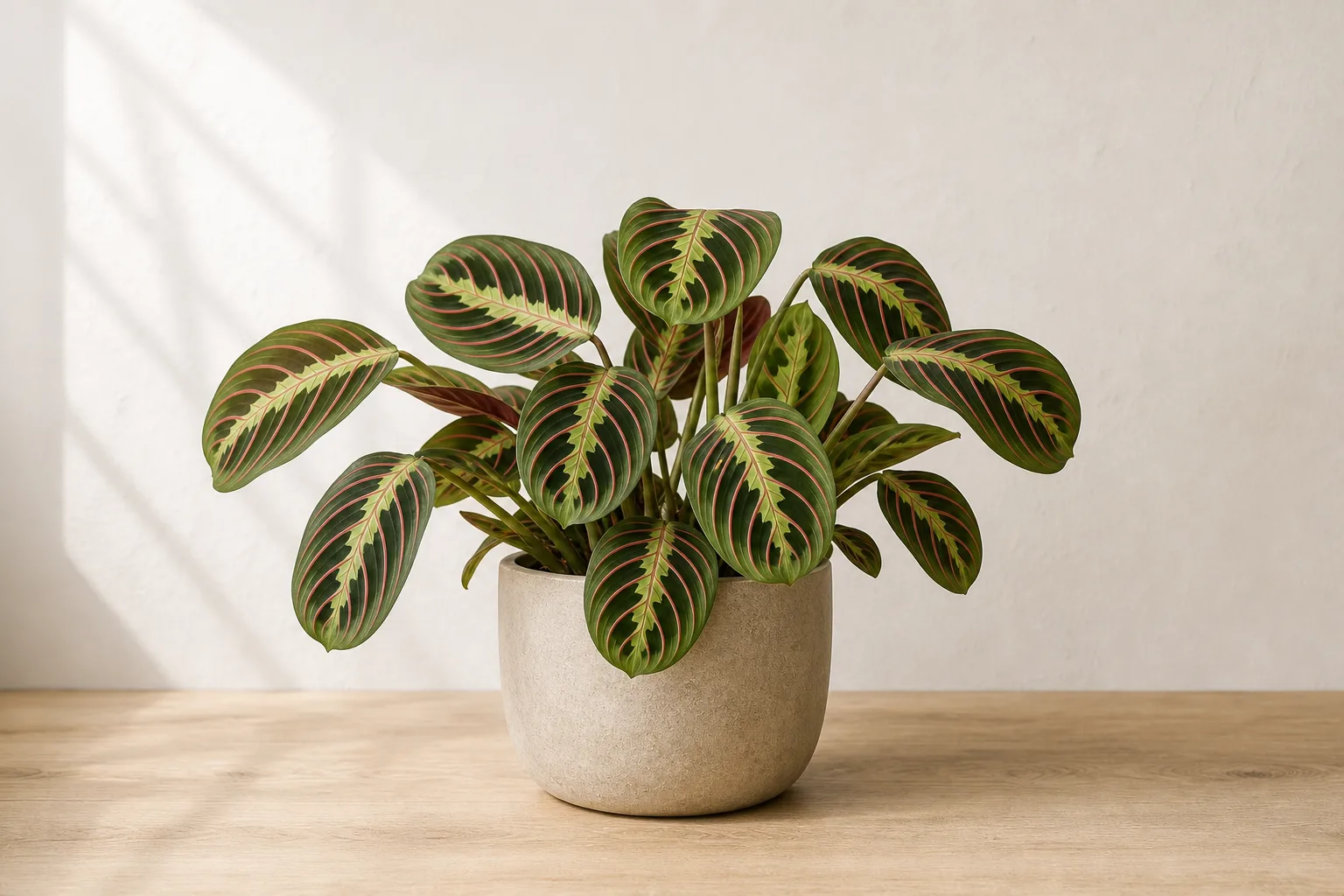 Pet-friendlier
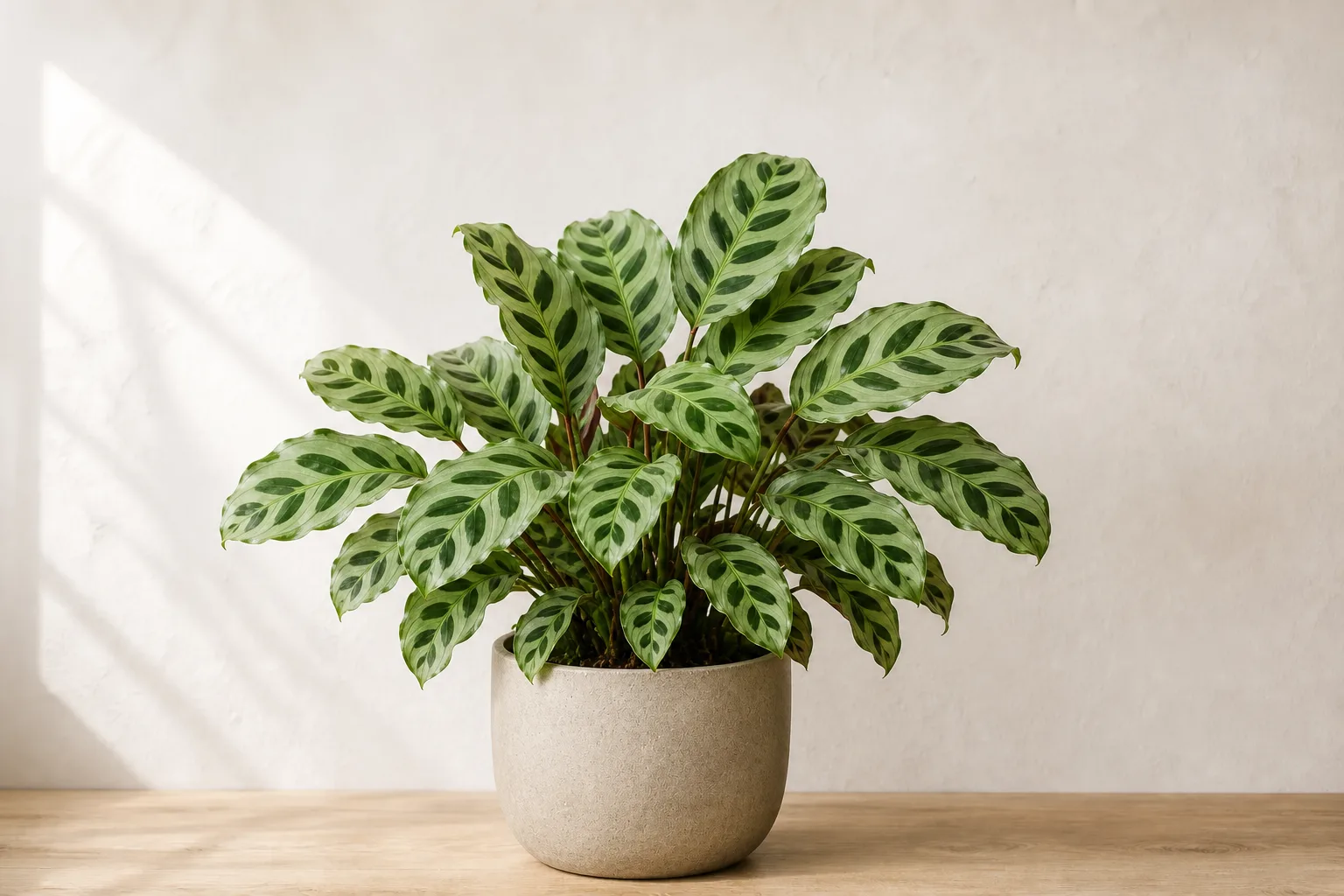
Maranta leuconeura
Prayer plant (Maranta leuconeura) is a low-growing tropical perennial from Brazil whose leaves fold upward at night like hands in prayer, then flatten again by day. Its oval leaves are marked with striking fishbone-pattern veins and dark blotches along the midrib.
 Pet-friendlier
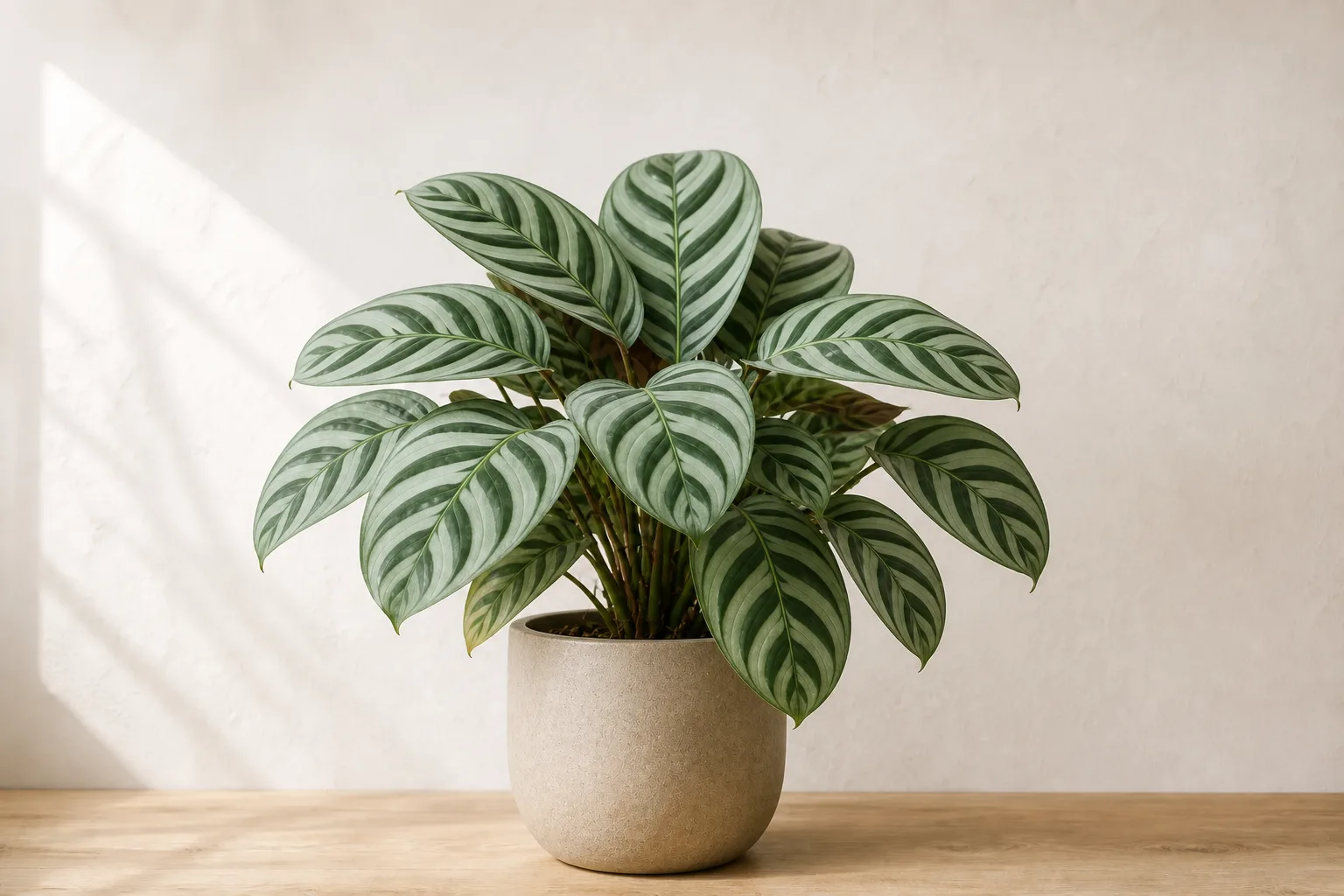
Goeppertia makoyana
Peacock plant (Goeppertia makoyana, long known as Calathea makoyana) is a tropical perennial from eastern Brazil grown for its papery, oval leaves patterned like peacock tail feathers, with dark blotches along the veins and rich purple undersides. Like other prayer plants, its leaves fold up in the evening and reopen at sunrise.
 Pet-friendlier
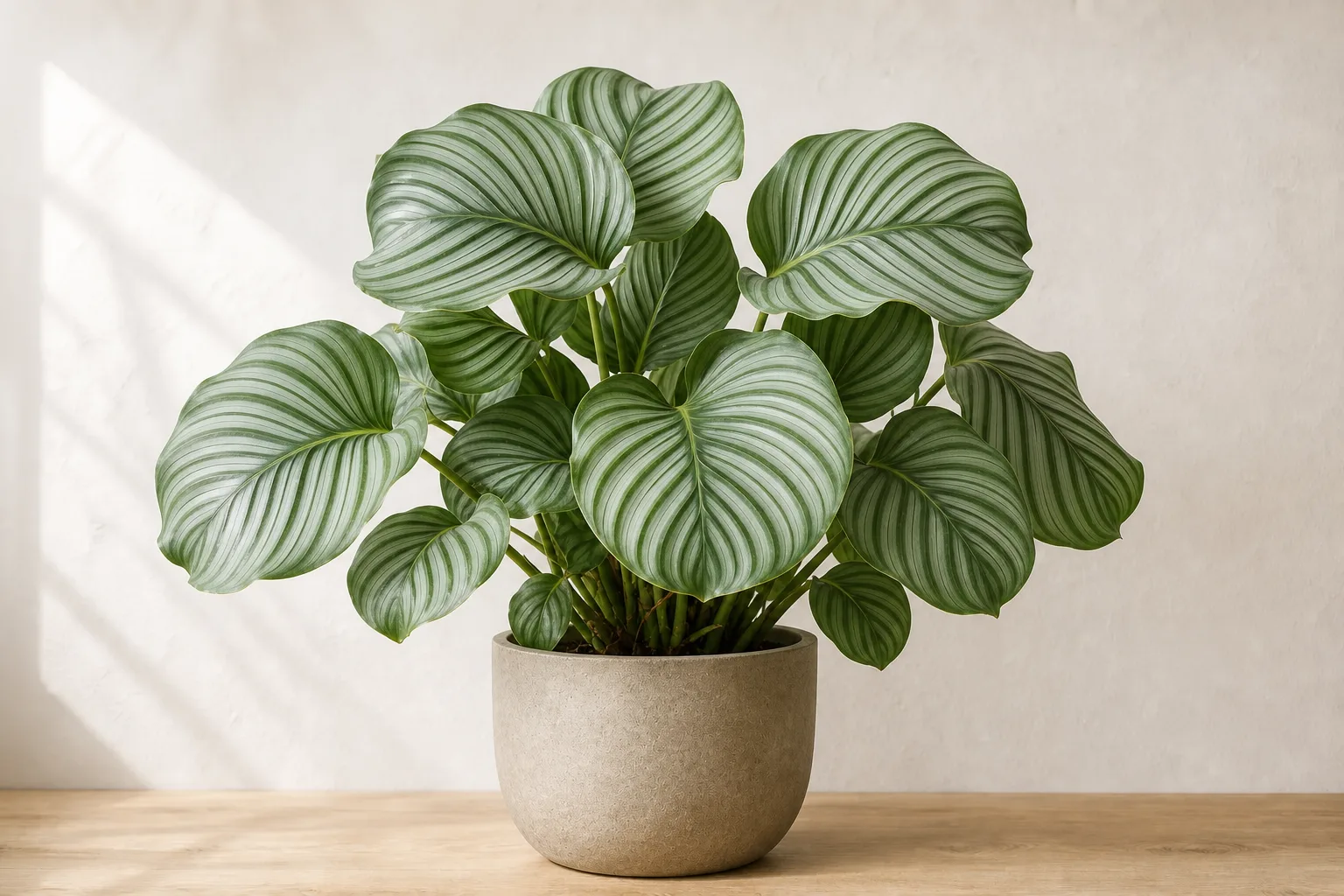
Ctenanthe burle-marxii
Ctenanthe burle-marxii is a compact Brazilian prayer-plant relative grown for its fishbone-patterned leaves - pale green with dark green bands along the midrib and purple undersides. Native to Brazil's Espirito Santo, it folds its leaves up at night, tolerates lower light than many tropicals, and stays a tidy tabletop size indoors.
 Pet-friendlier
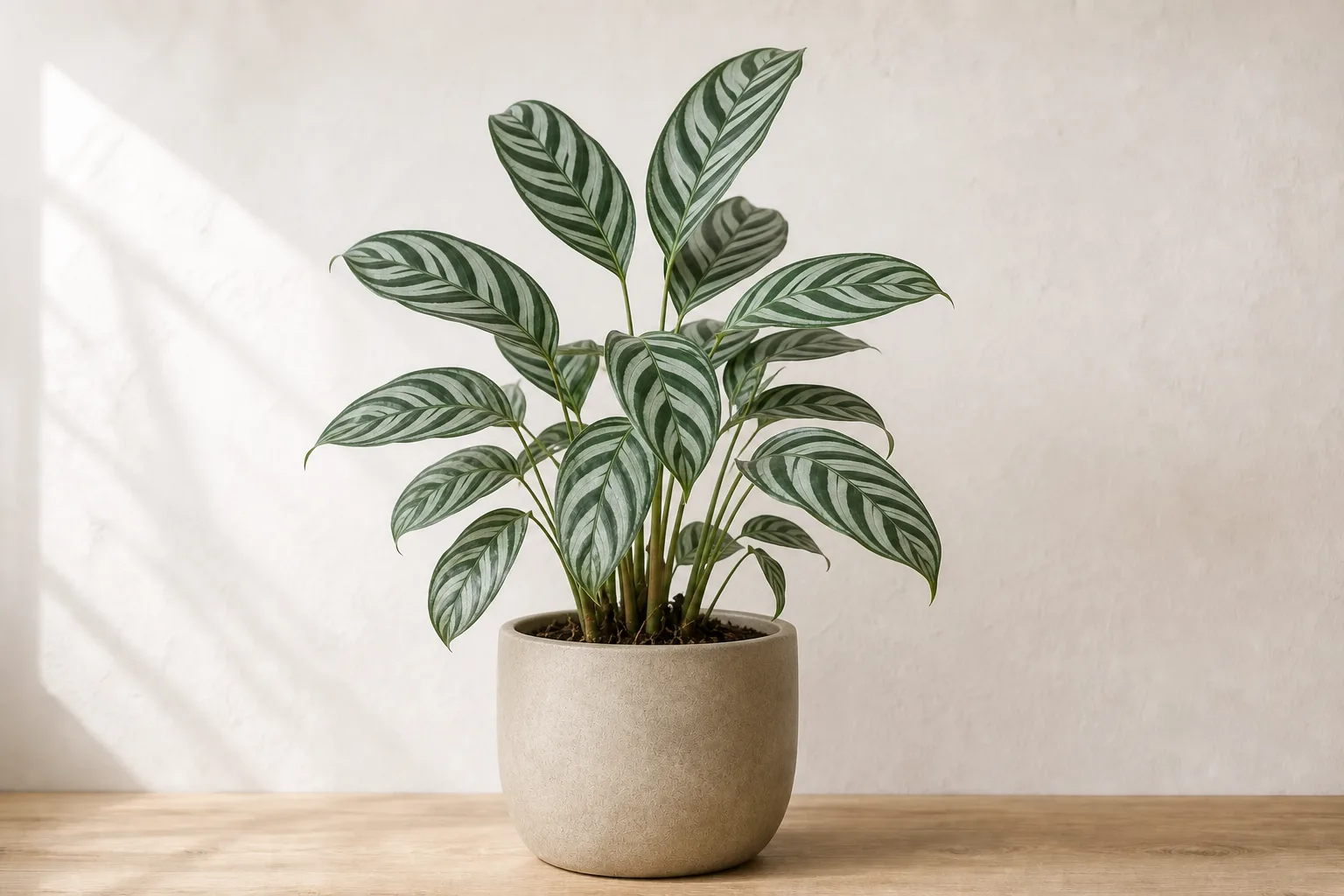
Goeppertia orbifolia
Goeppertia orbifolia (long sold as Calathea orbifolia) is a broad-leaved prayer plant from eastern Brazil grown for its large, rounded, silver-striped leaves. Its wide round leaves and nightly folding habit make it one of the most striking marantas, but it asks for consistently high humidity, filtered light, and careful water quality.
 Pet-friendlier
Ctenanthe setosa
Ctenanthe setosa, the never-never plant, is an upright Brazilian prayer plant grown for its long, velvety leaves striped silver and dark green with deep purple undersides. Larger and more vigorous than its relative Ctenanthe burle-marxii, it folds its leaves up at night and makes a graceful indoor foliage plant in warm, humid rooms.
If you cannot comfortably read in the spot during the day, the plant probably needs a brighter position or a grow light.