Key takeaways
- Tolerates deep shade and low indoor light better than almost any other foliage plant.
- Water regularly in the growing season but let the soil dry more in winter - avoid constant sogginess.
- Non-toxic to cats and dogs, making it a safe choice for pet households.
How to care for Cast Iron Plant
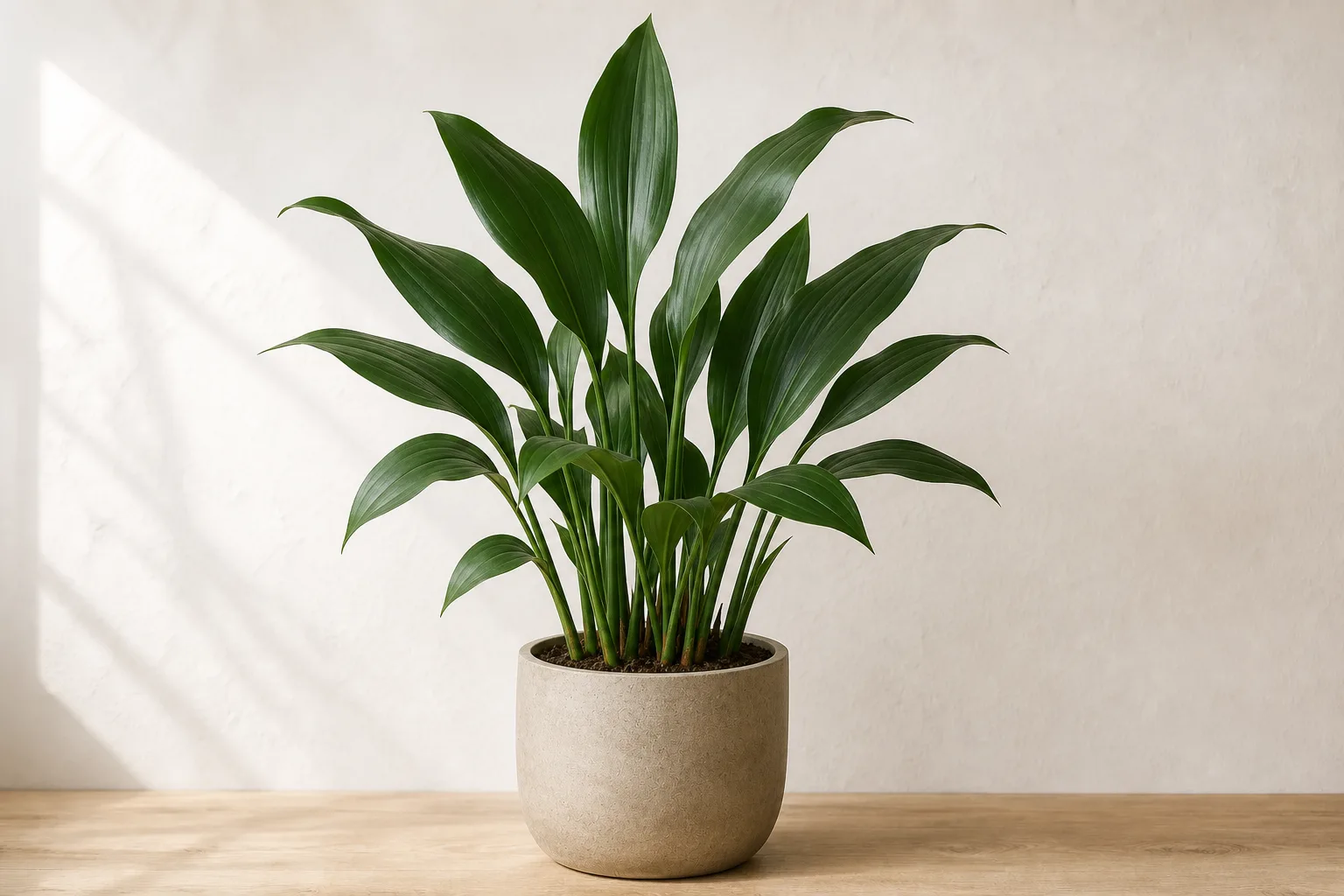
Cast iron plant (Aspidistra elatior) earned its name from its ability to survive significant neglect. Native to Japan, it is a stemless evergreen with arching, lance-shaped glossy leaves that rise up to 3 feet tall directly from a fleshy, creeping rhizome. It tolerates low light, drought, uneven watering, and a wide range of temperatures, which is why it has been a parlor staple for over a century.
Care is mostly a matter of restraint. Site it in shade or low indoor light, water when the top of the mix dries, and reduce watering in winter. It is more likely to be harmed by a constantly wet pot than by forgetfulness. Occasionally wipe the leaves with a damp cloth so dust does not block the light it does receive.
Light
Cast iron plant is one of the best low-light performers among houseplants. It grows well in bright indirect light and tolerates full shade, which makes it a candidate for dim corners and rooms with no direct window light. Avoid direct sun, which bleaches and burns the leaves. If you want it to flower (the insignificant cream-and-purple blooms appear at soil level), brighter light helps, but most indoor plants never flower.
Water
Water regularly from spring to fall, letting the top of the mix dry between waterings, and reduce watering in winter as the plant rests. It tolerates occasional drought well but dislikes constant moisture, which causes root rot and yellowing. Use a pot with a drainage hole and empty the saucer after watering. In very dry indoor air, brown leaf tips can develop; a pebble tray or occasional misting helps.
Soil and repotting
Use a well-drained, peaty potting mix in a container with drainage holes. Cast iron plant tolerates a wide range of soils and pH, which is part of its reputation for toughness. It grows slowly and prefers to be somewhat snug, so repot only every few years when the rhizome fills the pot, moving up one size. Division during repotting is also the easiest way to make new plants.
Temperature, humidity, and fertilizer
Cast iron plant tolerates a wide range of indoor temperatures and does not require a humid atmosphere, though it prefers winter minimums around 50 F (10 C) and protection from cold drafts. Average household humidity is fine. Feed lightly with a balanced houseplant fertilizer at label strength during spring and summer, and skip feeding in winter. Overfeeding browns the leaf tips, so err on the side of less.
Pruning and propagation
Remove yellowed or damaged leaves at the base with clean tools; this is the only regular pruning needed. Propagate by dividing the rhizome when repotting - separate rooted clumps, each with several leaves and roots, and pot them into fresh mix. Keep divisions evenly moist and out of direct sun until they establish. This is a slow grower, so be patient with new plants.
Common problems
Start with the pattern, current soil moisture, and recent changes. One symptom can have several causes, so change the most likely factor first and observe before making another major adjustment.
| Symptom | Check first | First action |
|---|---|---|
| Brown leaf tips | Very dry air, tap-water minerals, dry soil, or overwatering | Check the mix first, then improve humidity and flush the soil before changing other care. |
| Yellowing leaves | Whether the mix stays wet, drainage, and natural aging of older leaves | Let the top of the mix dry and confirm the pot drains; reduce watering in winter. |
| Bleached or scorched leaves | Direct sun exposure and position near bright windows | Move the plant to shade or low indirect light. |
| Stunted or pale growth | Root crowding, light, and soil age | Check roots and repot if crowded; move to brighter indirect light gradually. |
| Fine webbing or waxy bumps | Mites or scale on leaf undersides and stems | Isolate the plant and identify the pest before treating; wipe leaves and use a targeted control. |
Pet and household safety
Cast iron plant is non-toxic to cats, dogs, and horses, so it is a safe choice for pet households. Non-toxic does not mean edible: chewing any plant or potting material can still upset a pet's stomach, so keep persistent chewers away and contact a veterinarian if a pet becomes unwell after eating plant material.
Frequently asked questions
How often should I water a cast iron plant?
Water when the top of the mix feels dry, regularly from spring to fall, and less in winter. It tolerates missed waterings better than constant moisture, so when unsure, let it dry a little more.
What light does a cast iron plant need?
It grows in bright indirect light and tolerates full shade, making it ideal for dim rooms. Avoid direct sun, which bleaches the leaves.
Where does cast iron plant grow naturally?
It is native to Japan, where it grows as an understory perennial in forest shade - the origin of its remarkable shade tolerance.
Why are the leaf tips turning brown?
Usually very dry air, tap-water minerals, dry soil, or overwatering. Check the mix first, then adjust humidity and water quality before changing other care.
How do I propagate a cast iron plant?
Divide the rhizome when repotting - separate rooted clumps with several leaves and roots into fresh mix. It is slow to recover, so be patient.
Is cast iron plant safe for pets?
Yes, it is non-toxic to cats and dogs. Still discourage chewing, since any plant material can upset a pet's stomach.
Sources and editorial review
This editorial draft is based on the sources below and awaits named horticulture-expert approval before publication.
- Aspidistra elatiorRoyal Botanic Gardens, Kew (Plants of the World Online) · Checked
- Aspidistra elatior (Cast Iron Plant)North Carolina State Extension · Checked
- Aspidistra elatiorMissouri Botanical Garden · Checked
- Cast Iron PlantASPCA · Checked
What works well
- Extremely tolerant of neglect, low light, and uneven watering.
- Slow-growing and rarely needs repotting.
- Non-toxic to cats and dogs.
What to consider
- Grows slowly and stays plain without striking variegation.
- Direct sun bleaches the leaves.
- Overwatering or very dry air causes leaf tip browning and root rot.