Key takeaways
- Bright filtered light helps maintain stripes.
- Use low-mineral water if tips brown.
- Generally considered non-toxic to cats and dogs.
How to care for Spider Plant
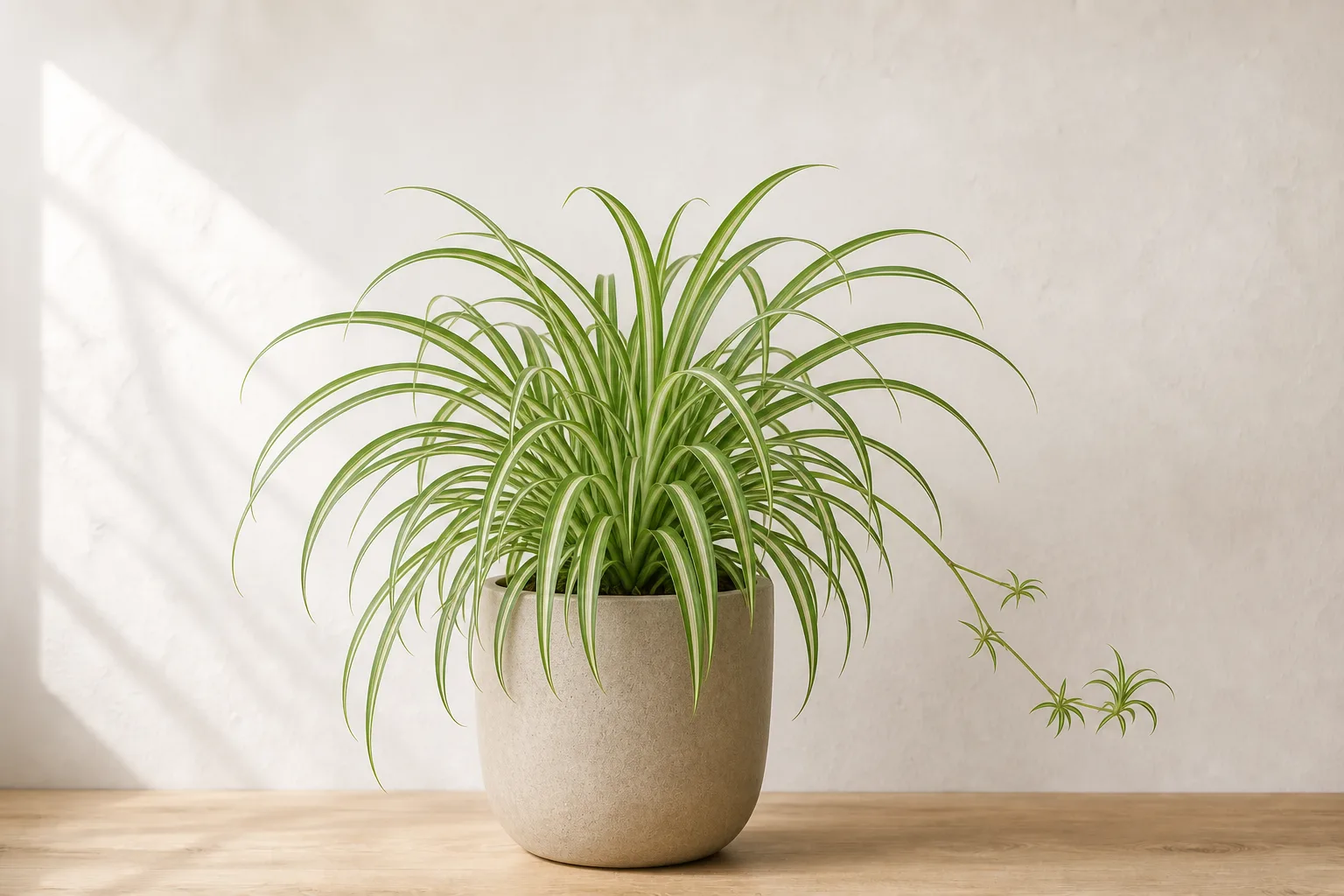
Spider plant forms arching leaves, fleshy roots, and eventually runners with flowers and plantlets. It is forgiving, but it stays tidier when water, light, and pot size are kept steady rather than treated as a calendar task.
Light
Medium to bright indirect light helps maintain stripes and encourages balanced growth. It tolerates lower light but direct sun can scorch leaves, especially through hot glass.
Water
Water when the upper inch of mix has dried, then let excess drain. Spider plant tolerates short dry spells, but repeatedly saturated roots or an overlarge pot make decline more likely.
Soil and repotting
Use a general well-drained indoor mix. Fleshy roots can fill a pot quickly; repot or divide when the container bulges, water races through, or roots leave little room for mix.
Temperature, humidity, and fertilizer
Average indoor humidity is adequate. Brown tips are often linked to dry spells, mineral-laden water, or excess fertilizer, so avoid overfeeding and review water quality before cutting off healthy green tissue.
Pruning and propagation
Trim only brown tips or damaged leaves with clean scissors. Plantlets can be rooted while still attached to the mother plant or after removal once they have small roots; division is useful for a crowded clump.
Common problems
Start with the pattern, current soil moisture, and recent changes. One symptom can have several causes, so change the most likely factor first and observe before making another major adjustment.
| Symptom | Check first | First action |
|---|---|---|
| Brown tips | Drying cycles, water minerals, and fertilizer use | Stabilize watering and review salts before trimming |
| Pale stripes | Recent low-light placement | Increase filtered light gradually |
| No plantlets | Plant maturity, light, and fertilizer level | Keep care steady; do not force growth with extra feeding |
| Pot bulges | Crowded fleshy roots | Repot one size up or divide |
| Yellow leaves | Wet mix and leaf age | Adjust watering only after checking the root zone |
Pet and household safety
Spider plant is listed non-toxic to cats and dogs by ASPCA. That classification does not make it a snack: chewing any plant material can still cause gastrointestinal upset, so keep persistent chewers away and contact a veterinarian if a pet becomes unwell.
Frequently asked questions
How often should I water Spider Plant?
Water when the upper inch is dry, then drain excess.
Why are Spider Plant tips brown?
Check dry spells, mineral-heavy water, and fertilizer salts.
Can Spider Plant take direct sun?
No; medium to bright indirect light is safer.
How do I propagate Spider Plant?
Root plantlets or divide a crowded clump.
Why is my Spider Plant root-bound?
Its fleshy roots expand quickly and may need a modestly larger pot or division.
Is Spider Plant safe for pets?
ASPCA lists it non-toxic to cats and dogs, though chewing any plant can still upset a stomach.
Sources and editorial review
This editorial draft is based on the sources below and awaits named horticulture-expert approval before publication.
- Spider Plant — Chlorophytum comosumNC State Extension · Checked
- Chlorophytum comosum (Thunb.) JacquesRoyal Botanic Gardens, Kew — Plants of the World Online · Checked
- Spider PlantASPCA · Checked
- Spring houseplant careUniversity of Minnesota Extension · Checked
What works well
- Pet-friendlier
- Produces easy plantlets
- Compact habit
What to consider
- Tips may brown
- Can become root-bound quickly
- Direct sun scorches leaves