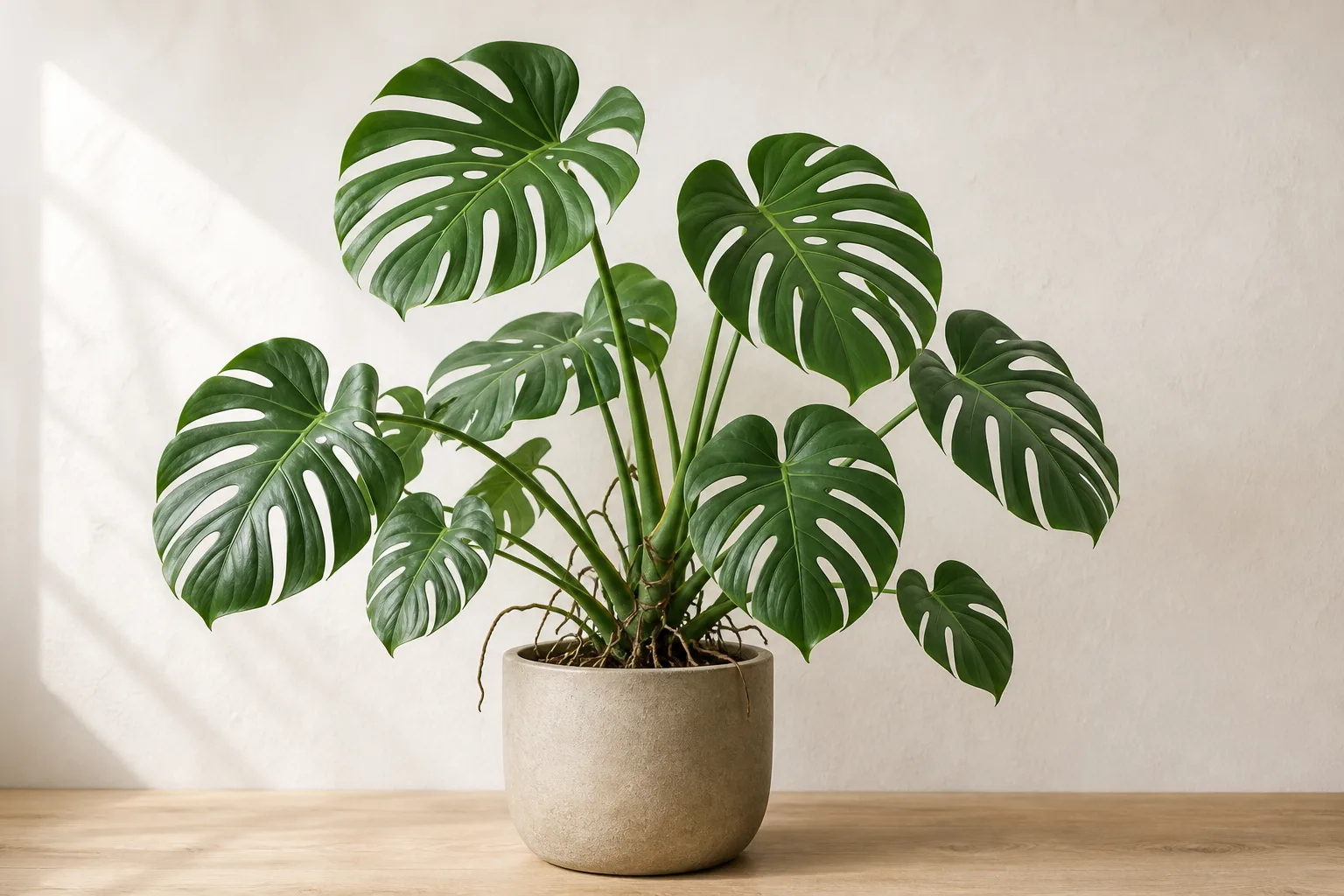
 beginner
Monstera
Monstera deliciosa
A confident indoor statement plant with naturally split mature leaves.
Tropical does not automatically mean difficult. Stable warmth, filtered light, suitable moisture, and protection from cold drafts cover most of the essentials.
This collection brings plant profiles and care guidance together around the conditions that define tropical plants.
Tropical plants fail indoors less from difficulty than from three specific mismatches: cold drafts near windows and doors, direct hot sun their forest-floor heritage never prepared them for, and watering habits copied from succulents. Fix those three and most plants in this collection become straightforward: warm rooms, filtered light, and a potting mix that stays airy while it holds moderate moisture.
Humidity helps, but it ranks below light and watering. Grouping plants, using a room humidifier, or setting pots on a pebble tray all raise local humidity modestly; none of them compensate for a saturated root zone. Watch new leaves—they are the first place a tropical plant reports that air is too dry or conditions swung too fast.
beginnerMonstera deliciosa
A confident indoor statement plant with naturally split mature leaves.
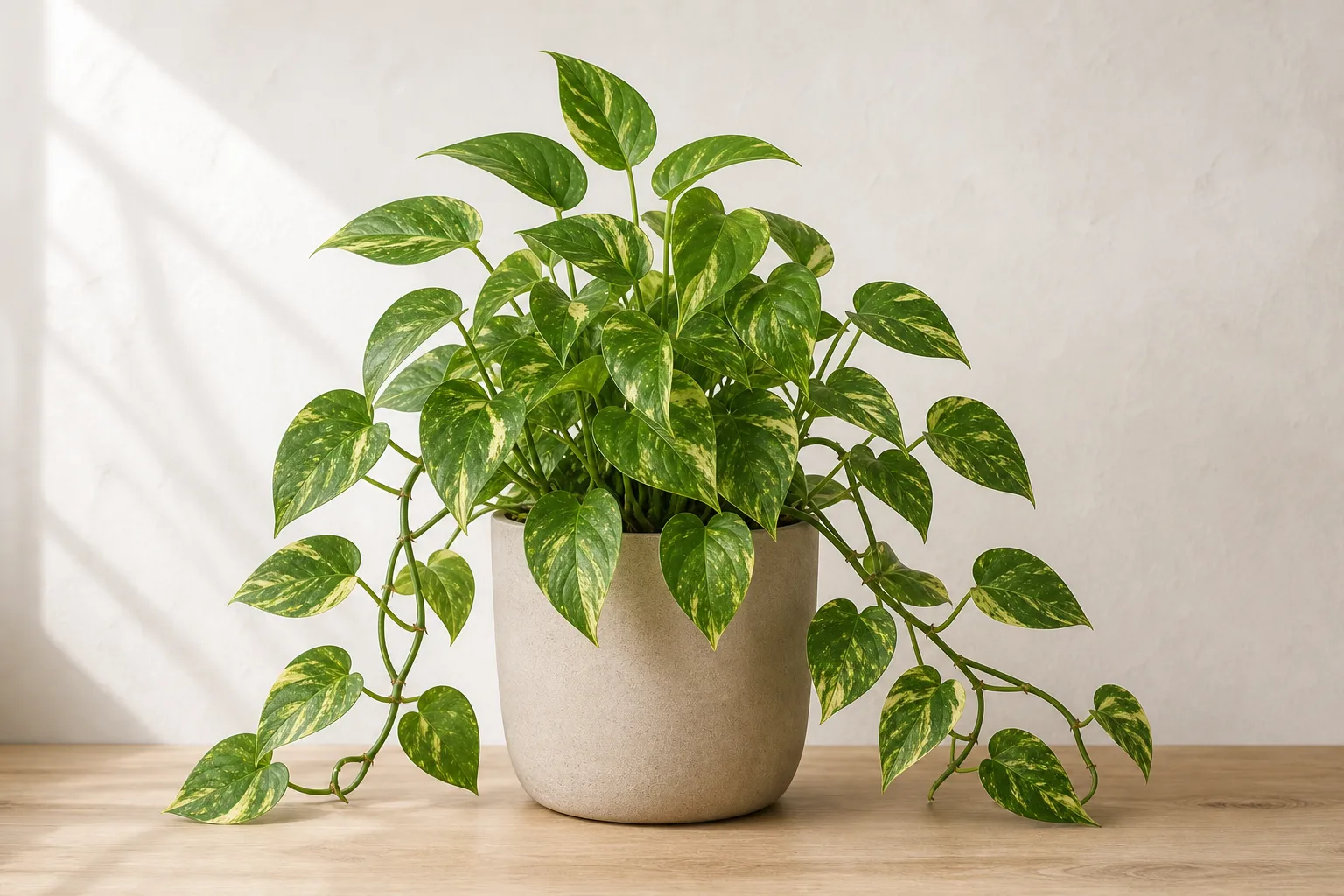 beginner
Epipremnum aureum
A forgiving trailing plant with green and gold heart-shaped leaves.
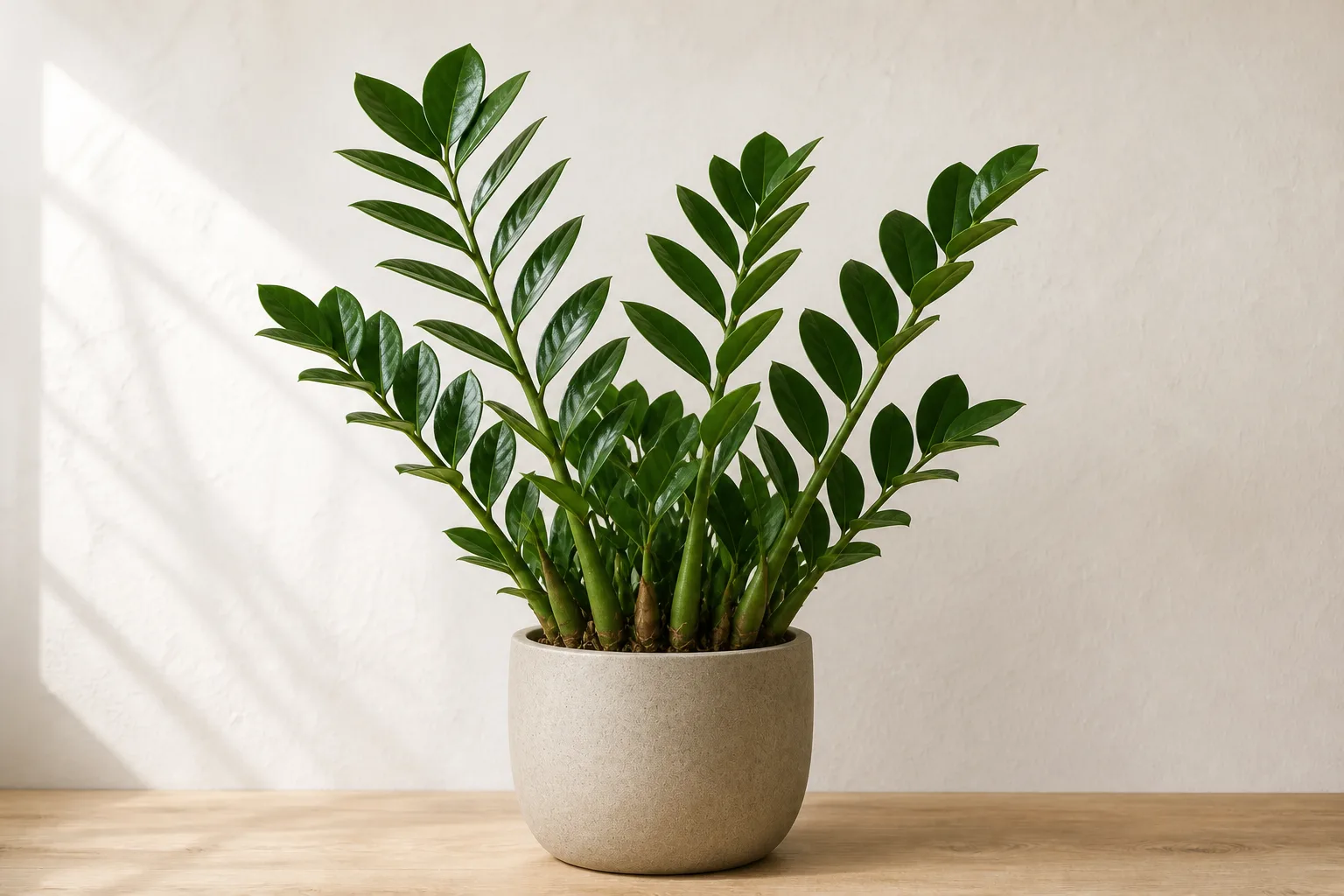 beginner
Zamioculcas zamiifolia
Glossy leaflets and water-storing rhizomes make this a steady low-light performer.
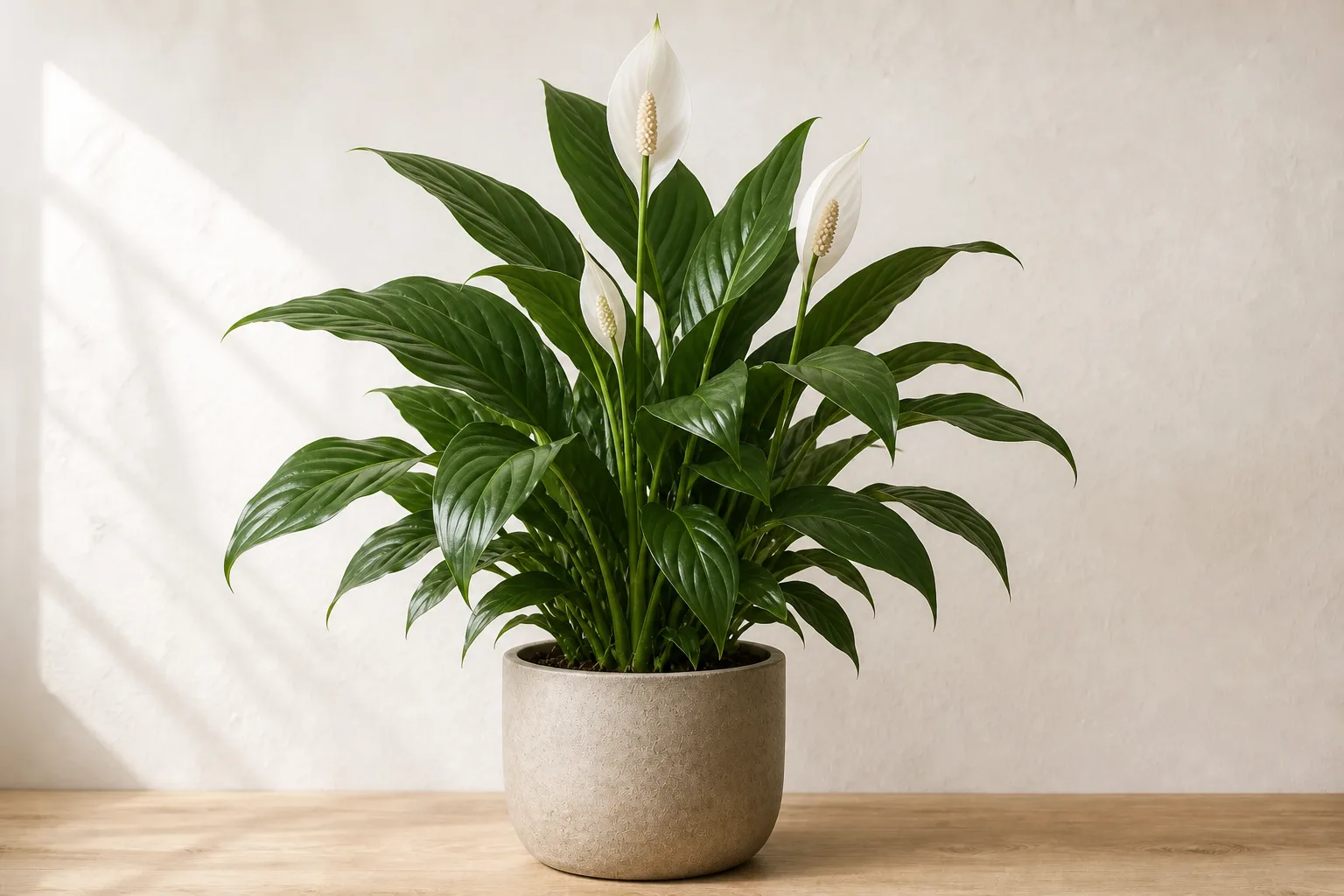 intermediate
Spathiphyllum wallisii
Deep green leaves and white spathes that signal thirst with a visible droop.
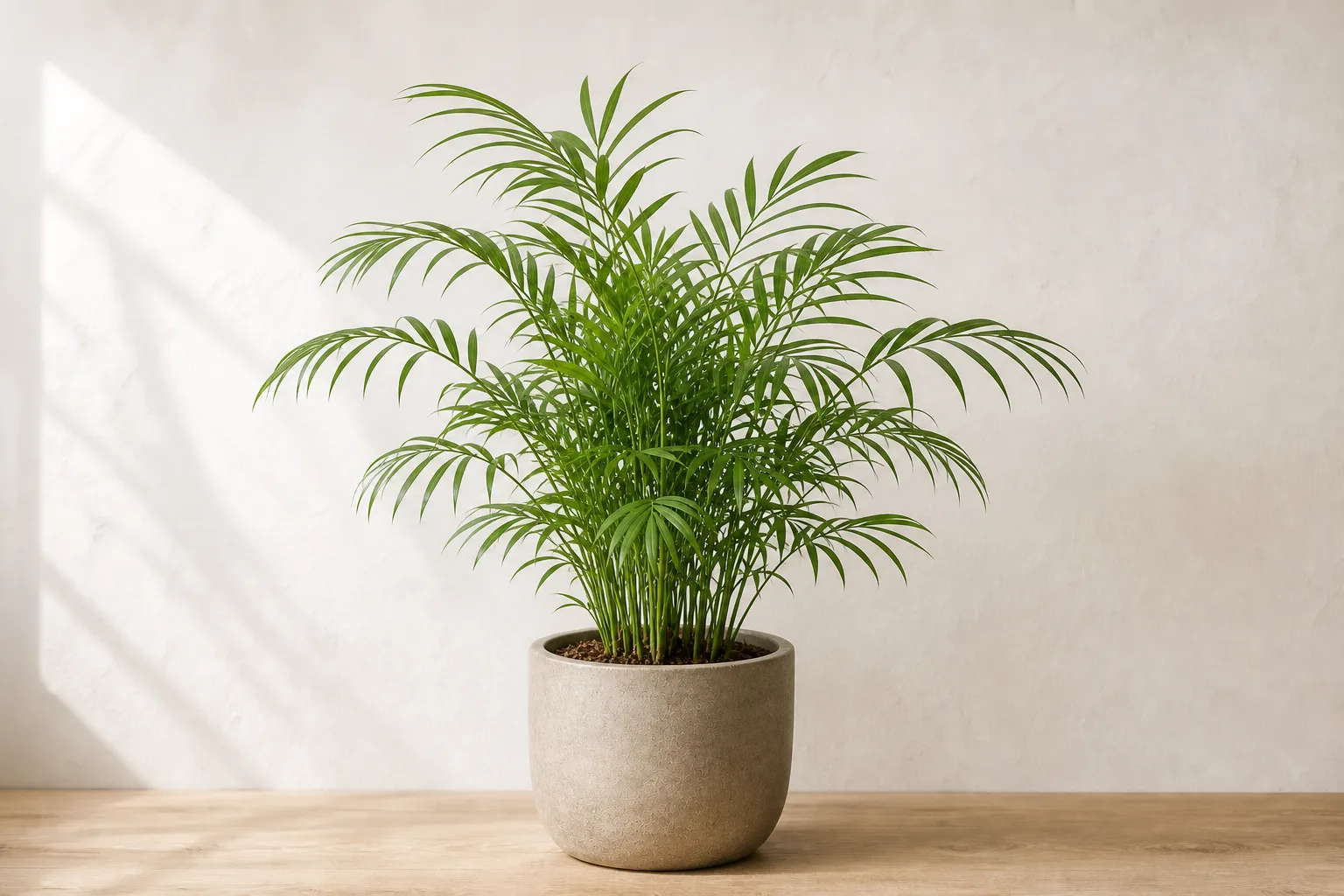 Pet-friendlier
Chamaedorea elegans
A compact palm that accepts lower light and is considered non-toxic to pets.
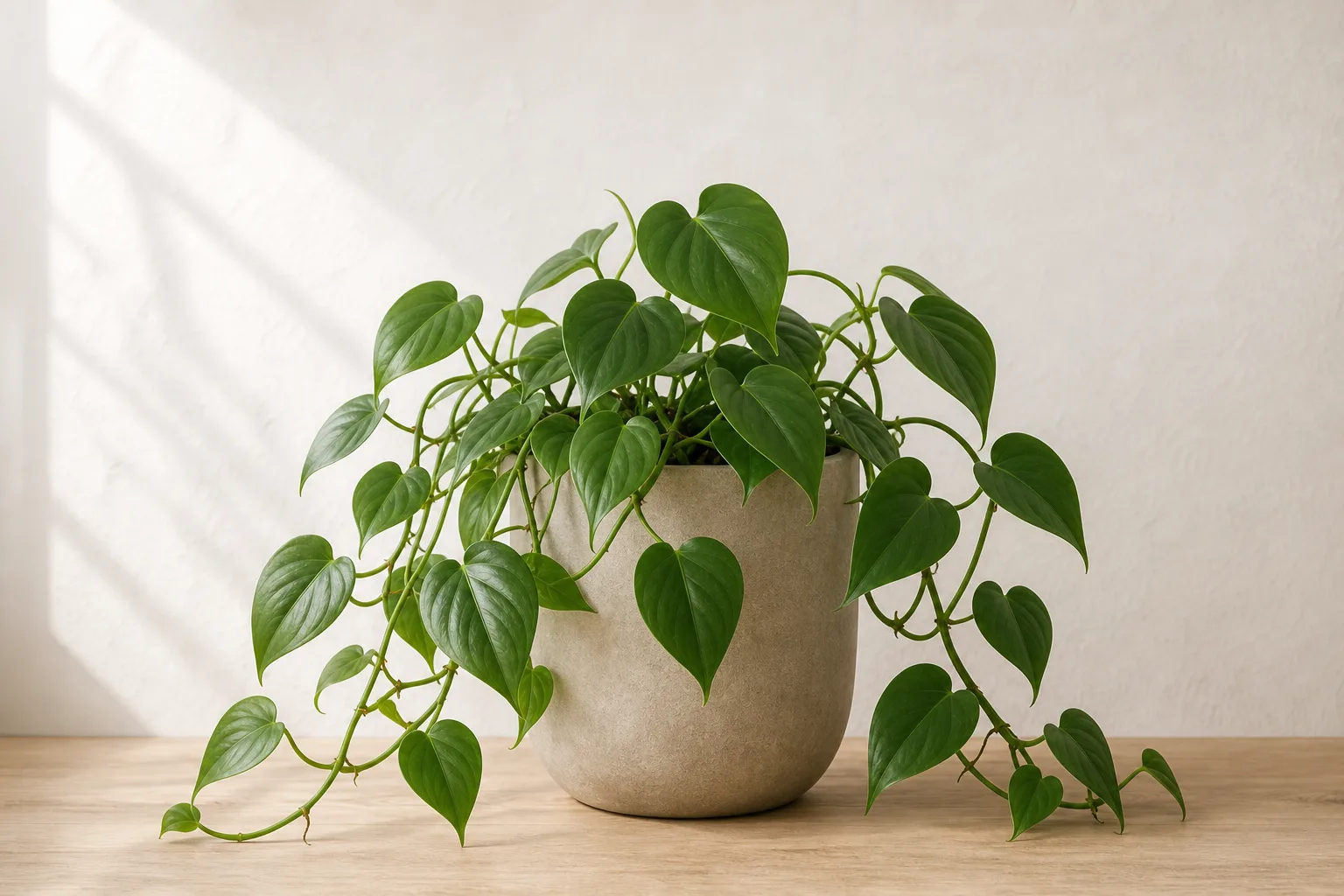 beginner
Philodendron hederaceum
Heartleaf philodendron (Philodendron hederaceum) is a vining aroid grown for its glossy, heart-shaped leaves and forgiving nature. Native to the tropical forests of Central and South America and the Caribbean, it climbs and trails readily, making it a staple for shelves, hanging baskets, and moss poles. It tolerates lower light better than most houseplants, but grows fuller and larger-leaved with bright, filtered exposure.
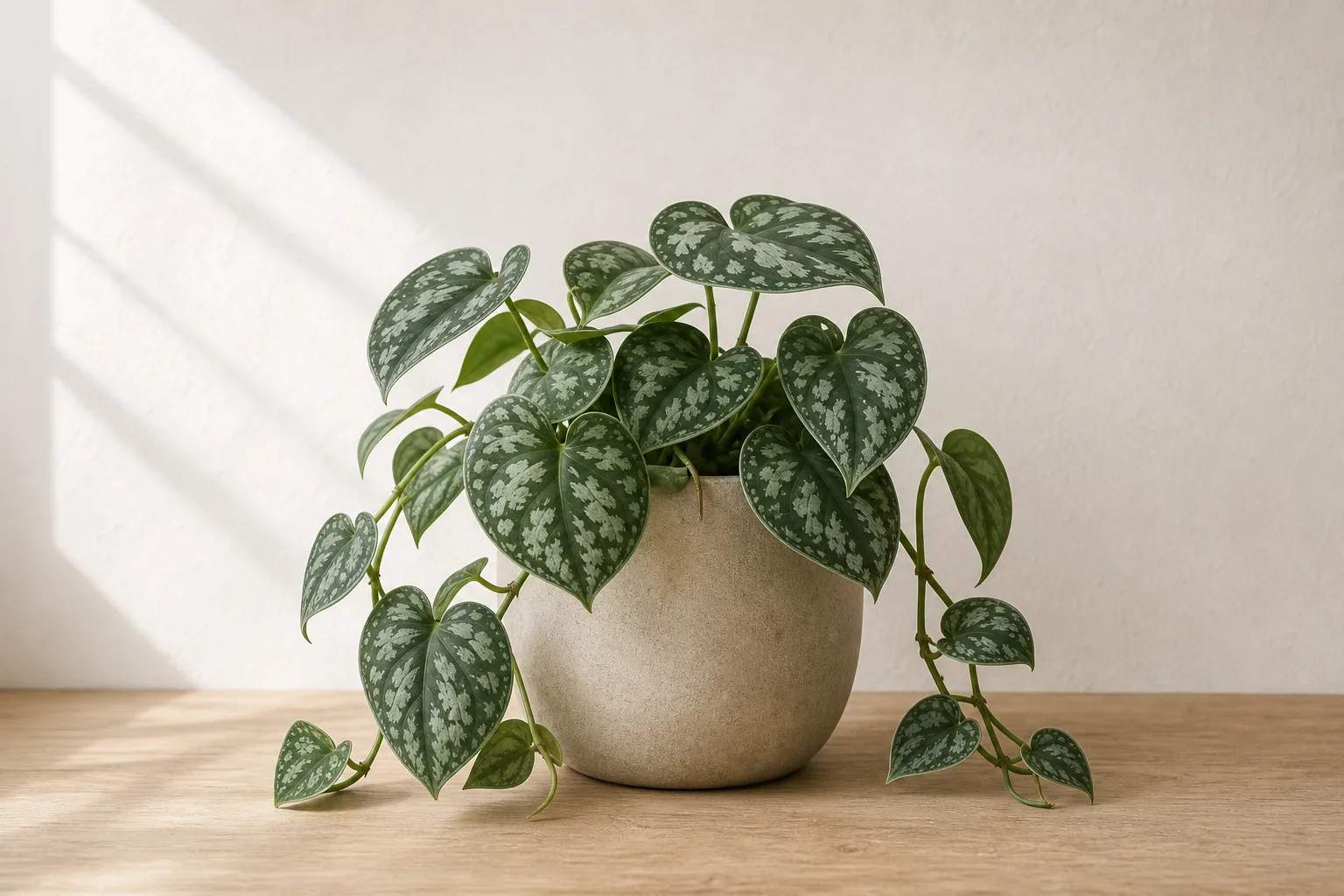 beginner
Scindapsus pictus
Silver satin pothos (Scindapsus pictus) is a trailing tropical aroid grown for its matte green leaves splashed with silvery blotches. Native from Bangladesh through western and central Malesia, it climbs by rootlets in the wild and trails gracefully from a shelf, hanging basket, or moss pole indoors.
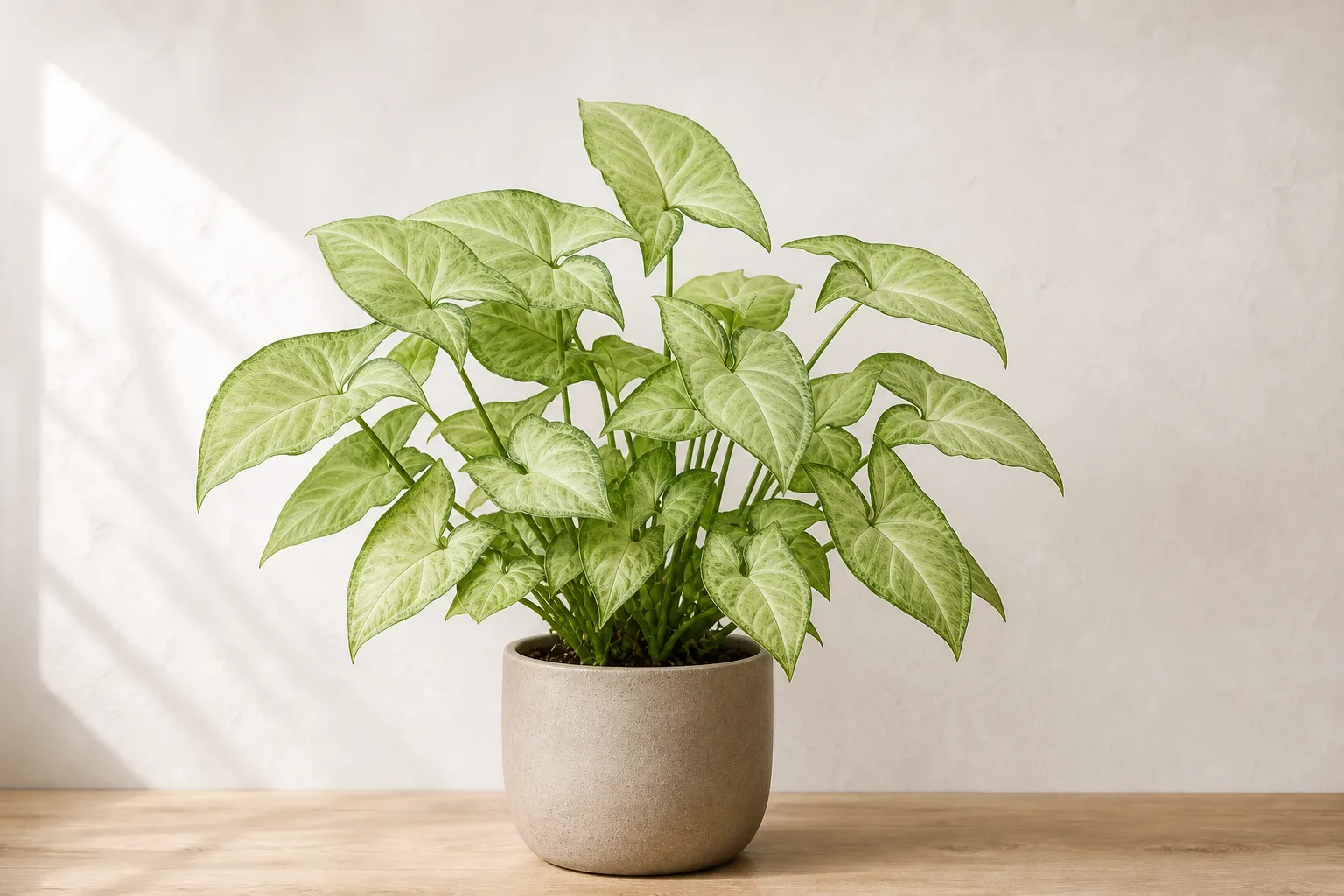 beginner
Syngonium podophyllum
Arrowhead vine (Syngonium podophyllum) is a climbing aroid from Mexico to tropical America, grown for its arrow-shaped juvenile leaves that mature into deeply lobed, multi-part leaves. Indoors it trails from a basket or climbs a moss pole with very little fuss.
 beginner
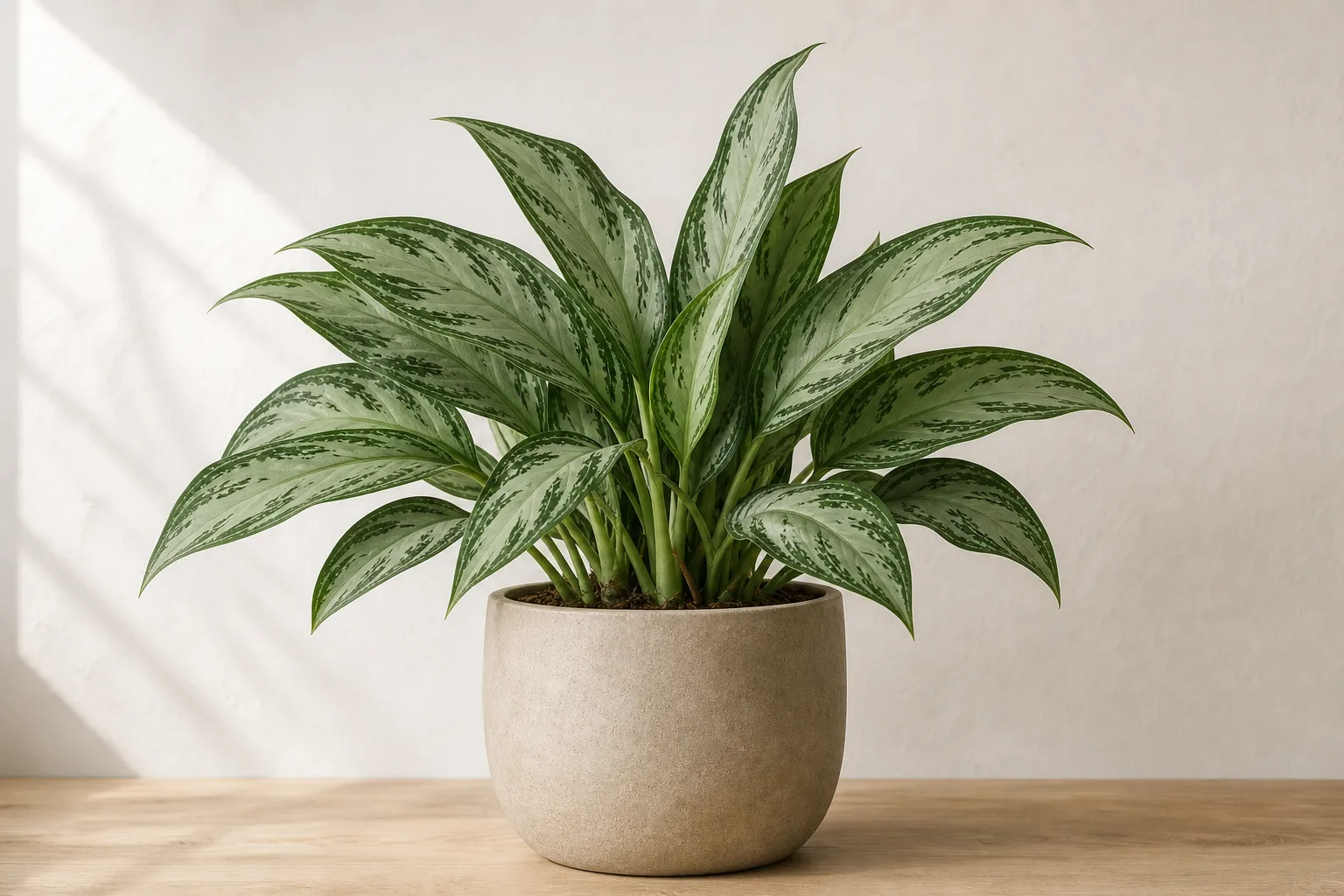
Aglaonema commutatum
Chinese evergreen (Aglaonema commutatum) is a slow-growing foliage plant prized for its patterned, silver-and-green leaves and remarkable tolerance of low indoor light. Native to the Philippines and Sulawesi in Central Malesia, it sits well on a desk or in a dim corner where few other plants thrive. It is a durable, beginner-friendly houseplant, but - like other aroids - it is toxic if chewed.
 beginner
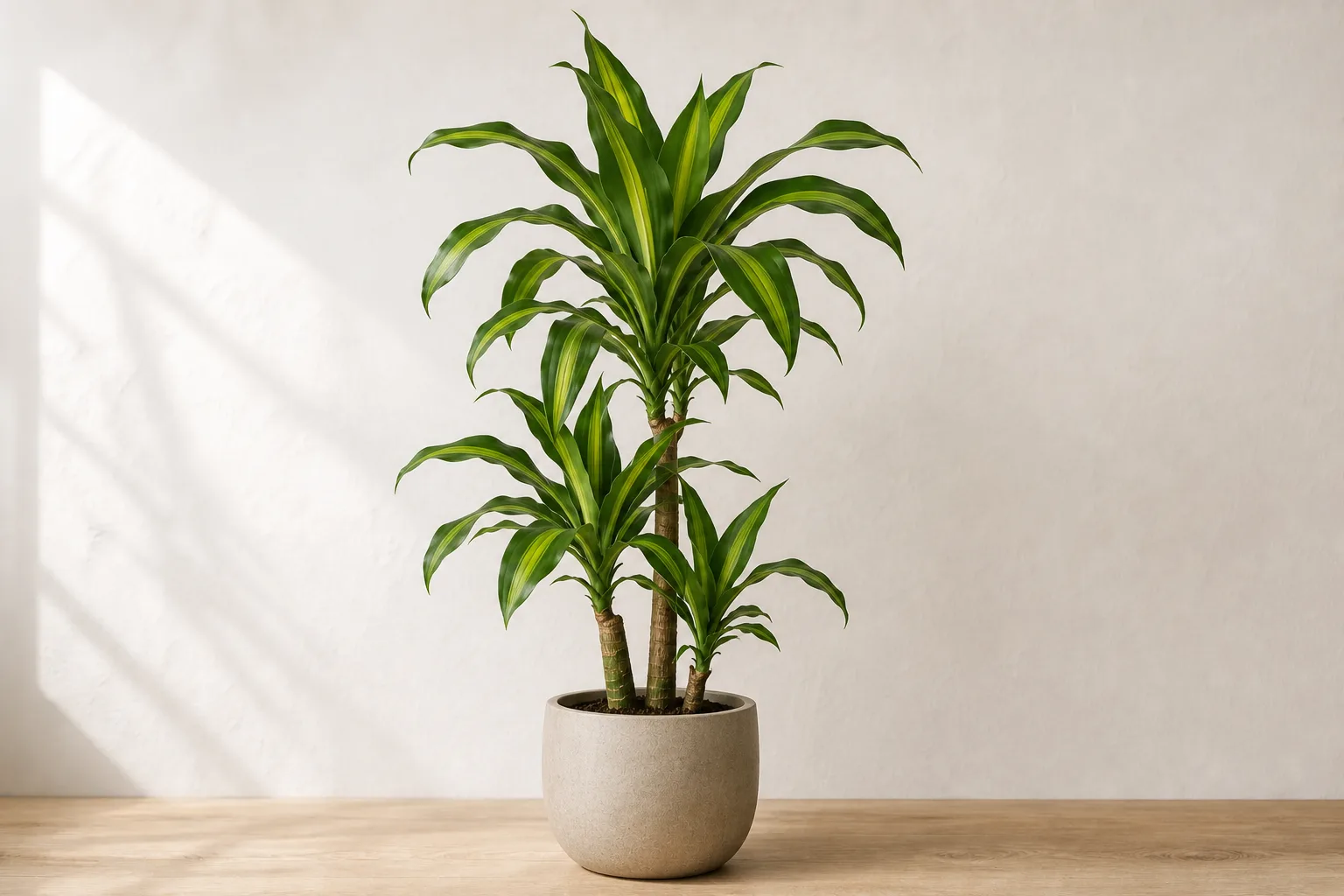
Dracaena fragrans
Corn plant (Dracaena fragrans) is a tropical African shrub grown indoors as a tall, cane-form foliage plant with arching, sword-shaped leaves. Its woody stem sheds lower leaves over time, and the leaf rosettes cluster near the top like a small indoor tree.
 beginner
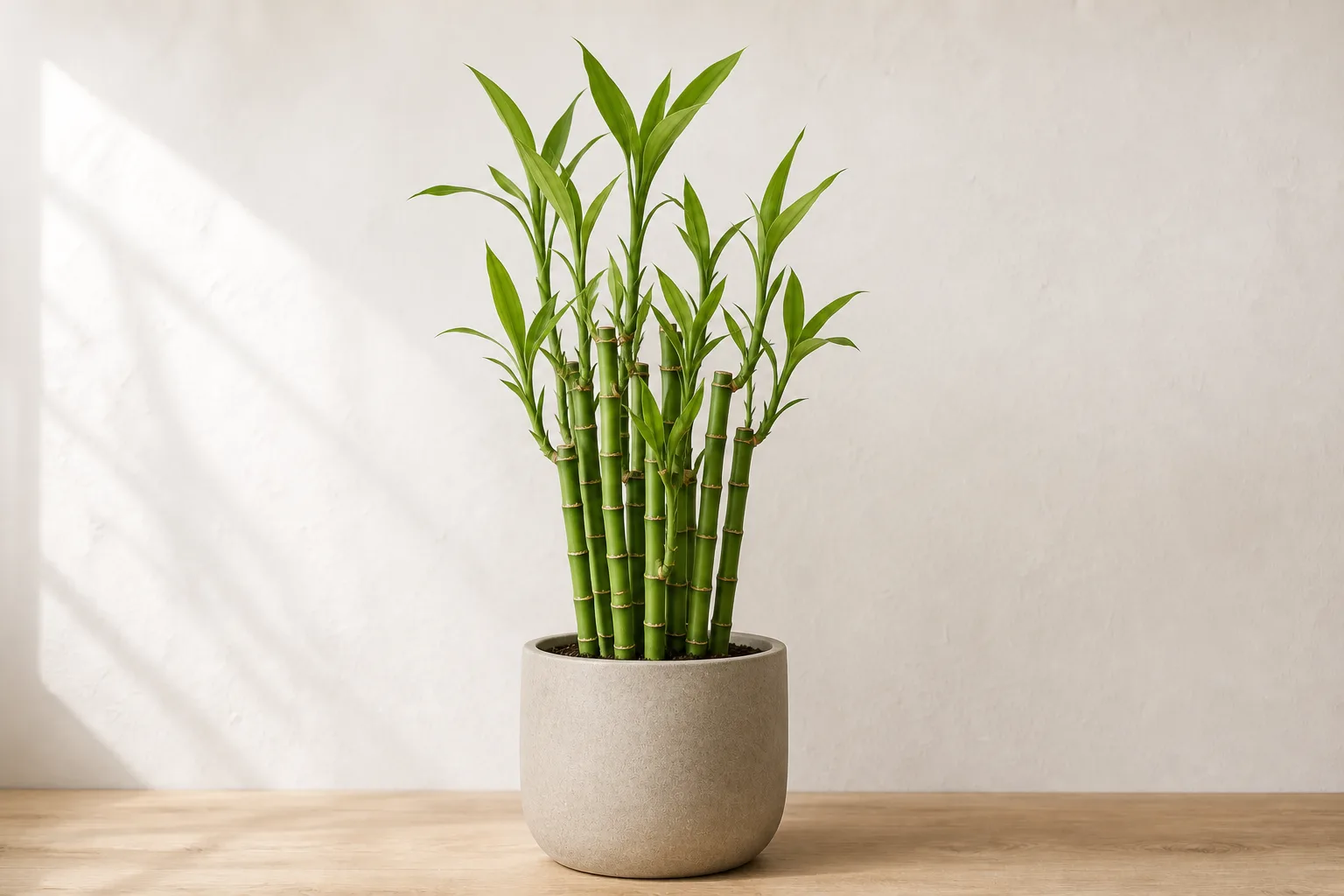
Dracaena sanderiana
Lucky bamboo (Dracaena sanderiana) is not bamboo at all but a tropical African dracaena with fleshy, bamboo-like canes, often trained into spirals, braids, or hearts. It grows happily in water with pebbles or in moist soil, making it one of the easiest and most symbolic houseplants.
 Pet-friendlier
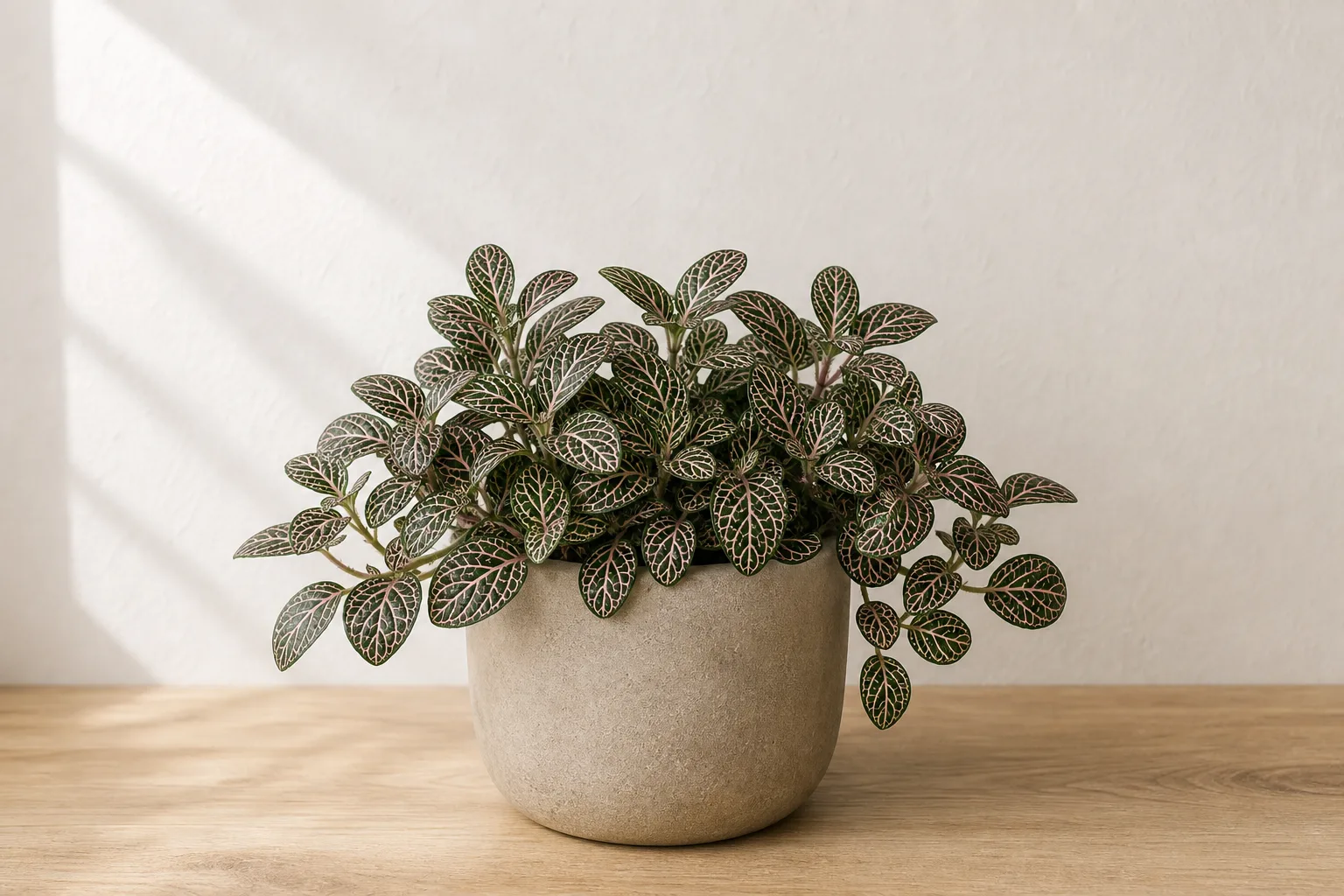
Fittonia albivenis
Nerve plant (Fittonia albivenis) is a creeping evergreen from the tropical rainforests of South America, prized for deep olive-green leaves netted with white, pink, or red veins. It is a small, low-growing plant that thrives in humid terrariums, pots, and hanging baskets.
 Pet-friendlier
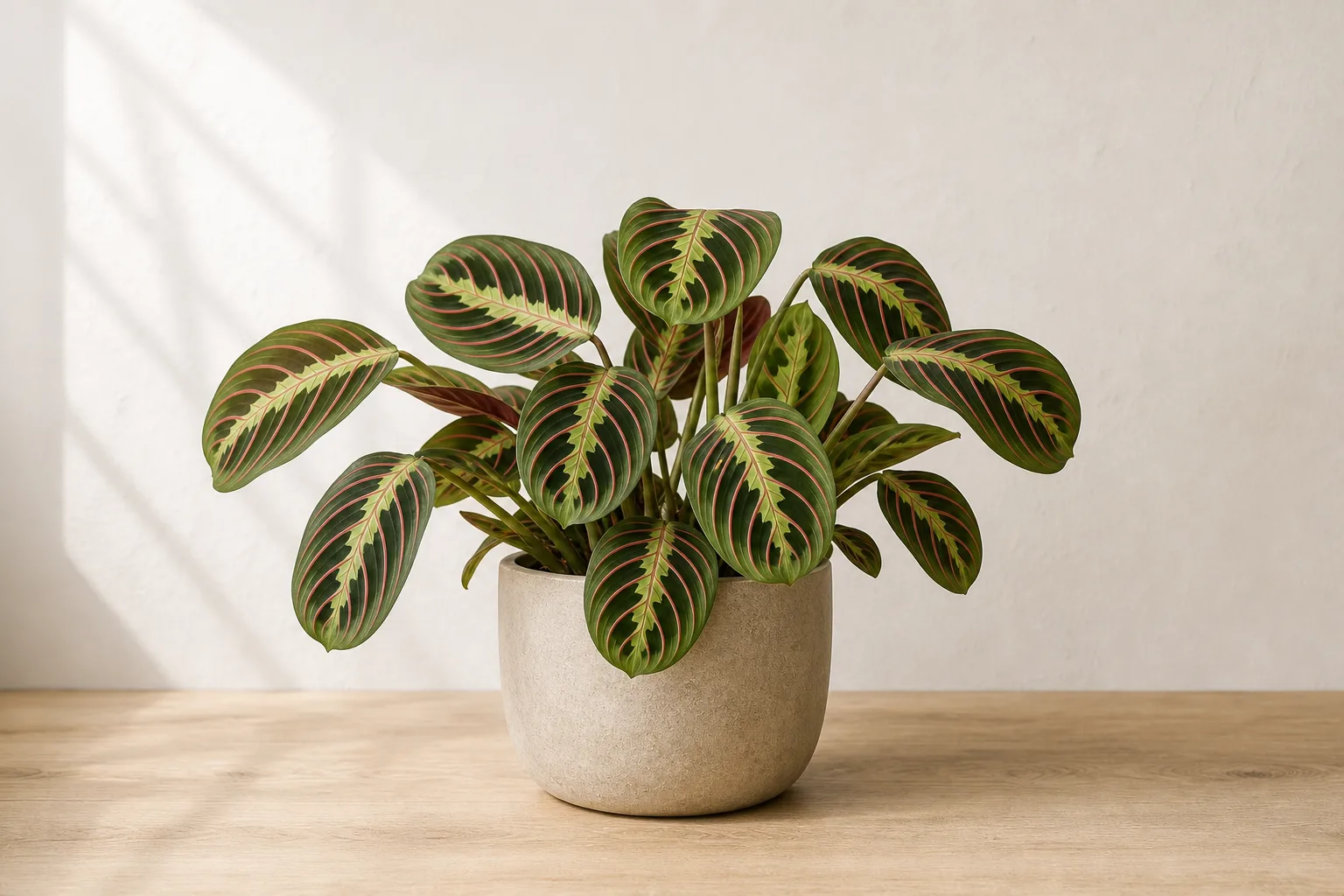
Maranta leuconeura
Prayer plant (Maranta leuconeura) is a low-growing tropical perennial from Brazil whose leaves fold upward at night like hands in prayer, then flatten again by day. Its oval leaves are marked with striking fishbone-pattern veins and dark blotches along the midrib.
 Pet-friendlier
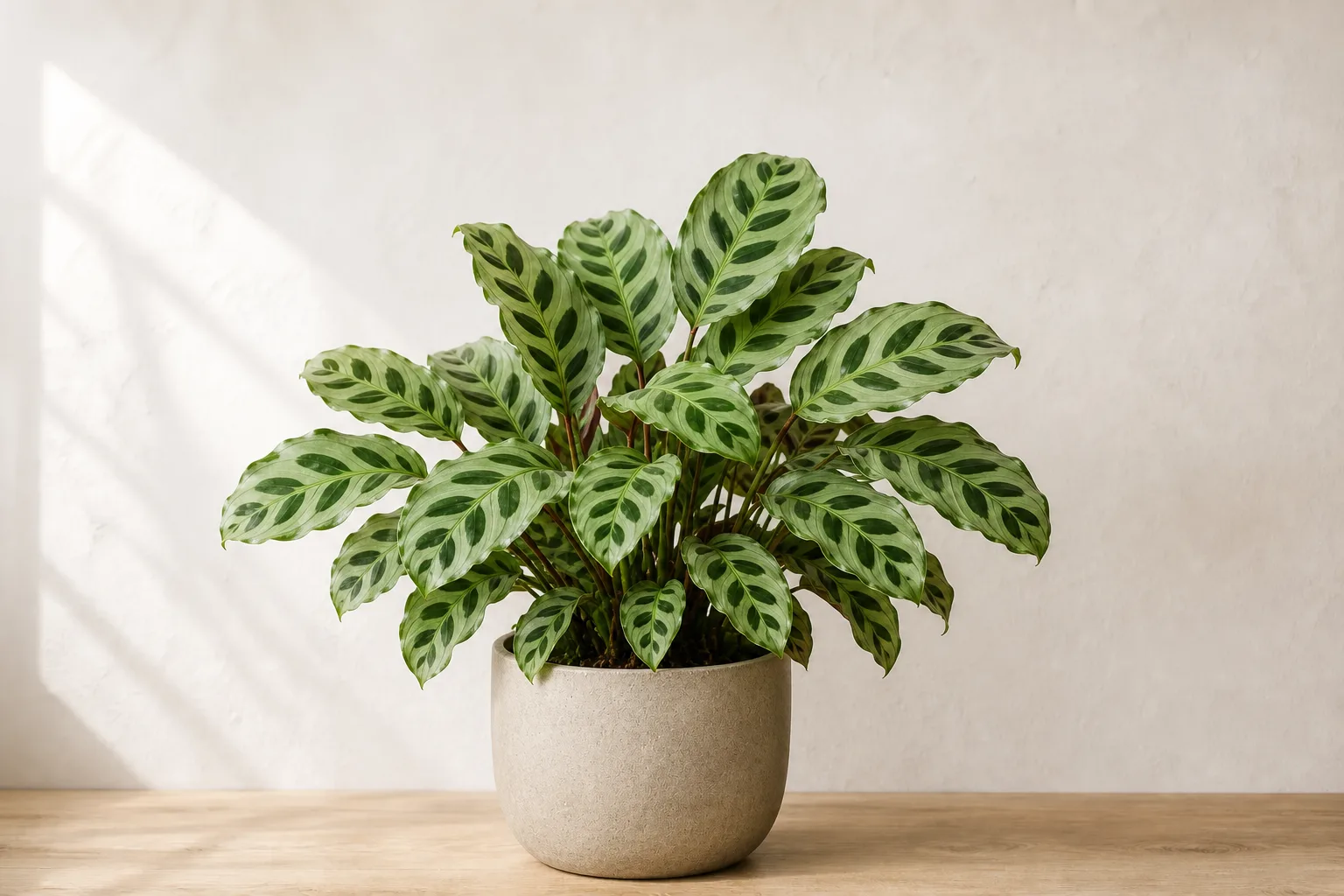
Goeppertia makoyana
Peacock plant (Goeppertia makoyana, long known as Calathea makoyana) is a tropical perennial from eastern Brazil grown for its papery, oval leaves patterned like peacock tail feathers, with dark blotches along the veins and rich purple undersides. Like other prayer plants, its leaves fold up in the evening and reopen at sunrise.
 Pet-friendlier
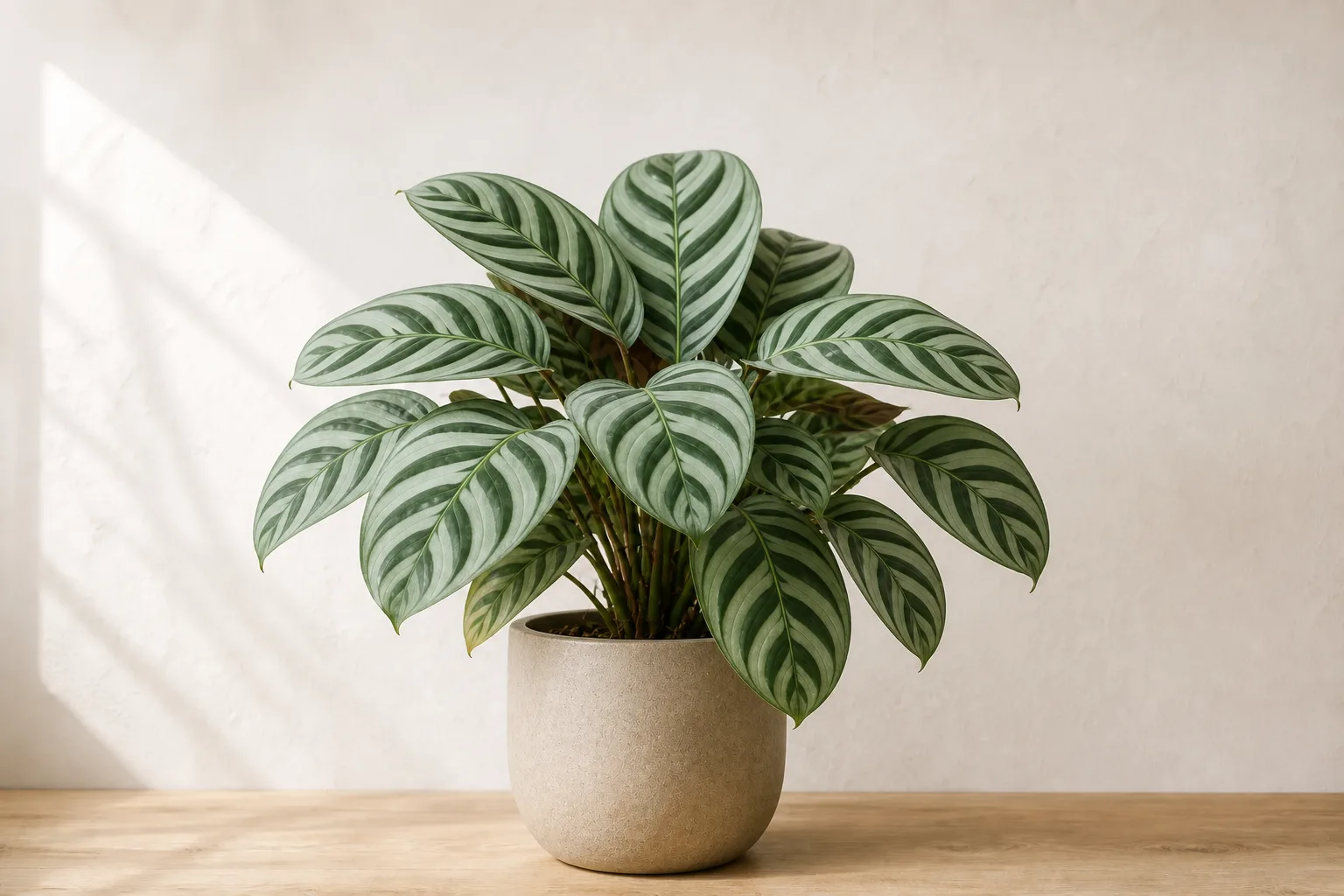
Ctenanthe burle-marxii
Ctenanthe burle-marxii is a compact Brazilian prayer-plant relative grown for its fishbone-patterned leaves - pale green with dark green bands along the midrib and purple undersides. Native to Brazil's Espirito Santo, it folds its leaves up at night, tolerates lower light than many tropicals, and stays a tidy tabletop size indoors.
 Pet-friendlier
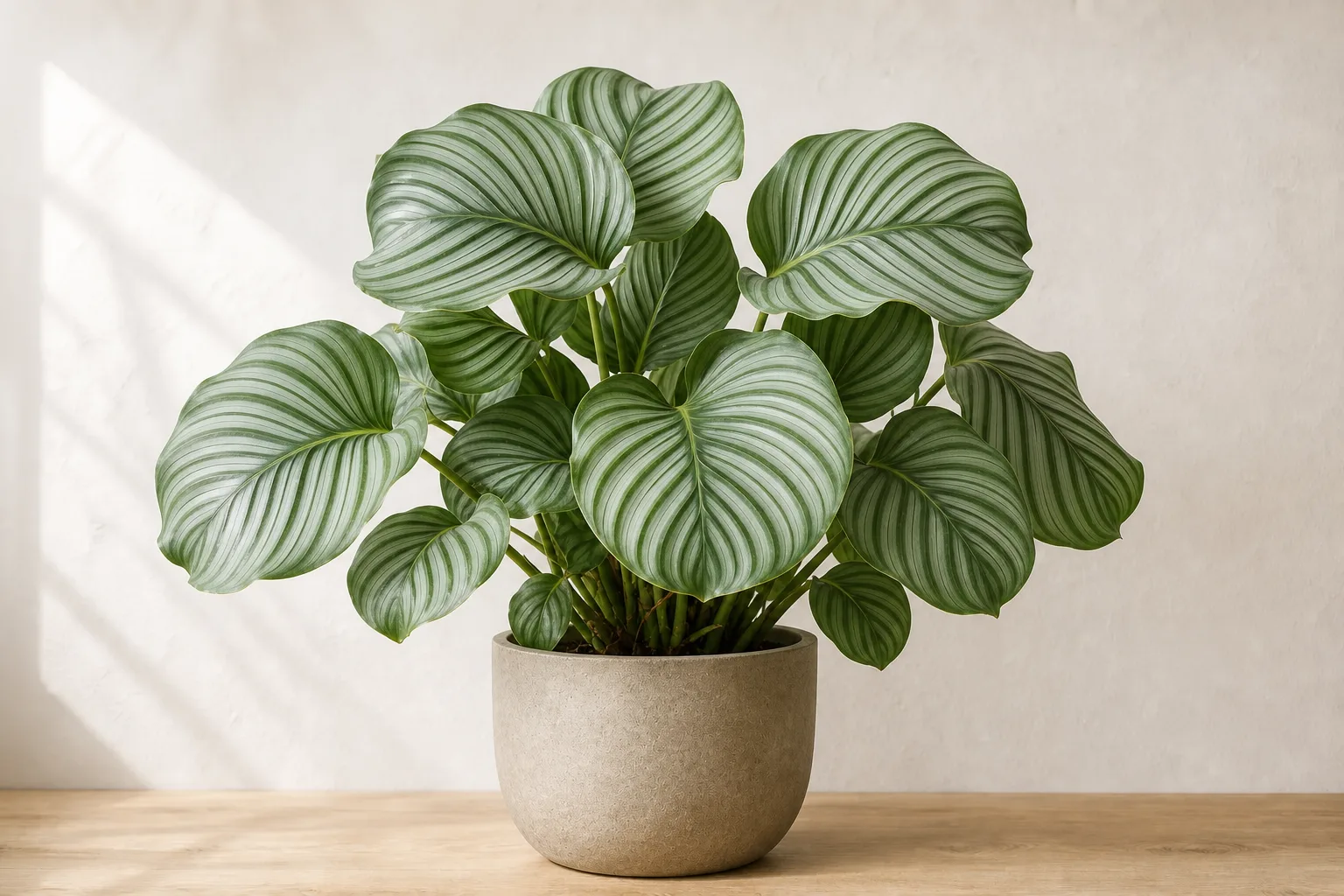
Goeppertia orbifolia
Goeppertia orbifolia (long sold as Calathea orbifolia) is a broad-leaved prayer plant from eastern Brazil grown for its large, rounded, silver-striped leaves. Its wide round leaves and nightly folding habit make it one of the most striking marantas, but it asks for consistently high humidity, filtered light, and careful water quality.
 Pet-friendlier
Ctenanthe setosa
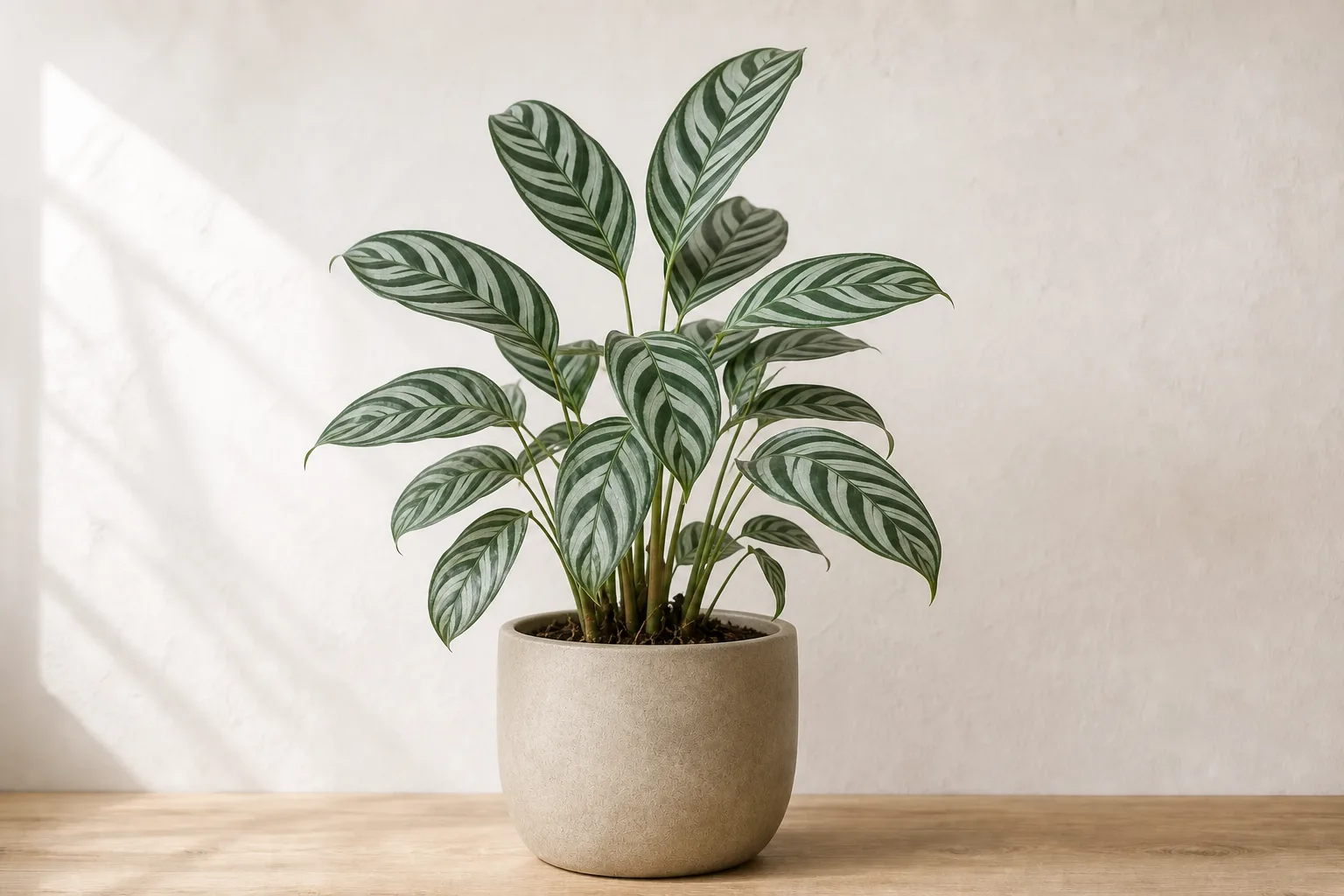
Ctenanthe setosa, the never-never plant, is an upright Brazilian prayer plant grown for its long, velvety leaves striped silver and dark green with deep purple undersides. Larger and more vigorous than its relative Ctenanthe burle-marxii, it folds its leaves up at night and makes a graceful indoor foliage plant in warm, humid rooms.
 Pet-friendlier
Schlumbergera truncata
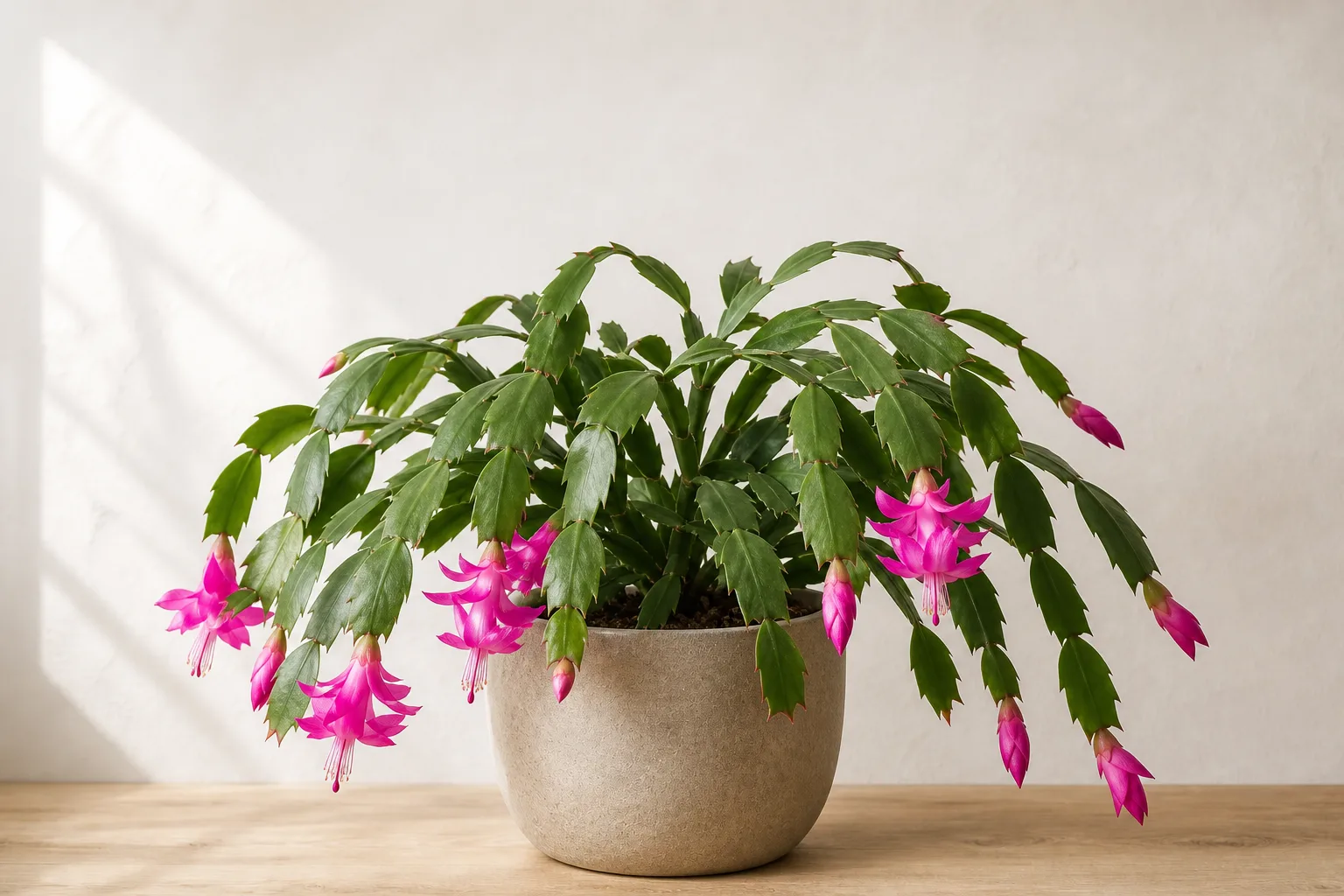
Schlumbergera truncata, the Christmas or Thanksgiving cactus, is an epiphytic cactus from the coastal mountains of southeastern Brazil with flattened, segmented stems and vivid winter flowers. Unlike desert cacti it wants filtered light and regular moisture, and it is listed as non-toxic to cats and dogs.
 Pet-friendlier
Phalaenopsis amabilis
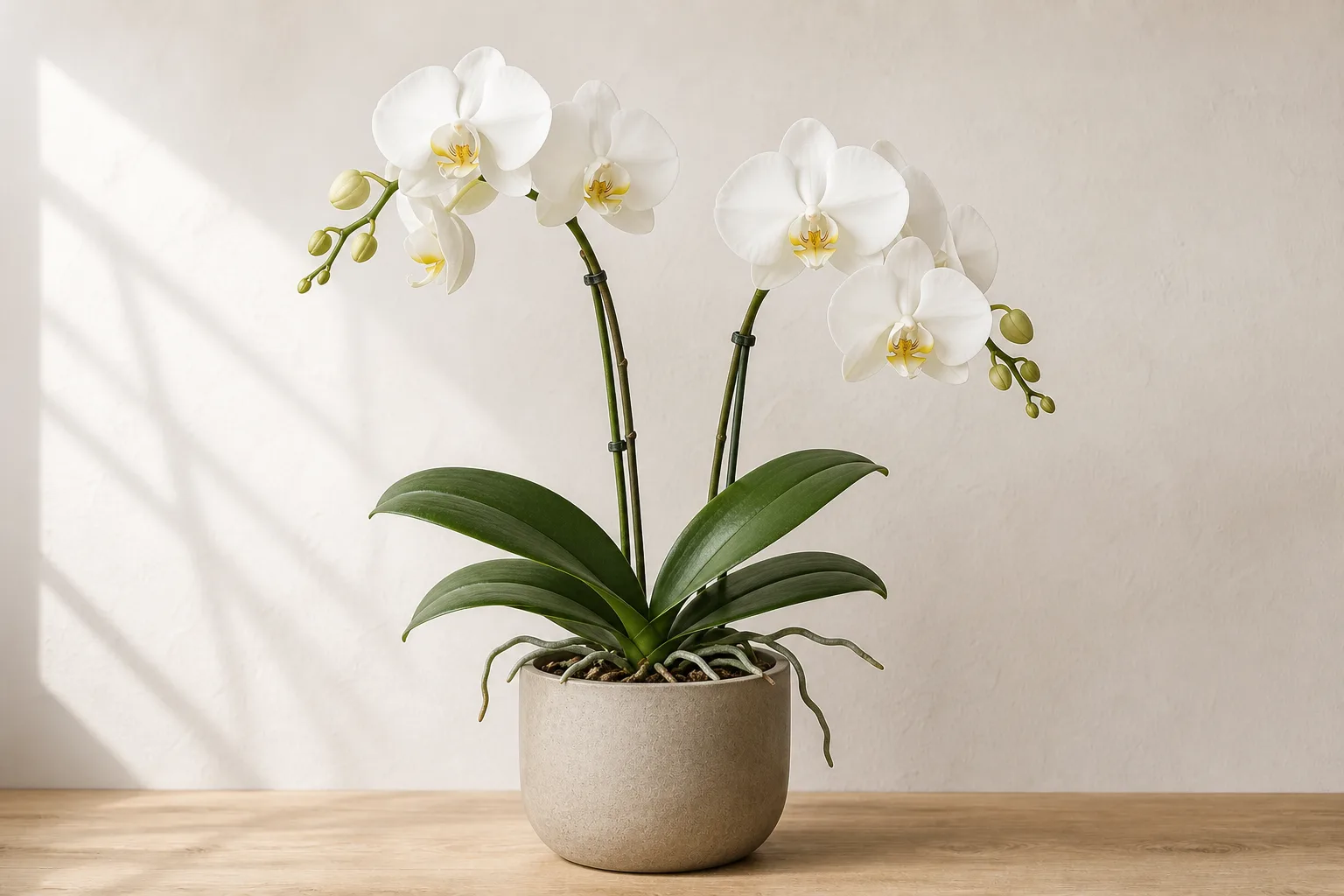
Moth orchid (Phalaenopsis amabilis) is the white-flowered species behind most supermarket 'moth orchids.' A tropical epiphyte native to Malesia and northeastern Australia, it grows on trees with arching sprays of long-lasting white flowers. Indoors it wants bright, filtered light, an airy bark mix, and watering based on root color rather than a calendar. It is non-toxic to pets.
 intermediate
Anthurium andraeanum
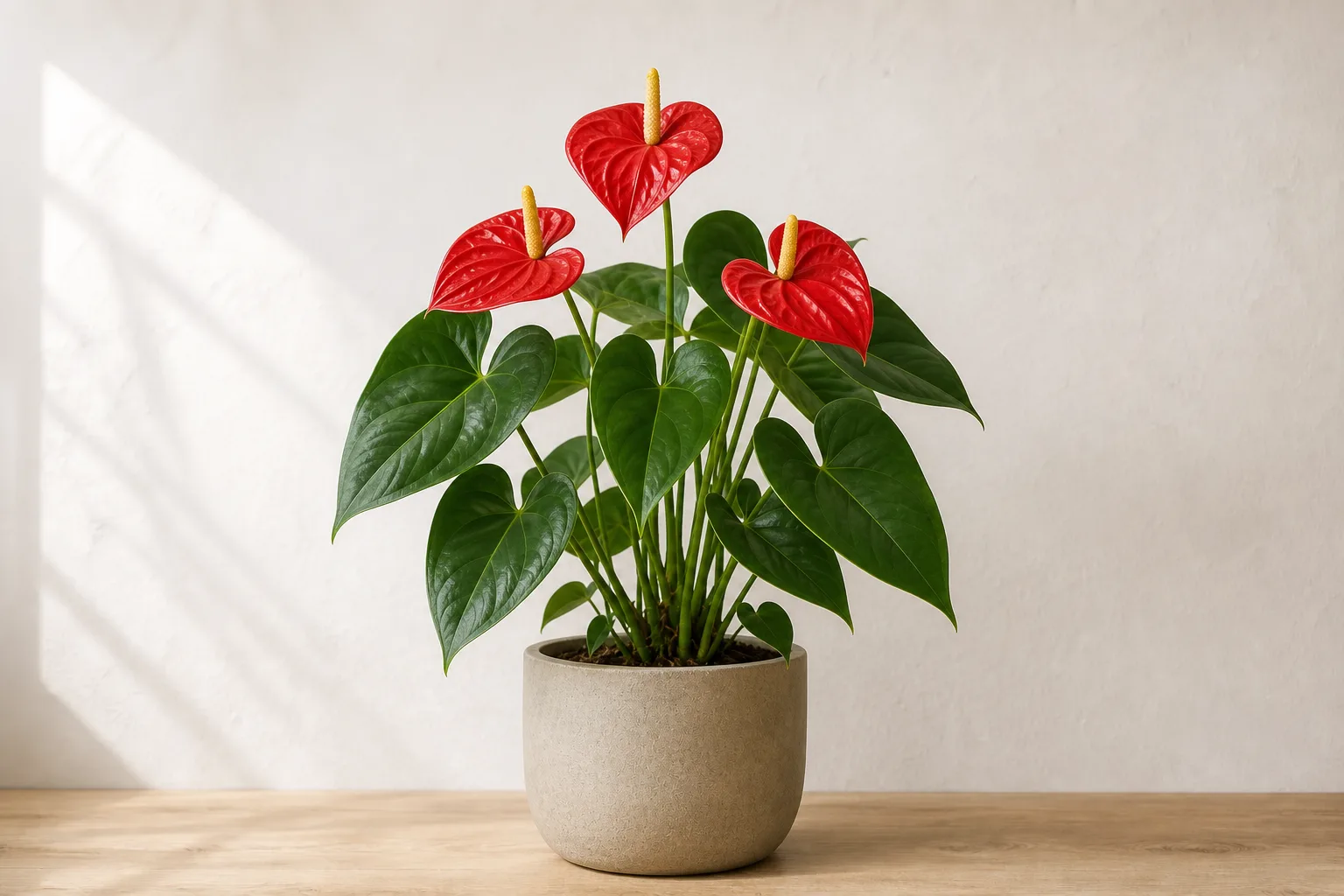
Flamingo flower (Anthurium andraeanum) is a tropical aroid grown for its glossy, heart-shaped leaves and waxy, palette-shaped spathes in red, pink, or white around a creamy spadix. Native to Colombia and Ecuador, it blooms intermittently through the year indoors when kept warm, humid, and in bright filtered light.
 Pet-friendlier
Guzmania lingulata
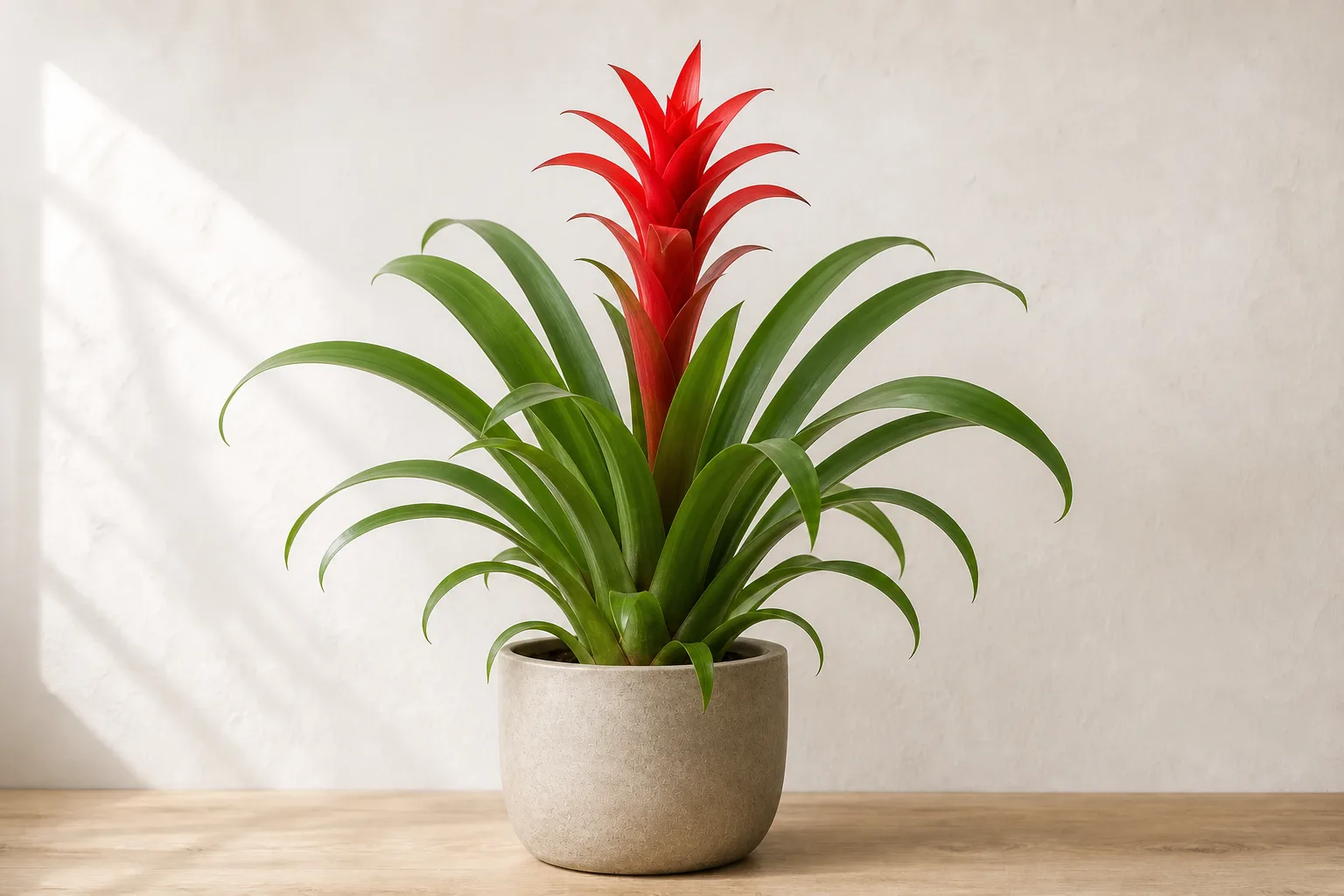
Scarlet star (Guzmania lingulata) is a tropical epiphytic bromeliad with a rosette of glossy green strap leaves and a globular head of red or orange bracts surrounding small white flowers. Native from southeastern Mexico through tropical America and the West Indies, it keeps its showy inflorescence for two to four months.
 Pet-friendlier
Hoya carnosa
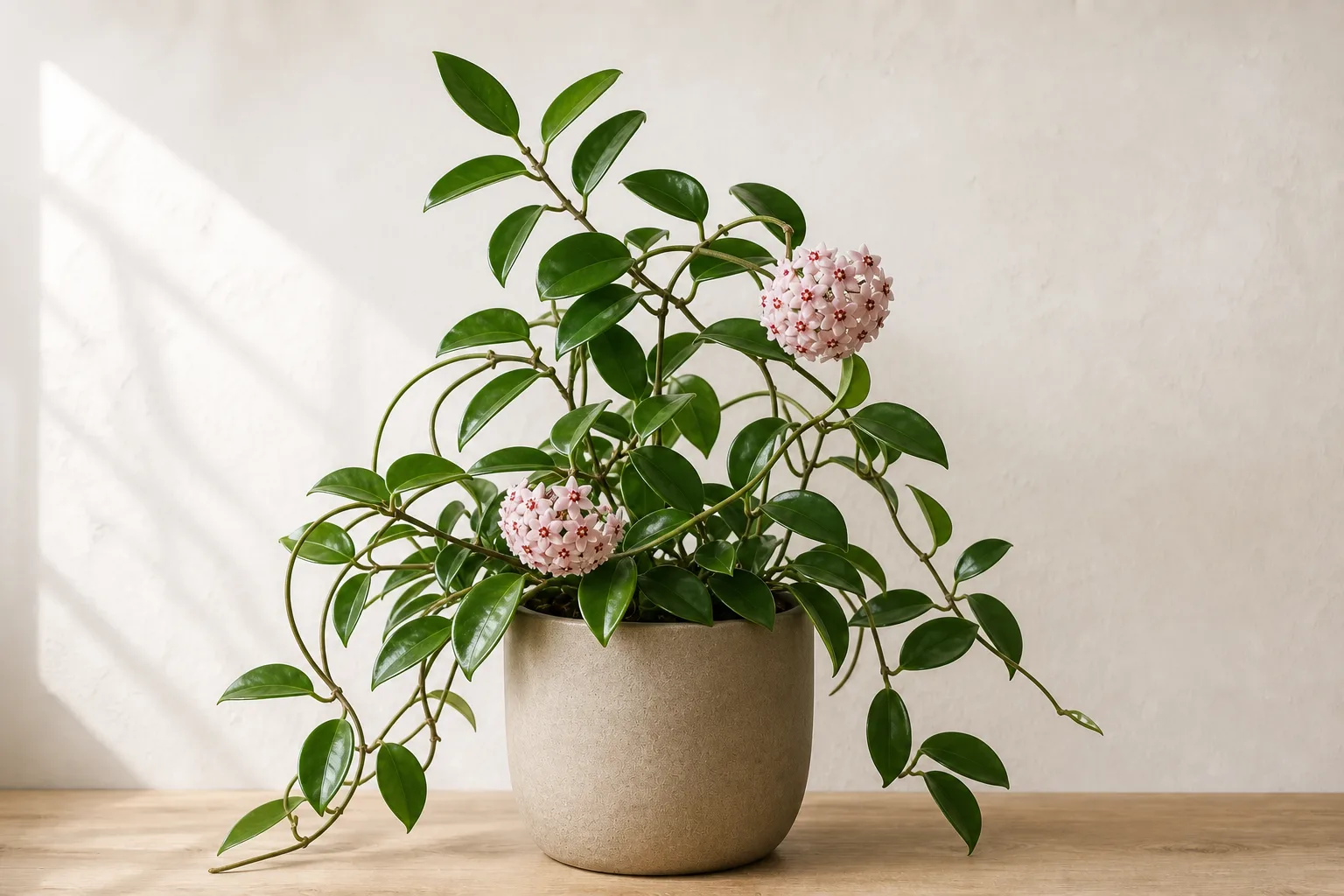
Wax plant (Hoya carnosa) is a trailing or climbing tropical vine with thick, waxy, dark green leaves and tight clusters of fragrant, star-shaped white-to-pink flowers with red-centered coronas. Native from southern China and Japan to Taiwan and Laos, it is a long-lived, easy flowering houseplant.
 Pet-friendlier
Aeschynanthus radicans
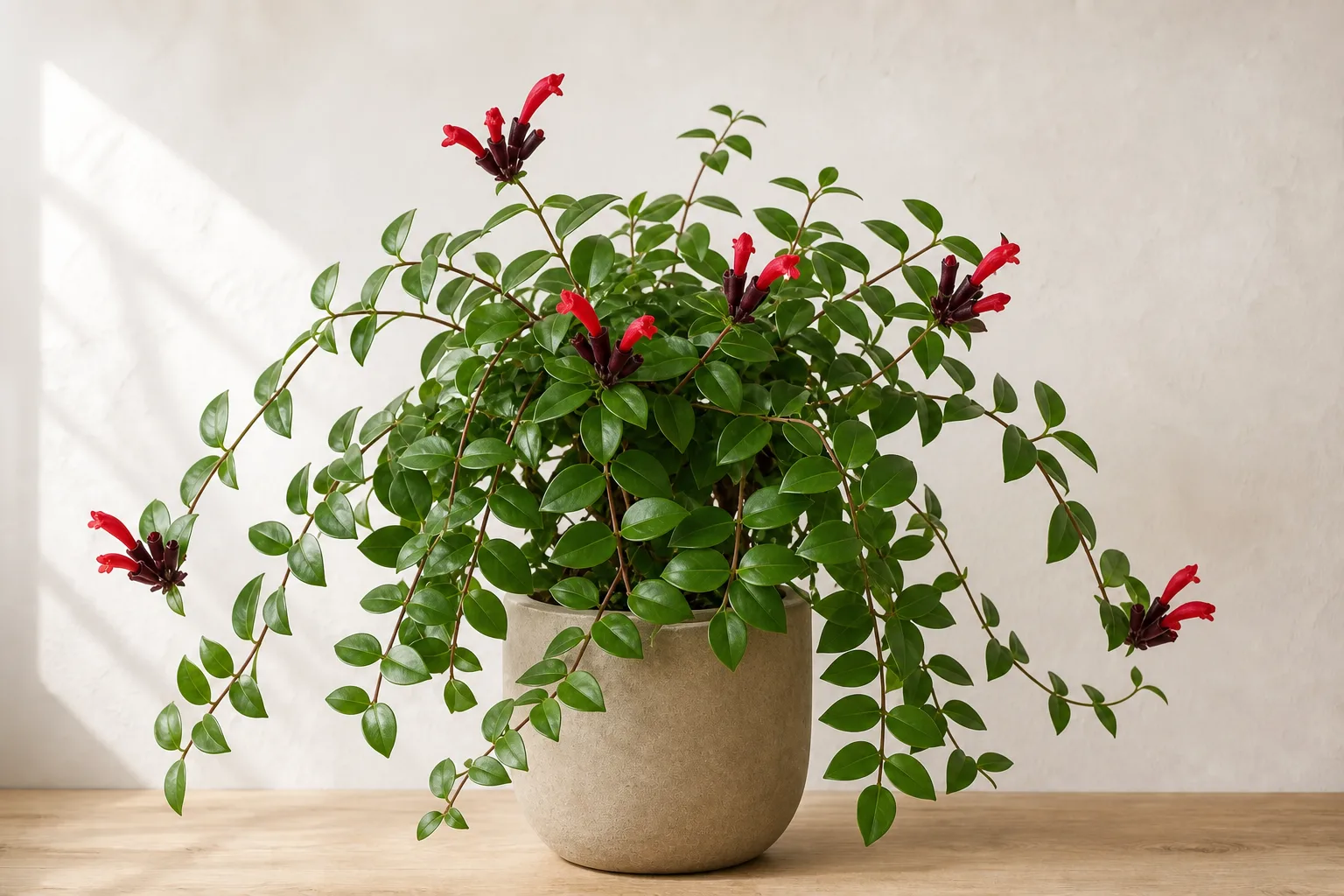
Lipstick plant (Aeschynanthus radicans) is a trailing, epiphytic tropical vine with waxy green leaves and clusters of tubular scarlet flowers that emerge from dark, lipstick-tube-like buds. Native to Thailand, the Malay Peninsula, Sumatra, and Borneo, it is a reliable flowering plant for hanging baskets.
 Pet-friendlier
Nematanthus gregarius
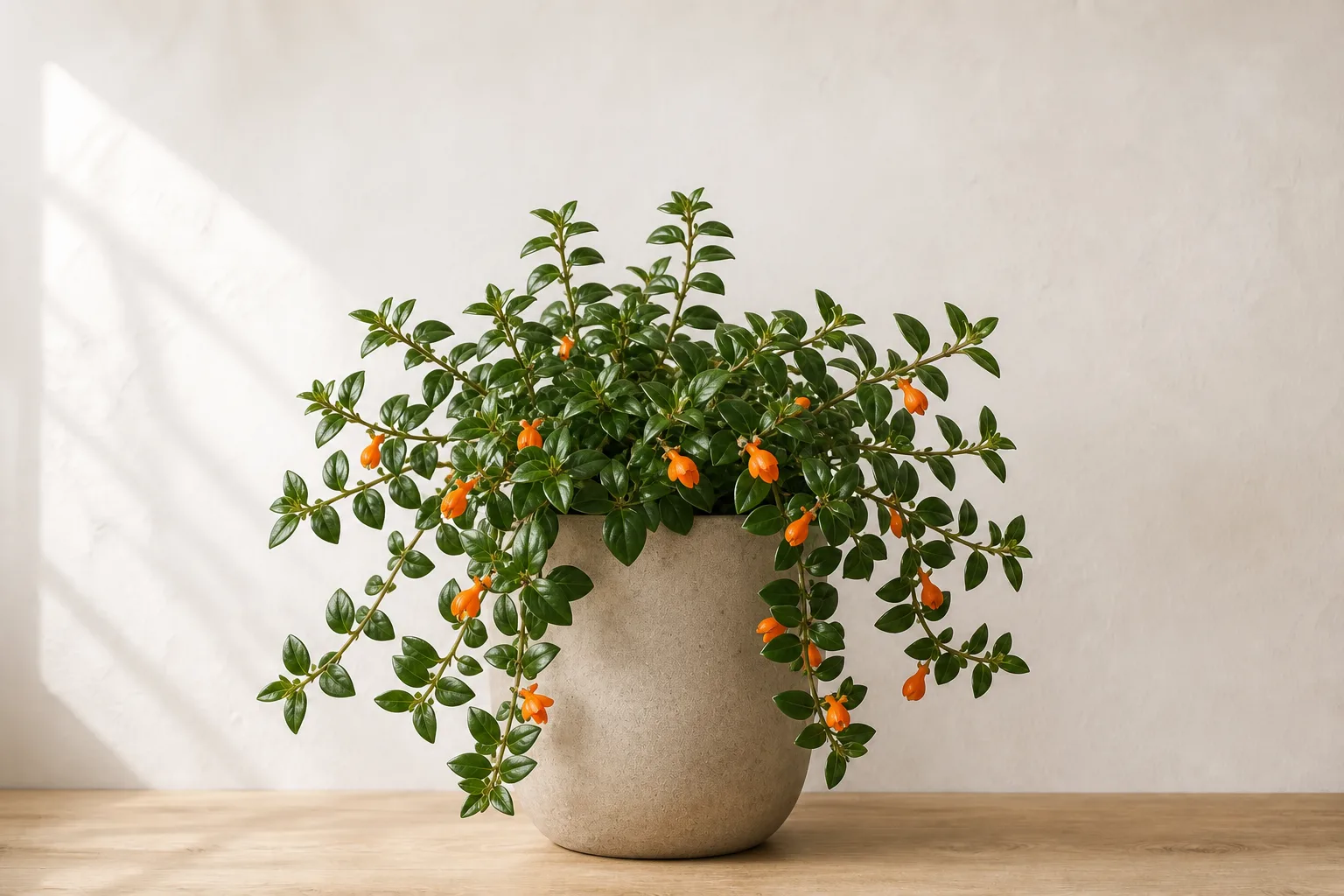
Goldfish plant (Nematanthus gregarius) is a trailing, epiphytic tropical plant with small, glossy, fleshy leaves and bright orange, pouch-like tubular flowers that resemble tiny goldfish. Native to southeastern Brazil, it is a compact, reliable bloomer for hanging baskets.
 Pet-friendlier
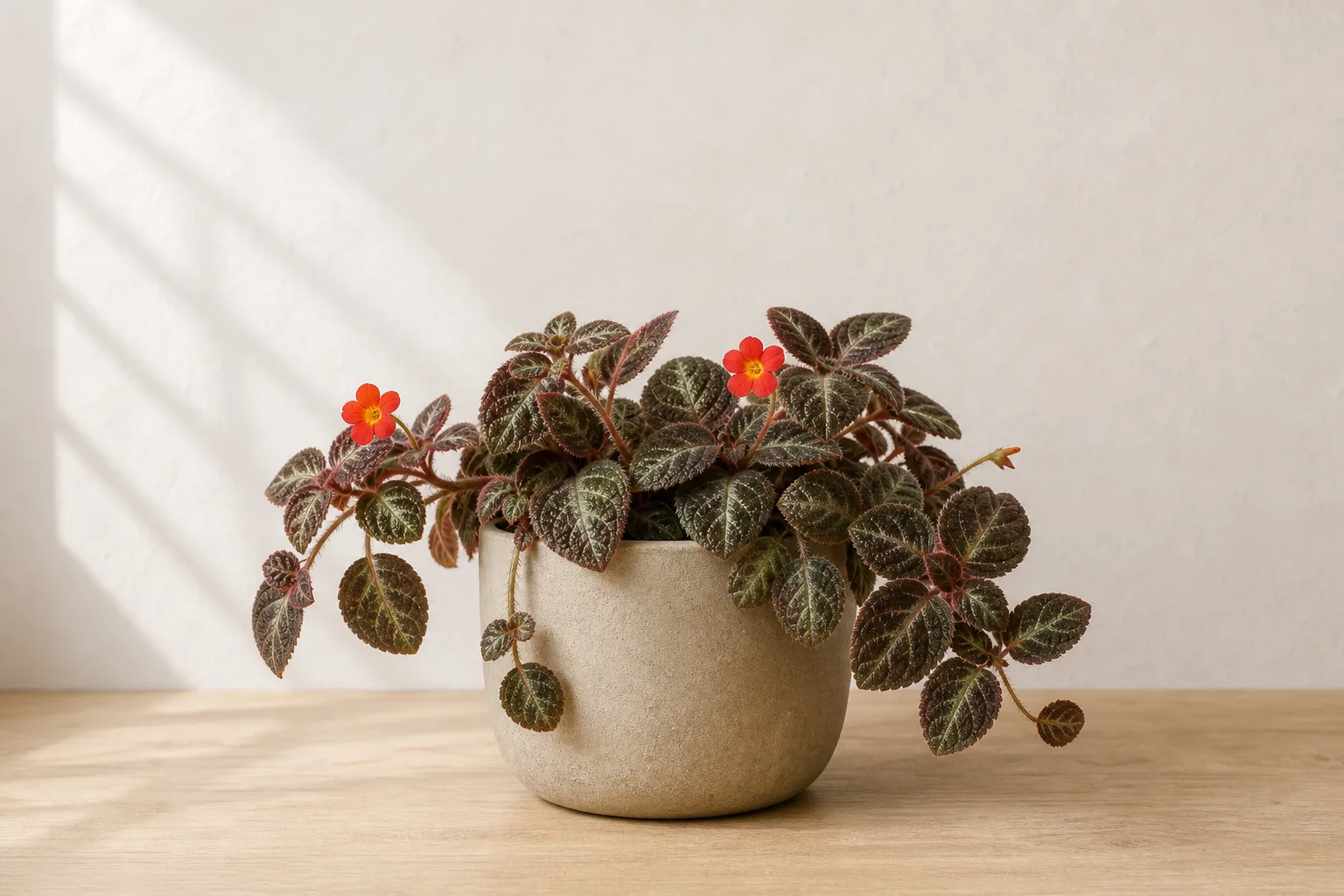
Episcia cupreata
Flame violet (Episcia cupreata) is a trailing tropical perennial with oval, velvety leaves marked by pale midribs and purple undersides, and scarlet-to-orange tubular flowers with yellow throats. Native from Nicaragua to northern Brazil, it is a colorful, creeping plant for hanging baskets and terrariums.
 Pet-friendlier
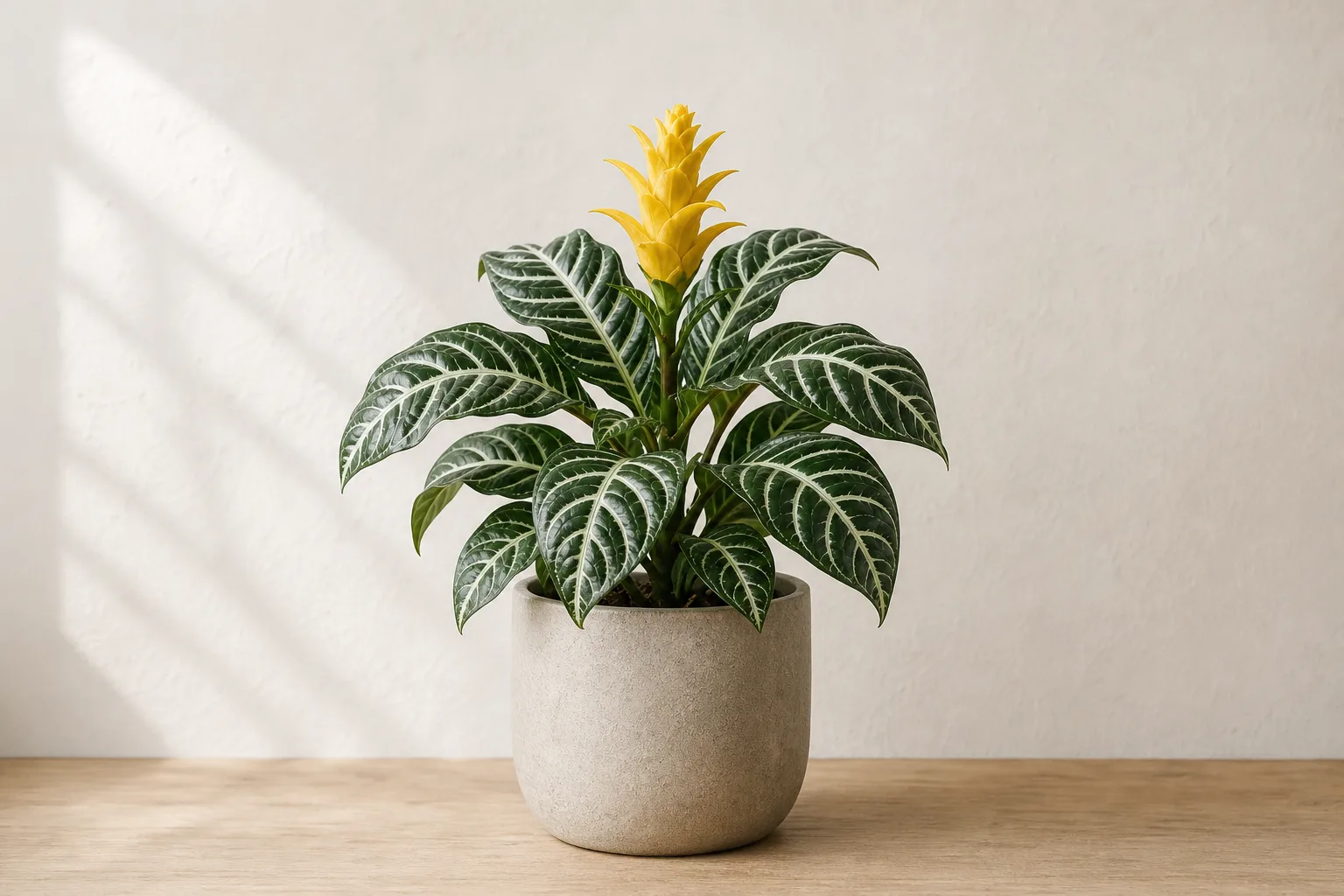
Aphelandra squarrosa
Zebra plant (Aphelandra squarrosa) is a tropical broadleaf evergreen grown for its glossy dark green leaves striped with bold white veins and its upright spikes of golden-yellow bracted flowers. Native to the Atlantic forests of Brazil, it makes a striking small houseplant that needs bright filtered light, warmth, and steady humidity.
 advanced
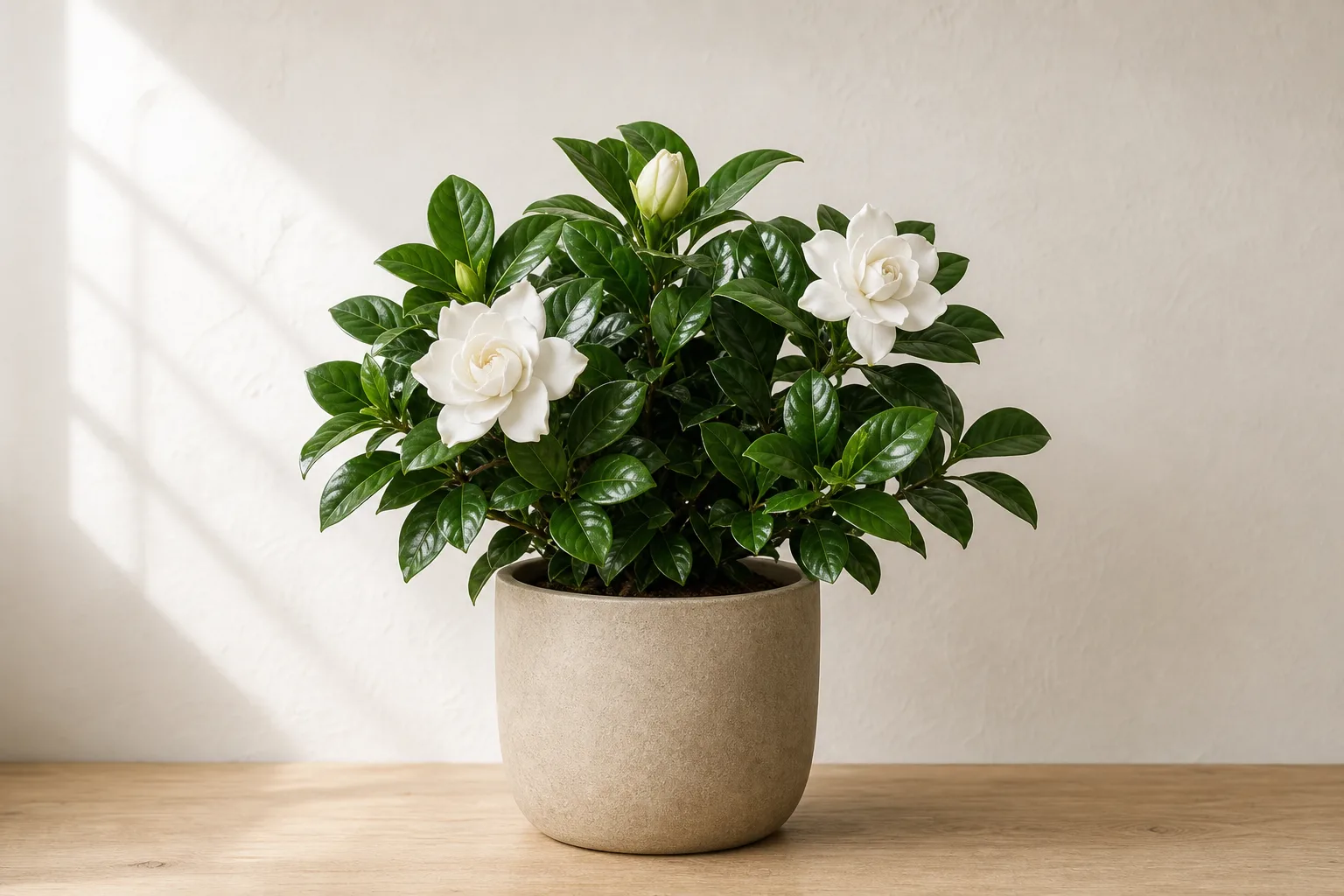
Gardenia jasminoides
Gardenia (Gardenia jasminoides) is an evergreen shrub from eastern Asia prized for its glossy dark leaves and intensely fragrant, waxy white flowers that fade to cream. Indoors it is a demanding but rewarding plant that needs bright light, acidic soil, steady moisture, and stable temperatures to flower well.
 intermediate
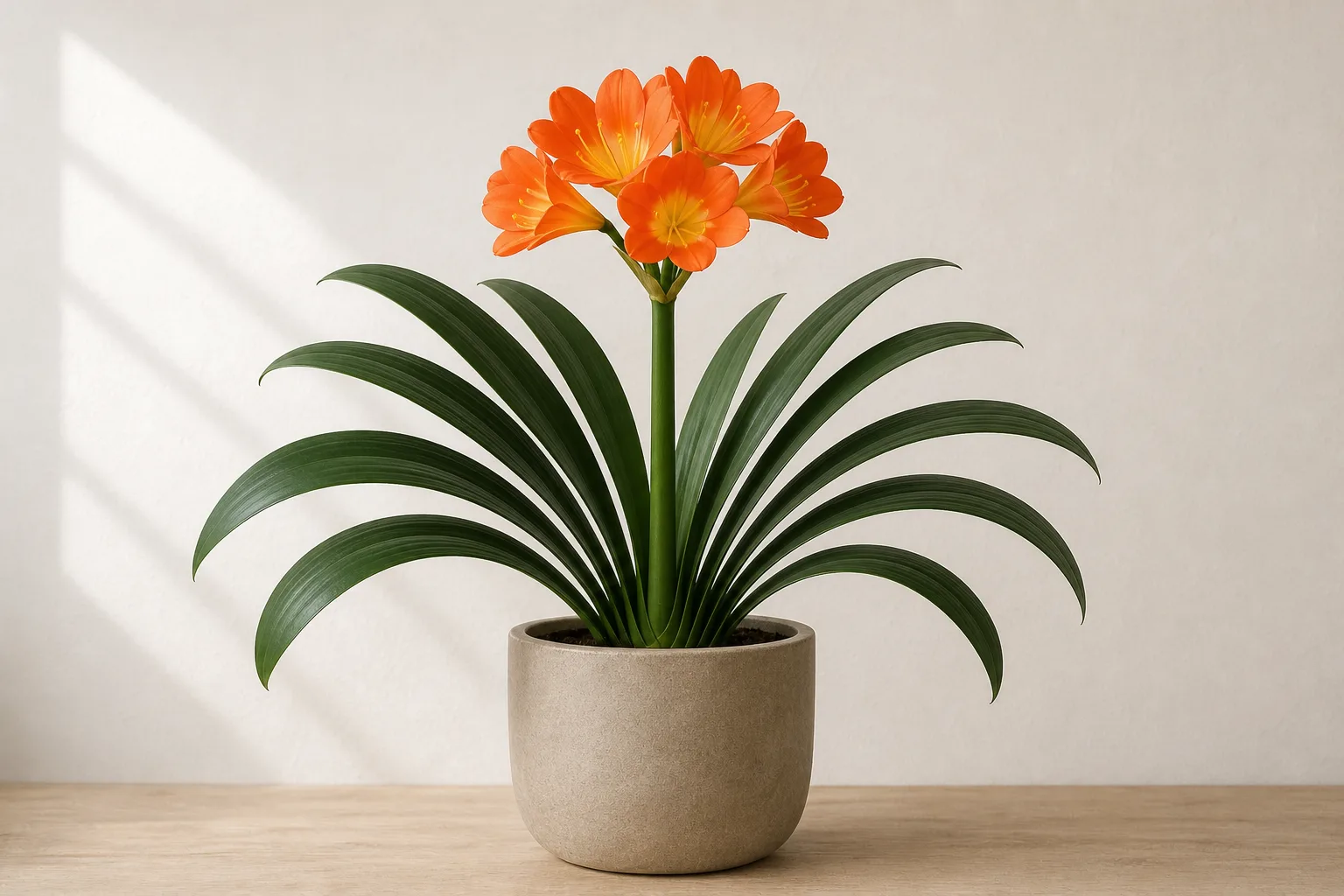
Clivia miniata
Bush lily (Clivia miniata) is a clump-forming, strap-leaved perennial from South Africa and Eswatini, grown for its evergreen dark green foliage and showy clusters of funnel-shaped orange flowers with yellow throats. A long-lived, low-maintenance houseplant, it flowers best when kept snug in its pot and given a cool rest in winter.
 Pet-friendlier
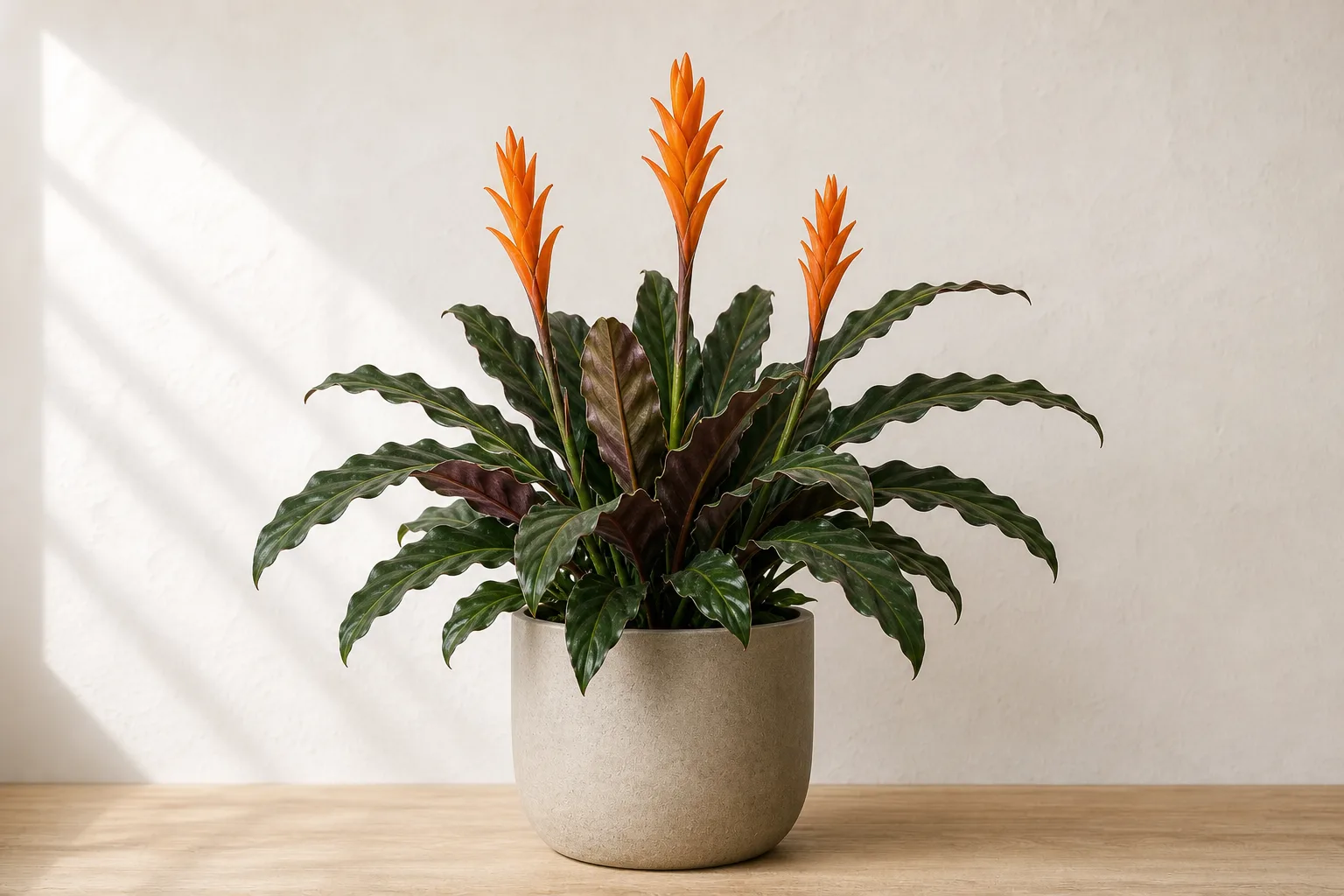
Goeppertia crocata
Eternal flame (Goeppertia crocata, formerly Calathea crocata) is a compact prayer-plant family perennial from the rainforests of eastern Brazil, grown for its glossy green leaves with maroon undersides and torch-like spikes of yellow-orange bracts. Its long-lasting flowers and pet-safe status make it a prized, if demanding, tropical houseplant.
Increase humidity by grouping compatible plants or using a humidifier; misting does not replace consistent root-zone care.