Key takeaways
- Give it bright to medium filtered light; direct sun scorches the leaves and low light narrows them.
- Water when the top of the mix dries and reduce in winter - this dracaena is sensitive to both overwatering and fluoride.
- Keep it out of reach of cats and dogs; it contains saponins that cause vomiting and drooling.
How to care for Corn Plant
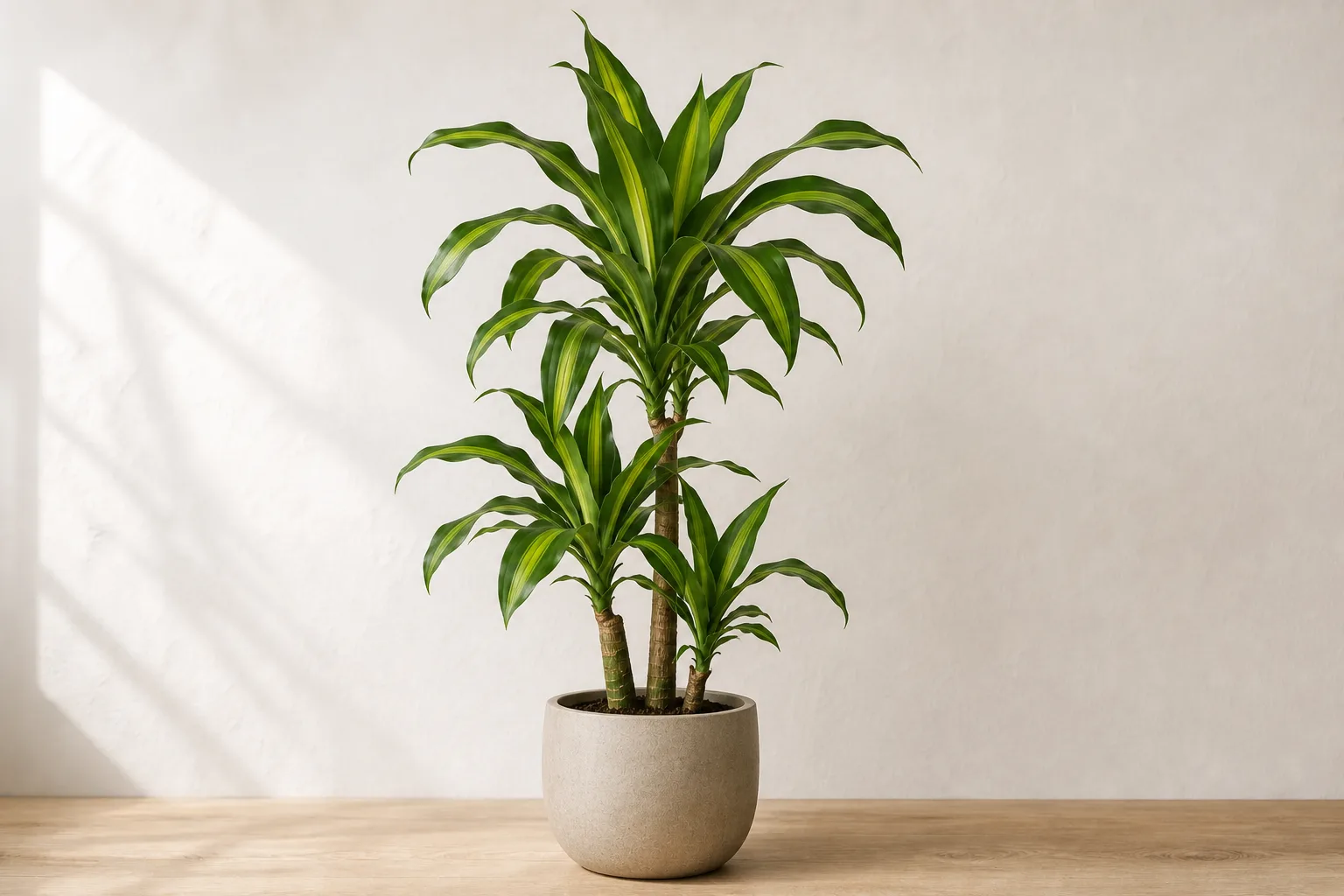
Corn plant (Dracaena fragrans) is a durable, slow-growing evergreen shrub native to tropical Africa, where it can grow into a small tree. Indoors it is usually kept at 4-6 feet, with rosettes of arching, sword-shaped green leaves clustered along a woody cane. Older lower leaves naturally yellow and drop, which is normal and gives the plant its bare-stem, tree-like form.
Care is straightforward: site it in bright filtered light, water when the top of the mix begins to dry, and keep it out of cold drafts and direct sun. Because the plant is sensitive to fluoride and mineral salts, brown leaf tips are often a water-quality issue rather than a watering one. Reduce feeding and watering in winter.
Light
Corn plant does best in bright to medium filtered light, protected from significant periods of direct sun, which can scorch the leaves. It tolerates some low light, but in dimmer spots the leaves grow narrower and the plant becomes sparse. An east or north window, or a spot a few feet back from a brighter one, works well. Turn the pot occasionally so the cane grows evenly.
Water
Keep the soil uniformly moist during the growing season, but allow the top to dry slightly between waterings, and never let the pot sit in a saucer of water. Reduce watering from fall to late winter. Both too-dry and too-wet soil brown the leaves, and the plant is sensitive to fluoride and dissolved salts - using filtered or rain water and flushing the mix occasionally helps prevent tip browning.
Soil and repotting
Use an organically rich, well-drained, peaty potting mix in a container with a drainage hole. Dracaenas appreciate a stable root zone, so repot only when roots crowd the pot or emerge from the drainage holes, typically every two to three years, moving up one pot size. Keep the cane at the same depth and water sparingly for the first week after repotting.
Temperature, humidity, and fertilizer
Corn plant grows well across a wide range of indoor temperatures, with 60-75 F (16-24 C) ideal, and it should be brought back indoors in fall before temperatures dip below 50 F (10 C). Average household humidity is acceptable, though dry air causes brown leaf tips; a humidifier or pebble tray helps in heated homes. Feed lightly with a balanced houseplant fertilizer at label strength during spring and summer and not at all in winter.
Pruning and propagation
Remove yellowed or damaged leaves at the base as needed. A too-tall cane can be cut back: a cane section with buds roots readily to make a new plant, and the old stump usually resprouts below the cut. NC State Extension confirms stem cuttings are the standard propagation method for Dracaena. Root cane pieces in moist mix or water, keeping them warm and out of direct sun until growth appears.
Common problems
Start with the pattern, current soil moisture, and recent changes. One symptom can have several causes, so change the most likely factor first and observe before making another major adjustment.
| Symptom | Check first | First action |
|---|---|---|
| Brown leaf tips | Tap-water fluoride, low humidity, overfeeding, or dry soil | Switch to filtered or rain water, flush the mix, and reduce fertilizer rather than changing watering only. |
| Yellowing leaves | Soil moisture, drainage, and whether it is only the oldest lower leaves | Let the top of the mix dry and confirm drainage; accept natural lower-leaf loss on an aging cane. |
| Scorched or bleached leaves | Direct sun exposure and position near windows | Move the plant to bright filtered light, away from harsh sun. |
| Drooping or limp foliage | Whether the mix is wet or dry and recent temperature changes | Check the root zone; water if dry, and withhold water while inspecting roots if the mix is still damp. |
| Tiny insects or waxy bumps | Spider mites, thrips, or scale along stems and leaf undersides | Isolate the plant and identify the pest before treating; wipe affected areas and use a targeted control. |
Pet and household safety
Corn plant is toxic to cats, dogs, and horses if chewed. It contains saponins, which can cause vomiting (occasionally with blood), depression, anorexia, hypersalivation, and dilated pupils in cats. Keep it out of reach of pets and children who chew plants, and contact a veterinarian or animal poison-control service after a concerning exposure. This species is not safe to chew.
Frequently asked questions
How often should I water a corn plant?
Keep the soil uniformly moist in the growing season, allowing the top to dry slightly between waterings, and reduce in fall and winter. Check the mix rather than following a fixed schedule.
What light does a corn plant need?
Bright to medium filtered light. It tolerates some low light but grows narrower leaves in dim spots and scorches in direct sun.
Where does corn plant grow naturally?
It is native to tropical Africa, where it grows as an evergreen shrub or small tree in the seasonally dry tropical biome.
Why are the leaf tips turning brown?
Usually fluoride or mineral salts in tap water, low humidity, dry soil, or too much fertilizer. Switch to filtered or rain water and reduce feeding before changing other care.
How do I propagate a corn plant?
Cut a cane section with buds and root it in moist mix or water; the old stump usually resprouts below the cut. NC State lists stem cuttings as the standard method.
Is corn plant safe for pets?
No. It contains saponins that cause vomiting, drooling, and depression in cats and dogs. Keep it out of reach and contact a veterinarian after a concerning chew.
Sources and editorial review
This editorial draft is based on the sources below and awaits named horticulture-expert approval before publication.
- Dracaena fragransRoyal Botanic Gardens, Kew (Plants of the World Online) · Checked
- Dracaena fragrans (Corn Plant)North Carolina State Extension · Checked
- Dracaena fragransMissouri Botanical Garden · Checked
- Corn PlantASPCA · Checked
What works well
- Tolerant of lower light and forgiving of occasional missed waterings.
- Upright, architectural form that fits corners and floors.
- Slow-growing and easy to maintain with minimal pruning.
What to consider
- Toxic to cats and dogs if chewed (saponins).
- Leaf tips brown from tap-water fluoride, low humidity, or overfeeding.
- Direct sun scorches the leaves.