Key takeaways
- Provide medium to bright indirect light; direct sun bleaches and scorches the leaves.
- Keep the mix evenly moist, never soggy, and prefer filtered or distilled water.
- Listed as non-toxic to pets, but give it high humidity or the leaf edges brown.
How to care for Calathea Orbifolia
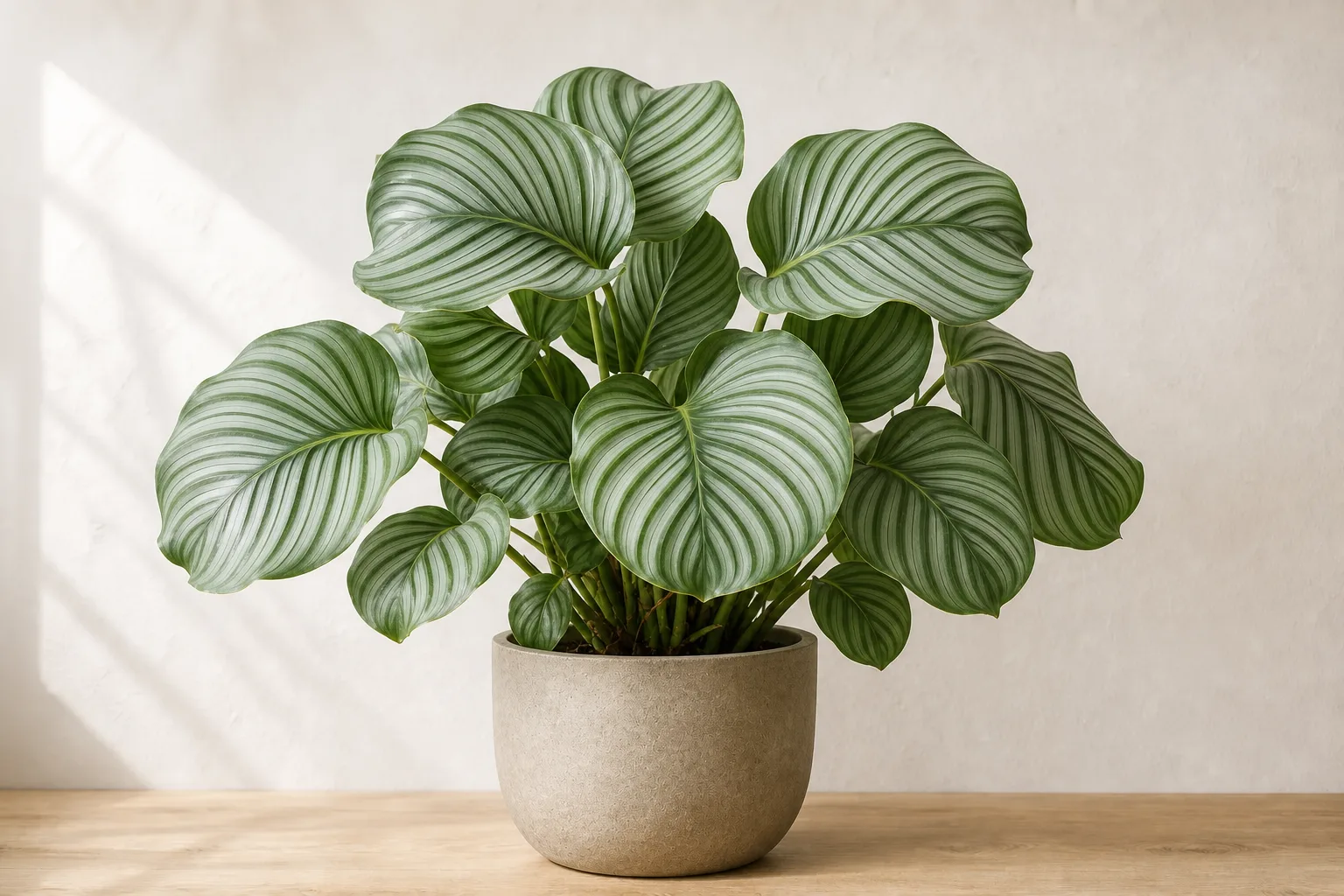
Goeppertia orbifolia, still widely sold as Calathea orbifolia, is a clump-forming prayer plant from the rainforests of eastern Brazil. Its signature is the leaf: broad, rounded, often 12 inches across, dark green with silver-green bands radiating from the midrib. Like other marantas it folds its leaves up at night, and it rarely flowers indoors, so the plant is grown entirely for that foliage.
This is an advanced houseplant because three things must stay consistent: bright filtered light, high humidity (ideally above 60 percent), and water low in fluoride and minerals. When those are right the plant grows steadily and looks almost sculptural. When any one drifts, the response is fast - brown edges, curling, or faded striping. Change one variable at a time and judge the next new leaf.
Light
Aim for medium to bright indirect light - an east window or a few feet back from a south or west window. Goeppertia orbifolia can cope with gentler light, but growth slows and the silver striping softens in dim corners. Direct sun is the plant's worst enemy: it bleaches the leaf color and can scorch large patches of thin leaf tissue. Acclimate any move gradually, because leaves formed in softer light burn easily.
Water
Keep the mix consistently moist but never waterlogged. Water when the top inch begins to dry, using filtered, distilled, or rainwater - the fluoride and minerals in hard tap water are a leading cause of brown leaf tips and edges. Always let excess water drain and empty the saucer. In winter, growth slows and the pot holds moisture longer, so check the root zone before each watering. The plant dislikes both extremes: a root zone left soggy rots, while repeated drying crisps the foliage.
Soil and repotting
Use an airy, well-draining mix that still holds moisture - a houseplant blend with perlite and a little orchid bark works well - and a pot with a drainage hole. Repot in spring when the rhizome clump fills the container, usually every year or two. Division is the propagation method: separate the rhizome into sections that each carry roots and shoots, and pot them at the same depth. Handle the plant gently; the big leaves and soft stems bruise easily.
Temperature, humidity, and fertilizer
Keep Goeppertia orbifolia in warm, stable rooms (roughly 65-80°F / 18-27°C) and out of cold drafts and heating vents. High humidity is essential - a humidifier, pebble tray, or steamy bathroom usually works better than misting alone. Feed monthly during spring and summer with a balanced houseplant fertilizer at half or quarter strength; salts from overfeeding build up quickly and can brown leaf edges. Reduce feeding in winter, when the plant grows slowly.
Pruning and propagation
Pruning is simple: remove yellowed or damaged leaves at the base with clean scissors, and wipe dust from the broad leaves so they can photosynthesize. Propagation is by division of the rhizome in spring or early summer, when each separated section needs at least one healthy shoot and its own roots. Pot divisions into the same mix and hold them in warm, humid, bright-filtered conditions until new growth confirms they have settled.
Common problems
Start with the pattern, current soil moisture, and recent changes. One symptom can have several causes, so change the most likely factor first and observe before making another major adjustment.
| Symptom | Check first | First action |
|---|---|---|
| Brown leaf edges or tips | Humidity, fluoride or minerals in tap water, and fertilizer salt buildup | Raise humidity and switch to filtered or distilled water; flush the mix with plain water if salts are suspected. |
| Curling leaves | Root-zone moisture, humidity, and temperature stability | Check the mix before watering again; raise humidity and steady the room temperature. |
| Faded silver stripes or washed-out color | Light levels and whether direct sun reaches the leaves | Move gradually to brighter filtered light and shield the plant from direct sun. |
| Yellowing leaves or drooping stems | Whether the mix is staying wet too long and the pot drains properly | Pause watering, confirm drainage, and check roots for rot before changing care. |
| Fine webbing or stippling on leaves | Leaf undersides for spider mites, especially in dry air | Isolate the plant, raise humidity, and identify the pest before treating. |
Pet and household safety
Goeppertia orbifolia is listed as non-toxic to cats, dogs, and horses - it belongs to the Marantaceae family, which poison-control references consistently list as non-toxic. Non-toxic does not mean edible: chewing any plant material can still cause mild stomach upset, so keep persistent chewers away and contact a veterinarian if a pet becomes unwell.
Frequently asked questions
How often should I water calathea orbifolia?
Use the top inch of the mix as the trigger and water when it begins to dry, so the root zone stays evenly moist. The interval changes with light, pot size, and season; the plant dislikes both soggy and bone-dry soil.
What light does calathea orbifolia need?
Medium to bright indirect light. Direct sun bleaches and scorches the large leaves, while very dim corners slow growth and soften the silver stripes.
Why are the leaf edges turning brown?
Almost always low humidity, fluoride or minerals in tap water, or fertilizer salt buildup. Raise humidity, switch to filtered or distilled water, and flush the mix periodically.
Why does my calathea fold its leaves at night?
This is nyctinasty, a normal daily rhythm shared by prayer plants. Leaves open flat by day and fold upward at night - it is not a sign of stress.
How do I propagate calathea orbifolia?
By dividing the rhizome in spring or early summer. Each section needs at least one healthy shoot and its own roots, then settles best in warm, humid, bright-filtered conditions.
Is calathea orbifolia safe for pets?
Yes, it is listed as non-toxic to cats, dogs, and horses. Still discourage chewing, since any plant can cause stomach upset, and contact a veterinarian if a pet becomes unwell.
Sources and editorial review
This editorial draft is based on the sources below and awaits named horticulture-expert approval before publication.
- Goeppertia orbifoliaRoyal Botanic Gardens, Kew (Plants of the World Online) · Checked
- CalatheaASPCA · Checked
- Goeppertia orbifoliaNorth Carolina State University Extension · Checked
- Goeppertia orbifoliaRoyal Horticultural Society · Checked
What works well
- Large, silver-striped round leaves that fold up at night.
- Listed non-toxic to cats and dogs.
- Rewards attentive care with dramatic, glossy foliage.
What to consider
- Demands high humidity and rejects hard tap water.
- Fussy about temperature stability and drafts.
- Brown edges and curling appear quickly when care drifts.