Key takeaways
- Keep it in bright indirect light and slightly rootbound; crowded roots improve flowering.
- Give it a cool winter rest period with reduced watering to set buds.
- Toxic to cats, dogs, and horses - the plant contains lycorine and other alkaloids.
How to care for Bush Lily
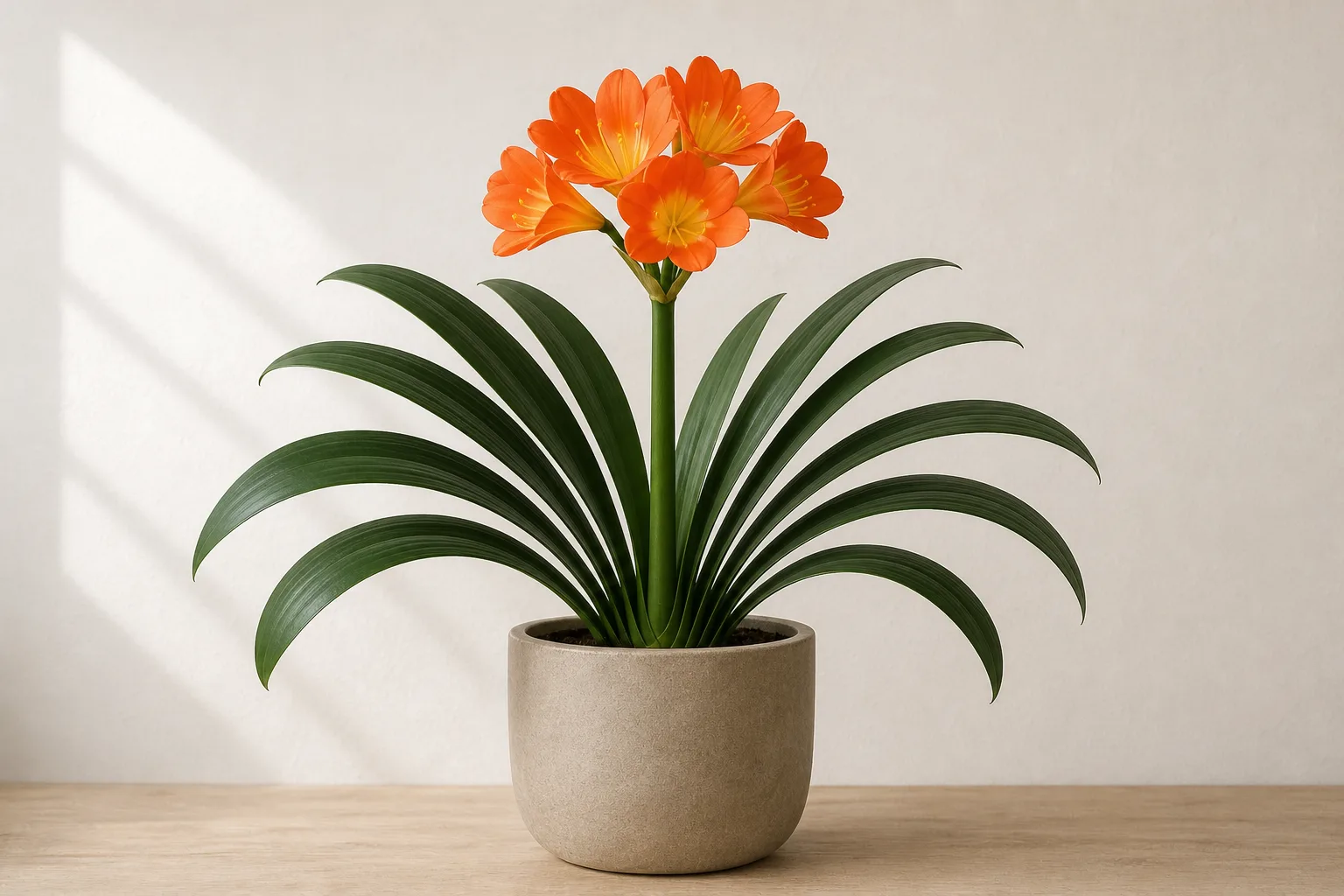
Bush lily (Clivia miniata) is a broadleaf evergreen perennial in the amaryllis family, native to the subtropical forests and bushlands of South Africa and Eswatini. It forms clumps of thick, glossy, strap-like leaves and sends up strong stems topped with umbels of 12 to 20 funnel-shaped flowers in shades of orange, red, and yellow with contrasting throats.
Clivia is remarkably undemanding. It prefers dappled to bright indirect light, likes to stay rootbound, and tolerates drought well - in fact, it flowers best when it has a cool, drier rest period for a month or two in winter. The most common mistakes are overwatering, which causes crown rot, and watering too freely from autumn on, which suppresses the flower stem. Water early in the day and provide good air circulation.
Light
Bush lily does best in dappled sunlight or bright indirect light - an east window or a few feet back from a brighter window is ideal. It also tolerates deeper shade but blooms less reliably. Direct hot sun can burn the leaves, while very dim spots produce few or no flowers. If leaves split vertically, the plant is likely getting too little light. Rotate the pot occasionally and adjust position gradually.
Water
Water clivias well during the warmer growing months, then allow the surface to dry between waterings. In winter, reduce watering substantially and keep the soil just moist - a cool, drier rest is what triggers the flower stalk. Keep water out of the heart of the plant, where it causes rot, and never leave the pot sitting in a saucer. Yellow spots on the leaves often mean too much water or water trapped in the crown.
Soil and repotting
Clivia performs best when slightly rootbound, so repot only every three to four years, moving up one pot size at a time. Use a well-drained, loam-based potting mix and a container with a drainage hole. When repotting, gently untangle the roots without damaging them, and keep the crown at the soil line. Repotting is also the time to divide large clumps into new plants.
Temperature, humidity, and fertilizer
Bush lily is comfortable in normal room temperatures but flowers best after a cool winter rest with night temperatures below about 50°F (10°C) for a month or two. Keep the soil just moist during that rest and resume normal watering when the flower stalk reaches a few inches. Average humidity is fine. Feed lightly with a balanced fertilizer during spring and summer growth, and avoid heavy feeding, which the plant does not need.
Pruning and propagation
Clivia needs little pruning: remove spent flower stalks after blooming and trim any damaged leaves close to the base. Propagation is by division - when you repot an established clump every three to four years, separate the offsets, making sure each piece has roots and a fan of leaves, then pot them up individually. Plants grown from seed take several years to flower, so division is the practical method for home growers.
Common problems
Start with the pattern, current soil moisture, and recent changes. One symptom can have several causes, so change the most likely factor first and observe before making another major adjustment.
| Symptom | Check first | First action |
|---|---|---|
| No flower stem in spring | Winter rest, whether the plant was watered too freely from autumn on, and light level | Next winter, provide a cooler, drier rest period and keep the soil just moist until the stalk appears. |
| Yellow spots on leaves | Overwatering and whether water collects in the crown | Reduce watering, keep the crown dry, and confirm the pot drains freely. |
| Leaves splitting vertically | Light level and whether the plant is too dim | Move gradually to brighter indirect light. |
| Rotting at the base or crown | Drainage, pot sitting in water, and watering frequency | Stop watering, inspect roots, remove rotted tissue, and repot in fresh, well-drained mix. |
| No blooms on a mature plant | Age of the plant and whether it was repotted too often or overfed | Keep it rootbound, reduce feeding, and provide a cool winter rest. |
Pet and household safety
Bush lily (Clivia miniata) is toxic to dogs, cats, and horses, according to the ASPCA. The toxic principles are lycorine and other alkaloids, which cause vomiting, drooling, and diarrhea; large ingestions can cause convulsions, low blood pressure, tremors, and cardiac arrhythmias, and the bulbs are the most poisonous part. NC State Extension lists the whole plant - flowers, fruit, leaves, roots, and stems - as poisonous. Keep it out of reach of pets and children, and contact a veterinarian after a concerning exposure.
Frequently asked questions
How often should I water a bush lily?
Water well during spring and summer growth, then let the surface dry. In winter, reduce watering and keep the soil just moist - a cooler, drier rest is what triggers the flower stalk.
What light does a bush lily need?
Dappled or bright indirect light, such as an east window. It tolerates lower light but blooms less, while hot direct sun can burn the leaves.
Where does the bush lily grow naturally?
Clivia miniata is native to the subtropical forests and bushlands of South Africa (Cape Provinces, KwaZulu-Natal, Northern Provinces) and Eswatini.
Why is my clivia not flowering?
Usually too much water from autumn on, too little light, or no cool winter rest. Keep it rootbound, provide a cool, drier rest period, and resume watering when the stalk appears.
How do I propagate a bush lily?
Divide established clumps when you repot every three to four years, ensuring each division has roots and leaves. Seed-grown plants take several years to flower.
Is bush lily safe for pets?
No. Clivia contains lycorine and other alkaloids that are toxic to dogs, cats, and horses, causing vomiting, drooling, and diarrhea, with more severe signs from large ingestions.
Sources and editorial review
This editorial draft is based on the sources below and awaits named horticulture-expert approval before publication.
- Clivia miniataRoyal Botanic Gardens, Kew (Plants of the World Online) · Checked
- Kaffir LilyASPCA · Checked
- Clivia miniata (Bush Lily, Natal Lily)North Carolina State University Extension · Checked
- Clivia miniata (Natal Lily)Missouri Botanical Garden · Checked
What works well
- Long-lived and very low maintenance once established.
- Showy, long-lasting clusters of orange flowers in late winter to spring.
- Tolerates drier conditions and rootbound pots for years.
What to consider
- Toxic to pets and people if chewed (lycorine alkaloids).
- Takes several years to reach flowering size from a young plant.
- Flowers poorly if watered too freely in autumn or kept too warm in winter.