Key takeaways
- Dry soil is safer than constant moisture.
- Rotate monthly for balanced growth.
- All parts can irritate pets if chewed.
How to care for ZZ Plant
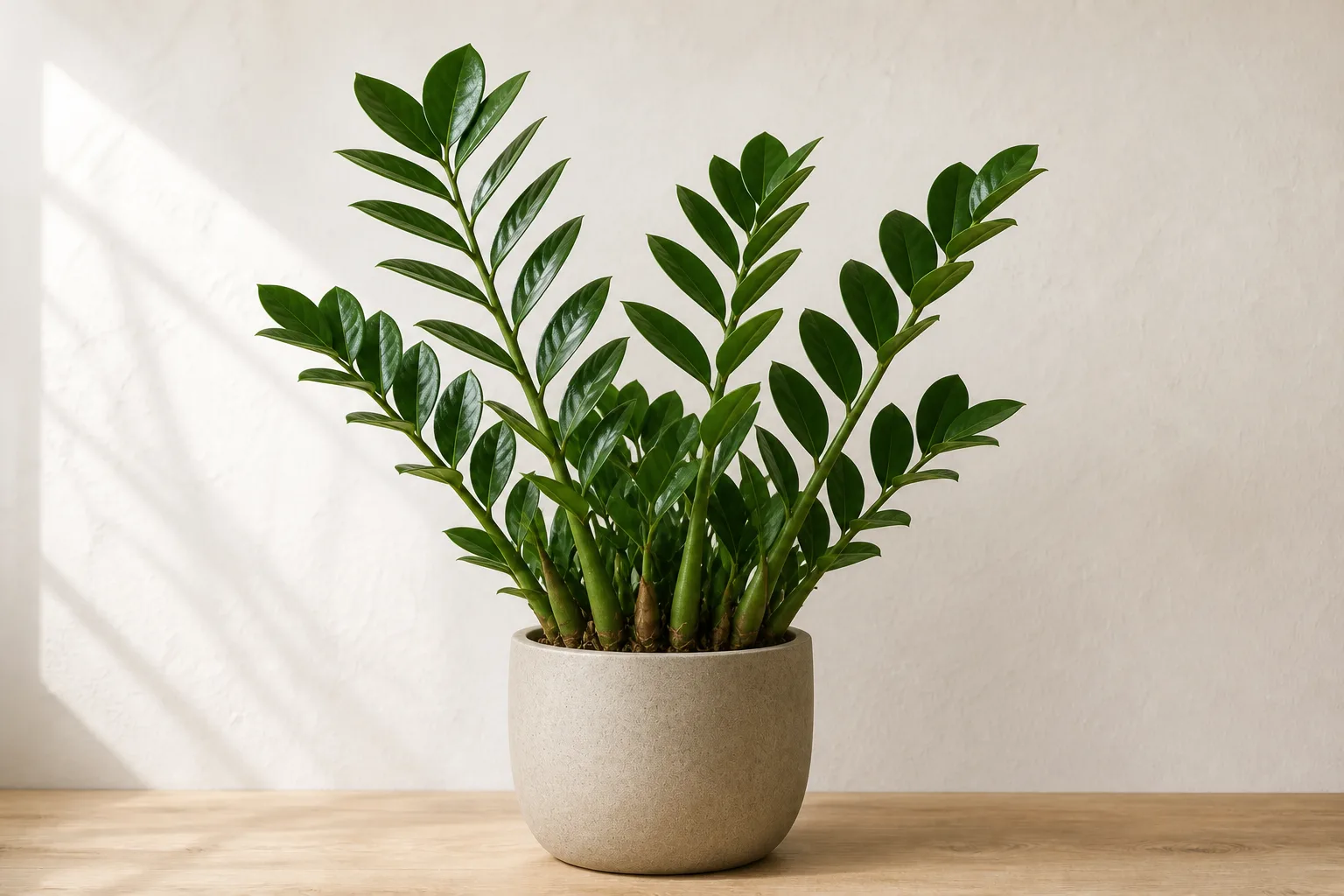
ZZ plant stores water in thick underground rhizomes, which is why it copes better with an occasional missed watering than with constant wet soil. It is naturally slow-growing, so judge it by firm stems and healthy new shoots rather than fast height gains.
Light
ZZ plant tolerates low light but grows more reliably in medium indirect light. In a dim corner it uses less water and produces new shoots more slowly. Keep it out of prolonged hot sun, which can stress or scorch leaves adapted to indoor conditions.
Water
Let most or all of the mix dry before watering thoroughly, then drain the pot. The rhizomes hold reserves, so delayed watering is usually safer than topping up an already damp pot. Yellowing together with wet mix is a diagnostic cue, not a signal to fertilize.
Soil and repotting
Use a well-drained mix and a pot with a drainage hole. Repot when rhizomes visibly crowd the pot, distort a container, or roots leave little mix to hold moisture. Move only one pot size up so the new mix does not remain wet for too long.
Temperature, humidity, and fertilizer
Average household humidity is fine. Avoid cold drafts and feed lightly only during active growth in adequate light. Do not try to speed a naturally slow plant with excess fertilizer; salts can accumulate while the root zone remains damp.
Pruning and propagation
Remove a damaged stalk at its base with clean tools. Division is the most dependable propagation method because each new plant retains part of the rhizome and roots. Leaf propagation is slower and requires patience; keep any medium airy and only lightly moist.
- Do not cut healthy stalks to make a ZZ plant branch.
- Turn the pot occasionally only if growth leans strongly toward one light source.
- Let a newly divided plant settle before resuming fertilizer.
Common problems
Start with the pattern, current soil moisture, and recent changes. One symptom can have several causes, so change the most likely factor first and observe before making another major adjustment.
| Symptom | Check first | First action |
|---|---|---|
| Yellowing stalks | Mix moisture, drainage, and whether lower growth is aging | Pause watering and inspect the root zone |
| Soft base | Rhizome firmness and how long the mix stays wet | Remove from standing water and assess roots |
| No new growth | Season, light level, and the plant's naturally slow pace | Improve medium indirect light gradually |
| Leaning growth | Direction and strength of the light source | Rotate gradually or move to more even light |
| Pale or scorched leaflets | Recent direct-sun exposure | Move back from harsh sun and avoid sudden changes |
Pet and household safety
ZZ plant is toxic to cats and dogs if chewed. Keep foliage and fallen pieces out of reach, and contact a veterinarian or animal poison-control service after a suspected ingestion or if symptoms develop.
Frequently asked questions
How often should I water ZZ Plant?
Wait until most or all of the mix is dry, then water thoroughly and drain excess.
Can ZZ Plant grow in low light?
It tolerates low light, but it grows slowly there and needs even less water.
Why is my ZZ Plant yellowing?
Check for wet soil and root stress first; do not assume that yellowing means it needs fertilizer.
Does ZZ Plant need high humidity?
No. Typical household humidity is usually sufficient.
How do I propagate ZZ Plant?
Division of a rooted rhizome is the most dependable route; leaf propagation is slower.
Is ZZ Plant safe for pets?
No. Keep it away from cats and dogs that chew plants.
Sources and editorial review
This editorial draft is based on the sources below and awaits named horticulture-expert approval before publication.
- ZZ Plant — Zamioculcas zamiifoliaNC State Extension · Checked
- Zamioculcas zamiifolia (G.Lodd.) Engl.Royal Botanic Gardens, Kew — Plants of the World Online · Checked
- Toxic and Non-Toxic PlantsASPCA · Checked
- Spring houseplant careUniversity of Minnesota Extension · Checked
What works well
- Tolerates low light
- Infrequent watering
- Polished foliage
What to consider
- Toxic to pets
- Slow growing
- Rhizomes rot in wet soil