Key takeaways
- Keep the mix lightly, not constantly, moist.
- Brighter filtered light supports flowers.
- Toxic to pets if chewed.
How to care for Peace Lily
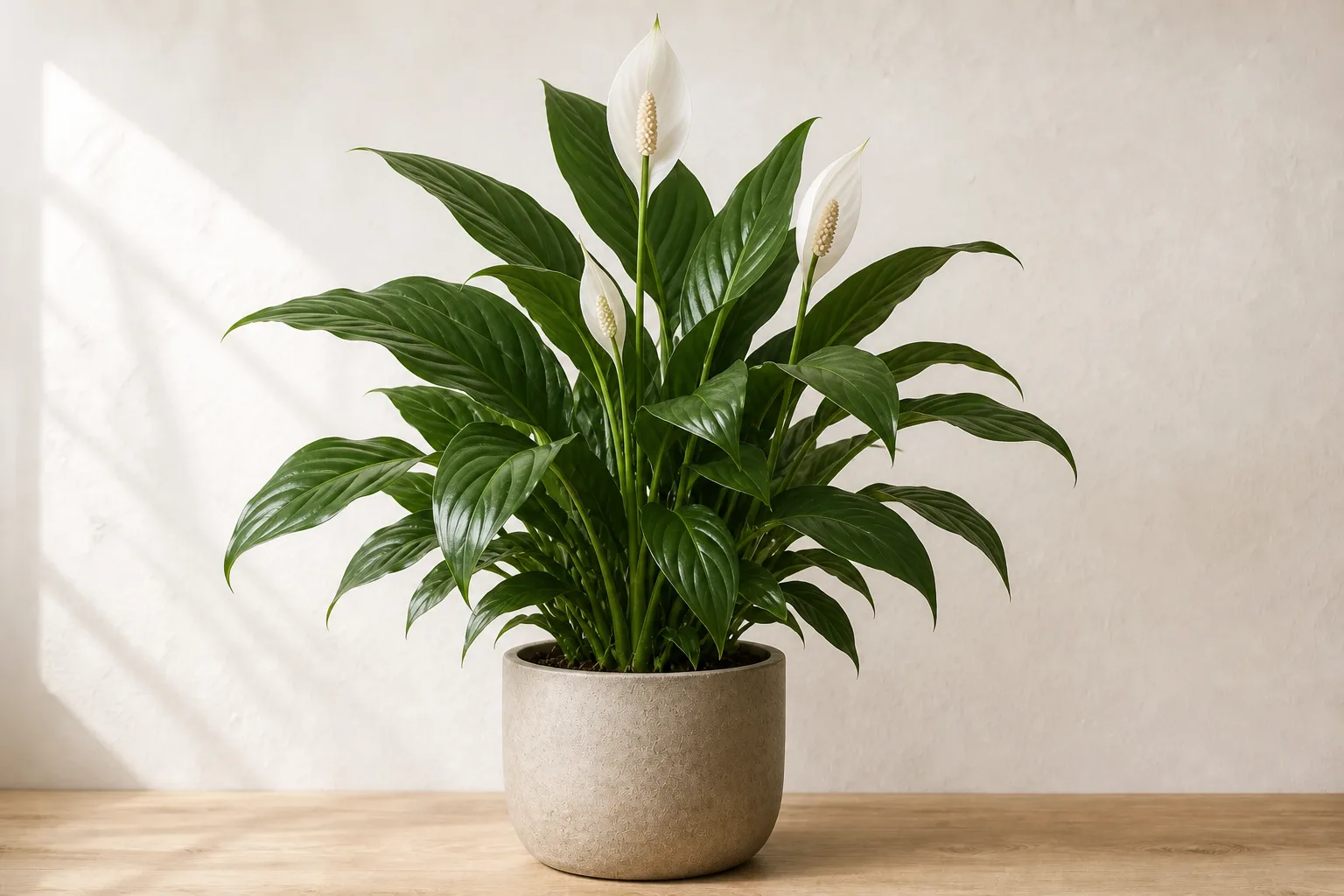
Peace lily is a flowering aroid grown for glossy foliage and pale spathes. It often droops when thirsty, but repeated severe wilting stresses the plant; use the potting mix and the recovery pattern rather than waiting for a dramatic signal every time.
Light
Give bright to medium filtered light for the best chance of flowers. It tolerates shade but direct sun can scorch leaves, and a dim plant may produce foliage without new spathes. Change positions gradually and judge the next leaves and blooms.
Water
Keep the mix lightly and evenly moist, never constantly saturated. Water when the surface begins to dry, then let excess drain. Yellow leaves with wet mix need a drainage check; brown tips can follow dry roots, low humidity, direct sun, or salts.
Soil and repotting
Use a moisture-retentive but well-drained houseplant mix in a pot with a drainage hole. Repot when roots crowd the pot or water runs through unusually fast, moving only one practical size up.
Temperature, humidity, and fertilizer
Warm, draft-free indoor conditions are most reliable. Feed conservatively during active growth and flush the mix periodically if salt buildup is suspected. Higher humidity can help leaf edges, but it does not replace correct watering.
Pruning and propagation
Remove spent flowers and damaged leaves at their base with clean tools. Divide a crowded plant during active growth so each division has roots and shoots, then keep the medium lightly moist while it re-establishes.
Common problems
Start with the pattern, current soil moisture, and recent changes. One symptom can have several causes, so change the most likely factor first and observe before making another major adjustment.
| Symptom | Check first | First action |
|---|---|---|
| Sudden droop | Surface moisture and whether the plant recovers after watering | Water thoroughly only if the mix is actually dry |
| Yellow leaves | Wet mix, drainage, and age of the leaf | Inspect moisture before changing light or fertilizer |
| Brown tips | Drying cycles, direct sun, humidity, and salt buildup | Stabilize moisture and flush excess salts if needed |
| No flowers | Light level and whether growth is otherwise healthy | Move gradually toward brighter filtered light |
| Mix stays wet | Pot size, drainage, and root health | Pause watering and assess roots if decline continues |
Pet and household safety
Peace lily is toxic to cats and dogs if chewed. ASPCA lists insoluble calcium oxalates and signs including oral irritation, drooling, vomiting, and difficulty swallowing. Keep it out of reach and contact a veterinarian or poison-control service after a concerning exposure.
Frequently asked questions
How often should I water Peace Lily?
Water when the surface begins to dry, before the root ball becomes fully dry; the interval changes with light and season.
Why is my Peace Lily drooping?
Dry mix is common, but wet mix and root stress can also cause droop. Check moisture before watering.
Can Peace Lily grow in low light?
It tolerates lower light, but brighter filtered light supports more dependable flowering.
Why are the tips brown?
Review dry periods, direct sun, humidity, and fertilizer or mineral buildup rather than assuming one cause.
How do I propagate Peace Lily?
Divide a rooted clump, keeping roots and shoots with each new division.
Is Peace Lily safe for pets?
No. Keep it away from cats and dogs that chew plants.
Sources and editorial review
This editorial draft is based on the sources below and awaits named horticulture-expert approval before publication.
- SpathiphyllumNC State Extension · Checked
- Peace LilyASPCA · Checked
- Spring houseplant careUniversity of Minnesota Extension · Checked
- HouseplantsUniversity of Minnesota Extension · Checked
What works well
- Distinct white blooms
- Signals thirst
- Handles medium light
What to consider
- Toxic to pets
- Sensitive to mineral buildup
- Wilts in dry soil