Key takeaways
- Give it bright light, a well-drained acidic mix, and stable temperatures to avoid bud drop.
- Water with room-temperature water and keep the soil evenly moist - never let it dry out or sit soggy.
- Toxic to cats, dogs, and horses; the plant contains genioposide and gardenoside that can cause vomiting and diarrhea.
How to care for Gardenia
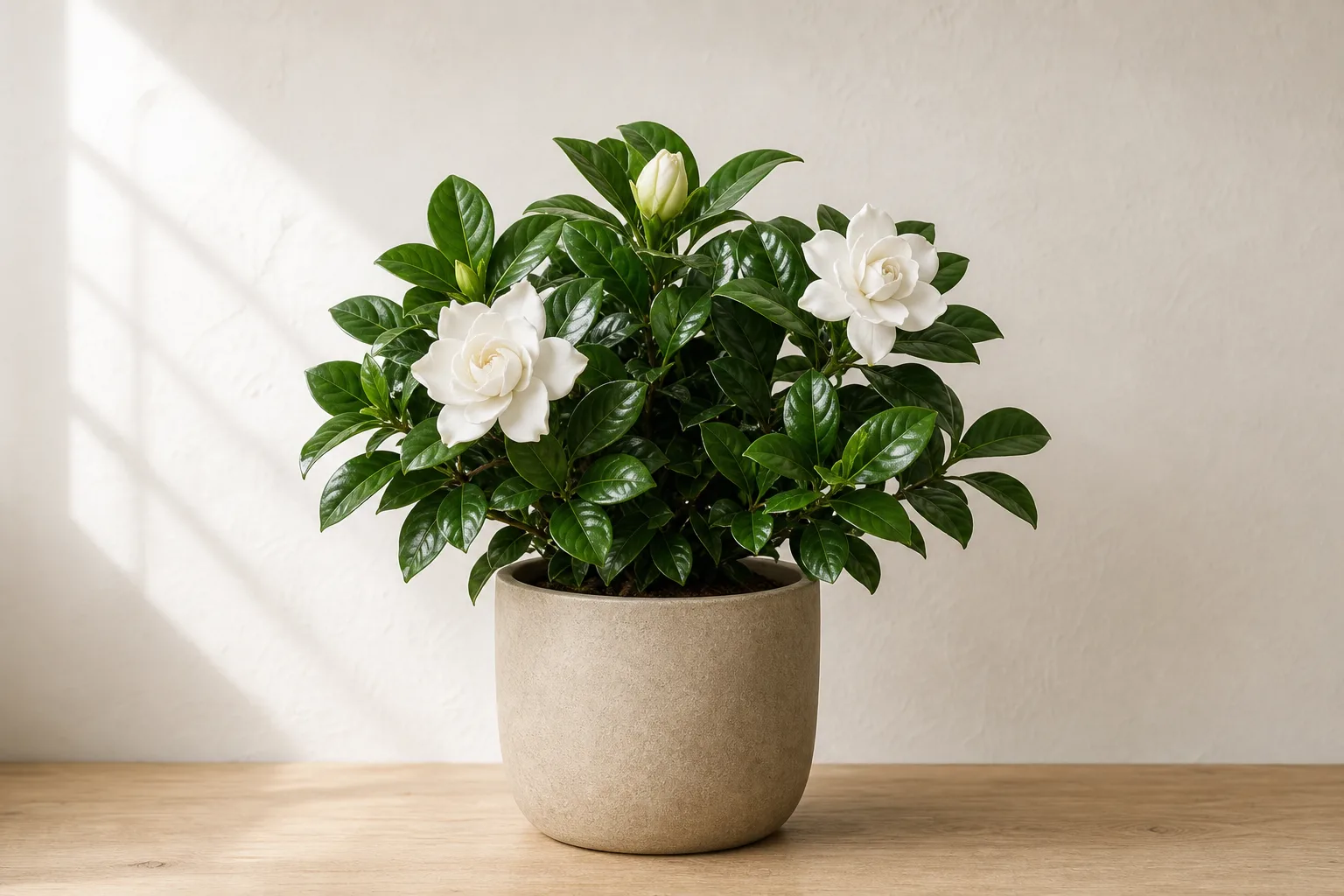
Gardenia (Gardenia jasminoides) is an evergreen shrub native from the eastern Himalayas through central and southern China, Indo-China, Taiwan, and Japan, where it grows in warm, humid, woodland conditions. It is grown for its thick, glossy leaves and its extremely fragrant, waxy white flowers that open from green buds and age to cream.
Indoors, gardenias are demanding but doable: give them the brightest light you can manage, a well-drained acidic mix, and steady conditions. Water regularly with room-temperature water so the soil neither dries out nor stays soggy, and keep the plant away from cold drafts and sudden temperature swings, which make the buds drop. Move it outdoors for the warm months if you can, and bring it back in before frost.
Light
Gardenias need bright light indoors to flower well - a south- or west-facing window with some filtered sun, or the brightest spot you have. Place them in light to moderate shade if moved outside for summer. Too little light produces weak growth and few flowers, while hot direct afternoon sun through glass can stress the leaves. Rotate the pot occasionally so all sides get light, and move the plant gradually when changing position.
Water
Water gardenias regularly so the soil stays evenly moist, using room-temperature water. Do not let the mix dry out completely or stay waterlogged - both cause yellow leaves and bud problems. Drip watering or watering the soil rather than the leaves helps prevent leaf spots, and the pot must drain freely. In winter, when growth slows, water moderately and reduce frequency, but never let the root zone go bone dry.
Soil and repotting
Gardenias need a well-drained, humus-rich, acidic potting mix with a low pH, since alkaline soil or hard water causes yellow leaves from iron deficiency. Repot in spring into a slightly larger container, disturbing the roots as little as possible - gardenias resent root disturbance. Mulch the surface and water in well after repotting. Use a fertilizer formulated for acid-loving plants to keep the pH favorable.
Temperature, humidity, and fertilizer
Gardenias want bright light, moderate temperatures, and average to high humidity indoors. Keep them cooler during dormancy, and avoid temperatures below about 60°F (15°C), which can produce malformed buds. Raise humidity with a pebble tray or humidifier, since dry air contributes to bud drop. Feed from early spring to late summer with a mild acid fertilizer, and stop feeding in autumn so the plant hardens off.
Pruning and propagation
Prune after flowering to shape the plant, remove straggly branches, and clear faded flowers. Propagation is by stem cuttings: take a semi-ripe cutting, root it in moist, well-drained mix, and keep it warm and humid until it establishes. Cuttings let you replace a tired plant and are a more reliable way to keep gardenias going indoors than trying to rejuvenate an old specimen.
Common problems
Start with the pattern, current soil moisture, and recent changes. One symptom can have several causes, so change the most likely factor first and observe before making another major adjustment.
| Symptom | Check first | First action |
|---|---|---|
| Yellow leaves with green veins (chlorosis) | Soil pH, hard water, and whether the mix is draining freely | Confirm the soil is acidic and use an acid fertilizer or iron supplement; flush built-up salts. |
| Bud drop before flowers open | Recent temperature changes, dry air, and watering consistency | Stabilize temperature and watering, and raise humidity with a pebble tray. |
| Black or scorched leaf tips | Temperature swings and inconsistent watering | Keep conditions steady; water evenly with room-temperature water and correct drafts. |
| No flowers | Light level and whether fertilizer is too high in nitrogen | Move to the brightest available light and switch to an acid bloom fertilizer. |
| Sticky residue or sooty leaves | Whiteflies, mealybugs, scale, and spider mites on leaf undersides | Isolate the plant, identify the pest, and treat with a targeted control. |
Pet and household safety
Gardenia (Gardenia jasminoides) is toxic to dogs, cats, and horses, according to the ASPCA and NC State Extension. The toxic principles are genioposide and gardenoside, which can cause mild vomiting, diarrhea, and hives if the plant is eaten. Keep the plant out of reach of pets and children who chew plants, and contact a veterinarian or animal poison-control service after a concerning exposure. This species is not safe to chew.
Frequently asked questions
How often should I water a gardenia?
Water regularly so the soil stays evenly moist but never soggy, using room-temperature water. Check the top of the mix rather than following a schedule; both dry soil and wet feet cause bud and leaf problems.
What light does a gardenia need indoors?
Bright light is essential - the brightest spot you have, such as a south or west window. Too little light gives weak growth and few flowers.
Where does the gardenia grow naturally?
Gardenia jasminoides is native from the eastern Himalayas through central and southern China, Indo-China, Taiwan, and southern and central Japan, growing as a shrub in warm, humid woodland.
Why are my gardenia buds falling off?
Bud drop is usually caused by sudden temperature changes, low humidity, or inconsistent watering. Stabilize conditions and raise humidity before changing anything else.
How do I propagate a gardenia?
Take semi-ripe stem cuttings in summer and root them in moist, well-drained mix under warm, humid conditions. Cuttings are the practical way to replace an aging plant.
Is gardenia safe for pets?
No. Gardenia is toxic to dogs, cats, and horses, containing genioposide and gardenoside that can cause mild vomiting and diarrhea. Keep it out of reach and contact a veterinarian after a concerning exposure.
Sources and editorial review
This editorial draft is based on the sources below and awaits named horticulture-expert approval before publication.
- Gardenia jasminoidesRoyal Botanic Gardens, Kew (Plants of the World Online) · Checked
- GardeniaASPCA · Checked
- Gardenia jasminoidesNorth Carolina State University Extension · Checked
- Gardenia jasminoides (Gardenia)Missouri Botanical Garden · Checked
What works well
- Extremely fragrant white flowers that perfume a whole room.
- Glossy evergreen foliage that stays attractive between blooms.
- Can bloom repeatedly through the year in warm, bright conditions.
What to consider
- Demanding about light, acidity, humidity, and stable temperatures.
- Drops buds if conditions change suddenly.
- Toxic to cats, dogs, and horses if ingested.