Key takeaways
- Tolerates lower light but loses variegation.
- Trim vines to encourage fullness.
- Toxic when chewed by cats or dogs.
How to care for Golden Pothos
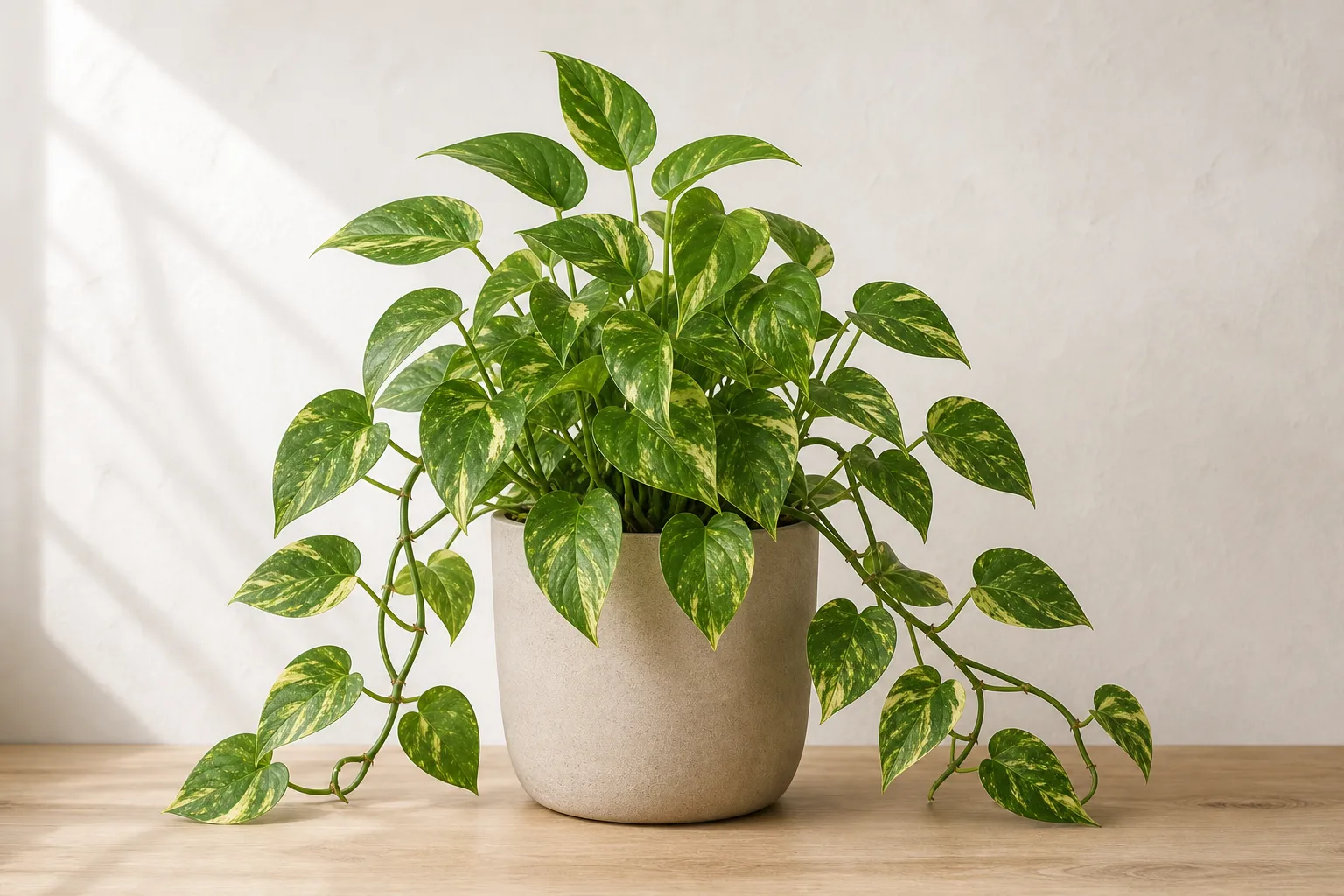
Golden pothos is a climbing aroid usually grown as a trailing houseplant. Its juvenile heart-shaped leaves stay relatively small in a hanging pot, while a vine given a firm support and adequate light can make larger leaves over time. Treat it as a flexible vine rather than a fixed-size tabletop plant: pruning and the direction of growth shape the plant you live with.
The yellow-and-green variegation is a practical light signal. A plant can tolerate lower light, but new leaves may become greener and vines may stretch farther between leaves. Keep changes gradual; a plant moved abruptly from dim light into hot direct sun can scorch before it has time to adapt.
Light
Bright, indirect light is the most reliable setting for fuller growth and strong variegation. An east-facing window or a spot set back from a brighter window often works well. Direct afternoon sun through glass can bleach or scorch leaves, while very low light usually produces slower, greener, more widely spaced growth.
Use the newest leaves as your guide. If variegation fades or vines become sparse, improve light a little at a time and turn the pot only gradually. Leaves with pale dry patches after a move need less exposure, not more fertilizer.
Water
Water when the upper inch or two of the potting mix has dried, then wet the root ball thoroughly and let excess drain. The aim is a cycle of moisture and air around the roots, not a permanently wet pot or a small daily sip at the surface.
Drying speed changes with season, pot size, light, and root density. Yellow leaves combined with mix that stays wet are a cue to pause scheduled watering and inspect drainage. A single older leaf can age out naturally, so look for a repeating pattern before changing several care variables at once.
Soil and repotting
Use a loose, well-drained indoor mix in a pot with a drainage hole. A standard houseplant mix can be made airier with coarse bark or another porous amendment, but the useful test is that water moves through the pot while the root ball does not stay saturated for days.
Repot when roots fill the container, grow from drainage holes, or the plant dries unusually fast after a thorough watering. Increase only one practical pot size. Extra unused wet mix around a modest root system can slow drying and make overwatering harder to diagnose.
Temperature, humidity, and fertilizer
Golden pothos is comfortable in typical warm indoor conditions and benefits from being kept away from cold drafts or hot air vents. Average household humidity is usually adequate; higher humidity can reduce rapid moisture loss, but it does not correct wet roots or poor light.
Feed only when the plant is actively growing in adequate light, using a balanced houseplant fertilizer according to its label. Reduce feeding when growth slows. Brown margins can follow dry roots, harsh sun, or accumulated salts, so treat fertilizer as one possible factor rather than an automatic cure.
Pruning and propagation
Prune a long vine just above a node to encourage branching closer to the pot. Clean, sharp tools make a deliberate cut easier to heal than tearing a stem. If a plant is sparse, improve light and trim selectively rather than removing every long vine at once.
Stem cuttings need a node, the point where a leaf and potential new growth join the stem. Root a node in water or a moist, airy medium, then pot it once roots are established. A leaf without a node may remain attractive for a while but cannot produce a new vine.
- Guide climbing stems to a pole or trellis if you want larger, more mature leaves.
- Do not bind leaf petioles tightly; they need to adjust toward light.
- Layering lets a node root while it is still attached to the parent plant.
Common problems
Start with the pattern, current soil moisture, and recent changes. One symptom can have several causes, so change the most likely factor first and observe before making another major adjustment.
| Symptom | Check first | First action |
|---|---|---|
| Yellow leaves | Soil moisture, drainage, leaf age, and speed of change | Pause routine watering and inspect the mix before changing several variables |
| Variegation fades | Recent light level and whether new leaves are greener than old ones | Move gradually toward brighter filtered light |
| Long bare vines | Light direction, node spacing, and whether the plant has been pruned | Improve light and trim selected stems above healthy nodes |
| Brown leaf margins | Drying cycles, direct sun, fertilizer use, and salt buildup | Stabilize light and watering, then review feeding |
| Mix stays wet | Drainage hole, pot size, mix density, light, and root health | Stop watering until the cause is clear; inspect roots if decline continues |
Pet and household safety
Golden pothos is toxic to cats and dogs if chewed. ASPCA lists insoluble calcium oxalates as the toxic principle; signs can include oral irritation, drooling, vomiting, and trouble swallowing. Keep vines out of reach of pets and contact a veterinarian or animal poison-control service promptly after a concerning exposure.
Frequently asked questions
How often should I water Golden Pothos?
Use the potting mix as the trigger. Water when the upper inch or two has dried, then drain excess water; the interval changes with light, season, and pot size.
Why is my pothos losing variegation?
New growth often becomes greener in lower light. Increase filtered light gradually and judge the next few leaves rather than expecting an old leaf to change color.
Can pothos grow in low light?
It can tolerate lower light, but it usually grows more slowly and less densely there. Bright indirect light gives a more reliable result.
How do I make pothos fuller?
Improve light, prune a few vines above nodes, and root node-bearing cuttings to plant back into the same pot if you want a denser display.
Can I propagate a pothos leaf?
A viable cutting needs part of the stem with a node. A leaf and petiole alone cannot make a new vine.
Is Golden Pothos safe for pets?
No. Keep it out of reach because chewing can irritate the mouth and digestive tract of cats and dogs.
Sources and editorial review
This editorial draft is based on the sources below and awaits named horticulture-expert approval before publication.
- Epipremnum aureumNC State Extension · Checked
- Epipremnum aureum (Linden & André) G.S.BuntingRoyal Botanic Gardens, Kew — Plants of the World Online · Checked
- Golden PothosASPCA · Checked
- Spring houseplant careUniversity of Minnesota Extension · Checked
What works well
- Adaptable
- Quick to propagate
- Fits small homes
What to consider
- Toxic to pets
- Can become sparse
- Variegation fades in low light